Description
Evo 2 is a cutting-edge biomolecular AI model that deciphers DNA, RNA, and protein sequences across evolutionary scales, delivering deep structural and functional insights. Ideal for molecular biologists and evolutionary researchers, it accelerates scientific discovery by combining advanced AI with comprehensive biomolecular analysis — all available for free.
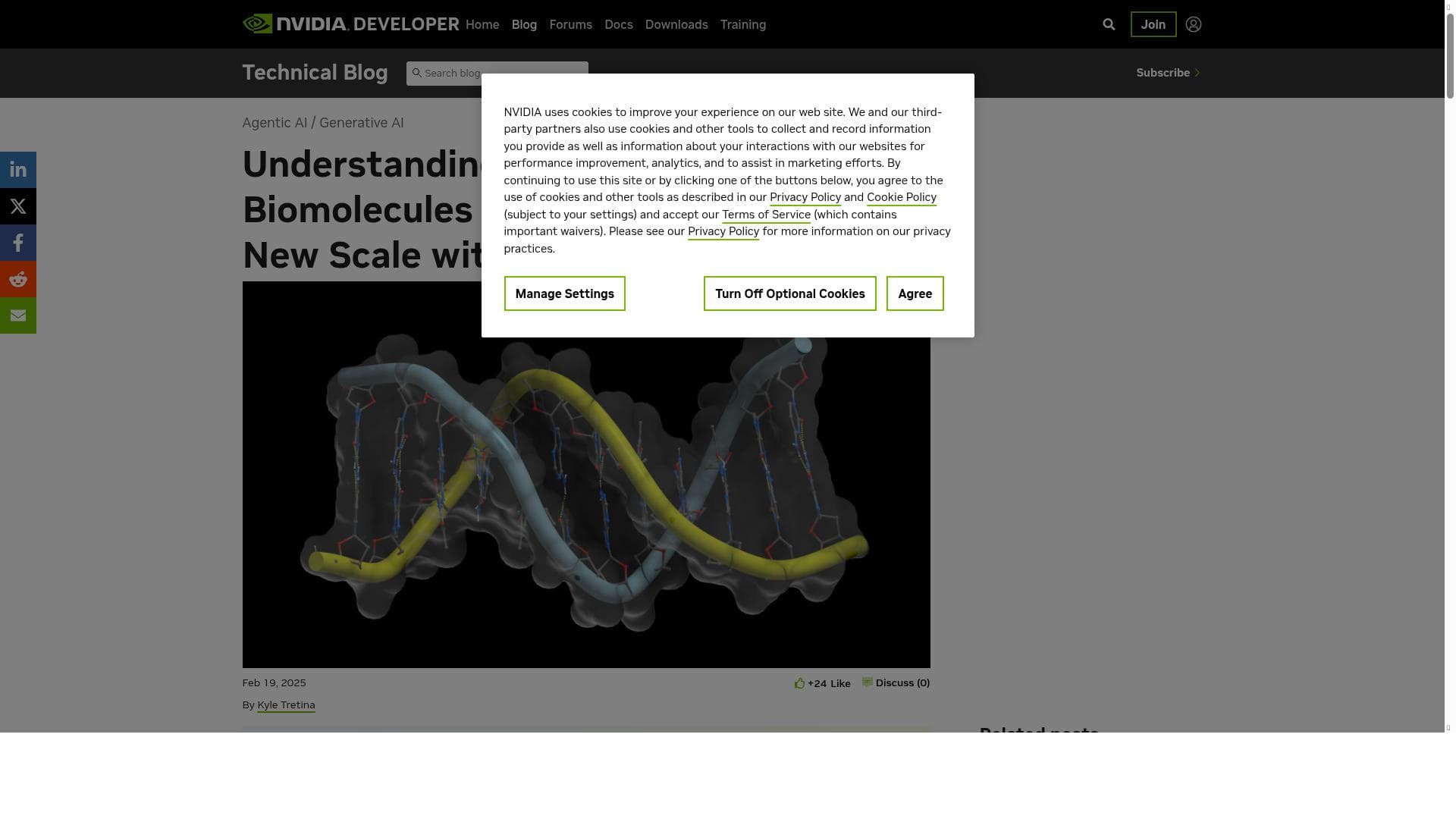
Evo 2 is an advanced biomolecular AI model developed to provide comprehensive insights into the sequences and structures of DNA, RNA, and proteins across a wide range of species. Its core purpose is to enable researchers and scientists to explore evolutionary patterns at an unprecedented scale, leveraging cutting-edge artificial intelligence to decode the complex language of life's biomolecules. By analyzing molecular data across evolutionary timelines, Evo 2 facilitates a deeper understanding of how biomolecules have evolved, diversified, and functioned in different organisms, thereby accelerating discoveries in molecular biology and related fields. At the heart of Evo 2's capabilities is its ability to analyze biomolecular sequences across evolutionary scales. This means it can process and interpret vast datasets of genetic and protein sequences from diverse species, identifying patterns and relationships that might be invisible to traditional analysis methods. The model uses sophisticated AI algorithms trained on extensive biological data, enabling it to predict structural and functional characteristics of biomolecules with high accuracy. Evo 2 also provides detailed insights into biomolecular structures, helping researchers visualize and understand the three-dimensional conformations that are critical for biological function. This structural insight is particularly valuable for drug discovery, protein engineering, and understanding disease mechanisms. Evo 2 is designed to facilitate the understanding of evolutionary patterns, making it a powerful tool for evolutionary biologists, geneticists, bioinformaticians, and molecular biologists. It supports research that aims to trace the lineage of genes and proteins, study evolutionary conservation and divergence, and explore the molecular basis of adaptation and speciation. Specific use cases include comparative genomics, protein structure prediction, functional annotation of genes, and evolutionary studies that require integration of large-scale sequence data with structural biology. One of the most attractive aspects of Evo 2 is its accessibility; it is offered free of charge, making it an excellent resource for academic institutions, research labs, and individual scientists who may have limited funding but require powerful computational tools. This free availability lowers the barrier to entry for cutting-edge biomolecular AI research and encourages widespread adoption across the scientific community. Compared to alternative biomolecular AI tools, Evo 2 stands out due to its focus on evolutionary scale analysis and its integration of sequence and structural insights. While other tools may specialize in either sequence analysis or structure prediction, Evo 2 combines these aspects, providing a more holistic view of biomolecular evolution. Its use of advanced AI models developed by NVIDIA ensures high performance and accuracy, leveraging state-of-the-art machine learning techniques that are continuously refined. However, as a specialized research tool, Evo 2 may require users to have a foundational understanding of molecular biology and bioinformatics to fully exploit its capabilities. Despite its strengths, Evo 2 has some considerations to keep in mind. Since it is a research-focused tool, it may not offer the same level of user-friendly interfaces or extensive customer support as commercial software. Additionally, while it is free, users might need access to compatible computational resources or platforms to run the model efficiently. Integration with existing bioinformatics pipelines may require some technical expertise. Nevertheless, for researchers committed to advancing molecular biology through AI, Evo 2 represents a powerful and accessible option that pushes the boundaries of biomolecular analysis and evolutionary research.

Description
Evo 2 is a cutting-edge biomolecular AI model that deciphers DNA, RNA, and protein sequences across evolutionary scales, delivering deep structural and functional insights. Ideal for molecular biologists and evolutionary researchers, it accelerates scientific discovery by combining advanced AI with comprehensive biomolecular analysis — all available for free.
Evo 2 is an advanced biomolecular AI model developed to provide comprehensive insights into the sequences and structures of DNA, RNA, and proteins across a wide range of species. Its core purpose is to enable researchers and scientists to explore evolutionary patterns at an unprecedented scale, leveraging cutting-edge artificial intelligence to decode the complex language of life's biomolecules. By analyzing molecular data across evolutionary timelines, Evo 2 facilitates a deeper understanding of how biomolecules have evolved, diversified, and functioned in different organisms, thereby accelerating discoveries in molecular biology and related fields. At the heart of Evo 2's capabilities is its ability to analyze biomolecular sequences across evolutionary scales. This means it can process and interpret vast datasets of genetic and protein sequences from diverse species, identifying patterns and relationships that might be invisible to traditional analysis methods. The model uses sophisticated AI algorithms trained on extensive biological data, enabling it to predict structural and functional characteristics of biomolecules with high accuracy. Evo 2 also provides detailed insights into biomolecular structures, helping researchers visualize and understand the three-dimensional conformations that are critical for biological function. This structural insight is particularly valuable for drug discovery, protein engineering, and understanding disease mechanisms. Evo 2 is designed to facilitate the understanding of evolutionary patterns, making it a powerful tool for evolutionary biologists, geneticists, bioinformaticians, and molecular biologists. It supports research that aims to trace the lineage of genes and proteins, study evolutionary conservation and divergence, and explore the molecular basis of adaptation and speciation. Specific use cases include comparative genomics, protein structure prediction, functional annotation of genes, and evolutionary studies that require integration of large-scale sequence data with structural biology. One of the most attractive aspects of Evo 2 is its accessibility; it is offered free of charge, making it an excellent resource for academic institutions, research labs, and individual scientists who may have limited funding but require powerful computational tools. This free availability lowers the barrier to entry for cutting-edge biomolecular AI research and encourages widespread adoption across the scientific community. Compared to alternative biomolecular AI tools, Evo 2 stands out due to its focus on evolutionary scale analysis and its integration of sequence and structural insights. While other tools may specialize in either sequence analysis or structure prediction, Evo 2 combines these aspects, providing a more holistic view of biomolecular evolution. Its use of advanced AI models developed by NVIDIA ensures high performance and accuracy, leveraging state-of-the-art machine learning techniques that are continuously refined. However, as a specialized research tool, Evo 2 may require users to have a foundational understanding of molecular biology and bioinformatics to fully exploit its capabilities. Despite its strengths, Evo 2 has some considerations to keep in mind. Since it is a research-focused tool, it may not offer the same level of user-friendly interfaces or extensive customer support as commercial software. Additionally, while it is free, users might need access to compatible computational resources or platforms to run the model efficiently. Integration with existing bioinformatics pipelines may require some technical expertise. Nevertheless, for researchers committed to advancing molecular biology through AI, Evo 2 represents a powerful and accessible option that pushes the boundaries of biomolecular analysis and evolutionary research.
Tool Features
- Analyzes biomolecular sequences across evolutionary scales
- Leverages advanced AI models for molecular biology research
- Facilitates understanding of evolutionary patterns
- Provides deep insights into biomolecular structures
- Accelerates scientific research in molecular biology
Frequently Asked Questions
What is Evo 2?
Evo 2 is an advanced biomolecular AI model designed to analyze DNA, RNA, and protein sequences across diverse species, providing insights into their evolutionary patterns and molecular structures.
How much does Evo 2 cost?
Evo 2 is available free of charge, making it accessible to researchers and institutions without any subscription or licensing fees.
Who is Evo 2 best for?
Evo 2 is best suited for molecular biologists, evolutionary biologists, geneticists, bioinformaticians, and researchers interested in understanding biomolecular evolution and structure.
What are the main features of Evo 2?
Key features include analysis of biomolecular sequences across evolutionary scales, leveraging advanced AI for molecular biology research, facilitating understanding of evolutionary patterns, providing deep insights into biomolecular structures, and accelerating scientific research.
Does Evo 2 offer a free trial?
Evo 2 is offered as a free tool, so there is no need for a trial period; users can access its capabilities without cost.
What integrations does Evo 2 support?
While specific integrations are not detailed, Evo 2 is designed to work with large-scale biomolecular data and can likely be incorporated into bioinformatics workflows with some technical setup.
How does Evo 2 work?
Evo 2 uses advanced AI models trained on extensive biomolecular data to analyze DNA, RNA, and protein sequences across species, identifying evolutionary patterns and predicting structural and functional characteristics.
Socials
Use ToolSponsored Tools






































Reviews
No reviews yet. Be the first to share your experience.