ChatGPT Deep Research
Description
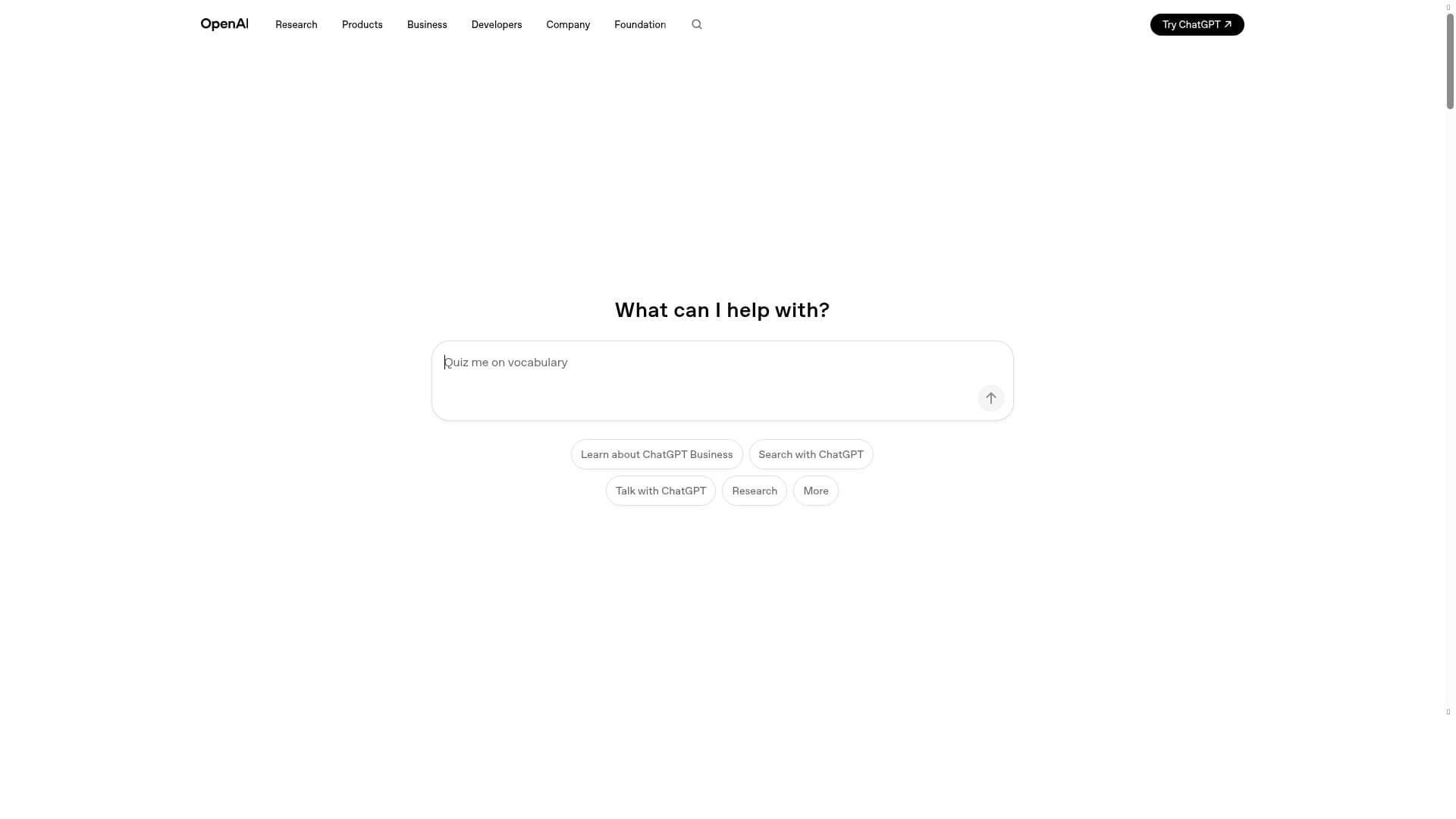
ChatGPT Deep Research leverages an optimized OpenAI o3 model to intelligently browse and analyze text, images, and PDFs across the web, delivering deep, multi-format research capabilities. Ideal for researchers, analysts, and developers, it combines advanced AI reasoning with versatile application support to transform complex data into actionable insights.
ChatGPT Deep Research is an advanced AI tool powered by a specialized version of OpenAI's o3 model, uniquely optimized for web browsing and Python-based analysis. Its core purpose is to facilitate intelligent, extensive research by dynamically accessing and reasoning over diverse content types including text, images, and PDFs from across the internet. This capability allows users to conduct deep, multi-format investigations with AI assistance, making it a powerful resource for complex information gathering and analysis tasks. By leveraging the latest advancements in AI reasoning and natural language understanding, ChatGPT Deep Research transforms raw data from the web into actionable insights, enabling users to explore topics with unprecedented depth and accuracy. The tool boasts several key features that distinguish it in the AI research landscape. First, its advanced AI model development foundation ensures high-quality, context-aware responses that go beyond simple keyword matching. The natural language processing capabilities enable it to understand nuanced queries and generate coherent, relevant outputs. Additionally, it supports AI research and deployment workflows, making it suitable not only for end-users but also for developers and researchers seeking to build or integrate AI functionalities. Its general-purpose AI tools cover a broad spectrum of applications, from data extraction and summarization to complex reasoning tasks. Moreover, ChatGPT Deep Research supports various AI applications, allowing seamless integration into diverse workflows that require intelligent data processing and interpretation. This tool is best suited for professionals and organizations that require comprehensive research capabilities. Academics, data scientists, market analysts, and content creators can benefit from its ability to sift through large volumes of heterogeneous data efficiently. For example, researchers can use it to analyze scientific papers and extract key findings, while market analysts might leverage its image and PDF browsing capabilities to gather competitive intelligence. Developers and AI practitioners will appreciate its support for AI model development and deployment, enabling them to prototype and implement AI-driven solutions with ease. Its versatility makes it ideal for anyone needing to perform deep, multi-modal research without manually combing through countless sources. ChatGPT Deep Research operates on a freemium pricing model, offering basic access for free with optional premium features available through subscription. This approach allows users to explore the tool’s core functionalities at no cost, making it accessible to individuals and small teams. Premium plans typically provide enhanced capabilities such as faster processing, higher usage limits, and advanced analytical tools, catering to professional and enterprise needs. This tiered pricing ensures scalability and flexibility, accommodating a wide range of user requirements and budgets. Compared to alternative AI research tools, ChatGPT Deep Research stands out due to its integration of web browsing and Python analysis within a single AI framework. Many competitors focus solely on text-based AI or lack the ability to process multiple content formats simultaneously. Its reasoning-driven approach to browsing and analysis offers more intelligent and contextually relevant results than traditional search engines or simpler AI assistants. However, while it excels in versatility and depth, users should consider that its performance depends on internet connectivity and the quality of accessible online content. Additionally, as with any AI tool, there may be occasional inaccuracies or limitations in understanding highly specialized or ambiguous queries. Notable limitations include the reliance on external web content, which can vary in reliability and availability, potentially affecting the consistency of research outcomes. Users should critically evaluate AI-generated insights and corroborate findings with authoritative sources. Furthermore, while the tool supports multiple data formats, extremely large or encrypted files may pose challenges. Privacy and data security considerations are also important, especially when handling sensitive information during research. Overall, ChatGPT Deep Research offers a robust, intelligent platform for deep, multi-format research, but users should remain mindful of its operational context and inherent AI constraints.

Description
ChatGPT Deep Research leverages an optimized OpenAI o3 model to intelligently browse and analyze text, images, and PDFs across the web, delivering deep, multi-format research capabilities. Ideal for researchers, analysts, and developers, it combines advanced AI reasoning with versatile application support to transform complex data into actionable insights.
ChatGPT Deep Research is an advanced AI tool powered by a specialized version of OpenAI's o3 model, uniquely optimized for web browsing and Python-based analysis. Its core purpose is to facilitate intelligent, extensive research by dynamically accessing and reasoning over diverse content types including text, images, and PDFs from across the internet. This capability allows users to conduct deep, multi-format investigations with AI assistance, making it a powerful resource for complex information gathering and analysis tasks. By leveraging the latest advancements in AI reasoning and natural language understanding, ChatGPT Deep Research transforms raw data from the web into actionable insights, enabling users to explore topics with unprecedented depth and accuracy. The tool boasts several key features that distinguish it in the AI research landscape. First, its advanced AI model development foundation ensures high-quality, context-aware responses that go beyond simple keyword matching. The natural language processing capabilities enable it to understand nuanced queries and generate coherent, relevant outputs. Additionally, it supports AI research and deployment workflows, making it suitable not only for end-users but also for developers and researchers seeking to build or integrate AI functionalities. Its general-purpose AI tools cover a broad spectrum of applications, from data extraction and summarization to complex reasoning tasks. Moreover, ChatGPT Deep Research supports various AI applications, allowing seamless integration into diverse workflows that require intelligent data processing and interpretation. This tool is best suited for professionals and organizations that require comprehensive research capabilities. Academics, data scientists, market analysts, and content creators can benefit from its ability to sift through large volumes of heterogeneous data efficiently. For example, researchers can use it to analyze scientific papers and extract key findings, while market analysts might leverage its image and PDF browsing capabilities to gather competitive intelligence. Developers and AI practitioners will appreciate its support for AI model development and deployment, enabling them to prototype and implement AI-driven solutions with ease. Its versatility makes it ideal for anyone needing to perform deep, multi-modal research without manually combing through countless sources. ChatGPT Deep Research operates on a freemium pricing model, offering basic access for free with optional premium features available through subscription. This approach allows users to explore the tool’s core functionalities at no cost, making it accessible to individuals and small teams. Premium plans typically provide enhanced capabilities such as faster processing, higher usage limits, and advanced analytical tools, catering to professional and enterprise needs. This tiered pricing ensures scalability and flexibility, accommodating a wide range of user requirements and budgets. Compared to alternative AI research tools, ChatGPT Deep Research stands out due to its integration of web browsing and Python analysis within a single AI framework. Many competitors focus solely on text-based AI or lack the ability to process multiple content formats simultaneously. Its reasoning-driven approach to browsing and analysis offers more intelligent and contextually relevant results than traditional search engines or simpler AI assistants. However, while it excels in versatility and depth, users should consider that its performance depends on internet connectivity and the quality of accessible online content. Additionally, as with any AI tool, there may be occasional inaccuracies or limitations in understanding highly specialized or ambiguous queries. Notable limitations include the reliance on external web content, which can vary in reliability and availability, potentially affecting the consistency of research outcomes. Users should critically evaluate AI-generated insights and corroborate findings with authoritative sources. Furthermore, while the tool supports multiple data formats, extremely large or encrypted files may pose challenges. Privacy and data security considerations are also important, especially when handling sensitive information during research. Overall, ChatGPT Deep Research offers a robust, intelligent platform for deep, multi-format research, but users should remain mindful of its operational context and inherent AI constraints.
Tool Features
- Advanced AI model development
- Natural language processing capabilities
- AI research and deployment
- General-purpose AI tools
- Supports various AI applications
Frequently Asked Questions
What is ChatGPT Deep Research?
ChatGPT Deep Research is an AI-powered tool that uses an optimized version of OpenAI's o3 model to intelligently browse and analyze text, images, and PDFs from the internet, enabling deep and extensive research with advanced reasoning capabilities.
How much does ChatGPT Deep Research cost?
ChatGPT Deep Research offers a freemium pricing model, providing free access to basic features and premium subscription plans that unlock enhanced capabilities such as faster processing, higher usage limits, and advanced analytical tools.
Who is ChatGPT Deep Research best for?
It is best suited for academics, data scientists, market analysts, content creators, and AI developers who need to perform comprehensive, multi-format research and leverage AI for data analysis and model deployment.
What are the main features of ChatGPT Deep Research?
Key features include advanced AI model development, natural language processing, AI research and deployment support, general-purpose AI tools, and the ability to browse and analyze text, images, and PDFs across the internet.
Does ChatGPT Deep Research offer a free trial?
Yes, the tool provides free access to its core functionalities under its freemium model, allowing users to try essential features without cost before opting for premium plans.
What integrations does ChatGPT Deep Research support?
While specific integrations are not detailed, ChatGPT Deep Research supports various AI applications and workflows, making it adaptable for integration into diverse research and development environments.
How does ChatGPT Deep Research work?
It works by using an optimized OpenAI o3 AI model to intelligently browse and reason over multiple content types—text, images, and PDFs—across the web, combining natural language processing and Python-based analysis to generate insightful research outputs.
Sponsored Tools




































Reviews
No reviews yet. Be the first to share your experience.