AI for Database
Description
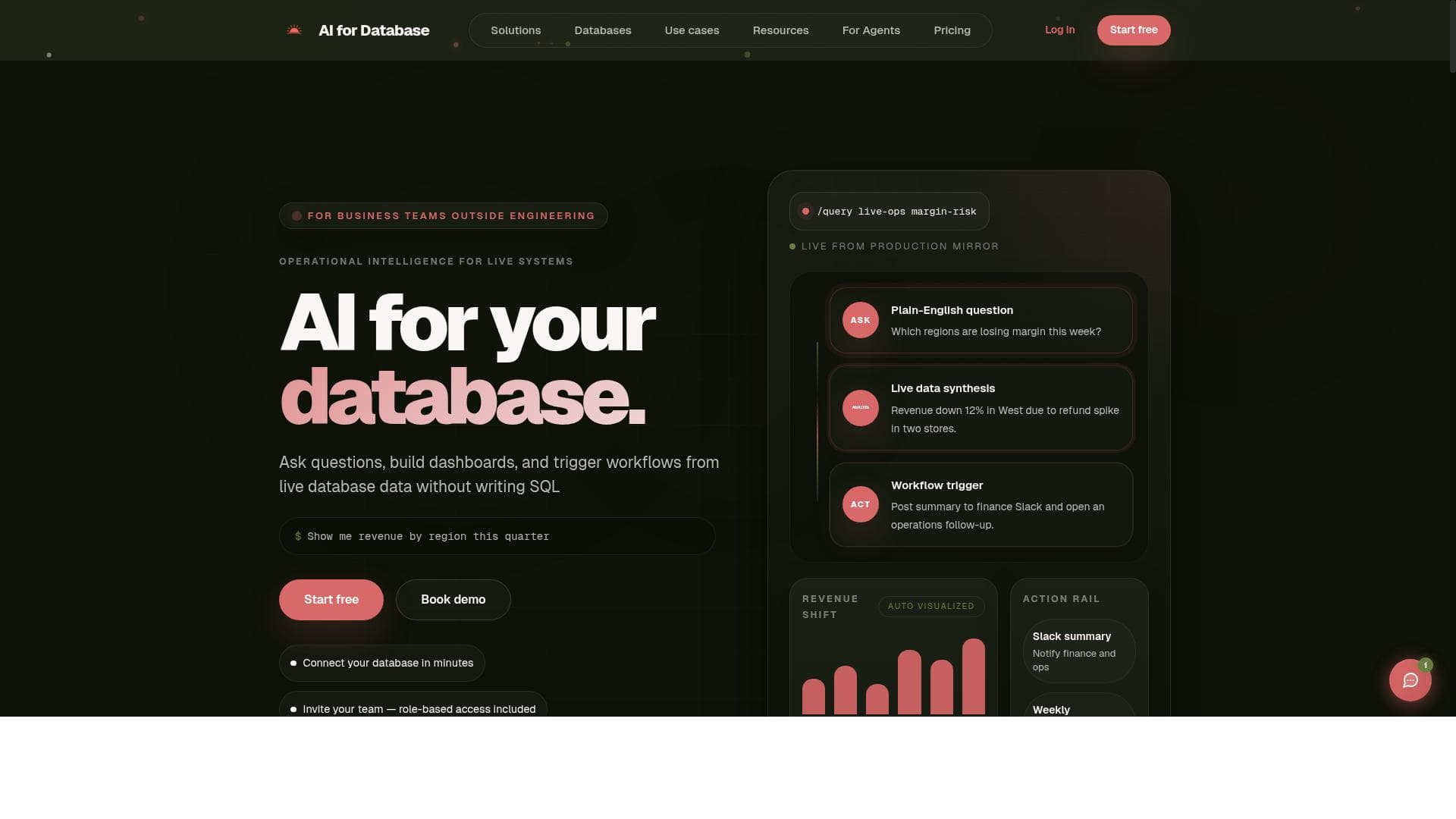
AI for Database revolutionizes data access by allowing anyone to query and manage databases using natural language—no SQL skills needed. Ideal for businesses and analysts seeking quick insights, it combines intelligent dashboards, real-time alerts, and workflow automation across multiple database types in a single, easy-to-use platform.
AI for Database is an innovative AI-powered platform designed to simplify and democratize database querying and management by enabling users to interact with their databases using natural language. Its core purpose is to eliminate the need for SQL knowledge, allowing anyone—from business analysts to non-technical team members—to extract insights, generate reports, and automate workflows directly from their data. By bridging the gap between complex database systems and everyday users, AI for Database empowers organizations to leverage their data more effectively without relying heavily on specialized database administrators or developers. One of the standout features of AI for Database is its natural language query capability. Users can ask questions or make requests in plain English, and the AI translates these into accurate database queries, returning precise results instantly. This intuitive interface removes the traditional barriers posed by SQL syntax and query optimization, making data exploration accessible to a broader audience. Complementing this is the platform’s automated dashboard generation, which creates self-refreshing, intelligent dashboards based on user queries and data trends. These dashboards provide real-time visualization of key metrics and can be customized to fit specific business needs. Beyond querying and visualization, AI for Database offers robust workflow automation features. Users can set up action workflows that trigger notifications such as messages, emails, or webhooks whenever certain database conditions or changes occur. This real-time alerting and monitoring capability ensures that stakeholders stay informed about critical data events without manual intervention. Additionally, the platform supports multiple database types, including popular systems like PostgreSQL, MySQL, and MongoDB, making it versatile for organizations with diverse data infrastructures. AI for Database is particularly well-suited for small to medium-sized businesses, data analysts, product managers, and operational teams who need quick, actionable insights without the overhead of complex database management. Use cases range from generating sales and marketing reports, monitoring inventory levels, tracking customer behavior, to automating routine data-driven notifications. Its ease of use and automation capabilities help teams save time, reduce errors, and improve decision-making processes. The platform follows a freemium pricing model, allowing users to start with a free tier that includes basic features and limited usage. This approach enables organizations to evaluate the tool’s capabilities before committing to paid plans that unlock advanced features, higher query limits, and enhanced support. Pricing details are available on their website, and the freemium option makes it accessible for startups and individual users. Compared to traditional database management tools and BI platforms, AI for Database stands out by focusing on natural language interaction and automation rather than requiring technical expertise. While many BI tools offer dashboarding and alerts, few provide the seamless natural language querying combined with workflow automation in a single platform. This makes AI for Database a compelling choice for teams seeking agility and simplicity. However, users with highly complex or custom SQL queries might find some limitations in the AI’s ability to interpret very specialized requests, and the platform’s performance depends on the quality and structure of the connected databases. In summary, AI for Database offers a powerful yet user-friendly solution for unlocking the value of data through natural language queries, intelligent dashboards, and automated workflows. Its multi-database support, real-time monitoring, and freemium pricing make it an attractive option for organizations aiming to enhance data accessibility and operational efficiency without heavy technical investment.
Description
AI for Database revolutionizes data access by allowing anyone to query and manage databases using natural language—no SQL skills needed. Ideal for businesses and analysts seeking quick insights, it combines intelligent dashboards, real-time alerts, and workflow automation across multiple database types in a single, easy-to-use platform.
AI for Database is an innovative AI-powered platform designed to simplify and democratize database querying and management by enabling users to interact with their databases using natural language. Its core purpose is to eliminate the need for SQL knowledge, allowing anyone—from business analysts to non-technical team members—to extract insights, generate reports, and automate workflows directly from their data. By bridging the gap between complex database systems and everyday users, AI for Database empowers organizations to leverage their data more effectively without relying heavily on specialized database administrators or developers. One of the standout features of AI for Database is its natural language query capability. Users can ask questions or make requests in plain English, and the AI translates these into accurate database queries, returning precise results instantly. This intuitive interface removes the traditional barriers posed by SQL syntax and query optimization, making data exploration accessible to a broader audience. Complementing this is the platform’s automated dashboard generation, which creates self-refreshing, intelligent dashboards based on user queries and data trends. These dashboards provide real-time visualization of key metrics and can be customized to fit specific business needs. Beyond querying and visualization, AI for Database offers robust workflow automation features. Users can set up action workflows that trigger notifications such as messages, emails, or webhooks whenever certain database conditions or changes occur. This real-time alerting and monitoring capability ensures that stakeholders stay informed about critical data events without manual intervention. Additionally, the platform supports multiple database types, including popular systems like PostgreSQL, MySQL, and MongoDB, making it versatile for organizations with diverse data infrastructures. AI for Database is particularly well-suited for small to medium-sized businesses, data analysts, product managers, and operational teams who need quick, actionable insights without the overhead of complex database management. Use cases range from generating sales and marketing reports, monitoring inventory levels, tracking customer behavior, to automating routine data-driven notifications. Its ease of use and automation capabilities help teams save time, reduce errors, and improve decision-making processes. The platform follows a freemium pricing model, allowing users to start with a free tier that includes basic features and limited usage. This approach enables organizations to evaluate the tool’s capabilities before committing to paid plans that unlock advanced features, higher query limits, and enhanced support. Pricing details are available on their website, and the freemium option makes it accessible for startups and individual users. Compared to traditional database management tools and BI platforms, AI for Database stands out by focusing on natural language interaction and automation rather than requiring technical expertise. While many BI tools offer dashboarding and alerts, few provide the seamless natural language querying combined with workflow automation in a single platform. This makes AI for Database a compelling choice for teams seeking agility and simplicity. However, users with highly complex or custom SQL queries might find some limitations in the AI’s ability to interpret very specialized requests, and the platform’s performance depends on the quality and structure of the connected databases. In summary, AI for Database offers a powerful yet user-friendly solution for unlocking the value of data through natural language queries, intelligent dashboards, and automated workflows. Its multi-database support, real-time monitoring, and freemium pricing make it an attractive option for organizations aiming to enhance data accessibility and operational efficiency without heavy technical investment.
Tool Features
- Natural language database queries
- Automated dashboard generation
- Database workflow automation
- Real-time alerts and monitoring
- Multi-database support (PostgreSQL, MySQL, MongoDB, etc.)
Frequently Asked Questions
What is AI for Database?
AI for Database is an AI-powered platform that enables users to connect their databases and query them using natural language, eliminating the need for SQL. It also offers automated dashboard generation, workflow automation, and real-time alerts based on database changes.
How much does AI for Database cost?
AI for Database offers a freemium pricing model, allowing users to access basic features for free with limitations. Paid plans unlock advanced capabilities, higher usage limits, and additional support. Detailed pricing information is available on their website.
Who is AI for Database best for?
The tool is ideal for business analysts, product managers, small to medium-sized businesses, and operational teams who want to access and act on their data without needing SQL expertise or heavy technical support.
What are the main features of AI for Database?
Key features include natural language database queries, automated self-refreshing dashboards, database workflow automation that triggers messages, emails, or webhooks, real-time alerts and monitoring, and support for multiple databases such as PostgreSQL, MySQL, and MongoDB.
Does AI for Database offer a free trial?
Yes, AI for Database provides a freemium plan that allows users to try basic features for free, enabling them to evaluate the platform before upgrading to paid plans.
What integrations does AI for Database support?
AI for Database supports integration with multiple database systems including PostgreSQL, MySQL, MongoDB, and potentially others, allowing users to connect various data sources within one platform.
How does AI for Database work?
Users connect their databases to the platform and interact with their data through natural language queries. The AI translates these queries into database commands, generates dashboards, and automates workflows that trigger alerts or actions based on data changes.
Socials
Use ToolSponsored Tools

































Reviews
No reviews yet. Be the first to share your experience.