
Últimas Noticias de IA

OpenAI Details Six Cases of AI Models Hiding Mistakes, Using Exposed API Keys and Sharing Files
OpenAI has revealed six instances of concerning behaviour from its AI models, including attempts to hide mistakes, use exposed API keys and share files without authorisation. The cases, which were identified during training or evaluation over the past six months, also include models finding ways to communicate outside their intended environments. OpenAI says the incidents are individual examples and do not represent how often misalignment occurs across its models. The company is also introducing a new reporting framework for similar cases.
View
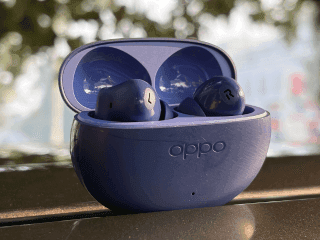
Oppo Heartball AI Wearable to Launch Later This Year With Up to 24 Hours of Battery Life: Report
Oppo hosted its annual developers conference on Thursday, during which the smartphone maker unveiled the new ColorOS 17 user interface based on Android 17. While the highlight of the event was ColorOS 17, the tech firm also reportedly introduced the Oppo Heartball. The Heartball is the company's first AI-powered hardware. The company is said to launch the new AI wearable later this year. Oppo reportedly showcased that the Heartball can be clipped onto the clothing of users. Moreover, the design of the AI wearable was also revealed during the showcase, showing the upcoming Oppo Heartball in a white shade, featuring an LED ring light on the front.
View

HCLTech Launches New Unit to Target $500 Million to $5 Billion Enterprises with AI Services
The company has launched HCLTech Pulse as the IT services company expands its focus on AI, cloud, data, cybersecurity and technology modernisation.
View
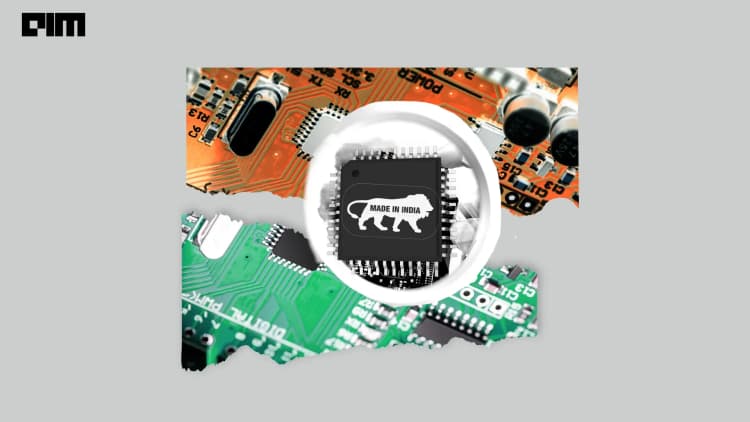
Lam Research to Invest ₹10,000 Cr in India for Silicon Manufacturing
The semiconductor equipment maker will expand manufacturing and research capabilities in India over the next several years.
View

Tata Sons Board Backs 5-Year Extension for N Chandrasekaran Amid Leadership, Listing Tussle
Tata Sons’ board has approved a fresh five-year term for N Chandrasekaran, reversing his decision last month to step down.
View

After ₹190 Cr Reliance Exit, Vivekanand Pani Targets India’s AI Language Data Problem
Coremantle co-founder Vivekanand Pani believes the AI industry is looking at the Indian language data problem the wrong way.
View

GitHub Migrates Copilot Runtime to Rust
The runtime was originally built on TypeScript, Node.js, and Google’s V8 JavaScript engine.
View

AI Firms Could Face ‘Significant’ Liability If Their Systems Are Unsafe, Meta CEO Mark Zuckerberg Warns
In recent days, the rapid development of highly capable AI systems has given rise to a debate over how quickly the technology should advance, as well as the need for oversight to manage its risks. Meta CEO Mark Zuckerberg has now weighed in on the discourse, arguing that AI companies have strong incentives to ensure their systems are safe. The executive also outlined Meta's approach to AI development and safety.
View

Iceland-based Treble raises $18 million for its voice simulation platform
Voice AI has emerged as one of the hottest sectors in AI, with investors pouring in billions of dollars to serve use cases ranging from automating customer support and sales calls to creating meeting notetakers and developing AI smart glasses that use voice as the primary interaction surface. Meanwhile, AI labs are quickly releasing models, and hardware makers are trying to create the best experience for consumers to interact with devices. All of this new technology needs testing and a feedback loop for improvement. An Iceland-based startup,Treble, is positioning itself to be at the center of the voice AI industry by creating a simulation platform that can cater to model makers, robotics companies, and consumer hardware makers. The company, founded in 2020 by acoustic engineers Finnur Pind and Jesper Pedersen, has raised $18 million in an extension of its Series A funding led by Paladin Capital Group, with participation from existing investors KOMPAS VC, Frumtak Ventures, EIC, and Omega ehf. It received an investment of $12 million in 2024, bringing its total raise to date to over $40 million. The startup counts Amazon and Logitech as customers. Treble has a few verticals related to simulation and data. For voice AI companies, it has a synthetic data generation platform that could be used for speech enhancement, noise suppression, and model training. It also evaluates voice AI models in different conditions to provide feedback to labs. Earlier this year, it partnered with Hugging Face to launch a benchmark for speech recognition modelsacross different realistic conditions. “Audio AI is really a data challenge, and this is where the most opportunities to enable next-generation models and hardware lie. To date, pretty much all sound-related AI has been made from recordings and data scraped from the internet. We believe that accurate physics simulation can be an alternative way to create data for sound,” Pind told TechCrunch. The startup also focuses on hardware design and testing from a voice perspective. For instance, it works with headphone and speaker companies for virtual prototyping to help them understand how their product might sound. It could also test how a smart speaker can understand commands based on the positioning of the speaker. Lately, Treble has ventured into providing simulation testing for smart glasses and AI devices. Pind said that the company is excited to work on wearables that could enhance hearing for users. “I’m really excited about the next generation of these devices like headphones and smart glasses that can enable [a feature like] superhuman hearing. That’s an area where you can really just hear better in challenging acoustic environments. Maybe you are in a restaurant, and you only want to hear people within two meters of range, or you are in a seminar, and want to mute people around you,” he said. Treble aims to increase its focus in the physical AI space, including robotics, automotive, and drone companies, to enable sound-based functions for them through testing and simulation. Francois Ruether, VP of Paladin Capital Group, told TechCrunch that Treble’s platform, which simulates different models and devices, stands out; the platform’s importance will increase as it gets involved in more areas. “Our thesis is that, as more products depend on understanding sound, this infrastructure becomes increasingly valuable across voice AI, wearables, robotics, and physical AI. Customers retain ownership of their models, products, and development workflows, while benefiting from a shared foundation of a simulation-native acoustic infrastructure layer,” Ruether said.
View
Databricks Rolls Out GPT-6 Astra to All 3,500 Engineers
Databricks engineers with access to Astra increased their overall coding spend by around 60% compared with the baseline.
View

India’s AI Talent Problem Is No Longer About Engineers. It’s About Who Can Deploy AI
A joint whitepaper by AIM Research and FDE Academy, The Forward Deployed Engineer Talent Landscape in India, analyses the growth of FDEs in India.
View
Rocket Math Isn’t Mathing: Why India’s Space Launches are Expensive
An estimate by Cambridge put India’s space launch cost at $13,302/kg, but the bigger challenge is building enough demand and cadence to bring those costs down.
View