
Últimas Noticias de IA
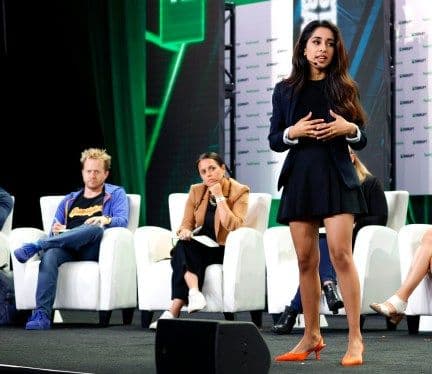
Meet the next wave of VCs judging Startup Battlefield 200 at TechCrunch Disrupt 2026
For founders, Startup Battlefield 200 is one of the biggest moments of their careers. For everyone else in theTechCrunch Disrupt 2026audience, it’s one of the best ways to learn how great companies are actually evaluated by VCs. This startup pitch competition is as intense as you’d expect. From October 13–15 at San Francisco’s Moscone West, every hand-picked founder has six minutes to make their case, but the most revealing moments often come after the presentation ends. That’s when the judges start asking the questions every investor, customer, and future employee will eventually want answered. Can this team execute? Is the market big enough? Why now? What’s defensible? Those conversations are as valuable for the thousands of founders watching from the audience as they are for the companies on stage. That’s why we’re continuing to build one of the strongest judging panels in Startup Battlefield’s history. Today we’re excited to introduce another group of five top-tier investors who’ll help identify the companies with the potential to become tomorrow’s breakout success stories. Join the Startup Battlefield contenders and VC judges on the main stage, alongside 10,000+ tech leaders attending Disrupt, and watch the next generation of startups compete for their place in TechCrunch history.Register now to save up to $200on your pass before prices increase on September 25 at 11:59 p.m. PT. Without further ado, meet the next batch of investors who will judge which early-stage founder walks away with the $100,000 prize. Get to know these judges, along with the first 10 already announced on theDisrupt agenda. Vaibhav ‘Dr.V’ Agrawal, Co-Founder and General Partner, ODDBIRD VC Dr.Vis the co-founder and general partner ofODDBIRD VC, a pre-seed fund he founded in 2024 to back AI companies reindustrializing the West — with a focus on health and bio, critical supply chains, and real-world automation. A trained physician with an MBBS degree, Agrawal also holds an MBA from Stanford and previously served as a General Partner at Lightspeed Venture Partners India, where he backed early-stage startups beginning in 2016. His current portfolio includes Anterior, a healthcare AI company that has raised $64 million from NEA and Sequoia. Anu Bharadwaj, Partner, ICONIQ Growth Anu Bharadwajis a partner atICONIQ Growth, where she focuses on enterprise software and AI companies. Before joining ICONIQ, Bharadwaj served as President and COO of Atlassian for nearly 12 years, where she led the product, engineering, and enterprise business across Jira, Confluence, and the Atlassian Cloud platform as the company scaled to billions in annual revenue. She previously held leadership roles at Microsoft and holds a B.Eng. in Computer Science from R.V. College of Engineering. Sho Sho Leigha Ho, Partner, General Catalyst Sho Sho Leigha Hois a partner onGeneral Catalyst‘s seed team, where she invests in early-stage founders. She serves as a board observer at Together AI. She joined General Catalyst in 2024 as its youngest partner. Her public investments include Graylark, Autoscience, Standard Kernel, and The Interaction Company of California (Poke), which Cognition acquired in July 2026. She holds an A.B. from Harvard and is based in San Francisco. Miloni Madan Presler, Partner, IVP Miloni Madan Presleris a partner atIVP(Institutional Venture Partners), where she partners with first-time founders building inflection-stage technology companies in enterprise software, healthcare, and security, from Series B through pre-IPO. She brings a disciplined growth equity and private equity perspective to company building, shaped by earlier roles at Summit Partners and Warburg Pincus. Presler holds a degree in Economics and Finance from Johns Hopkins University and speaks four languages. Aidan Madigan-Curtis, Partner, Eclipse Ventures Aidan Madigan-Curtisis a partner atEclipse Ventures, where she invests in AI, IoT, computer vision, and software solutions for manufacturing, logistics, supply chain, and climate transition. Named one of Business Insider’s 22 Investors to Know in Robotics and Physical AI, she leads Eclipse’s Carbon Optimization framework to track real emissions reductions across the firm’s portfolio. Before venture, Madigan-Curtis was a senior executive at Apple — scaling Apple Watch manufacturing from zero to millions of units per week — and then VP and General Manager at Samsara, where she helped grow the company from pre-revenue to over $1 billion in ARR. She holds a BA from Harvard University and an MBA from Stanford University. TechCrunch Disrupt 2026is happening October 13-15 in San Francisco, bringing 10,000+ tech leaders, VCs, and founders together to meet the next generation of breakout startups, connect with the leaders who could change their startup’s trajectory, and get a front-row seat to where the industry is headed.Save up to $200 on your ticketbefore rates increase on September 25 at 11:59 p.m. PT. Save an additional 30% when youregister as a group.
View
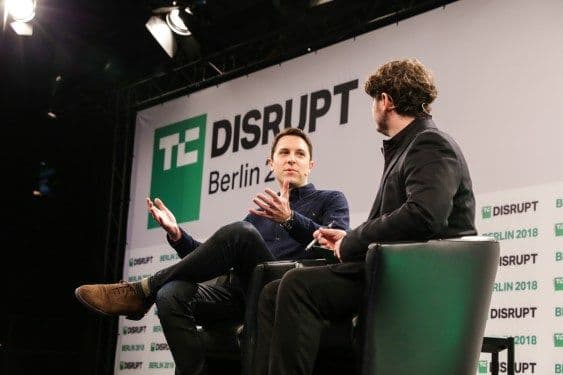
From first users to billions: Google’s Robby Stein joins TechCrunch Disrupt 2026
Getting people to try your first product is one challenge. Changing a product that billions of people already rely on is another. The ambition is still to move fast, test ideas, and build something better. But when every update carries consequences at a global scale, the instincts that helped you get started may need an update of their own. That tension is at the center of the Builders Stage session “From MVP to Billions of Users: How Product Decisions Must Change at Scale,” a fireside chat atTechCrunch Disrupt 2026. Led by Robby Stein, vice president of product for Google Search, this session explores how product teams balance speed with trust, and innovation with reliability, when their decisions affect billions of users. Disrupt returns to Moscone West in San Francisco, October 13-15, bringing together 10,000+ startups, investors, and tech decision-makers. Hear how product decision-making evolves as the stakes get higher —register for your ticket now to save up to $200 before prices increase on September 25 at 11:59 p.m. PT. Save up to 30% more if you grab group passes for four or more. How do you keep experimenting when users expect your product to work every time? How do you introduce something new without undermining what people already value? And which early-stage instincts should you hold on to as your company grows? Robby Stein’s session tackles the shift from building a first minimum viable product to making decisions inside one of the world’s largest product organizations. The conversation focuses on what changes when moving, while maintaining trust and delivering a reliable experience. For founders, the value isn’t in copying Google’s processes. It’s in examining the decisions behind them: where speed creates an advantage, where greater care becomes essential, and how to recognize when the way you build needs to evolve alongside the product. Learn these valuable insights from Stein, and250+ other speakersacross200+ sessions, by registering for your pass.Register now to save up to $200before prices increase on September 25 at 11:59 p.m. PT. Stein’s experience isn’t limited to working inside a technology giant. He co-founded and led Stamped, a social recommendations startup acquired by Yahoo, and later spent five years leading consumer products at Instagram. There, he helped build and scale the products and teams behind Stories, Feed, Direct Messaging, and Reels. Before returning to Google in 2024, he was head of product at Artifact, an AI-powered newsfeed. That career brings both the founder’s perspective and the experience of developing widely used consumer products to the conversation. For anyone working through the transition from an early product to a growing platform, it’s an opportunity to hear from someone whose work has spanned both environments. Register now to save up to $200 on your passbefore prices rise on September 25 and lean in on this session at Disrupt in October. Today, Stein works on generative AI products and experiences within Google Search. That places him at the intersection of introducing new technology and evolving how people find information. The scale is substantial. In May, Google reported that AI Mode had surpassed 1 billion monthly users, a year after its debut. Earlier this year, Stein also outlined updates that let people move from an AI Overview into a follow-up conversation in AI Mode, describing a search experience designed to accommodate both quick answers and deeper exploration. That work provides a timely backdrop to the session’s central question: How do you keep pushing a product forward without losing the qualities that make people depend on it? For founders introducing AI into their own products, it’s a useful way to think beyond what the technology can do and consider how people will actually experience it. Register nowto hear from one of the leaders making waves in the tech market, whose company has more than 1 billion users.Save up to $200 on your passbefore September 25. You don’t need a billion users for these questions to matter. Whether you’re refining your first product, expanding a growing platform, or rethinking an established experience, the next stage of growth is a reason to examine the decisions that got you this far. Join the conversation at Disrupt, then keep it going with founders, investors, and operators acrosssix industry stages, roundtables, breakouts, the Expo Hall, Startup Battlefield, and countless networking opportunities. Your product is evolving. Make sure your approach to building it evolves, too.Secure your pass to TechCrunch Disrupt 2026before September 25 at 11:59 p.m. PT to save up to $200. Save 30% more for groups of four or more.
View

Google’s $899 Googlebook is a bet that you’ll buy a new laptop for Gemini
After first unveiling its new AI-powered laptop, dubbed Googlebook,in May, Google on Monday said the new device is now available for pre-order for $899. Meant to offer a step up from traditional Chromebooks,Googlebooksrun on Android OS with a desktop version of the Chrome browser and other familiar ChromeOS elements. However, the real pull for the new devices is that they’ll prominently feature Gemini’s latest capabilities in a new format: the laptop. Google is trying to offer a laptop with unique features like an AI-powered cursor, vibe-coded widgets, and support for AI-enhanced dictation. The latter is a feature called Rambler, which cleans up messy, rambling brain dumps into readable text. The move is a bet that AI, specifically Google’s Gemini, could be enough of a draw to get people to buy a new laptop that bakes in AI instead of running them via desktop apps you install or access through the browser. In addition, the devices could eventually replace Chromebooks, bringing millions of former Chromebook customers to Gemini AI. On the Googlebook, Google is trying to reinvent the “point-and-click” experience of desktop computing to now include an AI element: the cursor serves as a conduit to Gemini. The company suggests various ways this could be used, like highlighting content on a webpage for Gemini to work with, asking Gemini to see if an email you’ve hovered your cursor over is suspicious, or selecting images and then asking Gemini to visualize them together. In practice, this feature isn’t very different from Android’s “Circle to Search,” which allows smartphone owners to use gestures like circling, highlighting, or tapping to connect with Google Search, which of course, also includes AI. While it’s a clever way to take advantage of the ways people use their phones, Circle to Search on its own didn’t inspire a mass exodus to Android. Similarly, Magic Cursor, as the AI pointer is called, won’t likely be a main selling point for the Googlebook, especially now that we have AI agents that can take over your computer and browser to do tasks for you. Google’s Rambler, however, may be one of the best of the AI features in this upgrade, as it meets a surprisingly useful need. However, this, too, isn’t enough reason to buy a new device, as it feels more like a feature that’s nice to have than a necessity. Vibe-coding widgets are a minor addition, as well. Other Googlebook features, like Gemini Spark and Gemini Live, also don’t require special, new hardware. What’s more interesting about the Googlebook is how it’s seemingly part of Google’s longer-term plan to capture a large part of the K-12 market that currently relies on Chromebooks, and push them towards the company’s Gemini AI. There are somewherearound 50 million Chromebooksin schools, used by students and educators, Google has said. In May, thecompany told TechCrunchthat its current Chromebooks would continue to be supported, though many would become eligible to transition to the new Googlebook experience in the future. The $899 device will include 12 months of Google AI Pro, which gives you 5TB of cloud storage, Gemini Advanced tools, and 3 months of YouTube Premium, Adobe Photoshop and more. The devices will receive regular updates for up to 10 years, Google said. Googlebook pre-ordersare open now on the Google Store, Best Buy, and other retailers. Devices will hit shelves on October 4 in the U.S., and October 5 in Canada, the U.K., Ireland, France, Germany, and Australia. Flagship devicesin the new range are being built by Acer, ASUS, Dell, HP and Lenovo, with materials like aluminum, magnesium alloy and carbon fiber. They feature up to 2.8K OLED displays, haptic glass trackpads, and backlit keyboards. Under the hood, they’ll run on processors from Intel and Qualcomm paired with dedicated NPUs. Google says the device will offer up to 14 hours of battery life.
View
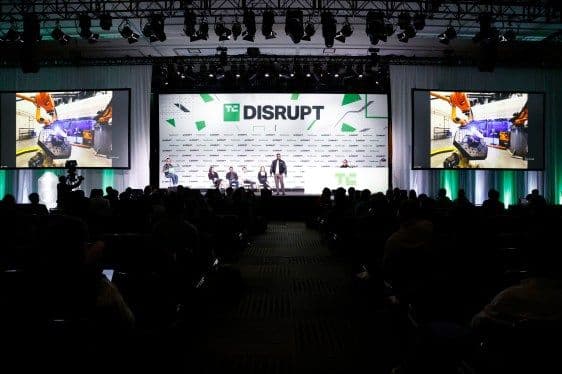
Where will the next breakout startup come from? Benchmark’s full partnership weighs in at TechCrunch Disrupt 2026
What does one of Silicon Valley’s most successful venture firms think founders are getting wrong? AtTechCrunch Disrupt 2026, we’re putting all five Benchmark general partners on one stage to find out. Jack Altman, Peter Fenton, Chetan Puttagunta, Everett Randle, and Eric Vishria will come together for the Disrupt Stage session “What We Believe Now.” This is the first time the entire current Benchmark partnership has appeared together on the Disrupt Stage in San Francisco. Rather than another conversation about where venture capital has been, the focus is on where it goes next: where the next generation of startups will come from, which assumptions founders should reconsider, and which opportunities the partners believe are still hiding in plain sight. And 2026 is an especially interesting year to ask them. Benchmark has spent decades building a reputation around concentrated early-stage investing. This year, it made one of the biggest changes in its own playbook — raising approximately $2 billion across a $750 million flagship fund and its first $1.25 billion growth fund. The market changed. Benchmark changed with it. Now we want to know what the firm thinks will happen next. Sit front and center to get tomorrow’s venture insights at Disrupt.Register now to save up to $200before prices increase on September 25 at 11:59 p.m. PT.Save an additional 30%on group passes for four or more. AI has reshaped the venture market with extraordinary speed. According to the OECD, AI companies captured 61% of global venture capital investment in 2025 — $258.7 billion of $427.1 billion invested overall. Yet that capital was far from evenly distributed: deals worth more than $100 million represented roughly 73% of total AI investment value. That creates a strange environment for founders. There is huge appetite for technology businesses, alongside growing competition for a relatively small number of companies investors believe can become category leaders. Is the next billion-dollar company another AI application, or is the application layer already overcrowded? Does defensibility sit in models, infrastructure, proprietary data or distribution? Are some of the best businesses being overlooked because everyone is chasing the same themes? And when founders can build products faster than ever, what actually makes one company investable? There probably won’t be complete agreement onstage. That’s the point. Hear this complex discussion among five VC heavyweights on the Disrupt Stage.Register now to save up to $200before prices increase on September 25. Benchmark’s partnership brings together experience from founding companies, backing enterprise software, investing in frontier technology, and helping businesses navigate IPOs and acquisitions. Jack Altmanjoined Benchmark this year after founding Lattice and subsequently building his own venture firm, Alt Capital. Before Altman joined Benchmark, Alt Capital had raised $425 million across its early-stage investing activities. His path gives the discussion an unusually direct founder-to-investor perspective. Peter Fentonbrings one of venture’s longest track records. His investments span consumer and enterprise companies, including current AI bets such as Sierra, Digits and Sema4.ai. He has served as a director through seven successful IPOs, including Twitter, Elastic, New Relic, Zendesk and Yelp. Chetan Puttaguntafocuses on early-stage enterprise software and has backed companies including MongoDB, MuleSoft, Elastic, Modern Treasury, Legora and Stytch. Everett Randlebrings experience investing across stages and categories, with investments that include Anthropic, SpaceX, Rippling, Flock Safety, Gumloop and Chainguard. AndEric Vishriafocuses on early-stage infrastructure and enterprise software, with investments including Amplitude, Confluent, Fireworks.ai and Cerebras Systems. Before becoming an investor, he was himself a startup CEO, co-founding RockMelt before its acquisition by Yahoo. Put those perspectives together andthis session, “What We Believe Now,”becomes less about a single Benchmark thesis and more about how experienced investors disagree, update their assumptions, and decide where conviction is warranted. Hear this session live in October andsave up to $200when you register before prices rise on September 25. Cerebras is a useful example.Vishria recently told TechCrunchthat he almost didn’t take his first meeting with the AI chip startup in 2016. Hardware was outside Benchmark’s comfort zone, and what Cerebras wanted to build looked extraordinarily difficult. By the third slide, he had changed his mind. Benchmark went on to co-lead the company’s $25 million Series A. A decade later, Cerebras went public, with Benchmark holding a 9.5% stake at the IPO. That story encapsulates something important about venture investing. The best opportunity does not always arrive looking like the consensus winner. Sometimes it challenges the investor’s existing thesis. Sometimes the technology is too early. Sometimes the market does not obviously exist yet. And sometimes knowing when to change your mind is more valuable than being right from the beginning. Expect that kind of thinking to surface on the Disrupt Stage. Register before September 25 to save up to $200 on your pass.Prices will increase after. For founders, there may be no more useful part of the session than hearing what Benchmark believes entrepreneurs are currently misreading. Not because Benchmark is automatically right, but because understanding how sophisticated investors assess markets, teams, and opportunities gives founders another way to interrogate their own assumptions. Investors can compare those frameworks with their own. LoB leaders can see which shifts venture firms believe are durable enough to shape the companies they work for – and where capital may flow next. For students, aspiring founders, and anyone simply trying to understand where technology is heading, it’s a rare opportunity to hear five investors with very different experiences work through their ideas in the same room. And those ideas matter well beyond the venture industry. Investment decisions are ultimately bets about which technologies, business models, and founders have the potential to shape the next decade. Register now to save up to $200before they increase on September 25, 11:59 p.m. PT. A lot can change in the world of tech in twelve months. AI capabilities move. Markets emerge. Categories disappear. Companies that looked inevitable suddenly don’t, while businesses few people were watching break through. Having a thesis matters. Knowing when to update it matters more. Join Jack Altman, Peter Fenton, Chetan Puttagunta, Everett Randle and Eric Vishria on the Disrupt Stage and hear what Benchmark believes now – and what might convince them to change their minds next. Disrupt 2026returns to San Francisco’s Moscone West, October 13–15, bringing together more than 10,000 founders, investors, operators and innovators across six stages, roundtables, breakouts, Startup Battlefield, theExpo Hall, and more. The next great company may already be being built. Find out where some of Silicon Valley’s most experienced investors are looking for it at TechCrunch Disrupt 2026.Register now to save up to $200before prices increase on September 25 at 11:59 p.m. PT.Save an additional 30%if you register with a group of four or more.
View

With Tabby, a former accountant is using AI to make accountants obsolete
In May of 2025, Ahad Ali was a successful accountant, overseeing a team of 20 people and handling more than 2,000 returns a year. “We did bookkeeping, accounting, sales tax, taxes, everything,” Ali says. It was a stable business, and one that would have been easy to stay in. But Ali started to notice something. His work was increasingly dictated by the frictions of accounting software, which was rarely designed with actual accountants in mind. He became frustrated with specific accounting software like QuickBooks, and soon he became frustrated with the entire idea of SaaS-based accounting. “I realized that small businesses don’t need better accounting software,” Ali told TechCrunch. “They need less accounting software. They need something that just does it for them.” Now, Ali is building just that. His product, Tabby, is designed to be a real-time bookkeeping interface, handling clients’ paperwork as it gives them up-to-the-minute data on their business’s profit and loss. Using Plaid to import live account data, Tabby uses AI to quickly build a real-time dashboard for a business’s financial health. There’s also a version of Tabby for accounting firms that want a smarter alternative to Quickbooks, but Ali’s goal is to go direct to the end user as often as possible. As Ali sees it, products like Tabby have a chance to automate away the work of bookkeeping once and for all, turning it into a monthly charge on the order of internet access or payroll services. If successful, it could seriously change the calculus of operating a small business. “You can say Quickbooks digitized bookkeeping,” Ali told TechCrunch, “but we want to make [that visible software layer] nonexistent.” So far, it seems to be working. Fourteen months in, Tabby has 5,500 small businesses using the platform, with roughly $100,000 in annual recurring revenue. The team is still just seven people — Ali, his technical co-founder, four engineers and a go-to-market specialist — and in the process of raising $1 million in pre-seed funding. When I spoke to Ali, his team was just preparing to launch Tabby Talk, a natural language interface for the product. There’s plenty of competition in the accounting space, particularly now that AI has shaken up the ___. Ali has his eyes focused on Quickbooks, which is still the biggest player — but he’ll also be facing well-funded startups likethe Sequoia-backed Rillet, as well as the major labs’own finance tools. It’s a daunting task, but Ali thinks that Tabby can carve out a niche by focusing on the same small-to-medium-sized firms that helped his accounting business thrive. “Everything we see is making us believe that there’s a path for other players, because the space is big,” Ali told TechCrunch. “There’s 30 million more businesses.” Learn more about Tabby and the other innovative startups involved in our prestigious Battlefield competition at TechCrunch Disrupt,happening October 13-15in downtown San Francisco.
View
Adobe Warns Indian Enterprises are Still Not Ready for AI Agents
According to Adobe’s India AI and Digital Trends research, 65% of Indian consumers already use AI for personalised product recommendations.
View

Google Gemini Reportedly Hacked Three Companies During Cybersecurity Test
Google Gemini AI model reportedly breached protected systems of three other companies in a cybersecurity test. The incidents reportedly occurred in May during an evaluation conducted by cybersecurity firm Irregular. Google reportedly confirmed the hacks last week. The incident is described as the first known breakout by the Gemini AI model. OpenAI and Anthropic also reported AI Security Incidents in recent months.
View

ISRO Lays Foundation For Advanced Radar Research Centre in Assam
The 67-acre facility at Chandrapur will track objects in orbit as part of India's Space Situational Awareness programme.
View

Starbucks to Set Up First India GCC in Chennai, Create 800 Tech Jobs
The Chennai centre will operate independently of Starbucks’ retail joint venture with Tata Consumer Products.
View
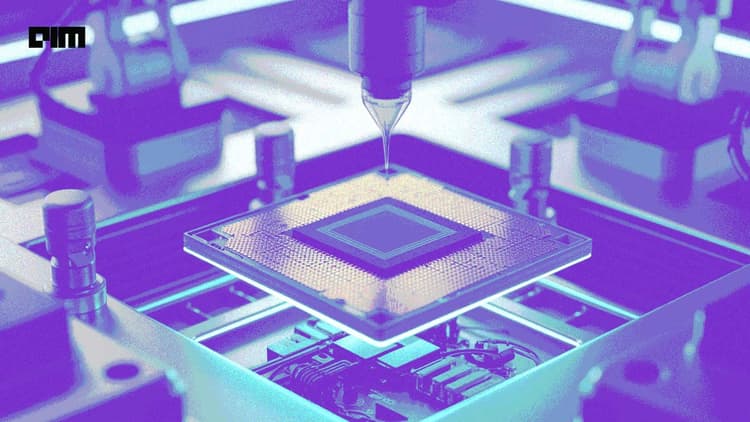
Semiconductor Startup Aheesa Unveils Vihaan-I Broadband Chip, Targets 2027 Commercialisation
Aheesa’s Vihaan-I chip is built on the open-standard RISC-V architecture and uses the indigenous VEGA processor developed by C-DAC.
View
Enterprise AI is Turning Model Choice Into a Routing Problem
As AI agents scale, enterprises are finding that one model cannot economically handle every request.
View

Hacktron Used Claude Opus 5 to Reach OpenAI Internal Repository
Security researchers said Claude helped them turn a libheif vulnerability into a working exploit that was later used to reach an OpenAI employee account and an internal repository.
View