Últimas Noticias de IA

Musk’s AI chatbot Grok reportedly encouraged Trump to capture Venezuela’s president
In December 2025, about a month before the U.S. invaded Venezuela and captured its president, Nicolás Maduro, President Trump had a secret meeting with Elon Musk,Timemagazine reports. This was roughly seven months after Muskleft his rolein the Trump administration at the Department of Government Efficiency (DOGE). During this meeting, Trump “spent hours” talking to Musk’s Grok chatbot, including asking how Venezuelans would respond to the capture of their president, a source told Time. Justa few months earlier,in September, Trump began ordering U.S. military strikes against Venezuelan boats that Trump alleged were involved in drug trafficking. People had apparently been turning to Grok asking about the boat strikes and political climate in Venezuela,as the Atlantic reportedat the time. So Grok told Trump that Maduro was a “deeply unpopular dictator and that many Venezuelans would likely celebrate his downfall,” Time reported. When such celebrationsindeed happened afterthe U.S. invaded on January 3, Trump apparently “came away thinking Grok was ingenious,” that source told Time. So perhaps it should come as no surprise that in June of this year, thePentagon’s head of AIsaid that the military used Gov Grok to deploy and strike targets during the Iran War. While Grok isn’t the only AI model serving the DoD (OpenAI also hasan agreementand Anthropic has been in aback-and-forthover how its models can be used for military intelligence and inmodern warfare), Grok may become an even bigger favorite under this administration. Earlier this week, the Pentagonannounced that Muskand Anduril’s Palmer Luckey have been tapped toco-lead a study about how advanced technologyis, and can be, used in battlefields.
View
Photon held a funeral for mobile apps. Now it has $4.5M to help replace them with agents.
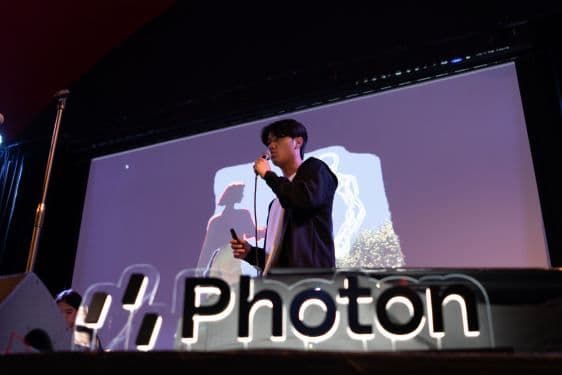
The AI startupPhotonis so sure that agents will eventually come to replace mobile apps that it held a funeral for the latter — yes, a real funeral in a church, with speeches and everything. Photon, which helps developers build agents that work over iMessage and WhatsApp, now has $4.5 million in seed funding to develop its products. The raise comes after the company signed up over 40,000 developers and grew its revenue 10x in just four months, it says. Photon co-founder and CEO Daniel Tian said the “app funeral,” held in San Francisco on September 17, was also a developer day for the startup, featuring panels from Vercel, Stripe, and OpenAI. It also included an actual coffin for app icons. The move to host an app funeral was obviously somewhat tongue-in-cheek, but Tian believes the app era is coming to an end. “Honestly, it’s going to take a while, but I think, directionally, it’s inevitable,” he said of the shift from apps to agents. The thesis behind the startup, as you may have guessed, is that users no longer want to install new apps. Instead, they want access to agents that work through the messaging apps they already use, like iMessage and WhatsApp. Meta’s Muse, whose app has soared to No. 1 on the app stores, is putting that theory to the test. But even if Muse comes to dominate the consumer AI space, Tian sees a market for serving developers who want their applications to work over messaging services. That’s why Photon is offering a package of tools, including a unified API, an extensible channel framework, a command-line interface (CLI), and an observability suite. Combined, they allow developers to build and operate an agent experience that works over iMessage, WhatsApp, Telegram, SMS or RCS, email, voice, and more. The idea for Photon emerged from the time co-founders Tian and Ryan Zhu, the CTO, spent building consumer apps as students, often at hackathons. Every time they finished a new app, they hit the same bottleneck: getting people to discover it. By building an agent that worked within iMessage, they realized they could reach people through an app those people already use every day: Apple’s Messages. Tian, for instance, had built a bot that would text his friends back as him over iMessage. When he and Zhu made the technology open source on GitHub, thousands of developers adopted it. So they went all in. Tian dropped out of UPenn’s M&T program, and Zhu left high school, later becoming a visiting student at MIT’s Media Lab. Today, the open source version of Photon still accounts for 98% of its use. This April, the founders decided to create a managed platform and sell access to it via subscription tiers. This hosted version of the product offers 99.95% uptime, which is much higher than what you’d get if you were just running the open source version on your local Mac for a hobby project. It’s also SOC 2 Type II and HIPAA-compliant, which opens the door to healthcare agent use cases. To date, the startup’s platform has attracted over 40,000 developer sign-ups and now includes paying clients. (Any usage beyond 10 users requires moving out of the free tier to one of the three paid tiers, we’re told.) The company isn’t sharing revenue figures but said that, in addition to the 10x revenue growth, it’s seeing less than 3% churn, and its messaging volume has grown by 5x in the last month alone. Customers using Photon include Corgi Insurance; social introductions app Boardy; Gen Z dating platform Ditto; business banking platform Rho; finance AI assistant Fliptexts; AI email client Slashy; and others building agents for fintech, consumer AI, and other vertical use cases. Photon’s technology integration partners also include companies such as Vercel (Eve and ChatSDK) and Nous Research, whose Hermes agent uses Photon as its default iMessage layer. Photon is also the layer under Tencent’s QClaw and NanoClaw. Plus, Photon has seen framework and infra integrations across LangChain, Mastra, Convex, Render, Railway, and Telnyx, among others. Vercel is also one of Photon’s new backers. The startup’s seed round was co-led by Gradient and A* with participation from Vercel, HongShan, Z Fellows, Llama Ventures, Karman, and other angel investors. Across both the hosted and open source versions, the technology reaches millions of end users, Tian estimated. While today, Photon focuses on agents connecting with humans, Tian believes there’s potential to grow into an expanding market that involves connecting agents to other agents. “I think, in the future, agents will be able to find you the agent that can do the right things — so it’s going to be the A-to-A communication layer,” Tian said. For instance, if a person was chatting with their AI assistant making travel plans, the agent could pull in other agents when needed, like a flight-booking agent or hotel-booking agent. “It’s been pretty powerful to observe the whole A-to-A-to-P [agent-to-agent-to-person] space,” he added.
View

Brian Chesky interview: AI agents need their own operating system
Airbnb rolled out its newAI-powered searchthis week as part of its fall update, a significant step for a company that has been slow and deliberate about AI. Co-founder and CEO Brian Chesky has said in the past that a chatbot-only interface isnot fit for travel discovery. With more AI on the way to the Airbnb app, I caught up with Chesky over Zoom to talk about how the company is approaching it, where interfaces are headed, why consumer AI still isn’t working, and what role voice will play. Chesky hasn’t changed his mind on chatbots. He said they aren’t good for browsing or shopping because they give you a few options at a time, and you have to take multiple turns before reaching a result. But he doesn’t see the current version of Airbnb’s search as the final form either: its interface will evolve over time. “I think that I’ve believed for a long time that a chatbot isn’t the right interface for e-commerce. I think what you’re seeing today is also not the endgame for e-commerce or for travel or shopping. I think that there’s going to be some interface that is, you know, I don’t want to call it a midpoint, but something between a chatbot and what you see in the first version we shipped,” he said. Continued Chesky: “You know, a lot of people want some things … to be fast and easy, like ‘Book me a flight, I don’t want to look at it.’ With Airbnb, they enjoy looking at the product. Travel studies show that people actually derive more pleasure in planning and anticipating travel than they do traveling. So you don’t want to take the inspiration and the browsing and the library experience of dreaming away.” Chesky sees a second problem with chatbots, which is that they are built for one person. He feels that they aren’t a collaborative interface, which matters for a product that people often use with family and friends. Over the next three to six months, the company’s task is to explore interfaces that enable “multiplayer” AI, meaning AI that several people, such as a group planning a trip together, can use at once. Airbnb isn’t the only one rethinking what an AI interface should look like. As AI tools evolve, new interfaces are also showing up in apps. Startups likeMonogramand, more recently,Wabiare experimenting with “generative” interfaces, which are screens an AI builds on-the-fly rather than ones a designer fixed in advance. Chesky thinks people will see a mix of deterministic (pre-designed and predictable) and generative interfaces. I asked Chesky how Airbnb is preparing for consumer AI agents, which are tools like Instinct and Muse that carry out tasks on a person’s behalf. Agents will need robust software infrastructure on Airbnb’s end, he said, and the company wants to make itself more agent-friendly. In his view, they could be good lead generators. “I don’t necessarily know if I believe in a world that there’s apps in the future, but I don’t believe in a world where the apps become data layers of a universal simple UI because when you open your iPhone, there is a reason Airbnb’s app is a different design than DoorDash, Shopify, and Amazon. Our interfaces should be adaptive to the utility and the function that we’re doing. We want to make our app more agentic, and we want to build a lot more user interface controls,” he said. “If I have an agent, but I also want like really great browse functionality, if I want to be able to message the host like an Airbnb, if I want to be able to compare, if I want to be able to verify my identity, if I want to be able to use a map feature, if I want to then be able to add other items, then if I want to stay in the platform, then either the agent has to do a handoff or the agent application would need to build a bit more of, I think, a robust software developer kit to bring the app to you, so to speak.” Chesky thinks that there were concerns around AI tools cutting companies like Airbnb out of the customer relationship, but he said that chatbots have proven to be good at lead generation. The Airbnb CEO is also planning for agent-to-agent interactions through the platform. He explained there might be some interactions within the platform and some with agents of other apps. His thesis is that apps have not always been interoperable unless companies struck a business deal. On the other hand, agents are like “apps with faces,” and when they talk to each other, all apps can become interoperable. “I think of the Airbnb app as one day becoming an agent, you know, where basically the explore tab has an agent, our customer service has an agent, we’re developing another agent in another service area. Probably eventually there’s going to be a macro Airbnb agent. And that will probably be interoperable with MCP [a standard that lets AI agents connect with other software] to other agents,” Chesky noted. Chesky argues the bigger problem is that the industry lacks a true operating system built for AI. Right now people are building AI apps for iOS, macOS, and Windows that are not “AI operating systems.” He thinks that in an ideal world, AI would be operable at the kernel level — the core of an operating system — and all components like agents would interact with each other. Right now, he said, the race is to be the “quarterback,” or primary AI agent that users go through for everything. “The problem with that model [of trying to become primary agent] is no one is developing a full operating system software developer kit. I’ll give you an example,” he continued. “ChatGPT, at the beginning of last year, tried to do their little app store. And I told Sam [Altman]: If you want to be an app store like the iPhone, you need to have a software developer kit and an operating system like the App Store. Otherwise, none of our functionality is going to exist. And of course, it didn’t work very well,” Chesky said. “I’ve used Airbnb on Muse and Instinct,” he went on. “And it doesn’t work very well. I mean, even hotels don’t work that well, but Airbnbs work even worse. So I don’t think we’ve cracked consumer AI. And for consumer AI to be cracked, we have to crack at a lower substrate, and we need to make the agents [into] apps; all apps need to become agents; all must be interoperable; and all must have much richer user interfaces.” Chesky thinks that there are two misconceptions in Silicon Valley: first, that the interface is going away and people will just talk and type; second, that software will be completely generative. His argument is that a designer can prompt better software than a consumer can. He also thinks that as long as the iPhone remains dominant and Apple and Google control the major platforms, apps will likely remain a central fixture. “It’s really up to Apple or Google, or somebody, to build a new platform for us to really make the true shift from apps to agents. Otherwise, we’re going to have apps that have agents inside them, rather than the whole app being a robust agent that’s interoperable with other agents,” he said. Before we wrapped up, I asked Chesky about voice, which is gaining ground as apps like Wispr Flow, Willow, and Superwhisper, a new wave of note-taking apps, and built-in dictation in AI tools get people talking to their devices more. He thinks people will eventually speak to computers more than they type. Voice, he said, will play a key part for Airbnb in search and customer service, and the company plans to roll out voice agents this fall to help users. The company has also been seeing big gains from using AI toship features faster, he volunteered. On a personal level, Chesky said AI has helped him get information faster, freeing him from so many meetings. “I think AI is reducing communication layers. One of my jobs as CEO is try to get information. And the way I used to get information was having meetings. Now, I can just ask my AI and I don’t need to have as many,” he said.
View

Shopify debuts Canvas, a way to build online stores by chatting with AI
Shopifyintroduceda new site-building tool Thursday called Canvas that lets merchants set up their Shopify store by chatting with AI. While Shopify already offered a fairly capable no-code builder before Canvas, it involved editing a selected theme by rearranging modular sections and blocks. Deeper customizations, however, would require editing code or bringing in a developer. Now, with Canvas, merchants simply chat with Shopify’s AI agent,Sidekick, to create their site. As the AI makes changes, Canvas displays the results in real time, allowing merchants to see how the store looks overall as it comes together or zoom in to focus on certain details. Notably, this isn’t a static preview, but the real code behind their store being rendered, according to Shopify. That means merchants can test the page’s full interactivity and animation, and view pages as they’d appear across different screen sizes. Sidekick also takes screenshots of the work so it can see the same thing the merchant sees as the site updates. Canvas’s launch is part of a broader shift toward a future where building a website no longer requires coding it directly. It joins numerous other AI-powered site-building tools from companies like Wix, Squarespace, Webflow, and Framer, alongside vibe-coding platforms like Lovable and Replit. Merchants can still click on individual elements to make changes directly, if they choose. But more likely, they’ll just tell Sidekick in a chat what they want to do. Sidekick itself is not new, as it’s already beenused to write code, build apps, customize themes, and make other edits. But it had yet to be pulled together into a full site-building product like Canvas, where users can see the entire store at once and zoom and pan around while making updates to the site’s actual files. To make this work, Shopify gave Sidekick the ability to work directly with the theme’s files and simplified the theme architecture so the store’s structure, logic, and design would be easier for Sidekick to understand and change. The product is still in its early days, so there are areas where it will need to expand and improve. However, Canvas could make becoming an online seller more accessible to those who don’t have the budget for developers and designers, or the time to learn to code.
View

Amazon releases its own Jev clone as decision models flood the web
Amazon Web Servicesreleasedan open-source decision model inspired byTypeSafe’s Jev, with AI developers increasingly seeking intelligence that is more suited to computer automation than frontier LLMs. Amazon’s Strands Decider 2B, released the same week OpenAIannounced a similar offering, is a high-speed, low-cost way to sort between pre-decided options and deliver a measure of how confident it is in its choice. The model is fully open-sourced, available now, and small enough to run locally. Amazon distinguished engineer Marc Brooker came up with the project after seeing Jev and trying tobuild his owntake on such a model. The homebrew project was successful enough—it briefly reached the top spot on theJevbench rankingfor models of its size—that Amazon engineers cleaned it up and released it as an offering from theirStrands Labs, an organization developing new tools and protocols for deploying AI agents. Brooker says the need for a tool like this emerged in conversations with AWS customers, whose agentic workflows didn’t always require the capability or cost of a fully-featured LLM all the time. “What originally piqued my interest in this class of models was that they make a perfect decider for a workflow step— ‘what is the next thing for me to do here, based on where I am?’” Brooker told TechCrunch. He said it offers customers “a workflow step that can be structured in a way that is more reliable, thanks to the confidence scores, thanks to the closed domain of answers, [and is] lower latency, potentially lower cost.” Like other decision models, Strands Decider is built on the “torso” of an LLM, in this case Qen3.5-2B, but instead of generating text, it delivers calibrated choices. TypeSafe named their model Jev after the economist William Stanley Jevons, with hopes of invoking his theory that the falling cost of something—like computer intelligence—can, in fact, increase its demand. The fact that dozens of similar models have been produced by researchers since TypeSafe debuted its idea shows the wide interest, but also raises the question of how valuable they can be. Brooker suggests that the challenge will be in optimizing the model’s speedy decision-making without compromising its intelligence. “There is a very careful balance to be found where you want to push its performance on accuracy and calibration on these kinds of tasks, without degrading its performance on understanding different languages, on having the kind of knowledge it has, which is what makes it general purpose and interesting and useful,” he told TechCrunch. Still, he doesn’t necessarily expect the frontier labs to dominate the space, especially since, with smaller markets, the cost to build something interesting is in the hundreds or thousands of dollars. For their part, TypeSafe executives say they are keeping their heads down and improving future models. “I get that people think it’s a gold rush, but they might be underestimating the difficulty of making the models actually smart,” CEO and founder Diogo Almeida told TechCrunch, saying that for now, he didn’t see real competition for his company emerging yet. “The current batch seems more like ML people wanting to implement a cool architecture than a team deeply dedicated to making intelligence useful.”
View

Google Announces Gemini 4 Argon With Longer Output Limit: See Features, Availability
Google has announced Gemini 4 Argon, its latest AI model, with a focus on software engineering, enterprise tasks and cybersecurity. The model can produce up to 1 million output tokens, a significant increase from the previous 64,000-token limit. The company is initially testing Argon with cybersecurity professionals through its Fairwind Program, before opening it up to paid API customers and Google AI Ultra subscribers. The model will first go to paid API customers and Google AI Ultra subscribers before expanding access to developers, enterprises and consumers.
View

Satlyt, founded by a former Google and SpaceX product manager, raises $8M to run AI on satellites
The way Rama Afullo tells it, he saw orbital data centers coming. The Kenyan American engineer previously worked in Google’s cloud computing business before a brief stint at SpaceX’s Starlink communications network in 2024. His experiences convinced him that there was untapped potential for computers in space. “When I was at SpaceX, I tried to pitch this internally. They said no. When I was at Google, I tried to pitch this internally. They said no,” he tells TechCrunch. So he left SpaceX and co-founded Satlyt, a new company with headquarters in Sunnyvale, California, and Nairobi, to build software for satellites that he hopes will let many satellites share the work of large computing jobs in space. The company has raised an $8 million seed round, Afullo exclusively told TechCrunch. The timing looks good for him. SpaceX has since gone all-in on orbital data centers, and Satlyt’s software is set to launch Thursday on a SpaceX rocket alongside the first prototype for Google’s space data center effort, Project Suncatcher. Unlike SpaceX, Google, or startups like Starcloud and Cowboy Space Company, Satlyt isn’t planning to build its own spacecraft. Afullo’s team is building the software to operate AI models on satellites, comparing his approach to VMWare and Snowflake—companies whose platforms let users run complex software without worrying about the underlying infrastructure. “The folks like SpaceX who are doing orbital data centers—if they are the iPhone, we’ll build Android as a horizontally integrated, open ecosystem,” he said. In other words, Satlyt wants to offer software that works across many companies’ satellites. Satlyt has already flown its software on two demonstration missions. The initial focus is finding operational efficiencies for spacecraft, which typically depend on flight controllers on the ground to solve any problems that arise. Sending data back to Earth, known as downlink, is expensive and often slow, so using AI to make decisions on the spacecraft can mean real savings, either when resolving anomalies or by processing sensor readings on the spacecraft instead of on the ground. Earlier this year, SatlytdeployedGoogle DeepMind’s Gemma AI model onboard a spacecraft operated by Momentus. The model cut the size of a transmission about onboard software errors by more than 60%, the kind of efficiency that Afullo says can save hundreds of thousands of dollars per satellite each year. This week’s launch will put Satlyt’s software to work onboard a spacecraft built by TakeMe2Space, an Indian startup that builds computing hardware for satellites. The mission involves three customers: NASA, which is paying the company to test protocols for cloud computing in space; Stellerian, a start-up focused on space surveillance (tracking objects in orbit) that wants to test image processing workloads; and TakeMe2Space itself, to show the satellite can host other companies’ software. Right now, few high-powered GPUs are in orbit. For now, the most likely opportunity lies in the kinds of workloads Satlyt is working on. But the company’s next project is to show that it can create a shared computing system—a cloud—spanning two different satellites, which it expects to attempt next year. If successful, it will allow the company to build a true compute cloud in orbit as a third-party provider to spacecraft builders. The way to think about it is that we turn your satellite into a revenue-generating managed service,” Afullo said. Satlyt’s seed round was led by Houston-based Non Sibi Ventures, where partner Bernard Harris, who served as a NASA astronaut for more than 20 years, helped ground the firm’s conviction in a novel, space-based business. One reason the firm invested was that Satlyt doesn’t depend on highest-octane vision of space data centers, which faces uncertain economics and a launch bottleneck. “We don’t need data centers in space for Rama to be wildly successful, right?” Non Sibi partner Kent Lucas told TechCrunch. “It can just be driven by the number of satellites going up.” Afullo’s hope is to be live on 20% of satellites by the end of the decade, when he expects virtually every spacecraft builder to be putting GPUs and similar advanced processors in their satellites. “If you’re putting up a satellite without putting up a GPU on it, at the very least, you’re doing yourself a disservice, right?” he says. Satlyt is among dozens of other startups vetted by TechCrunch and appearing at Disrupt as part of our broader Battlefield competition happening October 13-15 in downtown San Francisco.Learn more here.
View

Hearing tech startup Legato launches its AI hearing glasses
Hearing tech startupLegatoannounced on Thursday that its flagship AI-based hearing glasses are now available for purchase. The glasses, calledLegato Frames, integrate the company’s patented hearing-assistance technology into the arms of eyewear frames. Starting at $999, Legato Frames are designed for adults with up to moderate levels of hearing loss. The glasses stem from the startup’s goal of making hearing care more accessible by addressing the cost, comfort, and stigma associated with traditional hearing aids. Unlike traditional hearing aids, which often use directional microphones to focus on sounds coming from a particular direction and can struggle in noisy environments, Legato takes a different approach. Its AI-powered system distinguishes voices from background noise and amplifies voices while reducing unwanted sounds. While the frames have an open-ear design, sound isn’t broadcast to people around you. The frames feature a dual-speaker system that directs sound toward the wearer while canceling sound that escapes, reducing sound by 99% just a few inches away from the ear. All processing happens directly on the glasses, with no cameras or recording, the company says. The glasses weigh 34 grams with lenses and offer 10-12 hours of battery life. Legato Frames are available in three styles and support prescription lenses and Bluetooth streaming for music and calls. The official launch of the glasses comes a few weeks after thestartup emerged from stealthwith $12 million in funding from Neotribe Ventures, Listen, and Village Global. Legato was founded in 2024 by Mehul Trivedi and Steve Romine, who bring deep experience in wearables and hearing care from Bose, where Trivedi led the creation of Bose Frames and Romine ran the hearing aids division. After their time at Bose, Trivedi joined EssilorLuxottica, where he led smart eyewear efforts and worked on the Meta Ray-Ban smart glasses, while Romine went on to serve as COO of hearing care company Audicus. The pair then joined forces to explore the intersection of hearing technology and smart eyewear. Legato Frames can be purchased on thestartup’s websiteor through select eye care providers in the U.S., where they are eligible for coverage by vision insurance.
View

Oracle is Leasing 100k AI Chips to Chinese Giant Tencent: Report
The US can restrict where an NVIDIA chip is shipped without necessarily preventing a Chinese company from remotely accessing that chip's computing power once it is installed in another country.
View
Infosys Expands ABN AMRO Partnership With Focus on Enterprise AI
This comes as the Dutch bank looks to modernise its technology systems and increase its use of generative and agentic AI.
View

After 18% Rally and 13% Drop, Indian IT Stocks Face AI’s Real Q2 Math
Nifty IT rose 18% and then fell 13% in the July-September quarter. Q2 FY27 earnings will offer an early test of whether AI revenue can offset pricing pressure.
View

Accenture Boasts 400 Clients Doing Advanced AI, Notches $18.7 Bn Q4 Revenue
Bookings from Accenture’s eight emerging AI and data partners more than tripled from FY25, while revenue from those partners more than doubled.
View