Últimas Noticias de IA

Emergent CEO Doesn’t See Lovable, Replit as Competition
Emergent is also building a new agent that will be able to run autonomously for hours without any instructions.
View

Sasken Opens Centre in Hyderabad, Deepens Work with Chip Partners
The company plans to hire over 100 engineers and expand its digital services and global client base.
View

AI Is Making Cheaper MRI Machines Look Premium
AI is improving 1.5 Tesla MRI output, prompting hospitals to rethink expensive 3 Tesla upgrades and rebalance cost, access, and diagnostic quality.
View

Upscale AI in talks to raise at $2B valuation, says report
AI infrastructure companyUpscale AIis reportedly in talks to nab its third funding round since launching just seven months ago,according to Bloomberg. This latest round — which aims to raise around $180 million to $200 million — would value the company at about $2 billion. The company announced a $200 million Series A in January and a$100 million seed roundin September, when it first launched. Investors in the company include Tiger Global Management, Xora Innovation, and Premji Invest. Notably, Upscale AI has yet to release a product. However, it’s said to focus on building custom chips and on the infrastructure to enable them to communicate effectively. The company is betting on a full-stack solution and open standards as being the future of scalable AI infrastructure. The rumored valuation and raise are part of the startup playbook in this age of AI, where companies grow fast and valuations grow faster, but the hope for the next big thing outpaces it all.
View

Luma launches AI-powered production studio with faith-focused Wonder Project
AI video generation startup Luma has launched Innovative Dreams, a production company built in partnership with Wonder Project, a streaming service that produces religious films and TV on Amazon Prime. The tie-up’s first show will be called “The Old Stories: Moses,” starring British actor Ben Kingsley and set to launch this spring on Prime Video. “Innovative Dreams is a production services company where seasoned filmmakers from director Jon Erwin’s team and Luma’s creative technologists work with great studios and filmmakers to help them realize ambitious ideas,” Luma said Thursday in asocial media post. The company envisages creative teams collaborating in real time with Luma Agents to make changes to sets, props, and lighting, as well as bring in footage of human actors. Luma Agents are the company’srecently launched toolsdesigned to handle end-to-end creative work across text, image, video, and audio. “This is a significant improvement over the current virtual production and performance capture processes where things come together only in post,” Luma’s post said. “This is the leverage of AI — not just faster or cheaper, but better than what came before.” Luma isn’t the only startup to move from tooling to production. AI startup Higgsfield last week launched anoriginal series, starting with a 10-minute sci-fi episode, and London-based creative studioWonder Studiosis working on a documentary with Campfire Studios. The launch comes the same week that competitor Runway’s co-founder and co-CEOCristóbal Valenzuela saidfilm studios should take the $100 million they spend on a single film and instead use AI to produce 50 films in order to increase their chances of making a blockbuster. Luma founder and CEO Amit Jain has made a similar case, telling TechCrunch that Hollywood’s soaring production costs have made filmmaking increasingly constrained. Generative AI, he argues, could make filmmaking faster, cheaper, and more efficient without sacrificing quality. That thinking underpins Luma’s new partnership with Wonder Project. Wonder Project, launched in 2023, is run by director Jon Erwin and former Netflix executive Kelly Hoogstraten with the goal of serving the faith and values audience globally. Their first project, “House of David,” a Biblical drama series about the life of King David, was released on Amazon Prime in 2025. It’s unclear whether Innovative Dreams will focus solely on religious and faith-based content or expand beyond Wonder’s remit. TechCrunch has reached out for clarification. In avideopromoting the partnership, Erwin said Innovative Dreams will use a new “real-time hybrid filmmaking” process that combines performance capture (as in “Avatar”) and virtual production (as in “The Mandalorian”), done live and more cheaply using Luma’s tools. Performance capture is a technique where actors perform in a green-screen environment wearing suits and facial markers so their movements and expressions can be digitally captured and turned into animated characters. Virtual production involves actors performing on set, often in front of massive LED screens instead of a green screen while real-time game-engine graphics create the environment around them, blending the physical and digital worlds during the shoot. Luma’s tools, Erwin said, allow them to film a human actor anywhere and then transport that to a photorealistic scene, or go even further by generating a new face so it looks like a completely different person but still maps onto the actor’s movements and facial expressions.
View

Factory hits $1.5B valuation to build AI coding for enterprises
More than three years after the emergence of generative AI, AI-assisted coding remains by far the most popular and lucrative use case for the technology. Although multiple companies — including Anthropic, maker of Claude Code, as well as Cursor and Cognition — are already vying for dominance, investors believe there is room for at least one more player. On Wednesday, Factory, a startup developing AI agents for enterprise engineering teams, announced it had raised $150 million at a $1.5 billion valuation. The round was led by Khosla Ventures, with participation from Sequoia Capital, Insight Partners, and Blackstone. Keith Rabois, a managing director at Khosla Ventures, joined the startup’s board. Factory founder Matan Grinberg told theWall Street Journalthat the company’s key differentiator is its ability to switch between different foundation models, such as Anthropic’s Claude or Chinese AI startup DeepSeek. However, startups like Cursor also don’t rely on a single model to generate code. Factory’s customers include engineering teams at Morgan Stanley, Ernst & Young, and Palo Alto Networks. The startup was founded in 2023 after Grinberg, then a PhD student at UC Berkeley, cold-emailed Sequoia partner Shaun Maguire. The two bonded over mutual academic interest. (Maguire’s PhD from Caltech is in the same area of physics Grinberg was studying.) Maguire convinced Grinberg to drop out and launch Factory, with Sequoia backing the startup at the seed stage.
View

Google now lets you explore the web side-by-side with AI Mode
Google announced on Thursday that it’s rolling out a new way to explore the web withAI Mode, its conversational search experience. Now, when you’re using AI Mode on Chrome desktop, clicking a link will open the web page side-by-side with AI Mode. The goal is to make it easier to explore relevant websites, compare details, and ask follow-up questions while preserving the context of your search, the tech giant says. For example, if you want to purchase a new a coffee maker, you can describe what you’re looking for in AI Mode and get a range of options. Once you click on one, you can open the retailer’s website alongside AI Mode and ask specific questions, like “how easy is this to clean?” AI Mode will then use context from the page and from across the web to answer your questions. “Our early testers loved that they didn’t have to constantly switch tabs to get help with a comprehensive article or a long video,” Google explained in a blog post. “And they found that having both Search and the web side-by-side helped them stay focused on their tasks while exploring useful web pages.” Google also announced a new way to search across the Chrome tabs you’re already looking at. On Chrome desktop or mobile, you can tap the new “plus” menu in the search box on the “New Tab” page or in AI Mode, then select recent tabs to include them in your search. This means you can mix and match multiple tabs, images, or files and bring that context into your AI Mode searches. For example, if you’re researching local hiking trails and already have a few tabs open, you can add them to your search and ask for similar trails in a different location. Or, if you’re studying for a statistics exam, you can bring in context from open tabs, class notes, lecture slides, and more to ask for examples to illustrate a concept. The new updates to AI Mode are now available in the U.S. Google plans to expand them to additional regions in the future.
View

Anthropic CPO leaves Figma’s board after reports he will offer a competing product
Mike Krieger, Anthropic’s chief product officer, resigned from the board of interface design company Figma on April 14. His departure was disclosed to the U.S. Securities and Exchange Commission by the publicly traded $10 billion company the same day that The InformationreportedAnthropic’s next model, Opus 4.7, will include design tools that could compete with Figma’s primary offering. Figma is the developer of a popular tool for user experience designers who build interfaces for websites and apps. The company has collaborated closely with Anthropic to integrate the frontier lab’s AI models into its products as assistants for its users. Krieger, who previously co-founded Instagram and the AI-powered news app Artifact, became the top product executive at Anthropic in 2024 and joined the board of Figma less than a year ago. Krieger’s departure and any forthcoming design tools will be another data point for investors who fear theSaaSpocalypse— that the largest AI labs will come to dominate software businesses, a thesis that has rocked public markets at times this year. For example, iShares’s primary software ETF, IGV, is down nearly 18% this year. Anthropic, meanwhile, isturning down investorswho want to buy into the company at $800 billion — more than double the valuation from its most recent round at the beginning of the year. But companies like Anthropic and OpenAI still have to prove their ultra-capable models can truly replicate the domain experience and relationships of established software brands. Figma’s stock price is up 5% since Krieger’s departure was disclosed, though we’ll see what happens with the next Opus release.
View
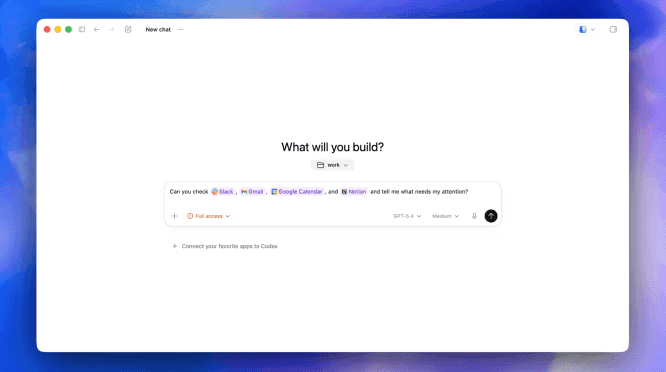
OpenAI takes aim at Anthropic with beefed-up Codex that gives it more power over your desktop
There is currently a low-grade war between OpenAI and Anthropic over who can release the most convenient and powerful AI-coding tools and, so far, Anthropic seems to be winning.Claude Codehas been dubbed the tool of choice for many businesses, as TechCrunch reported last week, but OpenAI isn’t giving up yet. This week, OpenAI announced a revamp ofCodex, its own automated tool, with a variety of new updates designed to give it significantly expanded powers. On Thursday, the company announced a plethora of new features and updates, perhaps the most notable of which is that Codex can now operate in the background on your computer — opening any app on your desktop and carrying out operations with a cursor that clicks and types. Functionally, what this does is allow Codex to deploy multiple agents, all of which work on a user’s Mac “in parallel, without interfering with your own work in other apps,” the company saidin a blog post. In other words, because of the way Codex runs in the background, a user can still be using the machine as the agent goes about its own work. The agent will then function, according to the company, as a kind of coding buddy that does auxiliary tasks while you work on topline projects. OpenAI’s lists “iterating on frontend changes, testing apps, or working in apps that don’t expose an API” as potential use-cases for this kind of agentic assistance. Overall, this agentic update and other new additions demonstrate OpenAI’s desire to not only make Codex a competitive coding assistant but also a more multifaceted tool that can be integrated into a variety of corporate workflows. Watchers of the AI coding space will also note that some of the powers OpenAI is now adding to Codex seem to resemble those previously released by Anthropic for Claude Code. Last month, Anthropicannounced thatClaude and Cowork could remotely control your Mac and desktop on a user’s behalf while they were away from their keyboard. In addition to the agentic tools, OpenAI’s Codex now has an in-app browser, which allows a user to issue commands to the agentic tool, which it will then ostensibly carry out on specific web applications. OpenAI says this function will be useful for frontend and game development, and that it plans to eventually expand the capability so that Codex can “fully command the browser beyond web applications on localhost.” There are other updates. A new feature in preview called “memory” allows Codex to recall previous work sessions and generate important context about how a particular user works. The agent has also been given a new image-generation ability, which OpenAI says can be used to create product concepts, slide visuals, mockups, placeholder images, and other corporate paraphernalia. Finally, to expand Codex’s ability to get things done, the company has announced 111 plugin integrations from apps like CodeRabbit and Gitlab Issues, which allows Codex to carry out tasks involving those tools. The way OpenAI has framed it, these plugins give Codex the ability to carry out minor clerical work to organize your work life. For example, if you want Codex to take a look at your Slack channels and Google calendar and give you a to-do list for a given day, OpenAI says that it can now do that for you. A new pay-as-you-go Codex pricing option for ChatGPT enterprise and business customers has also been announced in an apparent effort to give users more flexibility when it comes to procuring the coding tool’s services. Once considered the undisputed leader of its industry, OpenAI has more fiercely competed with Anthropic in recent months, with a focus on enterprise capabilities and a retreat from consumer tools like its social video appSora 2. The company has also battled various controversies in recent months, includinglawsuitsover ChatGPT’s alleged mental health impact on some users.
View
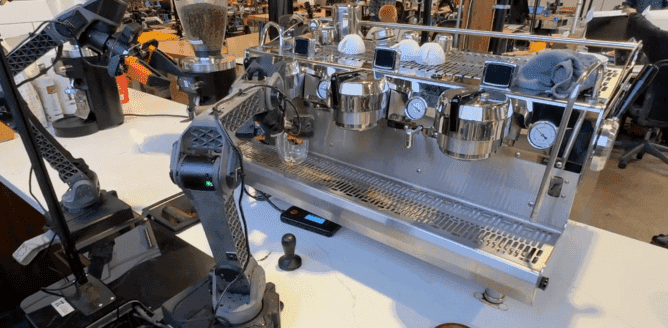
Physical Intelligence, a hot robotics startup, says its new robot brain can figure out tasks it was never taught
Physical Intelligence, the two-year-old, San Francisco-based robotics startup that has quietly become one of the most closely watched AI companies in the Bay Area, publishednew researchThursday showing that its latest model can direct robots to perform tasks they were never explicitly trained on — a capability the company’s own researchers say caught them off guard. The new model, called π0.7, represents what the company describes as an early but meaningful step toward the long-sought goal of a general-purpose robot brain: One that can be pointed at an unfamiliar task, coached through it in plain language, and actually pull it off. If the findings hold up to scrutiny, they suggest that robotic AI may be approaching an inflection point similar to what the field saw with large language models — where capabilities begin compounding in ways that outpace what the underlying data would seem to predict. But first: The core claim in the paper is compositional generalization — the ability to combine skills learned in different contexts to solve problems the model has never encountered. Until now, the standard approach to robot training has been essentially rote memorization — collect data on a specific task, train a specialist model on that data, then repeat for every new task. π0.7, Physical Intelligence says, breaks that pattern. “Once it crosses that threshold where it goes from only doing exactly the stuff that you collect the data for to actually remixing things in new ways,” says Sergey Levine, a co-founder of Physical Intelligence and a UC Berkeley professor focused on AI for robotics, “the capabilities are going up more than linearly with the amount of data. That much more favorable scaling property is something we’ve seen in other domains, like language and vision.” The paper’s most striking demonstration involves an air fryer the model had essentially never seen in training. When the research team investigated, they found only two relevant episodes in the entire training dataset: One where a different robot merely pushed the air fryer closed, and one from an open-source dataset where yet another robot placed a plastic bottle inside one on someone’s instructions. The model had somehow synthesized those fragments, plus broader web-based pretraining data, into a functional understanding of how the appliance works. “It’s very hard to track down where the knowledge is coming from, or where it will succeed or fail,” says Ashwin Balakrishna, a research scientist at Physical Intelligence and a Stanford computer science PhD student. Still, with zero coaching, the model made a passable attempt at using the appliance to cook a sweet potato. With step-by-step verbal instructions — essentially, a human walking the robot through the task the way you might explain something to a new employee — it performed successfully. That coaching capability matters because it suggests robots could be deployed in new environments and improved in real time without additional data collection or model retraining. So what does it all mean? The researchers aren’t shy about the model’s limitations and are careful not to get ahead of themselves. In at least one case, they point the finger squarely at their own team. “Sometimes the failure mode is not on the robot or on the model,” Balakrishna says. “It’s on us. Not being good at prompt engineering.” He describes an early air fryer experiment that produced a 5% success rate. After spending about half an hour refining how the task was explained to the model, it jumped to 95%, he says. The model also isn’t yet capable of executing complex multi-step tasks autonomously from a single high-level command. “You can’t tell it, ‘Hey, go make me some toast’,” Levine says. “But if you walk it through — ‘for the toaster, open this part, push that button, do this’ — then it actually tends to work pretty well.” The team also acknowledged that standardized benchmarks for robotics don’t really exist, which makes external validation of their claims difficult. Instead, the company measured π0.7 against its own previous specialist models — purpose-built systems trained on individual tasks — and found that the generalist model matched their performance across a range of complex work including making coffee, folding laundry, and assembling boxes. What may be most notable about the research — if you take the researchers at their word — is not any single demo but the degree to which the results surprised them, people whose job it is to know exactly what is in the training data and therefore what the model should and shouldn’t be able to do. “My experience has always been that when I deeply know what’s in the data, I can kind of just guess what the model will be able to do,” Balakrishna says. “I’m rarely surprised. But the last few months have been the first time where I’m genuinely surprised. I just bought a gear set randomly and asked the robot, ‘Hey, can you rotate this gear?’ And it just worked.” Levine recalled the moment researchers first encountered GPT-2 generating a story aboutunicorns in the Andes. “Where the heck did it learn about unicorns in Peru?” he says. “That’s such a weird combination. And I think that seeing that in robotics is really special.” Naturally, critics will point to an uncomfortable asymmetry here: Language models had the entire internet to learn from. Robots don’t, and no amount of clever prompting fully closes that gap. But when asked where he expects the skepticism, Levine points somewhere else entirely. “The criticism that can always be leveled at any robotic generalization demo is that the tasks are kind of boring,” he says. “The robot is not doing a backflip.” He pushes back on that framing, arguing that the distinction between an impressive robot demo and a robotic system that actually generalizes is precisely the point. Generalization, he suggests, will always look less dramatic than a carefully choreographed stunt — but it is considerably more useful. The paper itself uses careful hedging language throughout, describing π0.7 as showing “early signs” of generalization and “initial demonstrations” of new capabilities. These are research results, not a deployed product, and Physical Intelligence has been restrained from the start about commercial timelines. When asked directly when a system based on these findings might be ready for real-world deployment, Levine declines to speculate. “I think there’s good reason to be optimistic, and certainly it’s progressing faster than I expected a couple of years ago,” he says. “But it’s very hard for me to answer that question.” Physical Intelligence has raised over $1 billion to date and was most recently valued at $5.6 billion. A significant part of the investor enthusiasm around the company traces to Lachy Groom, a co-founder who spent years as one of Silicon Valley’s most well-regarded angel investors — backing Figma, Notion, and Ramp, among others — before deciding that Physical Intelligence was the company he’d been looking for. That pedigree has helped the startup attract serious institutional money even as it has refused to offer investors a commercialization timeline. The company is now said to be in discussions for a new round that would nearly double that figure to$11 billion. The team declined to comment.
View

Meta’s Planned Facial Recognition Feature for Smart Glasses Faces Opposition From Privacy Orgs
Meta's purported development of an artificial intelligence (AI)-powered facial recognition technology for its future smart glasses has raised concerns among privacy advocates. An open letter signed by 77 organisations working in the privacy and civil liberties space has been published, urging the Menlo Park-based tech giant to stop the development of such a feature. Notably, earlier this year, reports had claimed that Meta was developing a facial recognition feature that would allow its future smart glasses to detect and identify people around the wearer.
View
OpenAI updates its Agents SDK to help enterprises build safer, more capable agents
Agentic AI is the tech industry’s newest success story, and companies like OpenAI and Anthropic are racing to give enterprises the tools they need to create these automated little helpers. To that end,OpenAI has now updated its agents software development toolkit (SDK), introducing a number of new features designed to help businesses create their own agents that run on the backs of OpenAI’s models. The SDK’s new capabilities include a sandboxing ability, which allows the agents to operate in controlled computer environments. This is important because running agents in a totally unsupervised fashion can beriskydue to their occasionally unpredictable nature. With the sandbox integration, agents can work in a siloed capacity within a particular workspace, accessing files and code only for particular operations, while otherwise protecting the system’s overall integrity. Relatedly, the new version of the SDK also provides developers with an in-distribution harness for frontier models that will allow those agents to work with files and approved tools within a workspace, the company said. (In agent development, the “harness” is a term that refers to the other components of an agent besides the model that it’s running on. An in-distribution harness often allows companies to both deploy and test the agents running on frontier models, whichare considered to bethe most advanced, general-purpose models available.) “This launch, at its core, is about taking our existing Agents SDK and making it so it’s compatible with all of these sandbox providers,” Karan Sharma, who works on OpenAI’s product team, told TechCrunch. The hope is that this, paired with the new harness capabilities, will allow users “to go build these long-horizon agents using our harness and with whatever infrastructure they have,” he said. Such “long-horizon” tasks are generally considered to be more complex and multi-step work. OpenAI said it will continue to expand the Agents SDK over time, but initially, the new harness and sandbox capabilities are launching first in Python, with TypeScript support planned for a later release. The company said it’s also working to bring more agent capabilities, like code mode and subagents, to both Python and TypeScript. The new Agents SDK capabilities are being offered to all customers via the API, and will use standard pricing.
View