Últimas Noticias de IA

In another wild turn for AI chips, Meta signs deal for millions of Amazon AI CPUs
Amazon just scored a major coup with Meta thanks, once again, to Amazon’s own homegrown chips. Meta has signed a deal to use millions ofAWS Gravitonchips to power its growing AI needs, Amazon announced Friday. Note that the AWS Graviton is an ARM-based CPU, (a central processing unit, the chip that handles general computing tasks) not a GPU (a graphical processing unit). While GPUs remain the chip of choice for training large models, once those models are trained, AI agents built on top of them are causing a shift in the type of chip is needed. Agents create compute-intensive workloads like real-time reasoning, writing code, search, and the the coordination involved in managing agents through multi-step tasks. AWS’s latest version of Graviton was designed specifically to handle AI-related compute needs, the company says. This deal brings more of Meta’s cash back to AWS instead of competitors like Google Cloud. Last August,Meta signed a six year, $10 billion deal with Google Cloud, though Meta had, until then, primarily been an AWS customer that also used Microsoft Azure. We couldn’t help but notice that AWS timed the announcement of this deal right as the Google Cloud Next conference wrapped up, like a virtual smirk at its cloud rival. Google, of course, also makes its own custom AI chips andannounced new versions of them at the show. True, Amazon makes its own AI GPU as well: the Trainium, which, despite its name, is used for both training and inference — the stage that happens after a model is trained, when it’s actively processing prompts. But Anthropic had already swooped in with a deal announced earlierthis month that commandeered many of those chipsfor years to come. The Claude maker agreed to spend $100 billion over 10 years to run its workloads on AWS — with a particular focus on Trainium — while Amazon agreed to invest another $5 billion (bringing its total to $13 billion of investment) into Anthropic in return. Ultimately, the Meta deal is allowing Amazon to showcase a huge AI customer as a proving point for its homegrown CPUs. These are chips that compete with Nvidia’s new Vera CPU, which is also ARM-based and designed to handle AI agentic workloads. The difference, of course, is that Nvidia sells its chips and AI systems to enterprises and cloud providers (including AWS). AWS only sells access to its chips through its cloud service. Earlier this month Amazon CEO Andy Jassytook aim at Nvidia and Intel in his annual shareholder letter, saying that enterprises want better price-performance ratios for AI, and that he intends to win deals on that basis. This also means the pressure couldn’t be higher on Amazon’s internal chip building team to deliver, a team thatwe visited last month in an exclusive tour of their lab.
View

TCS Expands Google Cloud Partnership to Push AI-Led Autonomous Enterprise Shift
The collaboration will help enterprises move from AI pilots to fully autonomous, AI-native operations, rolling out new agentic AI offerings.
View

Why SpaceX’s $60 Bn Cursor Bet is a Playbook for All Future AI Deals
The SpaceX-Cursor deal links compute power with developer reach as Elon Musk’s company tests a path to owning the AI coding layer.
View

OpenAI Introduces GPT-5.5 Series AI Models With Improved Agentic Coding and Knowledge Work
OpenAI, on Thursday, introduced a new major update to its GPT-5 series artificial intelligence (AI) models. Bringing it to GPT-5.5, the new models are said to offer improved intent understanding, agentic coding, and reasoning capabilities. The San Francisco-based AI giant claims that the models outperform Anthropic's latest Claude Opus 4.7 and Google's Gemini 3.1 Pro models across a wide range of tasks. These large language models (LLMs) are first rolling out to the company's paid subscribers, and via the application programming interface (API).
View
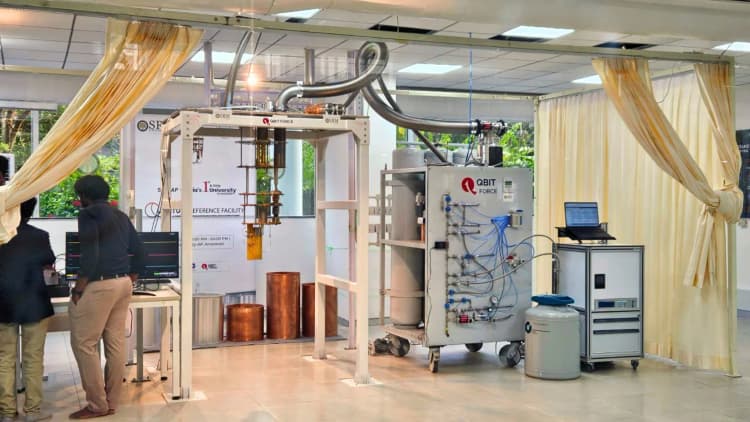
Why Amaravati's Quantum Computer is Unlike Any Other Global Facility
A new open-access testbed aims to help India design, test, and scale quantum hardware within the country.
View

‘I Am Sick and Tired of Constant Upskilling Expectations in Indian IT’
AI demand is rising fast, but engineers feel trapped between shifting expectations and constant relearning.
View
DeepSeek Releases V4 Pro, Challenging OpenAI, Anthropic on Key Benchmarks
DeepSeek’s new models bring a 1 million-token context window, dual reasoning modes, and API compatibility.
View

OpenAI Rolls Out GPT-5.5 For Agentic Coding and Autonomous Workflows
OpenAI said GPT-5.5 is its “smartest and most intuitive” system yet, capable of understanding intent faster and completing tasks in one go.
View
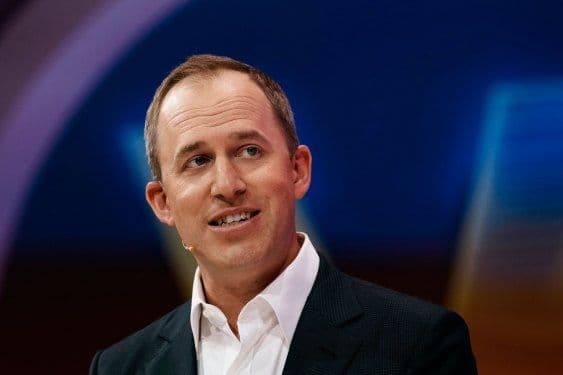
Bret Taylor’s Sierra buys YC-backed AI startup Fragment
Sierra, the customer service agent startup founded byBret Taylor, announced on Thursday that it has acquired theYC-backed French startup Fragment, which helps businesses integrate AI into workflows. This is Sierra’s third public acquisition. It previously bought Japan-based enterprise AI solutions company Opera Tech (which it acquired in late March) and voice agent company Receptive AI (which it also announced it acquired in late March). Fragment co-founders Olivier Moindrot and Guillaume Genthial will be joining the Sierra team. In a blog post, Taylor and his co-founder, Clay Bavor, wrote that Moindrot and Genthial will bring “valuable strength” to Sierra’s “agent development efforts in France.” Terms of the deal were not announced. PitchBook estimates that Fragment raised around $2 million through its seed round. Taylor, who also serves as OpenAI’s chairman of the board, co-founded Sierra alongside Google alum Bavor after stepping down as co-CEO of Salesforce in early 2023. The startup claims Casper, Clear, and Brex as customers and has raised more than$630 million in funding to date, from investors including Sequoia and Benchmark, giving it a $10 billion valuation.
View

Don’t stop hiring humans — stop hiring the wrong humans, with Jaspar Carmichael-Jack, Artisan
Surviving the early days as an AI startup isn’t just about making the technology work — it’s about hiring the right people, avoiding costly mistakes, and standing out in a crowded market. This week on Build Mode, Isabelle Johannessen sits down with Jaspar Carmichael-Jack, founder and CEO of Artisan, a fast-growing AI startup building AI employees for sales. Best known for its viral “Stop Hiring Humans” campaign, Artisan is rethinking outbound sales with AI, while still betting on hiring exceptional human talent. In this episode, they break down what it really takes to build and scale a venture-backed AI company, from Y Combinator to rapid growth. This conversation covers: Subscribe to Build Mode onApple Podcasts,Spotify, orwherever you like to listen. And watch the full videos onYouTube. Apply to Startup Battlefield:We are looking for early-stage companies that have an MVP. So nominate a founder (or yourself). Be sure to say you heard about Startup Battlefield from the Build Mode podcast.Apply here. TechCrunch Disrupt 2026:We’re back for TechCrunch Disrupt on October 13 to 15 in San Francisco, where the Startup Battlefield 200 takes the stage. So if you want to cheer them on, or just network with thousands of founders, VCs, and tech enthusiasts, thengrab your tickets. Use codebuildmode15 for 15% off any ticket type. New episodes ofBuild Modedrop every Thursday. Hosted by Isabelle Johannessen. Produced and edited by Maggie Nye. Audience development led by Morgan Little. Special thanks to the Foundry and Cheddar video teams.
View

Why Artisan still ‘loves hiring humans’ despite ‘Stop Hiring Humans’ billboards
Loading the player… Surviving the early days as an AI startup isn’t just about making the technology work — it’s about hiring the right people, avoiding costly mistakes, and standing out in a crowded market. This week on Build Mode, Isabelle Johannessen sits down with Jaspar Carmichael-Jack, founder and CEO of Artisan, a fast-growing AI startup building AI employees for sales. Best known for its viral “Stop Hiring Humans” campaign, Artisan is rethinking outbound sales with AI, while still betting on hiring exceptional human talent. In this episode, they break down what it really takes to build and scale a venture-backed AI company, from Y Combinator to rapid growth. This conversation covers: This conversation gets to the heart of building a startup: making the right hires early or paying for it later. Subscribe to Build Mode onApple Podcasts,Spotify, orwherever you like to listen. And watch the full videos onYouTube. Apply to Startup Battlefield:We are looking for early-stage companies that have an MVP. So nominate a founder (or yourself). Be sure to say you heard about Startup Battlefield from the Build Mode podcast.Apply here. TechCrunch Disrupt 2026:We’re back for TechCrunch Disrupt on October 13 to 15 in San Francisco, where the Startup Battlefield 200 takes the stage. So if you want to cheer them on, or just network with thousands of founders, VCs, and tech enthusiasts, thengrab your tickets. Use codebuildmode15 for 15% off any ticket type.
View

OpenAI releases GPT-5.5, bringing company one step closer to an AI ‘super app’
OpenAI on Thursdayreleased GPT-5.5, its newest AI model, which the company calls its “smartest and most intuitive to use model” yet. The algorithm comes with increased capabilities in a multitude of areas, with OpenAI co-founder and president Greg Brockman claiming that it also brings the company one step closer to the creation of OpenAI’s “super app.” On a call with journalists, Brockman said that the new model was a big advancement “towards more agentic and intuitive computing.” “This model is a real step forward towards the kind of computing that we expect in the future — but it is one step, and we expect to see many in the future,” Brockman said. “It’s a faster, sharper thinker for fewer tokens compared to something like 5.4. So this means that there’s just more frontier AI available for businesses and for consumers, which is part of our goal.” Brockman also said that the model was an additional step towardcreating a “super app”— a multi-purpose, Swiss Army knife of a program — which Brockman and co-founder Sam Altman have previously discussed launching. The co-foundersenvisioncombining ChatGPT, Codex, and AI browser into one unified service that can aid enterprise customers. Notably, the “super app” concept isalso a hot topicwith Altman rival (and former OpenAI colleague) Elon Musk, who has said he wants to turn X into its own so-called super app. OpenAI releasedits last modelonly last month, with a previous release in December and, before that, November. The company has continued to churn out new models at a crisp pace, a trend that company staff said should be expected to continue for the foreseeable future. “We see pretty significant improvements in the short term, extremely significant improvements in the medium term,” said Jakub Pachocki, OpenAI’s chief scientist. “In fact, I would say, like, I think the last two years have been surprisingly slow.” According to OpenAI, GPT-5.5 is designed to be useful across a broad array of categories, including foundational enterprise areas like agentic coding and knowledge work, but also in more experimental AI applications like mathematics and scientific research. The company also released data Thursday showing the model’s superior performance across a range of benchmarks. Compared to its previous models, and to models from competitors Google and Anthropic (like Gemini 3.1 Pro and Claude Opus 4.5), 5.5 consistently scores higher, according to OpenAI. OpenAI’s rivalry with Anthropic is never far from discussion, and GPT-5.5 offered another opportunity for the two companies to compare themselves to one another. One reporter during the press briefing asked if GPT 5.5. would have capabilities similar toMythos, the cybersecurity tool recently announced by Anthropic. (Mythos has experienced controversy in recent days due to a report ofunauthorized access to the program.) Mia Glaese, a member of OpenAI’s technical staff, said that GPT-5.5 would have a significant impact on the company’s approach to deploying its models toward digital defense. “We have a strong and longstanding strategy for our approach to cyber, and we’ve refined a durable approach to rolling out models safely,” Glaese said. Mark Chen, chief research officer at OpenAI, said that GPT-5.5 was better at navigating computer work than its predecessors, and also said that the model “shows meaningful gains on scientific and technical research workflows,” noting that the company feels it could really “help expert scientists make progress.” Chen also said it could assist with drug discovery, an area that has shownincreased industry interestover the last few years. GPT 5.5 is widely available starting Thursday, according to OpenAI. The company says that the model is deploying to Plus, Pro, Business, and Enterprise users in ChatGPT, while 5.5 Pro is headed to Pro, Business, and Enterprise users.
View