Últimas Noticias de IA

Google Cloud surpasses $20B, but says growth was capacity-constrained
Google Cloud, the business under parent company Alphabet that provides enterprise AI solutions, had a blowout first quarter, with revenues topping $20 billion for the time, a 63% increase from the same period last year. However, investors on the company’s earnings call expressed concern about the constraints surrounding the business and how Google decides to allocate cloud capacity. In thefirst quarter of 2026, the company said its cloud growth was driven by strong performance in the Google Cloud Platform, which grew at a higher rate than the Google Cloud division’s overall revenue growth. (The Cloud division includes a variety of services like infrastructure, data analytics, AI/ML tools, and Google Workspace.) Alphabet CEO Sundar Pichai told analysts on the Q1 2026 earnings call on Wednesday that this growth came from “strong demand” for Gemini Enterprise and its AI solutions, and pointed to an increased demand for infrastructure, including TPU hardware and data centers. AI solutions were the largest driver of cloud growth, with products built on Google’s genAI models growing nearly 800% year-over-year. Google Gemini Enterprise also grew 40% quarter-over-quarter, the company said, and AI token growth via its API grew to 16 billion tokens per minute, up from 10 billion in the fourth quarter. Pichai noted other cloud milestones, including new customer acquisition doubling year-over year, deal momentum doubling the number of $100 million to $1 billion deals year-over-year, with the company signing multiple “billion-dollar-plus” deals. Customers also outpaced their initial commitments by 45% quarter-over-quarter, he said. Still, the exec warned, there were constraints to this growth, noting that Google Cloud’s backlog had doubled in the quarter to $462 billion. He spun this as a positive for the company, noting that it demonstrated how Google Cloud was different from other competitors. “Obviously, we are compute constrained in the in the near-term,” Pichai said. “And as an example, our cloud revenue would have been higher if we were able to meet that demand. So we are working through that moment, and we are investing, but we have a robust, long-range planning framework…we see extraordinary opportunities ahead,” he added. The company expects to work through 50% of the backlog over the next “24 months,” it said. Much of the company’s revenue potential comes from providing infrastructure through the cloud, and, with some customers, the direct sale ofTPUhardware as well. Pichai told investors that Google takes an approach that considers the return on capital investment (ROIC), which helps it to continue to properly invest in the “cutting edge.”
View

Microsoft says it has over 20M paid Copilot users, and they really are using it
Despite thelingering perceptionthat no one really uses Copilot, Microsoft said Wednesday that its user base and engagement are growing for the AI tool that’s baked into M365 apps like Word, Excel, and Outlook email. M365 Copilot now has 20 million paid enterprise Copilot seats, Microsoft CEO Satya Nadella said during the company’s quarterly earnings conference call. The company has quadrupled the number of companies paying for over 50,000 seats, Nadella said, noting that Bayer, Johnson & Johnson, Mercedes, and Roche have more than 90,000 seats. He pointed to the dealannounced earlier this weekwith Accenture for over 740,000 seats. “Our largest Copilot win to date,” he said. Plus, he insists that people are using it, engaging with Copilot as much as they do with email. “Copilot queries per user were up nearly 20% quarter over quarter. To put this momentum in perspective, weekly engagement is now at the same level as Outlook,” he said. “This is like a daily habit of intense usage.” He emphasized that Copilot is not dependent on any one model, like OpenAI. “You now have access in chat to multiple models by default, with intelligent auto routing in agents with critique and counsel, you can use multiple models together to generate optimal responses,” he said. Microsoft 365 supports Anthropic’s Claude, for instance. In fact, Morgan Stanley’s Keith Weiss said on the quarterly earnings call on Wednesday, “Those Microsoft 365 Copilot numbers are super impressive and I think way ahead of most people’s expectations.” Agent mode is one area that is driving usage, noting that “as of last week, Agent mode is now the default experience across Copilot and Word Excel and PowerPoint.” Microsoft last week made its Copilot’sagentic capabilities generally available. This allows Copilot to take multi-step actions directly in the documents. “You now have a new way to delegate and complete work using Copilot,” Nadella said.
View
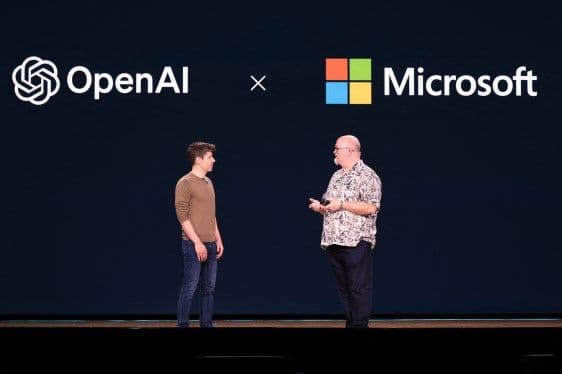
Satya Nadella says he’s ready to ‘exploit’ the new OpenAI deal
Microsoft CEO Satya Nadella was asked point-blank bya Wall Street analyston Wednesday how its revised OpenAI partnership would impact Microsoft’s financials. He said that the new agreement was a good deal for everyone. “We feel good about our partnership with OpenAI. I’m always very focused on any partnership and ensuring that there’s a win-win construct at all times. I mean, that’s how you can remain good partners.” He underscored that Microsoft has retained its access to OpenAI’s intellectual property — including its models and agent products — but that it no longer has to pay OpenAI for them. Referring to royalty-free access to OpenAI’s most advanced AI through 2032, Nadella said: “We have a frontier model, with all the IP rights that we will have access to all the way to ’32 and we fully plan to exploit it.” There was certainly plenty of ink spilled speculating that the new deal, inwhich Microsoft no longer has exclusive access to OpenAI’s tech, would causethe software giant to lose its edge in AI.OpenAI immediately announcedexclusive AI products with Microsoft’s largest cloud rival, Amazon(complete with Sam Altman and AWS CEO Mark Garmandoing interviewsabout their collaboration). But Nadella shrugged off those concerns. When Microsoft reportedearnings on Wednesday— the last full quarter under the previous deal — the company reported that its AI business has surpassed an annual revenue run rate of $37 billion, up 123% year-over-year. On that point, Nadella noted that Microsoft collects money from OpenAI in other ways. “They’re a large customer of ours, not just on the AI accelerator side, but also on all the other compute sides. And so we want to serve them well. And then, of course, we have our equity.” By that he’s referring to OpenAI’s commitment to buy more than than $250 billion worth of Microsoft’s cloud services, and Microsoft’s 27% stake in OpenAI. Finally, Nadella emphasized that enterprises often want to use multiple AI models, so OpenAI’s relative importance in the industry, especially to enterprises, is not as far ahead as it once was. “We offer the broadest selection of models of any hyperscaler, so customers can choose the right model for the right workload across OpenAI, Anthropic, open source, and more. Over 10,000 customers have used more than one model,” he said. Time will tell if this deal is really a win-win. In the meantime, Microsoft keeps delivering cloud growthand profits.
View

Meta is still burning money on AR/VR
When Meta released itsquarterly earnings reporton Wednesday evening, a colleague pointed out how Meta lost $4 billion on Reality Labs, the division responsible for its AR glasses, VR headsets, and VR software. I yawned at first. Meta losing $4 billion on Reality Labs justdidn’tseemsurprising. It’s agiven. Reality Labs lost another $4 billion, and also, the sky is blue. Then I realized, that itself is notable — for Meta, losses on this unit are quite literally average behavior. Over its last 21 quarterly earnings reports, dating back to 2021, Meta has lost a total of $83.5 billion on Reality Labs, which comes out to an average of about $4 billion in losses each quarter. That is bananas! Equally astounding is that as Meta pulls back from its metaverse ambitions, its spending on AI will be even more astronomical. True, it’s not like Meta doesn’t have the money. In the first quarter of this year, the social media giant posted a net income of $26.8 billion, up 61% over the year prior; revenue also increased 33% year-over-year to $56.3 billion. But despite its foundation in social media, Meta’s current goal is to stay competitive with AI leaders like OpenAI and Anthropic. Metaprojectedthat it will spend between $125 billion and $145 billion in 2026, exceeding analysts’ projections and Meta’s previousestimates. “We are increasing our infrastructure capex forecast for this year,” Meta CEO Mark Zuckerberg said on a public call with investors on Wednesday. “Most of that is due to higher component costs, particularly memory pricing […] We are very focused on increasing theefficiency of our investments.” Meta also spent a lot of money to build a metaverse that no one really wanted or cared about. It’s going to take even more money to build an AI superintelligence that (maybe some) people actually want. Last year, Meta went on an expensive hiring spree, poaching over50 AI researchers and engineersfrom competitors, which helped the company ship its newly overhauled AI model,Muse Spark, earlier this month. While CEO Mark Zuckerberg reported “large increases” in Meta AI use since that release, it’s only gettingmore expensiveto build and maintain AI products. On the earnings call, one concerned investor asked if Meta could provide an outlook for its 2027 capital expenditures. The response wasn’t reassuring. “We aren’t providing a specific outlook for 2027 capex, and we are, frankly, undergoing a very dynamic planning process ourselves as we’re working through what our capacity needs will be over the coming years,” replied Meta CFO Susan Li. “Our experience so far has been that we have continued to underestimate our compute needs.” So, despite its impressive quarterly results, Meta’s investors aren’t thrilled. The stock was downmore than 5%in after-hours trading.
View

On the stand, Elon Musk can’t escape his own tweets
Elon Musk came to a California federal court on Wednesday to argue that Sam Altman and his cofounders “stole a charity.” He left having admitted, under oath, that Tesla is not currently pursuing artificial general intelligence (AGI)— directly contradicting a tweet he’d posted just weeks earlier. It was that kind of day for Musk. The lawsuit he filed challenging the structure of OpenAI alleges Sam Altman and the other cofounders tricked him into backing a non-profit, then launched the frontier lab’s for-profit arm and let it come to dominate the organization. After an occasionally testy Musk testified for hours, it appears the case may come down to how much of a distinction jurors and Judge Yvonne Gonzalez Rogers make between investors in OpenAI having their potential profit capped or not. In Musk’s telling, when he cofounded the lab with Sam Altman, Ilya Sutskever, Greg Brockman and others, he trusted them to build AI for humanity, but over time became suspicious of their motives, and finally concluded that they were “looting the nonprofit.” OpenAI’s lawyer William Savitt sought to complicate that story during cross-examination, trying to show that Musk had supported a variety of efforts to transition OpenAI toward for-profit status so it could raise the funds necessary to compete with firms like Google, including incorporating the AI lab into Tesla. Musk testified that he had discussed converting the company to a for-profit as early as 2016, and that in 2017, he had explored creating a for-profit arm of OpenAI where he would hold the majority of the equity and control the company. When those plans fell apart, he stopped making regular donations to OpenAI, though he continued to pay for its office space until 2020. Musk insisted that there was a big difference between investors whose profits are capped and those whose profits are unlimited. The earliest major investments by Microsoft in OpenAI limited the software giant’s profits, but those restrictions have been rolled back over the years. Musk says those changes ultimately led him to bring this lawsuit. Savitt tried to establish that Musk had been consulted by Altman and Shivon Zillis — his longtime adviser who is also the mother of four of his children — about subsequent efforts to raise money, and did not object. Zillis was also a member of the OpenAI board when it approved some of those transactions. That cross-examination extended to Tesla’s AI ambitions. Notably, Musk was asked about Tesla’s efforts to develop competing AI technologies and found himself, not for the first time, on the wrong side of one of his own posts on X. After Musk said that Tesla’s AI work was focused only on self-driving and not AGI (a term for AI systems that can perform any intellectual task that a human can), he was asked about a recentpostclaiming that “Tesla will be one of the companies to make AGI.” “We are not pursuing AGI right now,” Musk told the court. (Tesla shareholders may want to take note.) Musk was also asked about apostwhere he claimed to have invested $100 million in OpenAI, rather than the $38 million that actually changed hands. He argued that his reputation and network made up for the disparity. Savitt brought up emails where Musk had backed efforts by Tesla and his brain interface company, Neuralink, to poach employees from OpenAI while he was still on that company’s board. Another conversation focused on his efforts to hire OpenAI leaders when he left the board in 2018, including Andrej Karpathy, who departed OpenAI to lead self-driving work at Tesla. Musk was also asked about a conversation where Zillis suggested Musk recruit Sutskever to Tesla. The most consequential thread of the day, though, may have been about harm prevention. Part of Musk’s case rests on the idea that OpenAI transition into a traditional corporation is dangerous to society because it reduces the company’s focus on safety. Savitt, in turn, had Musk admit that all AI companies, including his own, suffer from this risk. Judge Gonzalez Rogers halted that line of questioning, but in remarks to the lawyers after testimony concluded made clear it would resume, with limits. When Musk’s lawyers floated questions about ChatGPT’s role in the Tumbler Ridge shooting—an incident earlier this year in Canada in which a person went on a killing spree after extensive conversations with the chatbot—she made clear that she didn’t want to hear about scandals caused by AI models, but that xAI and OpenAI’s approaches to safety were fair game. Musk returns Thursday for another round of adversarial questioning. Also expected to testify are his family office manager, Jared Birchall; AI safety expert Stuart Russell; and OpenAI president Greg Brockman. Correction: An earlier version of this story misstated details of the Tumbler Ridge shooting due to an editing error. It has been updated.
View
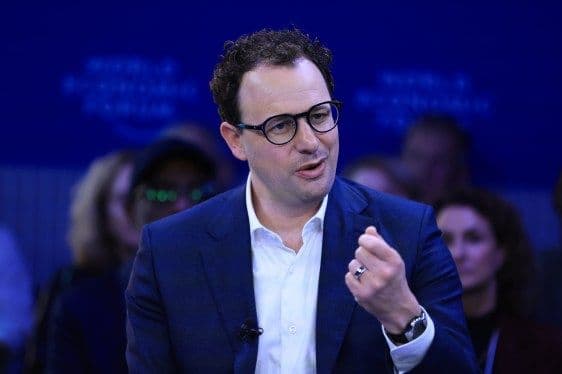
Sources: Anthropic could raise a new $50B round at a valuation of $900B
Investor interest in Anthropic has reached a feverish pitch. The maker of the Claude AI assistant has received multiple preemptive offers to raise fresh capital of around $50 billion at a valuation in the $850 billion to $900 billion range, according to half a dozen sources familiar with the matter.BloombergandBusiness Insiderreported earlier this month that Anthropic received multiple preemptive bids at an $800 billion valuation, but at that time, the company had not yet committed to a fundraise. Sources say, however, that Anthropic is finding it difficult to resist the pressure to secure more funding in what could be its final round of private fundraising before a potential IPO. The company is expected to make a definitive decision on the round and its valuation at a board meeting in May, one person told TechCrunch. The round is expected to total $40 billion to $50 billion, according to people familiar with the company. But investor demand appears to be much higher given the company’s rapid growth, which shows no sign of slowing. Investors are clamoring to get into the round. One institutional investor prepared to commit as much as $5 billion has yet to secure a meeting with Anthropic CFO Krishna Rao, according to a source. Anthropic announced this month that its annual revenue run rate has surpassed $30 billion, which is a dramatic increase from roughly $9 billion at the end of 2025. The company’s run rate is currently closer to $40 billion, one of the people with knowledge of the company’s financials said. Antrhopic declined to comment. A large portion of that revenue is driven by Anthropic’s AI coding capabilities, specifically through its Claude Code and Cowork platforms. Many investors believe the company is only scratching the surface of its potential, given the massive opportunity to expand its offerings into new industries, including finance, life sciences, and healthcare. Anthropic raised its last round at a$380 billionvaluation in February. If the company proceeds with another fundraise at the terms described by TechCrunch’s sources, it will not only more than double its valuation but also match or surpass that of its chief rival. Also in February, OpenAI closed a record-breaking $122 billion round at an $852 billion post-money valuation.
View
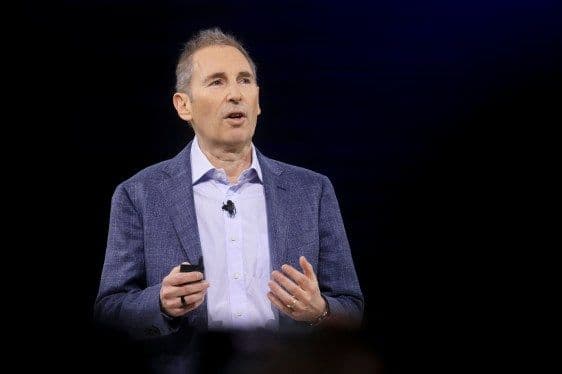
Amazon’s cloud business is surging — and so is its capital spending
Amazon was one of several tech giants that on Wednesday beat Wall Street’s first-quarter earnings expectations, offering more financial evidence that the AI boom continues to reward companies that supply the picks and shovels. Amazon’s cloud business is the latest example. Amazon Web Services, buoyed by itsrole in fueling the AI boom, saw its net sales increase 28% year-over-year, climbing to $37.6 billion, the company said Wednesday. It was the fastest growth rate for AWS in 15 quarters, Amazon president and CEO Andy Jassy said during the company’s earnings call. Jassy attributed AWS’ success to its role in providing compute to the AI industry. “It’s very unusual for business to grow this fast on a base this large. The last time we saw growth at this clip, AWS was roughly half the size,” Jassy said. “We’ve never seen a technology grow as rapidly as AI. Amazon is already a leader, and companies continue to choose AWS for AI.” Jassy compared the business unit’s growth to the aughts. “To put our growth in perspective, three years after AWS launched, it had a $58 million revenue run rate. [During] the first three years of this AI wave, AWS’s AI revenue run rate is over $15 billion — nearly 260 times larger.” Even as money flows into its cloud business, Amazon is also sinking increasingly large gobs of capital into building out the infrastructure that supports that cloud. Jassy said on Wednesday that capital expenditure growth would continue in the near term. “The faster AWS grows, the more short-term capex we’ll spend,” he said. “AWS has to lay out cash for land, power, buildings, chips, servers, and networking gear, in advance of when we can monetize it.” Jassy positioned these investments as short-term cash burn for a long-term payoff, noting that these capital expenditures fund assets like data centers that last more than 30 years or chips, servers, and networking gear that have a useful life for five to six years. Jassy did attempt to quell investor fears that the e-commerce giant was spending too much on infrastructure. He also provided more than a hint at how that kind of spending would affect free cash flow. “In times of very high growth like now — where the capex growth meaningfully outpaces the revenue growth — the early years, free cash flow is challenged,” he said. Amazon’s first-quarter earnings report reflects the pull on free cash flow. T he company reported that free cash flow decreased to $1.2 billion for the trailing twelve months, driven primarily by a year-over-year increaseof $59.3 billion in purchases of property and equipment — much of its related to AI. That’s a 95% drop from the $25.9 billion in free cash flow it had in the first quarter of 2025. “We’ve been through this cycle with the first big AWS growth wave, and like the results. We expect to feel similarly about this next wave with much larger potential downstream revenue and free cash flow,” he added. The e-commerce giant’soverall sales, meanwhile, rose 17% to $181.5 billion on a year-over-year basis. Sales grew 12% in North America and 19% throughout the rest of the world, the company reported.
View
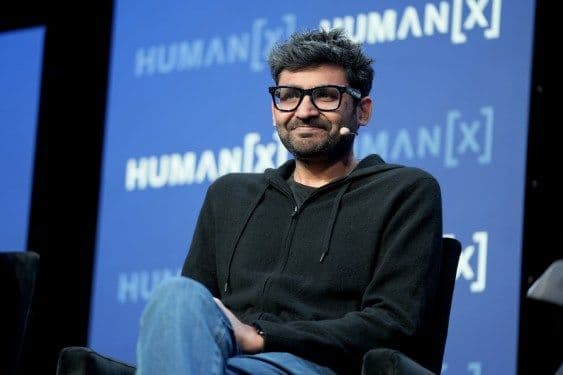
Parallel Web Systems hits $2B valuation five months after its last big raise
Parallel Web Systems, the AI agent-tool startup founded by former Twitter CEO Parag Agrawal, has raised a $100 million Series B at a $2 billion valuation led by Sequoia. Existing investors Kleiner Perkins, Index Ventures, Khosla Ventures, First Round Capital, Spark Capital, and Terrain Capital also participated,the company said. This raise comes just five months after the startupannounced its $100 millionSeries A at a $740 million valuation led by Kleiner and Index, and brings the total capital it raised to $230 million. Parallel offers a suite of web search and research APIs specifically for AI agents and names customers such as Clay, Harvey, Notion, and Opendoor. It says its customers include banks and hedge funds (though it has not named them). The confidence of investors in Agrawal’s startup has to be particularly gratifying for him after his time at Twitter ended with a subsequent lawsuit. Elon Muskfamously fired himand all the top execs after he bought Twitter. Those execs, including Agrawal, sued, alleging that Musk failed to pay the $128 million in severance pay they believe they were owed. In October,Musk settled the casefor undisclosed terms. In addition to some big-name customers, Parallel tells TechCrunch it has over 100,000 developers using its products.
View

Is AI video just a prequel? Runway’s CEO thinks world models are next
AI-generated video has gone from novelty to creative tool almost overnight, and Runway has a front row seat to the shift. The New York-based company has raised close to $860 millionat a $5.3 billion valuation, and its models are going toe-to-toe with the most well-funded labs in the world, including Google and OpenAI. The technology goes way beyond making videos: Runway is now pushing into general world models with applications in gaming, robotics, and maybe something closer to general intelligence. On this episode of TechCrunch’s Equity podcast, host Rebecca Bellan sits down with Runway co-founder and CEO Cristóbal Valenzuela to talk about where video generation goes from here, and why Runway’s ambitions now reachwell beyond Hollywood. Listen to the full episode to hear about: Subscribe to Equity onYouTube,Apple Podcasts,Overcast,Spotifyand all the casts. You also can follow Equity onXandThreads, at @EquityPod.
View
OpenAI, Amazon Announce Multi-Year Strategic Partnership as Microsoft’s Exclusive Deal Ends
Hours after OpenAI and Microsoft revealed the amended non-exclusive partnership, the ChatGPT maker has started forging new partnerships. On Monday, the San Francisco-based artificial intelligence (AI) giant announced a multi-year strategic partnership with Amazon and its cloud division, Amazon Web Services (AWS). The multi-faceted deal brings the latest OpenAI AI models to AWS customers, allows the AI firm to source additional compute, and includes a massive financial investment from the Seattle-based e-commerce giant. Amazon has also hosted several OpenAI models on its Bedrock platform in a limited preview.
View

Meet Shapes, the app bringing humans and AI into the same group chats
Shapes, an app where humans and AI characters chat together in shared group conversations, is emerging from stealth with $8 million in seed funding. Think Discord, but with AI characters alongside humans. Founded in 2022, Shapes has more than 400,000 monthly active users. The app’s founders, Anushk Mittal and Noorie Dhingra, believe that Shapes can address issues around “AI Psychosis,” which refers to cases where prolonged interactions with AI chatbots or AI companions can cause individuals to develop delusions or paranoia. Instead of isolating people with one-on-one interactions with AI, Shapes allows people to connect with AI within their everyday interactions with real people. “Today, all of our conversations with AI are very private and one-on-one, but that’s not really how humans collaborate and communicate with each other,” Shapes CEO Mittal told TechCrunch in an interview. “Our lives run on group chats. That’s where we spend all of our time. That’s where we talk and communicate with each other. It’s just natural to bring in AI into those same conversations where AI has all of the context and is readily available to help you.” In the app, AI characters, called “Shapes,” are viewed as any other user and can interact in all the same ways humans can. They’re clearly labeled as “Shapes” for transparency, but they aren’t restricted. Users can create their own Shapes and set their personalities. The company says users have already created three million Shapes to add into group chats. Many Shapes are rooted in fandom, as the app serves as a way for fans to deep-dive on subculture and meet other fans. When users sign up for the app, they’re asked to choose their interests so the app can recommend a selection of group chats they might be interested in joining. While some may question the need for adding AI into group chats, Mittal and Dhingra believe one of the main reasons group chats die is that some participants don’t want to be the first person to send a message. Shapes solves this, as AI agents can initiate conversations and play a key role in keeping them going. Additionally, users don’t have to worry about not getting a response to their messages because Shapes will always acknowledge and respond to them. Unlike AI companions on other apps that need to be summoned, Shapes have free will and can decide when to message. It’s worth noting that although the popular chatbot ChatGPT already allows AI and humans to converse in group chats, those conversations operate differently from Shapes. For example, when you create a group chat in ChatGPT, it’s mostly for planning or brainstorming. On Shapes, however, it’s all about social, community-style interactions with AI characters that have various personalities. The startup is aware that not everyone will want to bring AI into their group conversations, which is why the app is designed for a specific type of online user. “Shapes is about human conversations,” Mittal said. “It’s more of a next-gen chat app than an AI app. The demographic is people who are obsessively online, who spend a lot of time online connecting and sharing. Those are the users who come in and they get an opportunity to obsess about their interests, and the AI acts as a facilitator in those conversations.” Shapes’ growth has been driven by word of mouth, Mittal says, with the app seeing a sixfold increase in users since the start of the year. The company also says that thousands of users spend two to four hours in the app each day. As for the new funding, the company plans to use it to accelerate development and user acquisition. The round was led by Lightspeed, with participation from AI Capital Partners, AI Grant, and angel investors.
View

Firestorm Labs raises $82M to take drone factories into the field
In a Pacific conflict, the nearest U.S. drone factory is thousands of miles away. Ships and planes carrying parts to the front lines would be vulnerable to attack. Defense startupFirestorm Labsthinks the answer is a drone factory that fits inside a shipping container. The company announced on Wednesday that it has raised $82 million in Series B funding led by Washington Harbour Partners with participation from NEA, Ondas, In-Q-Tel, Lockheed Martin, Booz Allen Ventures, Geodesic, Motley Fool Ventures, and others, bringing its total funding to $153 million. Firestorm didn’t start out as a factory company. It began as a drone maker, but when customers started asking to move production closer to the front lines, the founders saw an opportunity to pivot. Firestorm Labs CEO Dan Magy is a serial defense tech entrepreneur. His co-founders bring complementary backgrounds: Chad McCoy is a career special operations veteran, and CTO Ian Muceus holds over a dozen patents in 3D printing. The San Diego-based startup makes xCell, a containerized manufacturing platform that can print drone systems in under 24 hours. The drones aren’t locked into a single purpose. Depending on mission requirements, they can be configured for surveillance or electronic warfare, Magy told TechCrunch. When asked whether the platforms are capable of lethal operations, Magy confirmed they are. All platforms are delivered to uniformed Department of Defense operational commands, who deploy them in accordance with military doctrine. It’s not just startups like Firestorm taking notice. The Pentagon has made contested logistics — keeping weapons and supplies moving under fire — one of only six national critical technology areas. Firestorm generates revenue through hardware sales and government contracts across all branches of the U.S. military. The Air Force contract carries a $100 million ceiling, though only $27 million has been obligated so far. The technology has already seen real-world use. Currently, two xCell units are deployed domestically; one with the Air Force Research Laboratory in Rome, New York, and one with Air Force Special Operations Command in Florida, Magy said. Firestorm declined to specify which units in the Indo-Pacific are using xCell, though the company says the platform is operational in the region. Inside each xCell container sits an industrial-grade HP 3D printer that prints the body and shell of each drone. Under the deal, Firestorm holds a five-year global exclusive with HP to use its industrial 3D printing technology in mobile deployment units, Magy said. The weapons themselves are not 3D-printed and are added separately, according to Magy. The Army has also used xCell to print replacement parts for a Bradley Fighting Vehicle on-site, parts that would otherwise take months to procure, the CEO noted. The problem runs deeper than distance. Fixed manufacturing sites are themselves targets, a vulnerability Ukraine learned the hard way. And modern conflict moves fast. Lessons from Ukraine show drone designs can change within days, not months, Magy said. For Firestorm, the Indo-Pacific is the main event, where the company says the logistics challenges of modern conflict are hardest to solve. The startup aims for xCell to reach full operational deployment there, “ideally within the next two years,” Magy told TechCrunch.
View