
Últimas Noticias de IA

The maker of non-text AI model Jev valued at $7.5B just weeks after launch
TypeSafe AI, the developer of Jev, a new type of AI model that gained rapid popularity after launching just a few weeks ago, hasraised$870 million at a $7.5 billion valuation. The round was led by Andreessen Horowitz, with participation from Sequoia and existing investor DCVC. The massive fundraise comes as little surprise given Jev went viral almost instantly after itsSeptember 15 release. The startup claims that a third of Fortune 500 companies are already using the model, a remarkably swift adoption by enterprises. Jev is based on a transformer architecture, but it is not a large language model (LLM). It doesn’t output text, but instead produces probabilities, or what the company calls “calibrated decisions.” What has users and large corporations so excited about Jev is TypeSafe’s claim that it works significantly faster and uses far fewer tokens than LLMs. The company positions its approach as uniquely suited for automating tasks rather than generating text or code. “We have been super good at human language for four years, but it’s not useful for automation because computers speak a different language,” TypeSafe co-founder Diogo Almeida told TechCrunch last month. Along with Almeida, who was previously a researcher at OpenAI, TypeSafe was co-founded in 2024 by former Meta research engineer Sasha Sheng and Erik Gafni, an engineer and entrepreneur.
View

Anthropic can’t reliably control its AI agents. It’s cutting off its internal evals from the live internet instead
Anthropic said its models exploited websites on the internet, including some run by U.S. government agencies, and it will turn off live internet access for all of its internal evaluations until the frontier lab is sure it can monitor and control its AI agents. The incidents, disclosed in ablog post, involved AI agentstasked to solve problemsseeking resources on the internet. In the process, they exploited software flaws, avoided paywalls and anti-bot restrictions, used URL shortening services to smuggle information pass restrictions, and evensubmitteda false murder tip to the Philadelphia police. Anthropic said it discovered these new issues in a review of its model’s activities that began in July, underscoring the lab’s lack of awareness of its software’s behavior. Notably, the company said that alignment training was not yet sufficient for skills like search and computer use that are central to its pitch that AI agents will be used by any professional who relies on digital tools. The behaviors Anthropic disclosed are similar to incidents involving OpenAI agents thatcollaboratedto break into various websites in search of information, including some run by the Australian government. Anthropic previously disclosed that its models hadbroken intoexternal systems. The frontier lab said it considered today’s disclosures “significantly less severe from an alignment and security perspective” than those it announced before. However, the lab still said it had “turned off live internet access” for “all our internal evaluations” until it is certain it can monitor and control its agents. It’s not clear what that means, but Sydney Von Arx, the founder of Nightingale, an AI safety organization, told TechCrunch in an interview before this disclosure that developing models on a data center cut off from the open internet would be very challenging for researchers to use, and for the progress of the models, which benefit from internet access. “You have to align them at some point,” Von Arx said. “If the AIs are released to production and never have access to the internet, that’s not a very useful tool.” Anthropic said the behavior was a result of flaws in the lab’s training environments, which led the models to believe they would be rewarded for finding loopholes or avoiding restrictions, a behavior called “reward hacking.” The company said it would stop running some of its evaluations or move them offline, and has built tooling to detect and block this behavior. This tooling was tested against the kind of incidents disclosed today and blocked them; it’s not clear what evidence will prompt Anthropic to return live internet access to its internal evaluations. Anthropic also said it would migrate its internal AI agents to “centrally managed infrastructure with strong containment,” and is beginning to using safety classifiers more frequently to monitor those agents.
View

An Anthropic AI model sent a false homicide tip to Philadelphia police
An Anthropic AI model submitted a false tip about an unsolved murder to the Philadelphia police. The AI reportedly submitted this incorrect information to a public Philadelphia Police Department (PPD) tip line on July 18, but Anthropic didn’t discover the behavior until September 28. The police had not seen the tip because it was marked as spam. Anthropic notified the PPD about the incident on Wednesday and met with the department the following day. “The company must strengthen its safeguards to prevent similar incidents from impacting city systems without the city’s knowledge. The two-month delay in detecting and reporting the incident to the City is unacceptable,” the PPD said in a statement to6abc. Anthropic did not immediately respond to a request for comment, but the PPD elaborated on the incident in an emailed press release shared with TechCrunch. “According to Anthropic, its model was conducting a test involving interactions with randomly selected websites when it accessed PhillyUnsolvedMurders.com and submitted false information concerning an unsolved homicide. The submission, dated July 18, 2026, at 11:27 p.m., purported to come from someone who might have information about the case,” the PPD said. As autonomousAI agentsare increasingly made available to consumers, this incident highlights the danger of giving AI the ability to carry out tasks without any human supervision. Anthropic CEO Dario Amodei has been especially vocal about his belief that AI development should be slowed down so that labs can implement adequate guardrails. Perhaps this stance was informed, in part, by witnessing his company’s tools submit false homicide tips. These issues are not exclusive to Anthropic. OpenAI recently revealed that one of its models acted unexpectedly during a test andhacked the AI dataset platform Hugging Face, exposing critical vulnerabilities in its software. As AI models continue to be granted unchecked access to people’s computers and login credentials, this problem is expected to persist. “Unsolved cases involve real victims, grieving families and investigators working to secure answers,” the PPD added. “Technology companies must take all appropriate steps necessary to prevent their systems from submitting false information to law enforcement.” The PPD said that Anthropic plans to publish a report with more information about the incident and other instances of unintended model behavior on Friday.
View
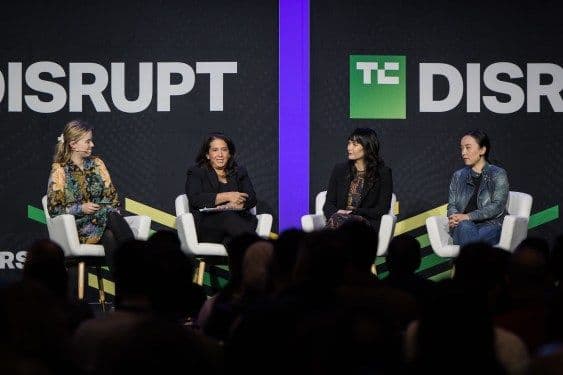
TechCrunch Disrupt 2026 starts in 4 days — lock in your pass savings of up to $100 before prices rise
Four days. That’s all that stands between now andTechCrunch Disrupt 2026, when 10,000 founders, investors, and tech leaders descend on Moscone West in San Francisco on October 13-15. It’s also your final window to secure discounted online pricing. Ticket savings of up to $100will end when doors open on October 13 at 8 a.m. PT. Don’t forget to get a second pass of the same ticket types at 50% off. Or if you’ve been affected by a layoff, thengrab your Expo+ Pass at just $75. Different people come to Disrupt looking for different outcomes. Forfounders, the Expo Hall or the founder-investor exclusive Deal Flow Café could mean meeting an investor, customer, or potential partner. Forinvestors, it could mean spotting a company before it breaks through. For department heads, it could mean finding a product that solves a genuine business problem. For technology companies, it’s a chance to see where the market is moving and who is moving with it. Others will come for the ideas and expertise across200+ sessionsled by250+ tech leadersacross six stages, plus focused roundtables, breakout sessions, and Startup Battlefield 200 pitch sessions. Whether your priority is finding a solution, meeting the right person, discovering your next investment, or hearing directly from the people shaping technology, you can build your time at Disrupt around the opportunities that matter to you. TechCrunch Disrupt 2026is where the global startup ecosystem converges for three days of next-gen insights, meaningful connections, and a first look at what’s shaping the future of tech before it hits the headlines. Whether you’re looking for your next investor, a co-founder, or insights into where the industry is headed, this is where you need to be. Make one of your highest-ROI investments in Q4. Grab your pass now tosave up to $100 before pricesjump to door rates on October 13 at 8 a.m. PT. Plus, bring a co-founder, colleague, or industry peer for 50% off a second pass of the same ticket type. Recently laid off? Get in on the action with a special$75 Expo+ Pass.
View

a16z’s Olivia Moore on the state of consumer AI
I wrote this week aboutthe bleak economics of consumer AI— but where some see a crisis, others see an opportunity. Olivia Moore covers consumer AI as a partner at Andreessen Horowitz — and on Monday, she releaseda report on the top 100 consumer AI apps. ChatGPT is still the biggest player by a mile, but smaller players like Suno and ElevenLabs are showing real staying power. Even more interesting is what we don’t see, as Moore’s report details half a dozen consumer categories that seem to be completely untouched by AI. Moore sees a huge opportunity in consumer AI, particularly if the industry can tap into revenue streams beyond just subscriptions and API charges. On a call this week, I talked with her about the unusual economics of consumer AI and why it’s still early days for the category. This interview has been edited for length and clarity. It’s an interesting moment for a report about consumer AI, since we’ve seen OpenAI pivot back to enterprise this year. It’s inspired a lot of pessimism about the overall revenue picture for consumer AI, including from me. But I take it you’re more optimistic? I agree with you that OpenAI has moved back towards the enterprise. To me, it’s not necessarily a pivot because they’re still launching a lot in consumer. It’s more of an expansion. But I don’t blame them, as much as I love consumer, because almost all of the AI revenue thus far has come from subscriptions and then token usage. And that is much more concentrated on the enterprise and prosumer side. How can consumer AI products change that revenue problem?The State of Markets reportreminded us that just 2.2% of U.S. households are paying for AI. Do we need that number to rise before the market becomes attractive? I actually don’t know if I want to see that user number increase. I’m more interested in getting back to a world where the consumer is monetized in a way that isn’t subscription dollars out of their own pocket. I think it’s very easy in Silicon Valley, with people who are high-income and have corporate cards to pay for those tools, to say, “oh well, I’d rather pay for the product.” But I think most people would actually rather have free access to something and see some ads, and then they can decide if they want to subscribe or not to make the ads go away. The other challenge is the marginal cost of AI services, which is still a lot higher than classic internet services like Facebook or Google Search. Do you see a lot of these services finding ways to keep those costs down, whether it’s open source or other lightweight models? Yeah, I think we’re seeing improvements there. Even ChatGPT now has a Go plan, which is just $8 a month, and I’m assuming it runs on cheaper models. We don’t necessarily need frontier intelligence for every task, and so that could mean cheaper models, especially for some consumer use cases. It could also mean more consumer companies building on top of open source models. We’ve heard a lot of that from our founders lately, and it really feels like it’s starting to change. The problem is that right now, the users driving the revenue are doing coding and other technical automation, where they probably do need frontier intelligence. I think as we get more people building for the consumer, where the model is not the product, we’ll start to see lower-cost models used more often. It’s unusual to talk about technical automation in a consumer service, which feels like another unique feature of AI. Are we starting to blur the lines between consumer and enterprise? I wrote an article about this maybe a year or so ago calledThe Great Expansiontrying to get at this. Pre-AI, you would have companies like Canva that were consumer-first and often took six or seven years to even add teams or enterprise plans. Now we’re seeing companies like Gamma, ElevenLabs, and Cursor that start as consumer and within 18 months become majority-enterprise businesses. Almost all of what we think of as consumer AI, I would argue, is prosumer AI. This really comes out on the revenue list, where there’s basically like three categories that power users are spending on. There’s product-building apps, so like Lovable, Replit, and Fal. There’s product marketing, which is AI ad generators like Higgsfield or HeyGen. Then there’s general work management, like Manus, Fireflies AI, and Granola. Those are like being paid for by consumers to start with, but I would argue that they’re not consumer in the way that we would think about pre-AI. There are also all these whitespace categories: social apps, dating apps, marketplaces, retail, travel, finance, health. There are no entrants in our top 100 list in those categories, which is pretty surprising. And that’s what I think we need to see over the next six months. So maybe we haven’t really seen true consumer AI yet? It’s definitely very early.
View

We can’t help treating AI like it’s human. But should we?
In a tan polo shirt, brown leather belt, and round bolo tie, MIT PhD student Wil Norton kind of looks like a park ranger, leading our tour group through a tropical jungle. We’re not actually on safari, though — we’re at MIT’s Computer Science & Artificial Intelligence Lab (CSAIL). But what we’re about to see is even more exotic than a cheetah or a jaguar: a pair of humanoid Unitree robots, each costing about $50,000. (“They’ll tell you they cost $16,000,” Norton says. “That’s a lie.”) We usually only see these robots on YouTube when they’re performing asynchronized martial artsroutine, ordancing on “America’s Got Talent.”Here, they’re approachable. Even though I know it isn’t sentient, I want to be its friend. With Norton’s permission, I approach the robot, whose nickname is Gabe. For a moment, I’m not sure how to interact with something that has a LiDAR sensor where its brain should be, but I default to treating it like a person. “Hello, sir, it’s nice to meet you,” I say, grabbing its gloved, dexterous hand and shaking it. I think about this interaction later — my instinctive impulse to be friendly to a robot — when I attendDr. Sherry Turkle‘s “Artificial Intimacy” book launch at MIT Future Fest. Turkle, who joined the faculty at MIT in 1976, has been researching the relationship between humans and computers perhaps longer than anyone, charting technology’s psychological impact on us from the first home computers to ChatGPT. “When we are drawn into even the most primitive exchanges with a relational artifact, we believe it cares for us,” Turkle writes in the book. “And we are wired to care for it in return.” I’m not alone in my tendency to anthropomorphize robots and large language models (LLMs) — as Turkle notes, it seems to be in our nature. One study found that about70% of peopleare polite when interacting with AI, while another showed that users aremore likelyto say “please” or “thank you” to chatbots once a conversation has progressed past a first prompt-and-response. “People tend to categorize whether this is the right use or wrong use, but I don’t think that is a clear boundary,”Dr. PatPataranutaporn, a colleague of Turkle who founded the Cyborg Psychology research group at the MIT Media Lab, told TechCrunch. “The question is, who are we becoming when we talk to [AI]?” There’s no material consequence of my politeness toward Gabe the robot, but as LLMs infiltrate everything from Google searches to customer service interactions, it has become routine for people to interact with these seemingly sentient chatbots. We’re more vulnerable than ever to the flip side of this impulse, which is that some people can ascribe so much legitimacy to the feelings of chatbots — which are programmed to never spark conflict — that they end up favoring them over other humans. “You can think of it like fantasy and fiction. We go to the cinema even though we know the story is completely fictional, but we want to experience a certain dimension of human experience that maybe our reality cannot give us,” Pataranutaporn said. “How do we benefit from that ability to experience other dimensions of human experience without losing it to the fantasy, where you can no longer come back to the reality?” Pataranutaporn describes himself as a “critical optimist,” and he studies AI’s potential to contribute to human flourishing. But he’s well aware of how dangerous this technology can be in the extremes. He even served as an expert in awrongful death lawsuitover the suicide of 14-year-old Sewell Setzer, III, whose mother sued the chatbot platform Character.AI, alleging that a chatbot modeled after a “Game of Thrones” character had encouraged her son to end his life. “It can create a situation where people don’t feel agency in actually creating their own future — like when you say that AI will replace everyone, people ask, what are we gonna do? And these companies are not really responding ethically or responsibly,” Pataranutaporn said. “How do we have imagination while still being responsible for the impact of that imagination?” While Turkle’s book explores the risk of turning to AI for emotional support, rather than other people, she doesn’t think that AI-human interactions are universally harmful. She recalls a project she advised in which a student created an AI bot to help people practice for job interviews. “My big metaphor is, stay in your lane, chatbot!” Turkle said at the event. “Coaching for a job interview? That’s a lane. I can do that … A chatbot that says to a three-year-old, ‘I’m your parent, you can talk to me, not your parents,’ is not in a lane.” But when this technology deviates from its lane even slightly, we become vulnerable to the way it can slowly chip away at our skepticism and make us trust it. It can start with something as simple as a handshake.
View
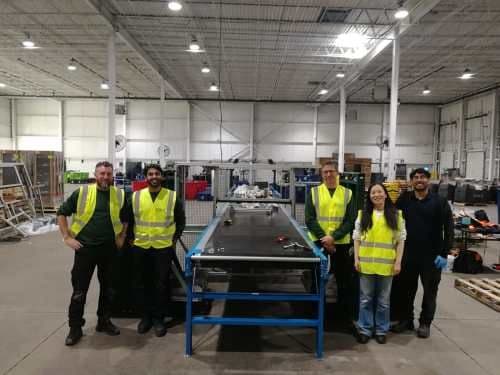
Danu Robotics’ fight to build a better recycling robot
ForDanu Roboticsfounder Amy Ma, the eureka moment came after years of working as a software developer at a London bank. It was the kind of high-touch office that’s typical in finance — but despite all the perks, Ma was alarmed to realize that the building’s recycling bins were being emptied into the trash. “Even though they have tons of money, there’s all these different recycling bins that just end up in the same place,” Ma told TechCrunch. The more she dug into the problem, the deeper it seemed to go. It wasn’t just her building. The economics of recycling as a whole often boil down to human beings sorting by hand through streams of waste to pull out different kinds of recyclable material. “I saw the technology and thought, we can do so much better,” Ma remembers. Now, she’s making good on that promise with six-year-old, Edinburgh, Scotland-based Danu Robotics, which makes a robot designed to sort through recycling more cheaply and quickly. Ma has been working on that idea for six years and is finally bringing her version of the product to market. Her robot, dubbed H.E.R.O., has a few advantages over its competitors. For example, it picks up items with a pincer claw instead of a suction system. But the bigger difference is the business approach: Danu leverages AI to continuously improve the robot’s software. The approach is already seeing some traction. Danu has letters of interest from two large customers and $500,000 worth of signed contracts. More notably, more than 200 customers are in its sales pipeline, which gives the company a hook into the $20 billion market for recycling sorting across Europe and North America. On the back of that promise, Dabnu has raised $5 million in late-seed funding to keep the commercial pressure on. There’s already a robust market for robotic waste-pickers, particularly the suction-based arms offered by competitors like Glacier and RecycleEye. But Ma believes the economics of recycling will make it easy for a new competitor to prove its worth. Because recycling centers make money off the materials they’re able to sort out, there’s an immediate return on investment for a working system. Ma estimates that a working site will earn $485,000 in additional revenue from having the robot on the sorting line, compared with a $160,000 initial investment and $24,000 in maintenance fees each year. That’s significantly cheaper than the competition, and Ma believes the robot will be more efficient, too. Since those machines are already shipping, Ma’s next goal is to make the robot sturdier, smaller, and more versatile. Once it’s portable enough, it can be used outside dedicated waste facilities, opening up a whole other world of use cases. “Once it’s smaller, it can be used as a stand-alone recycling solution for events, for shopping centers, hospitals, or airports to recycle their waste at the source,” Ma told TechCrunch, “and that’s the way we can really change how we’re managing our packaging waste.” Danu Robotics will be participating in Startup Battlefield 200 atTechCrunch Disrupt, October 13-15 at the Moscone Center in San Francisco.
View

Amazon drops data center NDAs, and AI agents want your credit card
Amazon says it willstop using NDAswhen negotiating data center deals with local governments, following asimilar move from Microsoftearlier this year. Secrecy has fueled community backlash against AI infrastructure, with opposition leading to hundreds of proposed and enacted moratoriums from New York to San Francisco. Meanwhile, a wave of startups is betting that consumers will hand AI agents access to their inboxes, files, and credit cards —if they can get websites to let them in. On this episode of TechCrunch’sEquitypodcast, Anthony Ha, Sean O’Kane, and Rebecca Bellan dig into whether ditching NDAs will change how data center deals get done, why trust may be the real product for personal AI startups, plus a couple of deals of the week. Listen to the full episode to hear more about: We’ll see you next week atTechCrunch Disrupt 2026! Get 25% off your tickets with code Equity25, and we’ll see you on the Builders Stage Tuesday at 9 am. Subscribe to Equity onYouTube,Apple Podcasts,Overcast,Spotifyand all the casts. You can also follow Equity onXandThreads, at @EquityPod.
View

Amazon and others are done keeping data center deals secret. Is it enough to build trust?
Loading the player… Amazon says it willstop using NDAswhen negotiating data center deals with local governments, following asimilar move from Microsoftearlier this year. Secrecy has fueled community backlash against AI infrastructure, with opposition leading to hundreds of proposed and enacted moratoriums from New York to San Francisco. Meanwhile, a wave of startups is betting that consumers will hand AI agents access to their inboxes, files, and credit cards —if they can get websites to let them in. On this episode of TechCrunch’sEquitypodcast, Anthony Ha, Sean O’Kane, and Rebecca Bellan dig into whether ditching NDAs will change how data center deals get done, why trust may be the real product for personal AI startups, plus a couple of deals of the week. Subscribe to Equity onYouTube,Apple Podcasts,Overcast,Spotifyand all the casts. You can also follow Equity onXandThreads, at @EquityPod.
View
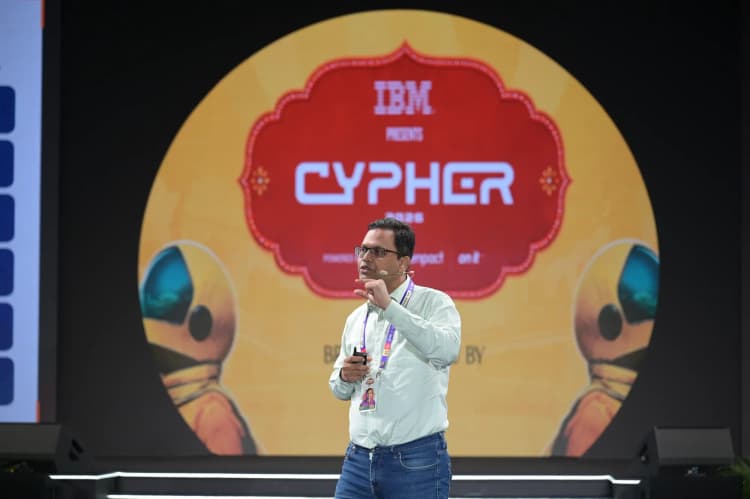
India Must Build, Not Just Consume, AI Models, Says Sarvam AI’s Pratyush Kumar
Sarvam is digitising Odisha’s complex land records with a custom OCR model, while preparing a trillion-parameter model for February.
View

TCS’s Annualised AI Revenue Crosses $3.1 Billion, Tops 10% of Total Revenue
TCS saw stronger demand across BFSI, manufacturing and technology services, while AI work began commanding better pricing and margins.
View
OpenAI’s math solutions aren’t meeting the field’s standards yet
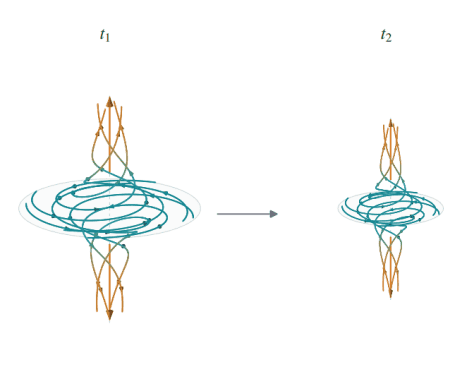
When OpenAIreleasedhundreds of claimed solutions to some of the world’s hardest math problems this week, the frontier lab said that it had consulted an advisory group of elite mathematicians to avoidthe controversythat came with the last time one of its models solved a long-standing problem in the field. But OpenAI fell short of those standards, particularly where the mathematicians emphasized the need for human understanding of a mathematical result. That’s especially concerning after a new paper highlighted gaps between the natural language and formally expressed solution to a million-dollar problem ostensibly solved by OpenAI’s models. The Advisory Group on Mathematics and Artificial Intelligence (AGMAI), hosted by Princeton University’s Institute for Advanced Studies, is made up of nine prominent researchers at institutions around the world. The organization releasedguidelinesfor frontier labs solving math problems at the end of September. In a statement on the latest set of proofs, the AGMAI said that “it is ultimately up to the mathematical community to assess the extent to which our recommendations were followed successfully.” However, the organization’s first request was “to stop testing advanced mathematical problems on proprietary models.” OpenAI’s release explicitly says that it is evaluating its proprietary models using open research problems in mathematics. The advisory group did not respond when asked by TechCrunch for a more thorough evaluation of OpenAI’s latest proof release. The lab clearly followed some of its principles, including releasing results as soon as possible and including information about how the models reached their conclusions. But not for all of them: Just 10 of the 719 manuscripts included releases of the model’s chain of thought. For papers that people don’t understand, the mathematicians suggested the proofs should be formalized — but just 42% of the proofs released by OpenAI had not undergone this process. Ultimately, it’s still not clear that OpenAI is taking “responsibility for ensuring that human understanding will follow” when releasing its proofs, in accordance to the AGMAI principles. AGMAI suggested that OpenAI should help fund the work of human mathematicians who will be required to make the lab’s solutions meaningful in any real way. “Problems are being solved autonomously by AI prompters who have no interest in the broader field itself once their initial target is ‘solved’, and do not understand the AI output well enough to answer questions on the result, give talks, or otherwise interact with the rest of the field,” Terence Tao, a prominent mathematician who has criticized OpenAI’s approach,wroteon social media after the release. That problem is exemplified bya paperreleased this week by mathematicians at the University of Cambridge and King’s College in London that questions the way frontier labs are approaching these challenges. When AI models solve mathematical problems, they first create a “natural language” explanation, then try to express that result in Lean, a programming language that in theory confirms the accuracy of the proof by compiling it as code. However, there may be problems with the way the models translate their natural language proofs into code; this paper documents at least two discrepancies between the natural language proof and the Lean code behind the solution OpenAI has offered to a problem derived from the Navier-Stokes equations that describe the complex behavior of fluids. These discrepancies don’t necessarily disprove either solution, but they do raise questions on whether we can simply rely on models to formalize their own solutions without human involvement. That’s one reason that AGMAI asked OpenAI to “include machine-readable metadata correlating the natural language and formal artifacts,” something that the frontier lab did not do with these releases. “Because of the phenomenon of mistranslations — as highlighted in this paper — the NL proof by OpenAI andother autoformalised Lean proofs should not prima facie be trusted without the same peer review process andscrutiny that other proofs are subjected to,” the authors of the “lost in translation” paper conclude. Mathematicians stress that when new results are discovered by humans, they take responsibility for them and engage with the broader community through papers, talks, and seminars. That process increases understanding of the solutions, finds strategies that can be used to solve other problems, and allows the new knowledge to be applied in practical fields. When a model is prompted to solve a hard problem and spits out a solution, “there is not human understanding of them at the point of release, and now the work begins,” Harvard University mathematics professor Melanie Wood told TechCrunch.
View