
Latest AI News

Bill Gates wants to see a robot tax and ‘Human Reserved’ jobs to mitigate harms from AI
Bill Gates posteda long essayto his Gates Notes site today, showing just how much the Microsoft co-founder has been thinking about the social impacts of AI. Gates is mostly in the Responsible AI camp, arguing thatPacing The Frontier, the open letter published by AI employees pushing for an AI slowdown, would be a good idea, but expressing skepticism that it would be sustainable. He also expressed excitement about AI’s benefits to science and healthcare, but worried about the labor impacts — all pretty familiar stuff if you followAnthropic’s policy work. But there were a few genuinely new ideas that could change the conversation if they take off. For starters, he proposes a “robot tax”: Right now, if you’re an employer and you hire someone, you pay payroll taxes on their earnings. But if you buy a robot, you can usually write it off right away as a business expense. The tax system nudges you toward replacing people with machines.A tax would slow the rush away from human labor a little and raise money for retraining and a stronger safety net. He also proposes setting aside certain jobs as “Human Reserved,” essentially barring AI from being used in certain tasks. It’s an interesting idea, and one that would be easy for policy-makers to enact: We might set something aside as Human Reserved for economic reasons. For example, we may do it because allowing machines to take over a certain role will displace a large number of people who can’t easily change jobs. You can’t tell a 55-year-old who has worked in construction their whole career that they need to go work at an elder care facility and expect them to find it fulfilling.Sometimes the decision to make something Human Reserved will be driven by other factors. In health, for example, imagine a robot giving you the awful news that you have an incurable disease. There’s no technical reason why it couldn’t. Yet it shouldn’t.The Human Reserved domain will evolve over time — for example, we should consider setting aside some jobs now and phasing in AI slowly over years or decades with a commitment to preserve some jobs. We should also note that both ideas would put a pretty serious dent in the profits of the major labs, which may be why we haven’t heard much about them until now. In addition, there are still a lot of unanswered questions about who exactly would set these rules and what exactly the rules would say, if they were to be rolled out.
View

Ex-Meta scientists want to bring visual AI to the factory floor
AI is transforming everything around us but, thus far, it has largely remained contained to the digital realm. Increasingly, however, startups are looking to take it into the real world. Perceptron, a startup started by two former Meta research scientists, is one such company. Founded in November 2024, the firm develops frontier vision models that aim to help machines more competently interact with their physical environments. This week, the company launched its latest model, Isaac 0.5, which its creators say is designed to provide machines with the ability to “perceive, reason and act” in industrial settings. Specifically, the software is capable of helping vision-guided robots navigate complex environments like warehouses or factory floors. It also helps companies extract visual intelligence from videos recorded by those bots. Isaac 0.5 is also being released as an open-weight model, so its parameters and training materials can be inspected by anyone. The startup, which recently raised $21 million in a funding round led by Bessemer Venture Partners, was co-founded by Armen Aghajanyan and Akshat Shrivastava, who previously worked for Meta’s Fundamental AI Research (FAIR), the tech giant’s AI research division. The duo see their software as the future of industrial automated deployment. “Physical AI today forces a false choice: generalist foundation models that need multiple dedicated cloud GPUs for every instance, or narrow models that handle perception or control, but never both,” the company says. Aghajanyan and Shrivastava say their tool is unlike existing models in the space because it is general-purpose, meaning that it’s not built for one specific, repetitive task. Instead, they say, the model is designed to be flexible depending on the particular environment (or situation) it is in. In an interview, Shrivastava asked me to consider what goes into a simple physical process like organizing boxes: “Imagine there’s a robot being deployed to sort packages right now. What are the tasks it would need to do?” Such a relatively simple task indeed consists of many steps. A robot would first have to read the label on the package, do some spatial analysis to understand where the boxes are, and decide which one to pick up. If it’s picking up a series of boxes, it would have to plan which boxes to pick up and in which order. Perceptron’s software is designed to help robots find their way through each step of the process. To be clear, the industry already has software that can help machines do most of those tasks, but there are few programs that are designed to do it flexibly. Where does the data for this algorithmic alchemy come from? Models like Isaac 0.5 learn operational skills by ingesting gargantuan amounts of video training data. Perceptron says its new model was fed on a million hours of what is known as general video to teach its algorithm to identify particular settings, visuals, and scenarios. The company also relied heavily on what is known asego video— video captured, typically through a GoPro or a wearable camera, from the perspective of a person completing a physical task — as well asUMI video, which are similarly used to teach AI systems movements by recording repetitive human actions. While Perceptron isn’t disclosing the sources of its training data, Shrivastava said that the company had “internally built petabyte-scale datasets that span across modalities, whether it’s images, text, video, etc. all the way through robotic trajectories.” The utility of a software that can help robots operate competently in warehouses is obviously vast, and Perceptron thinks it’s well-positioned to lead that wave of automation. The startup is ready to market its software to a variety of vendors, and thus potentially see its intelligence layer integrated into a broad array of industries. Those industries include manufacturing, logistics and warehousing, security, mobility, as well as media and entertainment. “Nothing like this really exists out there,” said Aghajanyan. “We’re really excited about it.”
View
Radar makes podcasts searchable — and usable by AI agents
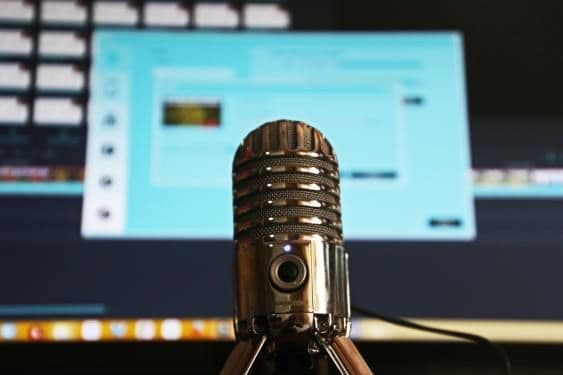
Particle, theAI newsreader startupfounded by former Twitter engineers, is shifting its focus to a potentially more lucrative idea: indexing the spoken conversations buried in podcasts and making them discoverable. On Wednesday, the company introducedRadar, a podcast search engine that not only transcribes podcast audio but also understands what it means, enabling it to pull out key quotes and highlights. The solution has business potential, as it’s already attracted interest from hedge funds looking for data that their agents can’t see, explains Particle co-founder and CEO Sara Beykpour. “Hedge funds have been the highest-volume customers that are directly integrating with the API,” Beykpour told TechCrunch. While journalists and researchers could also make use of the tools, other top-paying customers have included AI search platforms and data resellers. (The search API provider for AI agents,Exa, for instance, is among Radar’s partners.) The idea itself stemmed from one of the Particle news-reading app’s most beloved features. The app had usedan APItosource interesting podcast clipsthat it then included alongside related news stories in the app’s feed. Particle’s team realized the product’s value, but also that it was somewhat trapped in the news reader. As the movement around AI agents began to gain steam, the company decided to pivot and focus on building an API for its podcast intelligence product. “Our vision is really to have all new media intelligence and all audio intelligence in that API. One of the reasons why it’s an interesting space is that most API agents and services crawl the web and they’re focused on text. We are providing that layer with audio,” Beykpour said. “Agents are generally blind to audio; they can’t see it unless something or someone has transcribed it.” With Radar, the company transcribes more than 130,000 podcasts, making it the largest transcribed podcast service in existence. This includes all the Apple Top 200 podcasts across its 135 verticals, with 20,000 episodes added to Radar’s index daily. The podcast transcriptions include speaker labels and rich metadata, as Radar understands the entities — people, companies, brands, products, and topics — being discussed. It’s also able to track mentions of these entities across podcasts and send alerts whenever they come up, either when the mention occurs or as a daily or weekly digest. The alerts, which can be delivered via email, Slack, or webhook, can be customized with filters. These let users configure Radar to only send alerts when certain guests appear and discuss a particular topic, for instance. The search can also be narrowed in other ways such as limiting it to top podcasts only. Radar can extract relevant self-contained clips, with timestamps, allowing users to both listen to and read the comments made. “We’ve pre-chosen notable clips, so if you can’t listen to the whole podcast and you don’t want to read a summary, this is the best way to just get an idea of what’s happening in that podcast,” Beykpour noted. Radar can also track the topics mentioned in the podcast, who or what was mentioned and when, listener ratings and reviews, the episode’s ads, and more. There’s even a dedicated podcast ads search engine that can find every episode where a given company advertises and track how it trends over time. This feature has additional monetization potential, alongside other tools offering political bias analysis, chart rankings data, audience size estimates, sponsorship data, and brand suitability. While all of this is available through Radar’s web interface,its real product is the API and MCP, which allows AI agents and other businesses to tap into this same intelligence programmatically. Radar is priced at $29 a month per seat, with a $399-per-month plan for businesses that includes 20 seats. API users have custom pricing, based on their needs. In the future, Radar plans to expand the service beyond podcasts to support other forms of audio, such as YouTube videos and news clips.
View

Why Did Stripe Spend $8 Billion to Capture AI Spending?
“Would you keep production traffic on a gateway owned by the company that also settles your revenue?”
View

Your Next Laptop Will Be Costlier, Thanks to AI Data Centres
Memory shortages are driving up prices for everything, from consumer electronics to NVIDIA AI servers, while squeezing PCs and smartphones.
View

SpaceX Announces Starbase Louisiana Launch Site
The site is expected to support frequent Starship launches and expand SpaceX’s launch operations beyond Texas.
View

Runable hits $21M to bet AI agents can go from building businesses to growing them
As artificial intelligence makes it easier than ever to build websites and apps, Indian startupRunableis betting the next opportunity lies in what comes after: finding customers and helping businesses grow. The startup has raised $21 million to expand in that direction. The Series A was co-led by Susquehanna Venture Capital and Nexus Venture Partners, with existing investors Together Fund and Array VC also participating. The all-equity, primary funding valued Runable at $65 million after investment, co-founder and CEO Umesh Kumar (pictured above, right) said in an exclusive interview. Founded in 2025, Runable is targeting small businesses in an increasingly crowded market that includes AI giants such asAnthropicandOpenAIand coding platforms includingCursor,Lovable, andReplit. But the Bengaluru-based startup with its 15-person team is looking beyond software creation, with an AI agent designed to find customers, run ad campaigns, create presentations, and promote businesses across search, social media, and AI chatbots. “In the end, a business doesn’t requireCodexorClaude Codeor anything. They require real outcomes,” Kumar told TechCrunch. “If I am paying an agency $10,000 to run my Google Ads, can someone come in and do it for me for a lower price? That’s where Runable comes in.” Kumar and co-founder Saksham Sarda (pictured above, left) founded Runable initially as an AI infrastructure startup, building browser technology to scrape data at scale. However, the duo noticed users increasingly asked its browser-based agent to create things like slide decks and websites. That led the startup to eventually pivot toward a general-purpose AI agent. The shift helped Runable go from zero to a $2 million annualized revenue run rate within three weeks of launching payments in March, Kumar stated. Today, Runable’s agent allows users to build websites, apps, presentations, and other content by using natural language prompts, while handling some of the underlying infrastructure, including deployment and analytics. The startup is now extending the agent into what it calls the “grow” side of the business, where it aims to run ad campaigns, manage social media, handle SEO, and optimize a business’s presence in AI chatbot results, among other tasks. Kumar told TechCrunch that the aim is to ultimately help small business owners ask Runable to get a certain number of customers rather than separately setting up a website, analytics tools, advertising accounts, and marketing campaigns. Currently, Runable has about 1.7 million registered users, Kumar said, with the U.S., UK, and Japan among its largest markets. The platform also has users in Brazil, though the startup is increasingly focusing on the first three and expects Japan to emerge alongside the U.S. as one of its top markets as soon as next month. Kumar declined to disclose Runable’s current revenue or number of paying customers. He said, nonetheless, that its users consumed more than 1 trillion tokens over the last 90 days, with about 60% to 70% of that usage coming from paying customers. That usage comes at a cost, as Kumar acknowledged that Runable currently has negative gross margins. This is partly because the startup subsidizes AI usage for its customers. The startup, Kumar said, is working with a mix of models, including developing its own, and expects falling inference costs to help improve its economics over time. “We are seeing this path where you can provide the same quality of inference at almost 10x less cost,” Kumar told TechCrunch. Runable’s bigger challenge may be standing out as all top AI model companies it relies on are increasingly building agents of their own. Kumar, however, argued that Runable’s advantage is handling the work required to produce an outcome for a small business — including infrastructure, analytics, and distribution — without requiring users to stitch together multiple services. In a brief test of Runable, TechCrunch asked the agent to build and deploy a website for a fictional coffee subscription business, set up analytics, and then attract its first 100 visitors with an advertising budget of $25. Runable built the site and prepared an ad campaign, but stopped short of running it, saying an advertising account first needed to be connected. We ran a similar test on Cursor and encountered some of the same limitations. Cursor prepared an ad campaign but required access to a Meta Ads account and payment method, as well as a third-party service to permanently deploy the website. Runable handled more of the website infrastructure within its platform, but still required an external ad account before it could spend the advertising budget. Asked about the limitation, Runable said its ability to run ads without customers connecting their own advertising accounts is currently available for ads on ChatGPT. The startup said it has partnerships that enable such ads but declined to identify the partners, describing those relationships as a “soft wedge.” Kumar mentioned that Runable is not trying to beat coding agents at their own game. For developers working with local files or primarily writing code, he said tools including OpenAI’s Codex or Anthropic’s Claude Code can be a better fit. Runable is, however, targeting nontechnical small business owners who may not want to configure the tools and services required to turn an AI-generated product into a functioning business. General-purpose agents such as Manus and Genspark are seen as Runable’s closest competitors, Kumar said, as they target similar users and markets. Nevertheless, Runable aims to differentiate itself by helping businesses find customers using AI rather than focusing on building with AI alone.
View

Hearing tech startup Legato emerges from stealth with $12M and a peek at its AI hearing glasses
Hearing loss affects anestimated 50 million adultsin the United States, but onlyaround 20%of those with diagnosed hearing loss seek treatment.Legato, a new hearing tech company, aims to close that gap. The startup is emerging from stealth on Wednesday with $12 million in funding and a first look at its AI hearing glasses, the company told TechCrunch exclusively. The glasses, called Legato Frames, integrate the company’s patented hearing-assistance technology into the arms of eyewear frames. Legato Frames are expected to launch later this fall. Legato was founded by Mehul Trivedi and Steve Romine, who bring extensive experience in wearables and hearing care from Bose, where Trivedi led the creation of Bose Frames and Romine ran the hearing aids division. Trivedi left Bose to work at EssilorLuxottica, where he led smart eyewear efforts and worked on the Meta Ray-Bans, while Romine went on to serve as COO of hearing care company Audicus. After spending years at larger companies, Trivedi took some time off to explore the intersection of hearing technology and smart eyewear. During that time, Trivedi came across technology he believed could bring the two together, so he contacted Romine and the pair founded Legato in late 2024. “Our goal is to make hearing as ubiquitous as vision,” Trivedi said in an interview with TechCrunch. “It’s kind of a no-brainer that you go to an eye exam, you get your glasses, you wear your glasses, and you’re happy, and you do that for the rest of your life — and the idea of it being blurry again where you would just stop wearing them is not a consideration. I think that’s what we want to do with hearing: just make it something that people address and almost forget about.” Legato is targeting people with mild to moderate hearing loss, which represents the largest segment of the hearing-loss population, the startup says. The company started with the goal of making hearing care more accessible by addressing the cost, comfort, and stigma associated with traditional hearing aids. Legato set out to make the glasses as small and lightweight as possible, and developed a proprietary acoustic system, signal-processing stack, and mechanical architecture to achieve it. Traditional hearing aids often use directional microphones to focus on sounds coming from a particular direction, which works well in quiet settings but can be difficult in noisy environments, such as restaurants. Legato takes a different approach by using an AI-powered system to differentiate between background noise and voices, amplifying only the voices. The goal is to make conversations clearer without creating the cognitively draining listening experience that can come with some traditional hearing aids. “We wanted to deliver an experience that was unique,” Trivedi said. “So a form factor that’s really discreet and looks normal. They’re meant to feel and look like regular glasses. And so, we want it to be a product that’s effortless, easy to use, with kind of no controls that you need to fiddle with, works everywhere, works throughout your day, doesn’t need a ton of configuration, and just delivers you better hearing.” While the frames have an open-ear design, sound isn’t broadcast to people around you. They feature a dual-speaker system that directs sound toward the wearer while canceling sound that escapes, reducing sound by 99% just a few inches away from the ear. The company’s funding, which is from Neotribe Ventures, Listen, and Village Global, has largely gone toward product development, along with marketing efforts. “We have an opportunity to address a population with this product and build something that delivers without all the compromises of traditional hearing aids,” Trivedi said. “Hearing, at first glance, it’s not so much just like ‘I want to hear the TV better.’ It’s really about connection. When you hear better, you connect to the world. It reduces dementia risk and depression risk,” he continued. “There’s impactful hearing health factors associated with better hearing. We’ve got a product that lives on people for 16 hours that is trusted to help them with their hearing and their vision, and we’d love to continue helping them in every way we can.” When the frames launch later this year, Legato says they’ll be available through select eye-care providers nationwide and will “cost a fraction” of traditional hearing aids and may be eligible for vision insurance when purchased through an eye-care clinic.
View
Bengaluru-Based AI Startup Ringg AI Secures $10 Mn in Series A Extension Led by Peak XV
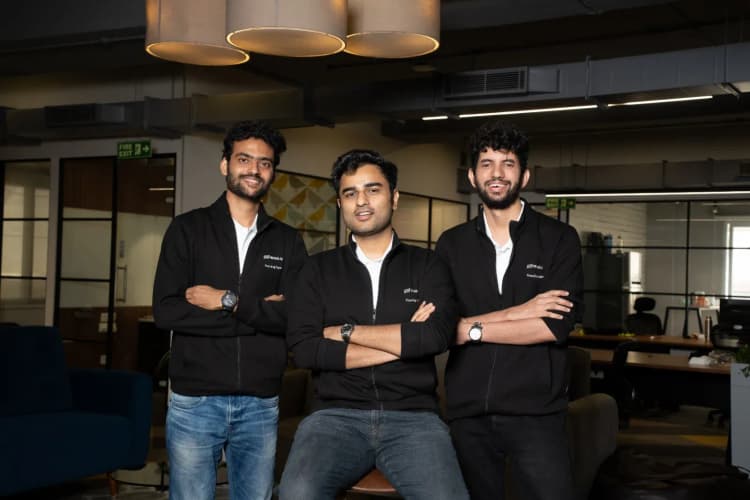
The Bengaluru-based startup plans to use the funds to expand its AI agents and enterprise operations across India and international markets.
View

Gujarat Police Seeks AI System to Connect 80,000 CCTV Cameras
Participants will test their systems on about 50 cameras, tracking a designated vehicle and generating real-time alerts, movement histories, and GIS visualisation.
View

India’s Next Global Legal Services Opportunity is Hiding in Its Data
The country has already demonstrated that it can become a global centre for technology, finance and business-process services. Legal Tech outsourcing could be the next frontier.
View

Why Did Stripe Spend $8 Billion to Capture AI Spending?
“Would you keep production traffic on a gateway owned by the company that also settles your revenue?”
View