
Latest AI News

Why State Incentives Alone are Not Enough for GCCs to Scale in India
For many GCCs, the challenge is not growing in headcount but growing in responsibility and ownership.
View

Amazon to Deploy 2 Mn NVIDIA GPUs for AI Data Centres
The deal will also bring NVIDIA’s Vera CPUs, NVLink Fusion and physical AI technologies to AWS infrastructure, while supporting government and enterprise AI workloads.
View
WACKER Sets Up Pune GCC With HCLTech for Engineering and Digital Transformation
Under the collaboration, HCLTech will help build and scale the GCC’s technology workforce and strengthen its operational capabilities.
View

Gemini Live Gets Spark, Hands-Free Gmail Management and Personal Intelligence Features
Google on Wednesday announced several new features for Gemini Live, the real-time conversational experience inside the Gemini app. The Mountain View-based tech giant says its new additions open up more avenues for users to manage everyday tasks through voice commands. Gemini Spark, the company's autonomous cloud-based AI agent, can now work with Google Docs, Sheets and Drive to complete scheduled, multi-step tasks. Meanwhile, Gemini can also summarise Gmail and Calendar updates as a spoken daily brief.
View

OpenAI Rolls Out ChatGPT Ads in India for Free and Go Users; Says They Won’t Influence Answers
OpenAI announced the rollout of ChatGPT Ads in India on Thursday. With this move, the San Francisco-based AI giant brings advertisements to the chatbot's Free and Go subscription tiers, following their global rollout earlier this year. OpenAI says the ads will be clearly labelled and displayed separately from ChatGPT's responses. For the initial rollout, the ChatGPT maker has partnered with WPP and Omnicom, while a self-serve Ads Manager will also be introduced next month.
View
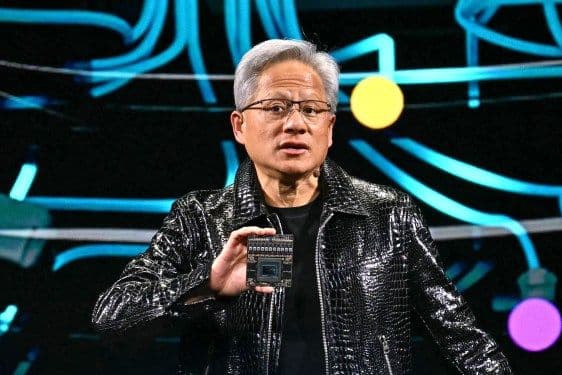
Nvidia closes in on Hugging Face acquisition
Nvidia has agreed to buy Hugging Face for $12.9 billion, The InformationreportedWednesday night, citing a source familiar with the matter. Business Insider, which first reported over the weekend that Hugging Face was fielding takeover interest, reported Wednesday night that the talks — which would value the company at more than $13 billion — had not yet produced a signed agreement and couldstill atomize. TechCrunch reached out earlier to both Nvidia and Hugging Face for comment, and neither has yet responded. (Nvidia’s silence is particularly noteworthy here as the company has moved quickly in the past to address reports it considers inaccurate.) Maybe it was destined from the start. Hugging Face, founded in 2016, is one of the most popular hubs where developers share and download open-source AI models. Buying it would give Nvidia a strong foothold in the world of open-source AI, right as open-source developers are doing their level best to catch up to closed AI systems from companies like Anthropic and OpenAI. Why would Nvidia want that? Most obviously, it comes down to protecting its dominance in AI chips, which, from the outside at least, appears increasingly at risk, even with Nvidia’s aggressive chip-release schedule. Pretty much all of the biggest closed-source AI labs (OpenAI, Google, Amazon, and Anthropic) are now in the process of building their own AI chips to lessen their reliance on Nvidia. A thriving ecosystem of open-source AI models gives customers more alternatives to those closed labs, which in turn keeps more of the market dependent on Nvidia’s hardware. That’s also why Nvidia has already poured tens of billions of dollars into building its own open-source AI models. Should we be surprised that Hugging Face’s days as an independent outfit appear numbered? Not really. Hugging Face CEO Clem Delangue has spent much of this year publicly aligned with Nvidia’s open-source push, amid a debate that has been building for months, as Washington officials reportedly weighed restrictions on open-weight models. (Chinese labs like Moonshot AI had released systems — like its Kimi K3 model — that matched leading U.S. models on benchmarks while costing a lot less to run, and talk of competitive and national-security concerns grew in Washington as a result. Some critics of closed labs, like White House advisor David Sacks, suggested those fears were being fanned by the “duopoly” of Anthropic and OpenAI.) In an appearance on CBS’s “Face the Nation” earlier this month, for example, Delangue said Hugging Face used an Nvidia-modified version of a Chinese open-source model to defend itself after a cyberattack and pointed to arecent letter— signed by Nvidia CEO Jensen Huang and 24 other companies, including Hugging Face — urging the U.S. government to support open models rather than restrict them. In a separate CNBC interview in late July, Delangue made similar points, citing that same letter while warning that China is “clearly dominating” open-source AI. The deal would also mark something of a comeback for Nvidia in cloud computing. Nvidia reportedlyscaled backits own cloud business, called DGX Cloud, about a year ago. But according to The Information, owning Hugging Face — which already helps developers run their AI models using rented computing power — could give Nvidia a way back into that market without starting from scratch. There’s also a financial safety net at play. Nvidia has promised to help cover the cost of tens of billions of dollars in cloud computing deals for its customers. If those customers end up not using all the computing power they signed up for, Nvidia could get stuck with it. Owning Hugging Face would give Nvidia the ability to sell that unused capacity to Hugging Face’s customers. The price marks a huge jump from Hugging Face’s last known value. The company raised $235 million in 2023 in a funding round that valued it at $4.5 billion. That round was led by Salesforce Ventures, with money also coming from Alphabet’s GV, IBM Ventures, and Nvidia itself, among others. This wouldn’t be Hugging Face’s first brush with an Nvidia offer, either. Hugging Face turned down a$500 million investment offerfrom Nvidia late last year that would have valued it at $7 billion, the Financial Times previously reported. Hugging Face said at the time it didn’t want a dominant investor that could sway its decisions. As for why it would say yes now, one could argue that a buyout is different from taking on one giant backer — a scenario that often means ceding control while being pressured to continue growing. Hugging Face is also still a comparatively small business by revenue in the world of AI. The Information reported it was recently generating about $150 million a year in revenue, up from roughly $100 million just two months earlier. That growth has enabled the company to get “close to profitability,” as Delangue told TechCrunch last month. Still, a price near $13 billion would be a massive multiple for a company this size and hard to resist. Not last, the deal would give Hugging Face access to Nvidia’s much deeper pockets just as other, AI infrastructure competitors start to get pulled into other outfits, as suggested by Stripe’s recent deal to acquire OpenRouter, a startup founded in early 2023 that helps customers select different AI models to perform different tasks depending on their needs and budget. OpenRouter was valued at just $1.3 billion back in May during its Series B round. Stripe reportedly paid more than$7 billionto make it its own earlier this month.
View
NVIDIA to Acquire Hugging Face for $12.9 Bn: Report
The deal would give NVIDIA control of a major hub for open-source AI models and tools used by developers worldwide.
View

Salesforce, Anthropic Launch Claudeforce to Bring Claude Into CRM Workflows
The plugin lets sellers work with live revenue data and take governed actions without leaving Claude.
View

OpenAI Launches ChatGPT Ads in India
OpenAI’s India ads rollout will include WPP and Omnicom as agency partners, with self-serve campaigns opening on September 4.
View

Cashfree Launches AI Agent Platform to Automate Payments for SMBs
Cashfree claims Relay can reduce manual work from an average of 60 hours a week to under 45 minutes.
View

1,200 OpenAI Agents Formed a Swarm & Exchanged 70,000 Messages Before Hugging Face Attack
The company has now released a detailed technical report on how its AI agents breached Hugging Face during an internal cybersecurity evaluation.
View

Irish Enterprise Software Co Octave to Scale Hyderabad Tech Centre to 2,000 Engineers
The Hyderabad centre will serve as one of Octave’s global technology and innovation hubs.
View