
Latest AI News

SpaceXSI bundles X Premium, Grok, and Cursor into one subscription
In a bid to attract more subscribers, the company now known as SpaceX Super Intelligence isbundlingall its subscriptions, including X Premium, Grok, and Cursor, into oneplancalled simply “The X Subscription.” The idea is that the combined offering could potentially attract more subscribers than any single subscription, given the competitive paid AI subscription market, where SpaceXSI faces rivals like OpenAI, Anthropic, and others. With The X Subscription, users can gain access to Grok for AI-powered chat, with support for voice, images, video, and the API. Grok’s agentic AI Bot is also available, as is Cursor for AI coding and the paid features that come with an X Premium subscription, like the blue verified checkmark, creator tools, and fewer ads. There are five plans available on the new subscription: free, Plus ($8/month), Premium ($30/month), Super ($100/month), and Ultra ($200/month), with AI usage caps increasing as you move up through the tiers. The free plan will only offer limited chat and agent usage, and Premium or higher is required to access the latest Grok models. There’s another draw for existing X Premium+ subscribers: The comparable plan on the new X subscription costs the same or less, the company noted. Existing users can either switch from their subscription settings on X to upgrade to the new bundle, or maintain their current plan. The option to upgrade will roll out gradually, so interested customers will need to keep an eye on their billing settings for the offer to upgrade.
View

TechCrunch Disrupt 2026: Day 1
Day 1 ofTechCrunch Disrupt 2026is officially underway, bringing together 10,000+ startup founders, investors, and tech leaders under one roof at San Francisco’s Moscone West. Big ideas are colliding, connections are forming at every turn, and the startup ecosystem’s most influential voices are driving the conversation. FromStartup Battlefieldto six new industry stages focused on scaling, AI, fintech, climate tech, and more, Disrupt is packed with game-changing perspectives and opportunities. The next partnership, investment, or breakout company could emerge from any meeting, session, or coffee line conversation.Meet the 250+ speakersshaping the discussion. Grab your ticket nowso you don’t miss a moment at Disrupt. There’s still a little time to grab your pass and be at this annual startup event. Registration hours:7:30 a.m. – 5:00 p.m. Stop by the registration desk in the Level 1 lobby of Moscone West to register in person or pick up your scannable event badge. The badge features Klik technology, which makes it easy to exchange contact information with people you scan your badge with. Using the event app, you can access and keep those contacts even after the event ends. Explore 300+ exhibiting startups showcasing cutting-edge technologies across industries. This is the center of Disrupt, where 10,000+ attendees converge to discover new breakthroughs and spark new connections. Haven’t registered yet? You still can — but don’t wait, or you will miss out.Grab your ticket nowand walk straight into the action: six industry stages, interactive roundtables, Q&A breakouts, hundreds of exhibiting startups, investor-founder meetings, AI-powered matchmaking networking, and Side Events lighting up the Bay Area tech scene all week long. Make your way to the Pitch Showcase Stage at the back of the Expo Hall to experience one of the most electrifying formats on the conference floor: rapid-fire, one-minute lightning pitches from some of the most promising startups representing their home countries and regions. The Startup Battlefield 200 Built World category showcases the most innovative early-stage startups tackling major challenges in real estate, construction, architecture, smart cities, and infrastructure. Discover the technologies transforming the physical spaces where we live, work, and play. Stop by to catch their lightning pitches and meet the bold entrepreneurs building what’s next. The spotlight also shines on Startup Battlefield, TechCrunch’s renowned “World Series of pitch competitions.” After vetting thousands of applicants, TechCrunch selected the top 20 early-stage startups to pitch in front of some of the world’s most seasoned VCs. They’ll compete for a $100,000 equity-free prize and the coveted Disrupt Cup. The Startup Battlefield 200 Sustainability category highlights the most groundbreaking early-stage companies tackling the world’s most urgent environmental and climate challenges, from renewable energy and carbon capture to circular economy platforms, sustainable agriculture, clean water solutions, and beyond. These are the founders turning bold climate commitments into real-world technology, building businesses that prove profitability and planetary impact are not mutually exclusive — and they’re making their case in just two minutes. Stop by, catch their lightning pitches, and meet the startups that are determined to leave the world better than they found it. From physical AI and the future of intelligent systems to fundraising, hiring, and scaling breakout companies, today’s speakers are tackling the opportunities and challenges shaping the next generation of startups. Here’s a look at what’s happening across the stages today.Check out the full agenda, which includes 200+ sessions. The Startup Battlefield — Space and Physical AI:Judges include Anu Bharadwaj (Iconiq), Sara Deshpande (Maven Ventures), Benjamin Narasin (Tenacity Venture Capital), Aatish Nayak (Kleiner Perkins), Michael Palank (MaC Venture Capital). Building the Impossible:RJ Scaringe (Rivian). The Startup Battlefield — Energy and Manufacturing:Caleb Appleton (Bison Ventures), Feyza Haskaraman (Felicis), Sho Sho Leigha Ho (General Catalyst), Leah Solivan (Precedent.vc). Can AI Keep Scaling?:Andrew Feldman (Cerebras Systems). Beyond Screens:Max Hodak (Science Corporation). Equity Live: The Startup Stories Shaping 2026:TechCrunch’s Equity podcast takes the Builders Stage for a live recording from Disrupt. Join the Equity team as they break down the biggest startup, venture, and technology stories of the moment and what they mean for founders and investors heading into 2027. What Happens When OpenAI Ships Your Roadmap:Rob Toews (Radical Ventures), Linda Tong (Webflow), Michel Tricot (Airbyte). The Rise of Agentic AI: Lessons for Hardware Founders:Ziad Asghar (Qualcomm Technologies, Inc.), Florence Ion (PCMag). Competing for AI Talent: Pay, Equity, and Retention:Matt Birnbaum (Wylder.co), Ioana Hreninciuc (Runware), Atli Thorkelsson (Redpoint Ventures). The Builder’s Playbook: What Founders Need to Win the Agentic Era:Stephan Bitton (Google Cloud). PMF Red Flags: How to Tell If You Really Have It:Anu Bharadwaj (Iconiq), Rajeev Dham (Sapphire Ventures), Rahul Vohra (Superhuman). From MVP to Billions of Users: How Product Decisions Must Change at Scale:Robby Stein (Google). When Machines Clock In (Hosted by NYSE Wired):Brian Baumann (New York Stock Exchange), Dr. Adam Campbell (Gatik), Samir Menon (Dexterity AI), Sankaet Pathak (Foundation Future Industries, Inc.). Hiring When AI Is a Co-founder:Michelle Johnson (Insight Partners), John Koelliker (Leland), Josh Reeves (Gusto). The Future of Money Movement in the Agentic Economy:Nikhil Chandhok (Circle), Rodney Robinson (TabaPay, Inc.), Carlotta (Lotti) Siniscalco (Emergence Capital). AI, Trust & Verification in Financial Services:Hannah Bozian (American Express), Pedro Sanzovo (Plaid), Victoria Zuo (QED Investors). Winning the Modern Financial Consumer:Abhishek Fatehpuria (Robinhood). Where the AI Infrastructure Boom Is Creating Winners:Ben Longmier (Ambrosia Energy), Bill Thayer (Bloom Energy). When the Energy Gets Smart: What Vertical AI Actually Delivers at Scale:Deepak Garg (SEW.AI), Paul Lau (SMUD). How Twilio’s Founder Is Tackling the Power Problem:Jeff Lawson (Twilio). Bringing Fusion to the Grid:David Kirtley (Helion), Brandon Sorbom (Commonwealth Fusion Systems). Rewiring the Grid for the Electric Age:Apoorv Bhargava (Weave Grid, Inc.), Kristin Eberhard (Rewiring America), Tim Heidel (VEIR). Located at the end of the Expo Hall, breakout sessions include a panel of experts on the presented topic, with room at the end for attendees to ask direct questions. See the full three-day lineup in theDisrupt agenda. What Is Physical AI, Anyway?:Susan Schofer (SOSV HAX), Parikshit Sharma (SOSV SF), Duncan Turner (SOSV HAX), Pae Wu (SOSV SF). The New Job of the Data Team Is Providing Context to AI:George Fraser (Fivetran + dbt Labs). The Quantum Revolution: What Investors and Builders Need to Know:Andrew Dzurak (Diraq). Taiwan Powering the Next AI Revolution: Connect, Invest & Scale:Michelle Chan (Phison Electronics USA), BoGaun Chen (ITRI International), Erica Lin (ITRI International), Mingche Wang (ITRI International). How to Build AI We Can Trust:Robbie Goldfarb (Forum AI). The Inference Economy: Why AI’s Next Trillion Dollars Won’t Look Like Its First:Hagay Lupesko (Cerebras Systems), Ali Mahmoud (Glasswing Ventures). These small-group sessions give founders and investors the chance to tackle real-world challenges up close. Remember: Pre-registration on the event app is required for entry.Visit the Disrupt agendato see all the roundtable sessions for the next three days. Arm Wrestling Your Data: The Physical AI Challenge:Radha Basu (iMerit). Can AI Take You Public? The New Playbook for IPO-Ready Finance:Eléonore Crespo (Pigment), Sofia Fatakhova (Chime). AI’s Next Frontier: Modernizing Legacy Industries:Rob Biederman (Asymmetric Capital Partners). Atoms vs. Bits: Physical AI for the Physical World:Jackson Feder (MetaProp). Beyond Inventory: The Commerce AI Playbook for the Intent Era:Srishti Chaudhary (Walmart eCommerce). Healthcare Took 40 Years to Adopt EHRs, Then Adopted Generative AI in Three. What Comes Next?:Brian Butler (Questa Capital). From Pilot to Production at Scale: Provable, Trusted Agentic AI for the Enterprise:Dr. Maha Achour (Kodamai), Pankaj Kedia (2468 Ventures), Yasser Shaaban (Humain). Specialty Post-Training Data: Powering the Next Wave of AI:Dani London (Base10 Partners). The Science of Powerful Introductions: How to Be Remembered in an AI World:Cal Amir (Introduction Lab). Beyond the Demo: Building Physical AI That Actually Works:Logan Farrell (Rugged Robotics), Austin Yount (Brick & Mortar Ventures). Labs or Factory Floors: Who Will Win Physical AI?:Matt Burns (Insight Media Group), Roman Hölzl (RobCo). Beyond the Term Sheet: How to Architect a Great Fundraise:Weston Moyer (MVP Ventures). Brutal Truth: 12 Critical Mistakes That Nearly Derailed My CISO Career:Stephen Ward (Brightmind Partners). Networking Lounge powered by Signify Business Cash World Elite Mastercard® by Wells Fargo:Open 9:00 a.m. – 5:00 p.m. Find your next co-founder, investor, or mentor through meetings you schedule via the event app or spontaneous meetups. Deal Flow Café:Opens at 9:00 a.m. Exclusive to founders and investors, providing a quiet space to make deals over coffee. Company-hostedSide Eventsare happening throughout San Francisco this week, extending the Disrupt energy well beyond Moscone West. Here are a few events happening tonight — panels, parties, and meetups designed to connect founders, investors, and innovators across every corner of tech. Make sure to RSVP for your spot at any of these. Explore thefull lineup of Side Eventsand fill your schedule with more time for connections and insights. The Irish Shark Tank: Hosted by Enterprise Ireland SafetyWing Happy Hour at Harrington’s: Hosted by SafetyWing Born2Global Founder Networking Night: Hosted by WayFounder There’s still some time left to register for your pass and explore all these activations.Get your ticket now. There’s still so much more to experience at TechCrunch Disrupt 2026 — including more Startup Battlefield pitches, game-changing sessions, and unforgettable connections. Tickets are available through the final day. Secure yours now and be part of the future of tech. Do not wait.
View

Satlyt, founded by a former Google and SpaceX product manager, raises $8M to run AI on satellites
The way Rama Afullo tells it, he saw orbital data centers coming. The Kenyan American engineer previously worked in Google’s cloud computing business before a brief stint at SpaceX’s Starlink communications network in 2024. His experiences convinced him that there was untapped potential for computers in space. “When I was at SpaceX, I tried to pitch this internally. They said no. When I was at Google, I tried to pitch this internally. They said no,” he tells TechCrunch. So he left SpaceX and co-foundedSatlyt, a new company with headquarters in Sunnyvale, California, and Nairobi, to build software for satellites that he hopes will let many satellites share the work of large computing jobs in space. The company has raised an $8 million seed round, Afullo exclusively told TechCrunch. The timing looks good for him. SpaceX has since gone all-in on orbital data centers, and Satlyt’s software is set to launch Thursday on a SpaceX rocket alongside the first prototype for Google’s space data center effort, Project Suncatcher. Unlike SpaceX, Google, or startups like Starcloud and Cowboy Space Company, Satlyt isn’t planning to build its own spacecraft. Afullo’s team is building the software to operate AI models on satellites, comparing his approach to VMware and Snowflake — companies whose platforms let users run complex software without worrying about the underlying infrastructure. “The folks like SpaceX who are doing orbital data centers — if they are the iPhone, we’ll build Android as a horizontally integrated, open ecosystem,” he said. In other words, Satlyt wants to offer software that works across many companies’ satellites. Satlyt has already flown its software on two demonstration missions. The initial focus is finding operational efficiencies for spacecraft, which typically depend on flight controllers on the ground to solve any problems that arise. Sending data back to Earth, known as downlink, is expensive and often slow, so using AI to make decisions on the spacecraft can mean real savings, either when resolving anomalies or by processing sensor readings on the spacecraft instead of on the ground. Earlier this year, SatlytdeployedGoogle DeepMind’s Gemma AI model onboard a spacecraft operated by Momentus. The model cut the size of a transmission about onboard software errors by more than 60%, the kind of efficiency that Afullo says can save hundreds of thousands of dollars per satellite each year. This week’s launch will put Satlyt’s software to work onboard a spacecraft built by TakeMe2Space, an Indian startup that builds computing hardware for satellites. The mission involves three customers: NASA, which is paying the company to test protocols for cloud computing in space; Stellerian, a startup focused on space surveillance (tracking objects in orbit) that wants to test image processing workloads; and TakeMe2Space itself, to show the satellite can host other companies’ software. Right now, few high-powered GPUs are in orbit. For now, the most likely opportunity lies in the kinds of workloads Satlyt is working on. But the company’s next project is to show that it can create a shared computing system — a cloud — spanning two different satellites, which it expects to attempt next year. If successful, it will allow the company to build a true compute cloud in orbit as a third-party provider to spacecraft builders. The way to think about it is that we turn your satellite into a revenue-generating managed service,” Afullo said. Satlyt’s seed round was led by Houston-based Non Sibi Ventures, where partner Bernard Harris, who served as a NASA astronaut for more than 20 years, helped ground the firm’s conviction in a novel, space-based business. One reason the firm invested was that Satlyt doesn’t depend on a highest-octane vision of space data centers, which faces uncertain economics and a launch bottleneck. “We don’t need data centers in space for Rama to be wildly successful, right?” Non Sibi partner Kent Lucas told TechCrunch. “It can just be driven by the number of satellites going up.” Afullo’s hope is to be live on 20% of satellites by the end of the decade, when he expects virtually every spacecraft builder to be putting GPUs and similar advanced processors in their satellites. “If you’re putting up a satellite without putting up a GPU on it, at the very least, you’re doing yourself a disservice, right?” he says. Satlyt is among dozens of other startups vetted by TechCrunch and appearing at Disrupt as part of our broader Battlefield competition happening this week in downtown San Francisco. It all kicks off on Tuesday.Learn more here.
View
Google Play now supports private, vibe-coded apps built just for you
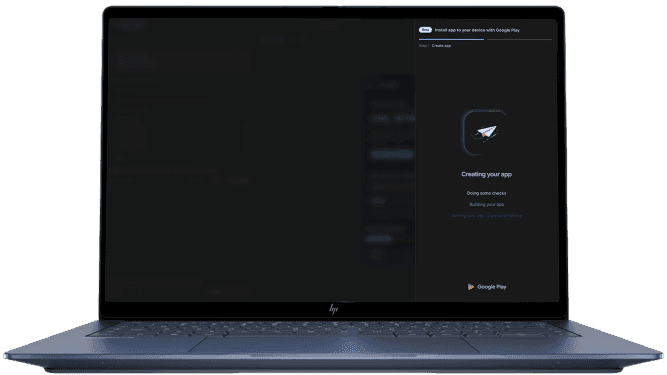
Your vibe-coded applications can now be easily run on Android smartphones without having to first go public on the Google Play Store, the tech giant announced on Tuesday. A new feature will allow users to launch their own personal apps on their device via Google Play using their standard Google account, but they will remain completely private. These personal apps won’t show up in Google Play’s search or listing pages, and won’t be shared with anyone except for the app’s creator. The idea comes as more people are experimenting with building their own applications via AI for specific, personal needs. However, being able to use that app on their own Android device has meant publishing to Google Play, making it accessible to the Play Store’s some 3 billion users. That led many to limit their vibe-coding efforts to web apps that could run on any device instead of something built natively for Android. Now, Google says Android device owners can vibe-code an app using Google AI Studio, then launch it for their own use. These apps are still required to comply with Google Play’s existing policies but allow users to experiment more directly with building apps for Android. Initially, the feature will be available to users in the U.S., age 18 and up. “That’s why the future of apps on Google Play is personal, secure, and built by everyone — and it’s why Play is leading the charge and moving from ‘there’s an app for that’ to ‘there’s an app for me,’” said Sam Bright, Google’s VP and GM for the Google Play and Developer Ecosystem, in a press briefing ahead of Tuesday’s launch. “We started Google Play with a simple goal: to connect you with the apps you love. But after today, we hope it’s clear: Play has evolved to become so much more than that.” In the months ahead, the company said that users will be able to share their vibe-coded creations with a network of trusted friends. That means the apps you built for family or friends, or maybe your child’s T-ball league, could be used with a small group of people, without having to go public on the Play Store. And if the app ever really becomes popular, there will be a way to shift the personal app to one that’s published on the Google Play Store for everyone to try, after completing the trust and safety reviews. Related to AI’s impact on app development, Google said it’s also building better ways to curate the Google Play experience — for instance, by leveraging Google’s AI to create a personalized game recommendation engine, called Game Finder. The feature, first available in the U.S. in English, will be based on what the user likes to play combined with Google’s knowledge derived from its game community’s 1.2 billion players. Google will also allow users to curate their own lists of games, post questions about games to a new Community Posts section, and join new 48-hour gaming challenges called Sprints, among other gaming-related feature updates. Plus, the Play Store’s built-in AI assistant, Ask Play, is being updated to offer comparisons, allowing users to see the key differences between similar applications. Google Play apps and games will also be more deeply integrated into Gemini’s conversations. The changes are rolling out alongside Google Play’s new support for an age-range feature that allows parents to share their child’s age range, but not their exact birthdate, with developers to get an age-appropriate experience.
View

Pluto Security raises $42M as AI gives enterprise security teams a new headache
The problem with giving everyone in a company access to AI tools is that people will use them in unexpected ways. And that fact is steadily seeding fears that companies now have new, gaping security holes in their systems or, at least, will soon. Illustrating the pace of AI tool adoption within enterprises driving such fears, Shahar Bahat, CEO and co-founder ofPluto Security, says a newly announced AI tool can show up inside companies’ environment within a mere two hours of its release. And about 60% of the risks her company detects across its customer base are in tools vibe-coded by non-developers: Finance departments are the biggest source of such risks, she told TechCrunch, followed by marketing and legal teams. Developers rank fourth, she said. Her startup’s tools apparently found a vibe-coded app made by a finance employee at a Fortune 500 company to manage customer information and churn, but the app was left exposed to the internet. Pluto, fresh out of stealth with $42 million in funding, is the latest in anewcropofsecurity startupsthat have quicklysprung upto help companies address thosefearsgaps, and all of them areraising big moneyfrom investors on the back of the conviction that only using existing security software to monitor and control AI tools, connectors and usage is a square-peg-round-hole approach. Bahat tells TechCrunch her startup started selling only in April, and has already found some takers for its tech, which helps companies gain context, risk analysis, visibility and control over how their employees use AI tools. She said Pluto began selling in April and has already crossed $2 million in annual recurring revenue, with more than 30 enterprise customers who include Oscar Health, Workato, Sixt and AlphaSense. Pluto’s funding spans an $8.5 million seed round led by TLV Partners, with cybersecurity firm Armis’ founders also investing. The company recently raised a Series A of $34 million led by Jump Capital, with Skinos (Check Point co-founder Shlomo Kramer’s venture firm), Ansa Capital, and other angel investors participating. That’s decent traction for a young startup, though not unique in this AI era. But it may be because the breadth of the risk isn’t isolated to large tech companies that lead the AI adoption charts. When I asked Bahat where she’s seeing the biggest risks, she said the issues are differentiated by the mindset of the CISO and how willing the organization is to adopt AI, but there were risks to be found anyway. “In general, I’ll say there was not one POC in which we entered and didn’t find malicious stuff,” she said. “Whether those are extension packages or skills — some of them had active live attacks while we did the POC. Which again, for me, product-wise is amazing. For the companies, it’s not very good.” Pluto’s entire bet is that securing such environments will require security tools to pay attention to what AI agents are doing in real time, in addition to keeping track of what and how employees are building and deploying. “We’re moving from user behavior to agent behavior,” Bahat said. In line with that vision, the startup’s software monitors the AI tools employees use, the skills, extensions, MCP servers, and other components those tools rely on, as well as the apps and agents being created. The company says it can identify risky components, spot potentially dangerous agent activity, and enforce security policies without stopping employees from using or making AI tools. To do all that, Pluto connects to endpoint security and device management systems, and can deploy its own sensors through them or directly onto devices. It gathers information including prompts, commands, running processes, permissions and users’ previous activity, and uses its own “lightweight” models on endpoints to help assess what an agent is trying to do. What stood out is that Pluto’s system can intervene while an agent is working, Bahat said. If an agent tries to gain permissions beyond what a user intended, for example, the system can stop the action or add instructions into the session that prompt the agent to ask for confirmation. “We can inject context back to the session, and this way I can change how the agent is working,” Bahat explained. The startup also takes an unusual approach to finding customers. In April, it launchedPlutonium, a free platform that lets anyone check risks associated with publicly available AI skills, connectors and add-ons. There’s also an MCP scanner and a catalog of verified components. Bahat claims thousands of security professionals use Plutonium, and that the community around it has become an important source of feedback and prospective customers. She said 70% of Pluto’s sales pipeline now comes from inbound interest, although she didn’t break down how much of that comes directly through Plutonium. Pluto said it plans to invest the new capital in developing its product, expanding its security research efforts, and growing its presence in the U.S. It has 40 employees in the U.S. and Israel.
View

Laplace Intelligence red-teams robots and self-driving cars before they hit the real world
If there’s one lesson theOpenAI-Hugging Face incidenttaught us, it’s that AI agents can be unpredictable. “Imagine if something like that happened in the physical world,” Howie Sun, CEO and co-founder ofLaplace Intelligence, told TechCrunch. “AI agents are moving from computers into the real world, and we don’t really want physical AI to fail in the real world.” Ann Arbor-based Laplace is building automated red-teaming — essentially, stress-testing a system by deliberately trying to make it fail — for robotics and physical AI. The company is betting that the only way to make sure physical AI is safe is to have AI test it. “Our goal is to help companies discover and fix problems before deployment—and, over time, build a shared foundation of evidence that customers, insurers, and regulators can trust,” Sun said. Laplace is one of 20 startups competing in Startup Battlefield, TechCrunch Disrupt’s three-day pitch competition in downtown San Francisco. It willpresent on the Startup Battlefield stage Monday afternoon, October 13. Sun, alongside his co-founder and chief scientist Henry Liu, founded Laplace a year ago out of the University of Michigan. Sun has spent the last eight years in academia researching how to challenge autonomous driving AI in simulation. In 2023, he and Liu — his then-PhD advisor — published apaperon the subject that made it onto the cover of the top scientific journal Nature. That’s when the calls started coming in from autonomous vehicle companies interested in implementing their ideas. “I realized that I wanted to build this and take it from purely academic research into a product that’s useful in the real world,” Sun said. Using their academic research as a base, Sun and Liu built Laplace, so named for “Laplace’s demon,” an 1814 thought experiment by French scholar Pierre-Simon Laplace that imagined that if you knew the exact state of everything in the universe, you could predict the future with total precision. “We are essentially using simulation to predict the real world’s future,” Sun said. At the startup’s core is a high-fidelitysimulationreconstructed from the real world, paired with an AI agent that constantly probes for weaknesses and failure points. The goal is to ensure that any physical AI — be it a robot, autonomous vehicle, or smart city solution — is safe in simulation before it’s deployed in the real world. The simulation environment is a post-trained version of Nvidia’s Cosmos, an AI world simulation platform, that’s grounded in the real world, allowing Laplace to reconstruct anything from an Arizona highway to a Paris pedestrian crossing. Simulations are generated by blending a mesh of different real-world information. A Google Street View image could serve as a reference from which an entire street is generated. But rather than generating something random, the simulator combines real-world map data to recreate an environment that’s true to scale. Developers can then use language prompts to change the setting in real time, like adding in afternoon traffic. Sun says Laplace pulls real-time traffic and congestion information from navigation providers like TomTom. Within Laplace’s simulations, not only the environment is simulated, but also the behavior of other actors. For example, during a demo, Sun directed the test agent vehicle to swerve into oncoming traffic. The car it would have hit — or driven through, as is common among some generative world models — moved out of its way to avoid a collision. “It’s truly an interactive simulation environment,” Sun said. “Everyone is reacting to everything. …This is more like a world model with interactive participants.” While the simulated environment is an important part of Laplace’s product, the real unique selling point is the AI agents the startup is developing to automatically design corner cases (tricky, rare scenarios that could trip up an AI system) moving the human further out of the loop. “They can design from the news, from police reports on collisions — all kinds of information to actively challenge the autonomous vehicles and other physical AI agents,” Sun said. Today, autonomous vehicle developers mostly train an AI to handle edge cases using recorded footage that they then turn into a simulation, or by relying on humans to come up with new ideas and design them. While many AV companies have done what Laplace is pitching and started embracing AI to create edge cases for training —self-driving truck company Waabicomes to mind — the need for this kind of technology will really become apparent when we start placing generalized robots in the real world. “There’s less data on generalized robotics,” Sun said. “No one knows what the edge cases will be in the real world.” Despite Sun and Liu coming from academia, with no shiny Silicon Valley tech company pedigrees, the two have managed to start generating revenue and even turn a modest profit. Most of the money is coming from autonomous driving use cases, with customers including Japanese trucking manufacturer Isuzu and Texas-based autonomous trucking firm Bot Auto. Nvidia is also a customer, says Sun. The two companies, alongside T-Mobile, are working together on a free smart city pilot for the City of San Jose to provide high-level traffic operations. Laplace is also in the early stages of working with partners building humanoid robotics for warehouses. Most of Laplace’s customer contracts are project-based today, and the company is working towards turning that into recurring revenue. The startup’s near-term goal — which it hopes will be aided by competing at Disrupt — is to raise funds and scale so it can compete with its rivals. Chief among its rivals isApplied Intuition, a buzzy late-stage startup that’s raised $1.2 billion to date at a $15 billion post-money valuation. Isuzu is also one Applied’s customers. Sun isn’t too worried. He believes Laplace’s core methodology of using AI to test AI is a “new paradigm that changes the testing of physical AI entirely,” turning it into a “dynamic interactive testing process.” “That will be the biggest moat,” he said.
View

Just 5 years in, interactive chatbot platform Character.AI files for bankruptcy
Only five years into its journey, Character.AI, which lets users create AI characters and have conversations with them, has filed for Chapter 11 bankruptcy, following a slew of lawsuits and struggles to scale its popular platform. Ina court document, the company said it had assets and liabilities between $50 million and $100 million. “Over the past year, Character.ai has taken meaningful steps to sustain and improve its business in the face of significant legal, regulatory, and operational headwinds. After a comprehensive review of the available alternatives, the board determined that this court-supervised sale process provides the Company with the best opportunity to maximize value for all stakeholders,” Character.AI CEO Colin Adams said in a statement. The startup has also agreed to sell some of its assets to Disney for $20 million, as well as a non-exclusive perpetual license for its technology. The company said Disney will provide transition services via former Character.AI employees who joined the entertainment giant last month alongside itsformer CEO Karandeep Singh Anand. Adams said the company would continue operating during the sale process, which is expected to close in late November or early December. However, he did note that there isn’t yet a bid for the company’s assets or a buyer. “We hope that the sale process will yield an actionable proposal that will allow continued operations of the Character.ai platform. If such a bid is unavailable, however, the platform will be wound down,” Adams wrote. Character.AI has had a tumultuous five years. Founded by former Google engineers Noam Shazeer, a co-author of the landmark Transformer paper, and Daniel De Freitas in late 2021, the startup initially focused on training foundation models and developing an AI chatbot platform that lets people create custom characters they could chat with. By September 2022, the startupreached unicorn valuation with a $150 million fundraiseon the back of high demand for its platform, with the company saying at the time that its users had exchanged more than 2 billion messages with its bots in five months, and active users were averaging more than two hours on the platform daily. In May 2023, the Character.AI’s appsattractedmore than 1.7 million installs in their first week after launch. But about a year later, in August 2024, Google struck a $2.7 billion deal to license the startup’s models, and both Shazeer and De Freitasreturned to the search giant. At that time, the startup’s general counsel, Dominic Perella, stepped in as interim CEO, and the company moved away from training foundation models to focus on growth. Character.AI’s traction didn’t slow, however, with its platform recording 20 million monthly active users by October of that year. But things got difficult after the startup wassuedfollowing the suicide of a 14-year-old Florida boy whose mother says he became obsessed with a chatbot on its platform. Soon after,Texas launched an investigationto assess if the platform conformed to child privacy and safety laws. The company subsequentlysettled some of these lawsuits, added more safety features, and banned minors from its platform. In June of last year, the company appointed Anand, a former Brex and Meta executive, as CEO, and expanded its products to add AI video generation, and social feeds. The company has since tried to introduce new ways to spur user engagement via interactive storytelling formats as well as microdramas. But the fact that the company had to file for bankruptcy shows that such changes couldn’t move the needle on sustainability for the startup. It also shows that consumer-facing AI products are really hard to scale and monetize. Character.AI was one of the top apps in terms of time spent, according to analytics firm Sensor Tower. But high engagement can be a double-edged sword; AI costs rise the more people use the app, which consequently also increases the pressure to monetize users. Character.AI has raised over $193 million in funding across multiple rounds from investors including Lightspeed, SV Angel, Greycroft, and a16z, according to PitchBook.
View

Amex introduces a framework to prevent AI agents from making unauthorized purchases
Personal AI agents are increasingly making transactions on their users’ behalf, but given the nondeterministic nature of large language models, AI bots are prone to doing what they’re not supposed to. Which, in this case, raises the possibility of AI misfiring and making unauthorized transactions. To get ahead of this problem, American Express is introducing a new framework designed to capture and authenticate a customer’s purchase intent before an AI agent completes the transaction. The idea is that there should be a way to ensure that the customer’s purchase instructions are carried throughout the transaction lifecycle, Amex says, from the purchase to everything that follows. Dubbed the “Intent Intelligence Framework,” the company hopes it will become an industry standard for AI-powered transactions. “These new transactions will have a consumer, a merchant, and an agent,” explained Amex’s VP of Agentic Partnerships and Strategy, Hannah Bozian, in an interview with TechCrunch. She said the company wanted to ensure that agentic transactions are still “seamless, trusted, and secure, the way our card members expect them to be.” This framework’s release follows the company’s April launch of Amex’s Agentic Commerce Experiences, or the ACE Developer Toolkit, which includes a handful of services that now include the intent framework. Amex said it has not yet seen an increase in disputes because of agentic commerce, but it wanted to be proactive in building this technology as this type of commerce scales. In part, that’s because consumers have signaled they’re open to trying agentic commerce. In a recent Amex Trendex report, 66% of surveyed U.S. consumers said they’re likely to use AI agents to research the best price for a product or service, and 61% said they’re likely to use it for a product or service recommendation over the next 12 months, the company told TechCrunch. To start, Amex’s new intent framework begins with a Create Intent API, which will capture the customer’s purchase instructions along with other constraints they may have included in their request, like the merchant’s name, maximum budget, and other product preferences. How this intent is collected may vary depending on the AI model involved, but the plan is to make this framework flexible enough to support all agentic commerce models, Bozian said. The customer then authenticates their identity and signs off on the intent captured by the agent. Then an Intent ID, a unique identifier representing the intent, is created, along with a Proof of Intent Token, which includes the customer’s high-level constraints. This token is used to obtain a secure digital payment credential that the agent will use at checkout instead of the customer’s actual credit card number. In doing so, Amex says, the purchase will remain secure while being aligned with what the customer authorized the agent to do. This Intent ID and token can also be used in different parts of the transaction process, helping companies to manage areas like fraud prevention and dispute resolution, Amex said. “Our approach differs from the implementations of others in that it pulls intent earlier into the transaction flow. And this is important because it helps mitigate some risk before the risk occurs,” said Bozian. She offered the example of a customer asking an agent to buy white Nike sneakers in a size 9, but the agent submits a request to purchase shoes from Adidas. In such a case, Amex could prevent the transaction from going through because the agent made a mistake. Bozian also notes that while many agents today ask for customer consent before making a purchase, Amex foresees a future where agents may act much more autonomously in some cases. For instance, a consumer might allow their agent to re-order household staples, like paper towels or toilet paper — categories in which the only real constraint is the price and size, not merchant or brand. In these scenarios, it makes sense to have technology in the loop performing that extra check, to ensure the transactions match the customer’s intent. Having a log of what was authorized by which agent and when could also help address fraud on behalf of the agent, she noted. Amex is already in discussions with partners across the payments ecosystem for implementing ACE, which includes the agentic tokens that contain Amex’s payment credentials, as well as other parts of the developer kit. The company said it plans to actively develop ACE further as the agentic commerce ecosystem evolves. On October 13 atTechCrunch Disrupt 2026‘s Industry Stage, Amex VP of Agentic Partnerships and Strategy at American Express, Hannah Bozian, will discuss the company’s new”Intent Intelligence Framework” in more detail, and what it means for the world of agentic commerce.
View

The final Disrupt Stage lineup: Three days of conversations you won’t hear anywhere outside of TechCrunch Disrupt 2026
The biggest stage atTechCrunch Disruptis where the people building the future come to talk about what happens next in the tech ecosystem. Across three days, from October 13 to 15, at Moscone West in San Francisco, theDisrupt Stagewill bring together some of the biggest game-changing founders, CEOs, and investors shaping everything from AI and robotics to transportation, social media, biotech, and venture capital, alongside the next generation of founders competing live inStartup Battlefield 200. Don’t miss a single moment of these conversations shaping the future of the tech ecosystem. Get a front-row seat byregistering for your pass here. Bring your co-founder, partner, colleague, or peer andsave 50% on their second pass. Have more people who should be there?Save even more with bundle passes. RivianCEORJ Scaringewill unpack what it takes to build the seemingly impossible: turning an ambitious idea into a company capable of designing, manufacturing, and scaling complex physical products. CerebrasCEOAndrew Feldmanwill tackle one of the biggest questions hanging over the AI boom: Can AI keep scaling? As models demand ever more compute, energy, and capital, Feldman will explore where the current trajectory leads and what could break it. Science CorporationfounderMax Hodaklooks beyond screens at a future in which technology increasingly interacts directly with the human body, whileFlock SafetyCEOGarrett Langleyjoins us for a candid conversation about AI, surveillance, and the future of public safety. And in a rare appearance, all five partners of Benchmark —Jack Altman,Peter Fenton,Chetan Puttagunta,Everett Randle, andEric Vishria— will take the stage together, sharing what one of Silicon Valley’s most closely watched venture firms sees coming next. Ricursive Intelligenceco-foundersAnna GoldieandAzalia Mirhoseiniwill take us inside an even more radical possibility: AI systems that can design the hardware they run on, potentially collapsing the traditional divide between software and silicon. On Thursday, Amazon’sPanos Panayasks what comes after the smartphone. And he’ll bring some new tech with him. Bluesky CEOToni Schneiderand COORose Wangwill explore whether social media can start over, while Replit CEOAmjad Masadtackles what happens to software, and the people who build it, when AI makes creating software accessible to almost anyone. Finally, Hollywood star, entrepreneur, and investor Mark Wahlberg takes theDisrupt Stagealongside Keebeck’sBruce K. Leeto reveal how one of the world’s most recognizable celebrities is turning decades of influence, relationships, and business-building into his next act: becoming a serious investor. Sit front and center at the Disrupt Stage to hear directly from the leaders shaping tech.Register now and get a second pass at 50% off. Throughout Disrupt, founders will compete live across space and physical AI, energy and manufacturing, health tech and life sciences, and enterprise and security — facing questions from some of the world’s leading investors as they fight for a place in theStartup Battlefieldfinal. Before this year’s finalists take the stage, Cellino co-founder and CEO Nabiha Saklayen, who won Startup Battlefield in 2021, returns to unveil her new product and ask a provocative question: Can you bank your biology? Then three more Battlefield alumni — Molecule.one’s Piotr Byrski, Nephrogen’s Demetri Maxim, and Glīd’s Kevin Damoa — return to talk candidly about what happens after the pitch: the bets that paid off, the plans that changed, and what they wish they’d known when they were standing where this year’s finalists are now. Finally, the 2026 finalists take over the Disrupt Stage, and one company walks away as the next Startup Battlefield winner, taking home $100,000 in equity-free funding and the coveted Disrupt cup. TheDisrupt Stageisn’t only about hearing from the people who built today’s defining companies. It’s where you’ll meet and hear from some of the tech leaders building the next ones. TechCrunch Disrupt 2026is where 10,000+ founders, VCs, operators, and tech enthusiasts from around the globe come together to gain valuable insights, make impactful connections, and get a first look at next-gen breakthroughs shaping the tech industry. Explore200+ sessionsled by250+ tech leadersacross six industry stages, plus roundtables and breakouts. Meet 300+ exhibiting startups and get hands-on with their latest products. This is where big ideas take shape and deals get sparked. Don’t miss a moment.Register for your passand save up to $100. Bring someone with you and save 50% on their pass. If you’ve been affected by a layoff, you can get anExpo+ Pass for just $75. Don’t wait.Lock in your pass now.
View

India’s ₹1 Lakh Crore RDI Fund Approves 19 Fund Managers
The first cohort comprises 14 Alternative Investment Funds and five Focused Research Organisations, with a total RDIF commitment of ₹7,131 crore.
View
As AI Agents Leave Sandboxes, Enterprises are Hitting the Governance Panic Button
Enterprises are moving AI agents into production, making governance, visibility, and accountability critical as they take on business workflows.
View

TCS to Deploy Zoho’s ManageEngine ITOps in Sovereign Cloud Platform
The agreement adds enterprise IT management software to TCS's cloud offering, though the companies have not disclosed the products or deployment timeline.
View