
Latest AI News
OpenAI faces 30 more lawsuits tied to Tumbler Ridge shooting
Edelson PC, the law firm that filed seven lawsuits against OpenAI in April on behalf of victims and families connected to theTumbler Ridge mass shooting, is filing 30 additional complaints this week. The new plaintiffs include teachers, a principal, and students who were in the building during the attack but not physically shot. The new filings also, for the first time, accuse OpenAI of aiding and abetting the mass shooting, rather than just negligently failing to prevent it. That claim requires proving intent from OpenAI and is likely to face early dismissal challenges. The complaints come as OpenAI continues to deal with the fallout of anotherhigh-profile safety incidentafter one of the company’s AI models escaped its sandbox during cybersecurity evaluations and hacked into the servers of Hugging Face’, a company that hosts open-source AI models and datasets. OpenAI has also facedseveral lawsuitsalleging thatChatGPT’s design contributedto users’ suicides, violent acts, and severe mental health crises. The fresh wave of lawsuits filed in a California court on Tuesday are tied to a school shooting that occurred in Tumbler Ridge, British Columbia, Canada on February 10. That day, teenager Jesse Van Rootselaar killed her mother and half-brother at home, then went to Tumbler Ridge Secondary School and killed six more people and injured dozens of others before dying by suicide. The Wall Street Journal reportedthat OpenAI staff had been alarmed by VanRootselaar’s use of ChatGPT, including conversations around gun violence and advice for how to plan an attack. OpenAI employees reportedly urged leaders to alert Canadian law enforcement about Van Rootselaar’s potential for real-world violence, but leadersdecided not to contact the authorities. Instead the company deactivated Van Rootselaar’s account, but she was able to make another one shortly after. OpenAI has justified its actions, claiming Van Rootselaar’s activity didn’t meet the company’s internal bar for an “imminent and credible risk” of serious physical harm to others required to engage with law enforcement. “That judgment is not infallible, but it is always rooted in looking out for this balance for people,” Jason Kwon, OpenAI’s chief strategy officer who oversees the team of human reviewers and the company’s legal department, said in a statement shared with TechCrunch. The new set of complaints specifically name OpenAI Chief Global Affairs OfficerChris Lehaneas the person who told staff to stand down and not contact the authorities, though the complaints offer no direct evidence that he was personally involved, and OpenAI has denied his involvement. Lehane is a well-known political operator and PR spin master with particular expertise in damage control, having worked in that capacity on behalf of the Clinton administration, at Airbnb, and now at OpenAI. The plaintiffs allege that his background contributes to a culture at OpenAI that prioritizes public relations and damage control over safety. “The Intelligence and Investigations Team—the only team inside OpenAI responsible for identifying ChatGPT users who pose a threat of real-world violence—was placed under [Lehane’s] control,” reads one of the complaints, shared with TechCrunch. “As a result, the decision whether to alert law enforcement to a user planning a mass attack was not made by the trained threat-assessment professionals who urged OpenAI to contact the [Canadian police]. It was made, on information and belief, by Lehane himself, or by someone in his chain of command, and ratified by Sam Altman.” “On information and belief” is a legal term meaning the plaintiffs believe a claim to be true based on secondhand information, even though they can’t yet prove it directly. TechCrunch was unable to confirm whether Lehane indeed has the authority to override recommendations from the intelligence and investigations team, or whether he was involved in this specific case at all. Notably, Lehane is not listed as a defendant in the complaints, though, as in the previous seven complaints, OpenAI CEO Sam Altman is. “We are not laying out all of our evidence at this point,” Jay Edelson, the lead lawyer on the cases, told TechCrunch, noting that Lehane and Altman will be “critical witnesses” alongside the safety team. “We can tell you that we are basing this in part on the org chart, but also our broader investigation, which includes what we have learned about how Lehane operates within the company.” “It is absolutely false to say Chris Lehane was involved with our original referral decision, or that our investigators report to him in any way,” Kwon said. “It’s also completely untrue to say that the people at the center of these challenging decisions do not prioritize safety, or that there are ‘political’ or ‘public relations’ factors at play.” The fresh complaints also seek to rebut OpenAI’s previous defense that it did not alert Canadian authorities to Van Rootselaar’s conversations with ChatGPT due to “imminence” and “privacy” justifications. The complaints point to an incident in November 2025, during whichOpenAI locked downits San Francisco offices following an alleged threat from an activist. “Although OpenAI acknowledged there was ‘no indication of active threat activity’—and thus no indication of an ‘imminent’ attack—the company… immediately locked down its offices, warned employees, distributed the suspect’s name and photograph, and notified the San Francisco Police Department,” a complaint reads. “When its own people were at risk, no ‘privacy’ interest stopped OpenAI from notifying the police or circulating the man’s name and photograph to thousands of employees. Nor did it wait for the attack to become imminent because it recognized that waiting would jeopardize employee safety.”
View

Can AI Prevent the Next Nepal Flood From Happening?
Satellite imagery provided by players such as Planet Labs can help train AI models to recognise glacial movement and patterns.
View
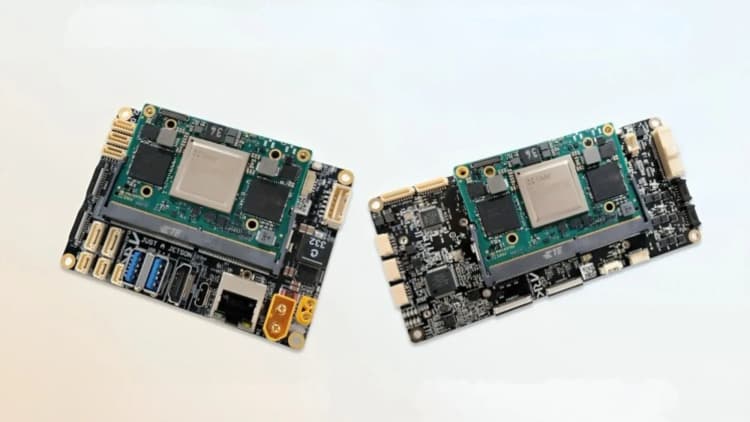
SiMa.ai, ARK Electronics Partner to Build Autonomous Drones
The companies will offer production-ready drone computing solutions for commercial, industrial, agriculture and defence applications.
View

Razorpay, IndusInd Bank Launch AI Account Manager RAY on WhatsApp for Businesses
RAY lets businesses check payments, track settlements, resolve support issues, and initiate actions through text or voice messages.
View

OpenAI Refutes Apple’s Trade Secret Theft Claims, Blames iPhone Maker for the ‘Mess’: Report
Apple accused OpenAI of stealing its trade secrets by soliciting confidential information from the iPhone maker's former employees. The accusation was made in the lawsuit that the tech giant filed against the AI firm earlier this year in July. This came after OpenAI hired multiple Apple employees, who allegedly brought knowledge of future Apple products. Interestingly, this coincided with reports of OpenAI's plans to foray into the hardware segment with a smart speaker. Now, in a new court filing, OpenAI puts the blame back on Apple for being unable to safeguard its own trade secrets, while calling the lawsuit a mess.
View
India’s ₹500 Cr Space Insurance Plan Has a Much Bigger Problem
The proposed third-party cover addresses government liability, but mission costs, weak domestic capacity, and orbital risks remain unresolved.
View
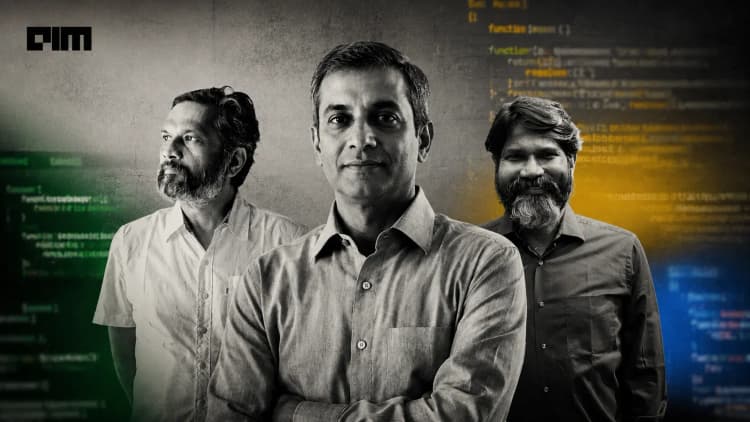
[Exclusive] Zoho Finally Brings Vibe Coding Into India’s Sovereign AI Push
The Chennai-based company will offer a monthly free-tier model for developers to explore the Catalyst 3.0 platform as well as ₹15,000 equivalent free credits to experience the platform beyond the free tier for a six-month period.
View

Tredence Certified as a Best Firm for Data Scientists
The Best Firm for Data Scientists certification surveys assess workplace culture, access to leadership, collaboration, learning opportunities, and the nature and depth of analytical work delivered.
View
OpenAI Says Its Most Capable Model Astra Can Find Zero-Day Exploits
For now, the company is choosing caution over unrestricted access. Astra is expected to become available soon, but its most powerful cybersecurity capabilities will remain limited initially.
View
Google’s Android update tackles motion sickness, accessibility, and more
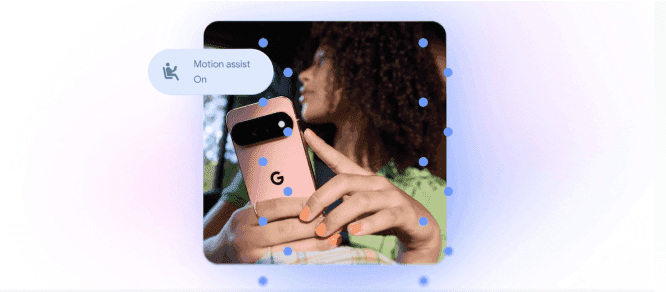
On Tuesday, Google announced it’s rolling out five new updates designed to make Android phones more accessible, useful, and personalized. Announced in ablog post, the features include those aimed at reducing motion sickness, helping blind and low-vision users navigate their surroundings, remembering where users leave important items, and another that adds new ways to personalize Google Messages. While some of the features see Google playing catch-up to Apple, which already offers similar features for iPhone users, others specifically leverage Gemini to provide various improvements. The most interesting update is “Motion Assist,” a feature designed to help people who experience motion sickness while using their phones in a moving vehicle. It adds a bubble overlay to the screen that moves in response to the vehicle’s motion, helping reduce the disconnect between what users see on their screens and what their bodies feel. The concept isn’t entirely new, however. Apple introduced “Vehicle Motion Cues” in 2024, which uses animated dots around the edges of the display that move in response to a vehicle’s motion. Users can set “Motion Assist” to turn on automatically, add it to Quick Settings, and customize the bubble’s shape, color, and transparency. Google says this feature is available to Android 17 users. Google is also introducing “Guided Vision,” a feature designed with blind and low-vision users in mind. It combines the phone’s camera with Gemini to help with tasks such as reading small print on a food label, viewing a menu in a dark restaurant, or identifying objects around the house. The feature can also provide voice guidance when the camera isn’t positioned correctly, telling users to move the phone, pan around, or center an object. Guided Vision is coming to phones running Android 9 and newer in countries where Gemini is available. Another update gives Gemini a new way to help users remember where they put important items. A “remembered items” section in Find Hub will allow users to tell Gemini where they’ve stored something. For example, a user could say they put their passport in a bedroom drawer, and Gemini can save that information in Find Hub. Users can also attach a photo to make the item easier to identify later. Additionally, Google is adding a Google Keep integration to Google Messages, allowing people to share and edit grocery lists, vacation notes, and other information directly within a conversation. Plus, Google Messages is getting more personalization options. Users will be able to customize individual chats with backgrounds, photos, and colors, Google says. The text bubbles will automatically match. Apple added a similarcustom background featureto Messages last year.
View
OpenAI’s Astra model is on the way — and very good at breaking into computer systems
OpenAIshared new detailson its forthcoming Astra model, which the company said is the first large language model to meet its “critical cybersecurity threshold,” in preparation for its imminent release. “We plan to make Astra available soon,” OpenAI’s blog post reads, “but access to its most advanced cybersecurity capabilities will be more limited.” The frontier lab determined that Astra is capable of finding unknown security flaws in computer systems, and exploiting them without a person’s guidance. That’s similar to the concerns Anthropic raised about its Mythos model earlier this year, and OpenAI is taking comparable precautions as it prepares to roll out the Astra. Without any third-party confirmation, it is difficult to evaluate OpenAI’s claims about safety or preparedness. The company said it would preview the model with a group of testers but did not say who they were or how they would be chosen. It’s not clear if OpenAI is working with the U.S. government to evaluate the model ahead of release. OpenAI noted that Astra scored a perfect score on ExploitBench, an evaluation of an LLM’s ability to hack into known system vulnerabilities. In a modified version of the test developed by OpenAI engineers, the model discovered and exploited two zero-day vulnerabilities, the company said. To ensure that its models are neither exploited by bad actors nor capable of bad behavior itself, OpenAI said it had already begun improving the model’s harness to detect abuses and prevent jailbreaks. For Astra, however, the company invested in unspecified new techniques designed to make the model safer. OpenAI has also started identifying “accounts assessed as higher risk” and restricting the model’s responses to their prompts, though it also doesn’t say how. Finally, though the company describes Astra as its “most aligned model to date,” it will deploy the model with additional chain-of-thought monitoring to spot and stop bad behavior. Preparations for the release of Astra come as the industry reacts to OpenAI agents breaking out of a training environment and accessing private data on Hugging Face, a popular model and benchmark distribution platform. For Astra, OpenAI said it designed a test to tempt the new model to replicate the actions of the rogue agents in the Hugging Face incident, which collaborated to access the open internet despite safeguards applied by OpenAI researchers. They said Astra did not attempt to break out of its testing environment in these experiments. Yona Shavit, a former OpenAI employee who now works on AI resilience at the OpenAI Foundation,wondered on social mediawhether Astra’s unwillingness to break the rules may have resulted from knowing what was expected of it or trying to fool researchers. And for all these new details, it’s still difficult to know exactly what Astra is capable of or if OpenAI is taking the right measures to ensure safety. The company said it expects to release more evaluations of the model and further safety information when it is launched widely to the public. At that point, however, the cat will be out of the bag.
View

AfterQuery reportedly becomes Y Combinator’s fastest-ever unicorn, now valued at $3.2B
AI training-data startup AfterQuery hasreportedlyraised a round that valued it at $3.2 billion. This just five months after announcing its $30 million Series A at a $300 million valuation in April. That’s more than a 10x increase in less than half a year and, according to Y Combinator partner Gustaf Alströmer, thefastestthat any startup has gone from launch to unicorn status in the accelerator’s history. AfterQuery’s founders, today 22 and 23 years old, attended Y Combinator’s Winter 2025 cohort, just 18 months ago. In April, the San Francisco startup said it had reached anannualized revenue run rate of $100 millionand that it was working with many of the biggest labs. It has named companies including Nvidia, Legora and the Korean AI lab Motif Technologies, as customers. AfterQuery is among the new crop of startups following in the footsteps of Mercor and Scale that employ knowledge professionals like doctors, lawyers, and other specialists, to do model training. However, rather than ensuring that models answer questions accurately, AfterQuery trains models and agents on how to work like professionals would to complete tasks — what the company describes as “encoding the patterns, decisions, and reasoning of the world’s best practitioners.” Forbes first reported on the round. AfterQuery could not be immediately reached for comment.
View