
Latest AI News
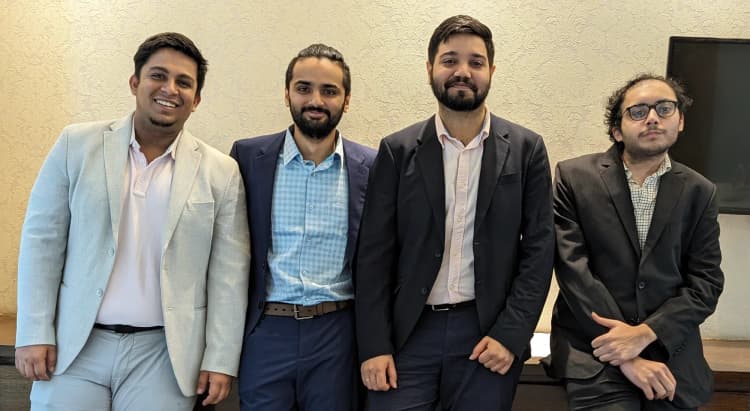
IBM Ventures Invests in BQP as Physics Platform Enters Production
The investment takes BQP’s total funding to $8 million as it expands its platform beyond aerospace and defence.
View
India has the Highest share of AI ‘Frontier Professionals’, Reveals Microsoft
“We’re not going after prompting, speed, and more efficiency. We’re going after judgment, taste, critical thinking, quality control,” said Puneet Chandok, Microsoft India president.
View
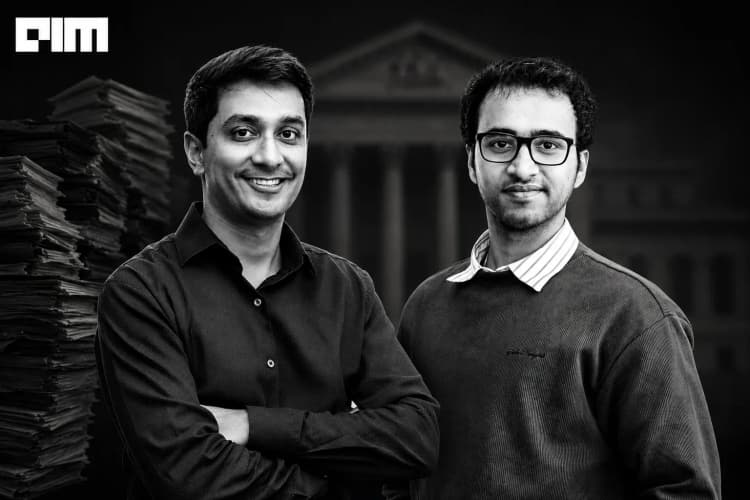
YC Backs India’s Legal Tech Nonprofit Adalat AI As It Takes Courtroom AI Global
Adalat AI says it now works across 11 states and has reached more than 6,000 judges, covering roughly 20–25% of courtrooms nationwide.
View
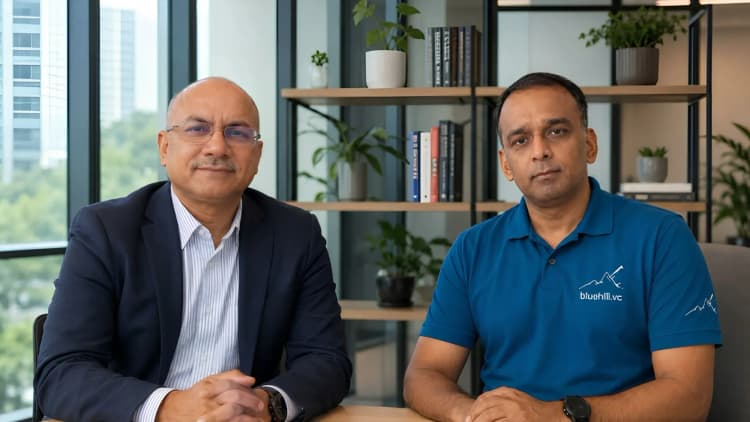
Bengaluru’s Makr Microsystems Raises ₹10.2 Cr Led by Bluehill VC
The funding will support Makr’s technology development, customer validation and path towards commercial deployment.
View
Adobe Acquires Indian AI Startup Rilo for Marketing Automation
The acquisition gives Adobe access to Rilo’s AI workflow automation technology as businesses adopt agentic AI tools.
View

Anthropic Claude Fable 5.1, Claude Mythos 5.1 Models Announced for Advanced Coding, Scientific Research
Anthropic has introduced Claude Fable 5.1 and Claude Mythos 5.1 as its latest models designed for advanced coding and knowledge work. Fable 5.1 is confirmed to be generally available, while Mythos 5.1 is accessible through trusted programmes. The two models work on the same system, but have different safety safeguards. As per Anthropic's benchmarks, Claude Fable 5.1 surpassed Fable 5 and Opus 5 in science and agentic coding tasks by scoring 52.6 percent on Terminal-Bench-Science and 73.4 percent on CursorBench.
View

Google Launches Gemini 3.8 Flash Alongside New Cybersecurity Model
The model is priced at $0.75 per million input tokens and $3.75 per million output tokens, while its cyber variant is available to trusted defenders through Google’s Fairwind Program.
View
10 People You’ll Meet at Cypher 2026
Five thousand people, three days, three halls. Here is the cast you will run into—and which of them is worth 20 minutes of your time.
View

Coforge Launches AI Platform to Help Enterprises Build & Run AI Within Their Own Environments
The Coforge AI Launchpad is aimed at enterprises seeking greater control over data, models and AI infrastructure, as companies move open-weight AI from pilots to production.
View
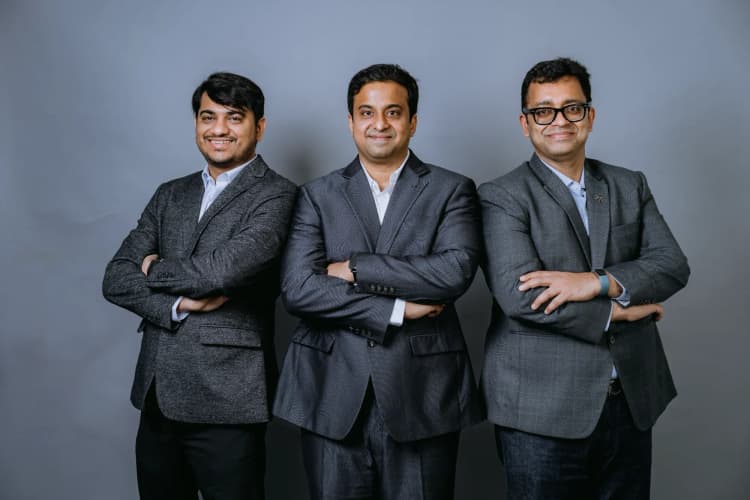
MathCo Plans 2,000 AI Hires as Enterprise AI Services Shift from Pilots to Deployment
The company is betting that enterprises moving from AI experimentation to large-scale deployment will create demand for a different mix of engineering, domain and analytics talent.
View
TechCrunch Disrupt 2026’s new Real World AI Stage features Nvidia, robots, and extinct animals
At our past TechCrunch Disrupt events, AI has taken center stage, both throughout our programming and in a stage of its own. This year, the technology, implications, and players are so rapidly developing and widespread that we’re expanding the single AI stage into two! The AI Stagewill continue as you’d expect, with a rundown of sessions and speakers available for review right here. But the Real World AI Stage is brand-new forTechCrunch Disrupt 2026. On this stage, we’ll be focusing on that intersection between the digital and physical, and all the ways we’ll continue to see a blending of the two, as autonomous hardware goes beyond self-driving cars and enters public spaces, battlefields, our homes, and even potentially helps extinct species reenter Earth. It’s a packed lineup featuring speakers from Shield AI, Colossal Biosciences, FieldAI, Foxglove, and more still to come. You can join in on all the excitement October 13 to 15 at San Francisco’s Moscone West,so register to attend right here. But in the meantime, here’s the breakdown of our Real World AI Stage lineup: Large language models had the internet. Self-driving cars have millions of hours of road data. Robots have neither. That data gap is the single biggest reason most experts believe general-purpose robotic intelligence is still years away, despite the breakthroughs happening everywhere else in AI. A new wave of startups is racing to close it, building the data pipelines, simulation environments, and foundation models that could trigger the same capability explosion we saw with LLMs. This session asks the hard question: what does the ChatGPT moment for physical AI actually require, and how close are we really? With Les Karpas, Head of Physical AI, Nvidia When AI enters the physical world, the consequences of failure change. A mistake could lead to a grounded aircraft, a vehicle crash, or a compromised mission. In this session, leaders who are building autonomous vehicles, defense technologies, and industrial systems will talk about one of the toughest questions that every hard tech founder must face: How do you know when your system is ready to be safely deployed? We’ll dig into how founders can create a safety culture, test and validate AI, navigate regulatory hurdles, and build companies that can earn trust when the stakes are high. WithNate Michael, CTO, Shield AI Ben Lamm has built one of the most controversial companies in tech by turning de-extinction from science fiction into a billion-dollar business. In this fireside chat, the Colossal Biosciences CEO will discuss the technologies used to revive extinct species, the role AI plays in modern biology, and the growing debate over whether engineering nature is a conservation breakthrough or a distraction from protecting what’s already here. With Ben Lamm, CEO, Colossal Biosciences The most valuable AI deployments in the world operate where the cloud can’t reach. And building for them requires a different technological playbook. This session brings together leaders from defense, space, and industrial AI who will share how they have tackled the challenge of making AI work at the edge — where latency matters, connectivity is limited, and failure isn’t an option. Expect practical lessons on architectural principles, design decisions, and trade-offs that make AI-centric systems work in the real world. With Dr. Ali Agha, CEO and founder of FieldAI; Michelle Lee, CEO and founder, Medra; and Aidan Madigan-Curtis, partner, Eclipse Ventures A prototype that works is not a product. A product that ships is not a scaled business. The gap between each of those stages is where most deep tech startups die. Founders might have the right team and tech, but they fail to understand what it takes to bring a prototype into production and eventually scale to higher, profitable volumes. This session brings together founders who have crossed that gap in space hardware, humanoid robotics, and autonomous systems. They’ll share what they got wrong, what they’d do earlier, and what the prototype-to-production journey looks like when supply chains and manufacturing realities replace lab conditions. With John Mackey, CEO, co-founder, MBRYONICS; Boris Sofman, co-founder and CEO, Bedrock Robotics; and Adrian Macneil, CEO, Foxglove There’s plenty more in store for you at Disrupt 2026 — after all, that’s just one stage’s worth of programming! For a sense of what else you’ll get to access, we’ve also announced the: Be part of Disrupt 2026 in San Francisco from October 13–15, where more than 10,000 startup, tech, and VC leaders come together for three days of insights, Startup Battlefield, unparalleled networking, and access to every stage and the exhibition floor. Register today!
View

Palo Alto Networks paid $500M for Thrive-backed Console, sources say
Palo Alto Networks paid $500 million in cash and stock to acquire Console, a two-year-old startup that uses AI agents to automate routine IT help desk tasks, according to two people with knowledge of the deal. The companies officiallyannouncedthe acquisition on Tuesday but didn’t reveal terms of the deal. Since its founding in 2024, Console has raised $29 million across two rounds: a$6.2 millionseed led by Thrive Capital and a $23 million Series A co-led by DST Global and Thrive. Before the sale, Console was valued at $157 million, according to PitchBook, delivering a rapid return for investors including SV Angel, Abstract Ventures, and notably Palo Alto Networks CEO Nikesh Arora, who participated as an angel investor. Palo Alto Networks declined to comment. The cybersecurity giant said that it will integrate Console into Cortex, its platform that uses AI to automatically detect and neutralize threats. Console’s agentic functionality will allow security teams to investigate and resolve alerts using natural language, giving Cortex “the arms and legs to deliver autonomous security outcomes across the entire enterprise,” as Arora described in a statement. Console was founded by Andrei Serban, coming shortly after his previous startup — code-security platform Fuzzbuzz — was acquired by Rippling. The startup, whose customers included Ramp, Flock Safety, and Scale AI, automated tasks like password resets, granted access to apps like Figma and Miro, and performed routine troubleshooting without direct human involvement. As a startup, Console competed primarily with Serval, another ServiceNow challenger that hit a $1 billion valuation after raising a $75 million Series B round led by Sequoia last December. Serval started as an AI tech support tool and quickly expanded to provide AI assistance for human resources, legal, and finance departments. Console’s acquisition leaves Serval as the category-leader-to-watch among startups automating IT service management, one investor, who is not a backer of Serval, told TechCrunch. Console is Palo Alto Networks’ seventh acquisition in 2026, according to PitchBook. Other VC-backed companies scooped up by the cybersecurity behemoth this year include Greylock and Lux Capital-backed observability platform Chronosphere, at a valuation of $3.35 billion, and Koi, a cyber startup backed by Battery and Team8, for $400 million.
View