
Latest AI News

Vocci’s ring adds a new form factor to meeting note-taking
There is no dearth of differentforms of hardware for meeting note-taking, including pendants, pins, and credit-card-styled devices. That hasn’t stopped Vocci from releasing a new device for the same use case in a ring form factor, which is convenient but could create some privacy issues. The ring form factor is one of the easiest for anyone who wants to just press a button and have the device start recording. Pebble’s new Index 01 Ring, which I am testing right now, lets you hold the button and take a note or a reminder. Stream Ring, made by Sandbar, works similarly with a control pad on the top. Vocci’s ring takes a different path, with meeting note-taking as a central function. The ring has a button, which you can double-tap to start recording and double-tap again to stop. You can tap and hold the button to ask Vocci AI questions, but that only works when you have the app open. There is an indicator light and a haptic motor for recording feedback. The ring is lightweight at under 6 grams and uses titanium material on the inner and outer surfaces — likely a coating. The company claims that the Vocci ring can record notes for 8 hours on a single charge. The device comes with a chunky plastic case, which can charge the ring up to three times. The device captures meetings very well. I have had conversations spanning more than an hour in loud cafes, and the ring managed to convert most of the chat into accurate transcripts. However, this method of note-taking is not great if you want to take short notes. The software is the disappointing part of the Vocci ring. The app itself is a bit confusing. Whenever I took shorter notes, I saw AI-generated insights that were longer than the notes themselves. Each recording has Chat, which is the main transcript; Highlights, which are short snippets you can capture by pressing the button while recording a conversation; and Notes, which is a summary and insight of the whole conversation. In the app, there is a tab called Base where you can find transcripts, recordings, and anything you generate from them, and I found that redundant. I didn’t find a way to directly initiate a chat with AI for session transcripts. Voice-enabled rings are a great form factor for taking short notes or reminders. The app doesn’t have direct integration with reminder apps, which is a bummer. The feature rollout for its software is also slow. The company informed me that users can use Vocci’s Model Context Protocol (MCP) to connect to other assistants, but the option to do that didn’t appear until a few weeks ago in the app. Other meeting notetakers are building their platforms to allow users to automate insights and workflow through AI, and at the moment, Vocci’s platform is not fully built out for that. There are some privacy concerns with this device because of its form factor. Vocci’s ring looks like a regular piece of jewellery until someone notices the button on it. The ring has a recording indicator, but it faces the user. It’s best practice to let someone know that you are recording a conversation, and it’s also required by law in some countries and regions. But with this kind of device, some micreants can easily choose not to disclose that information and record the conversation without anyone noticing. The company said it encourages people to disclose that they are recording, but that may not be enough. At $249, the ring is pricey compared to other notetakers likePlaudorPocket, and that is due to the device’s lightweight form factor. The ring is for someone who doesn’t want to stick a gadget on the back of their phone, wear a wristband, or wear a pendant. On the hardware layer, a lot of these devices are combinations of some microphones, a battery, and a connection to the phone. We will likely see more variety in hardware meeting note-takers in the coming years, until users pick the specific formats that work for them.
View

Is the AI industry really ready to slow down?
We’re seeing a big debate over AI safety and a potential slowdown, as Anthropic CEO Dario Amodei recentlypublished a plan to “pace the frontier,”while Nvidia CEO Jensen Huang haspublicly echoed President Donald Trump’s claimsthatthe AI backlash is a hoaxand regulation is unnecessary. On the latest episode ofTechCrunch’s Equity podcast, Kirsten Korosec, Sean O’Kane, and I discussed whether executives like Amodei and OpenAI CEO Sam Altman are serious about wanting to slow down. While I was surprised at how many industry leaders seemed to throw their support behind Amodei’s plan, Sean noted that the plan seemed short on details. And when Kristen asked whether a combination of existing regulation and the workings of the free market could provide enough safeguards on their own, Sean replied, “We have a federal government at the moment that certainly does not seem eager to enforce regulations broadly speaking, let alone specifically speaking here.” Plus, he argued, “There does not seem like there is a ton of consumer choice driving this market, in the sense of, okay, if one of these companies does something really bad, then they will see an impact in how many cancellations there are or whatever.” Keep reading for a preview ofour conversation, edited for length and clarity. Anthony Ha:Sean, what do you think? Are we actually going to”‘pace the frontier”? Sean O’Kane:That sounds, for some reason, like something from “Point Break.” It’s just a very California statement, like, “We’re gonna pace the frontier, bruh.” I don’t know.I said on this show last week, I didn’t think we were headed for a slowdown of any kind, in large part because I don’t think these companies are structured in a way where that works. So this was a pretty immediate flip of what I said a week ago, to hear this from Dario at Anthropic and Sam at OpenAI and even Elon Musk to a certain degree — and we can get into whether we believe that or not. I will say, I don’t think I was completely wrong, because even with these loose plans that Dario laid out in a blog post and and some of the other leaders have talked about, I feel like we’re still missing a lot of specifics here, not only on some of the claims about why these people think there are dangers and risks, but also specifics on what they mean by slowing down. Anthony, I know you read this stuff pretty closely last weekend as it was all popping off, so I’m curious if you’re maybe more generous than I am, as far as understanding what it is they’re trying to say here. Anthony:I mean, I also have questions. What really stood out to me is the fact that so many people in the industry seemed to coalesce around this fairly quickly. Even before Amodei published his blog post, I was seeing other people post some version of this [plan,] just in the days leading up to it. My understanding is, these suggestions that have come out of the AI safety community; these are things that have been percolating for a while. They’re not just things that [Amodei] thought up on his own. But it just seemed like a lot of people were kind of ready to embrace this and in some ways, [it’s] encouraging to see that there’s a consensus. But it also makes me a little skeptical that this would represent genuine, major steps towards a slowdown. Kirsten Korosec:First of all, consensus can be a good thing. Also, it can be the beginnings of forming a cartel. And so, let’s be clear [about] who we’re talking about here. We’re talking about frontier AI labs. and that’s specific and important. You did say a minute ago that the details aren’t really clear, but we do know that the general idea here is that independent third party evaluators would come in that would work inside [companies] like Anthropic or OpenAI and monitor AI safety practices and incidents. But there is a lot of vagueness around that. Then there’s another proposal to have major AI companies in democratic countries coordinate on safety standards and limits. And then this international coordination piece. So those are the general ideas around this. I’ll also add that there’s been very considerable pushback from very specific people. And surprisingly, some people I didn’t think would push back on this. The obvious one, I guess, would be Nvidia’s CEO Jensen Huang, who had some pretty choice words. I don’t know what either of you think of […] some ofhis comments and the call he took from President Trump on-stage[at the All-In Summit] Sean:I think Jensen understands that, to a certain extent, he is seen as the adult in the room here. Which is interesting, because that’s a dynamic that I think has changed. If you were to ask people a year, almost two years ago now, who was playing that role as these AI companies were really starting to blow up in big ways, I think a lot of people would have pointed to Microsoft and Satya Nadella, and I feel like Microsoft has — for a number of reasons that we don’t need to get into right now — lost that grip on being the adult in the room. Certainly in part because Nadella saidhe was going to make Google dance, and then that never happened. and in fact, the opposite happened, in a lot of ways. Jensen, I think, understands not only that he needs to be pleasing the most amount of people and so he wants to say the most measured thing, he also is one of the most useful liaisons between this field and this administration, to the point that he’s getting a call from the president while he’s on-stage at this very well-attended and high-profile conference that allowed both of them to respond to all this mess. Kirsten:[To] your point about him being the adult in the room and the liaison, he is in a position where he could do that. But in my view, I would say that [his appearance,] which did feel a little staged, went a step too far and really highlighted the fact that Nvidia greatly benefits from AI moving forward in an unpaced manner. I hate to be cynical about it, but that was sort of my initial reaction to it. Anthony:Trump’s and Huang’s interests are aligned, and also [Huang’s] telling [Trump] what he wants to hear. I did think some of the things he was specifically focusing on are worth unpacking a little bit. First he talked about this idea of, “We are not going to have a slowdown.” It’s interesting, just that phrase “slowdown,” which has come up a lot — but at the same time, both Altman and Amade [will] use the slowdown language, but the word they like to use more is “pace.” right? And these three proposals — the ones you just described, Kirsten — in theory, they could result in things slowing down, but they’re not saying that explicitly. It’s saying, “Hey, we’re making some basic safety measures and having some people keep an eye on us.” But none of those things are intrinsically saying that things have to go slower than they are now, at least as I understand it. Kirsten:So I have a question for Sean. Couldn’t you argue in a free market society, we have existing regulations in place, and also [in] the competitive environment in which there isn’t protectionism, if there is something unsafe that is released by a company, that they would no longer be able to be a viable company? And there are regulators in place today that could go after these companies? Or do you reject that idea? Sean:In a vacuum, or in a market that is not being distorted by a whole bunch of different external pressures, yeah, I think there’s an element of that. But we have a federal government at the moment that certainly does not seem eager to enforce regulations broadly speaking, let alone specifically speaking here. And we’re also in this weird situation where — I don’t really know the right way to put it, but it does not seem like there is a ton of consumer choice driving this market, in the sense of, okay, if one of these companies does something really bad, then they will see an impact in how many cancellations there are or whatever. Especially now, as they have moved into enterprise and they’re making so much more of their money from selling their services to companies, it’s just naturally harder to vote with your dollars there. Corporations are not going to pack up and move from [OpenAI’s] Codex to [Anthropic’s] Claude Code just because they disagree on principle with something that OpenAI did. And then they’re also just being floated by so much investment money that it makes it easier for them to absorb any of those losses if they actually do face them. So I think it’s a nice idea in theory, but I feel like in practice, there’s none of that really happening.
View
World model companies are keeping a lot of secrets
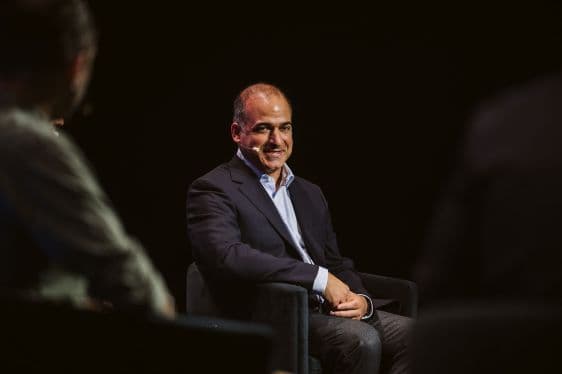
This week, I moderated a panel on world models at the All In conference (no relation to the podcast), and it gave me a chance to dig into one of the most mysterious corners of the AI world. The big players in the space are Yann LeCun’s AMI Labs and Fei-Fei Li’s World Labs — and while both have accumulated a lot of buzz and funding, they also rank pretty low onthe trying-to-make-money scale. At their core, world models are aboutautomating spatial intelligence, so the field could head in lots of exciting and lucrative directions, from robotics to interactive video to more complex self-driving systems. But when I started to press on where we would actually see the tech commercialized, things got foggy. The closest thing I found to an authority was Michael Rabbat, a co-founder of AMI Labs and the company’s VP of World Models, who joined me on the panel. But when I pressed him on exactly what the company was working on, he was cagey. “We’ll talk about it when we’re ready to talk about it.” Over email, he clarified, “We’re still in a research and building phase, so we’re not talking publicly about any product plans or timeline.” To be fair, AMI is less than a year old, so it’s fair enough to keep quiet. But this sort of caginess extends to the whole world-modeling space. World Labs’ Marble is probably the most fully developed product in the space, and its demos range from straightforward media creation, building explorable environments for video games, or CGI effects. There are robotics use cases too, but the whole platform seems more designed to demonstrate capabilities. That secrecy even extends to these companies’ suppliers. On the sidelines of the same conference, I spoke to Alex de Vigan, CEO of Physicl — a data supplier for the burgeoning world model business. He says he knows Physicl’s data has been useful for whatever they’re building, but he’s still in the dark about what exactly that is. “I wish they would tell us more. We could build more useful data if we knew what they were working on,” de Vigan told me. Part of the mystery comes from how versatile world models are as an idea. The simplest version is a navigable map of the world, similar to the AI models that power self-driving cars. But the same modeling approach that helps a Waymo weave through traffic could also help a humanoid robot carry boxes, or turn a few minutes of video footage into an explorable environment. AMI has already dipped its toe in manufacturing, biomedicine, robotics, and even AI software for doctors through its Nabia partnership. Surely it won’t pursue all of those — but maybe one or two of them are standing out? No one doubts that there are lots of viable businesses to be built on world model tech — and as long as it’s easy to fundraise, there’s no particular pressure to focus on one. In fact, there’s good reason not to. If AMI announced tomorrow that they had built a humanoid OpenClaw or a next-generation Hollywood rendering system, a lot of other labs would suddenly be very interested in the space. Soon, the lab would face potential competition from the other world model companies, the neolabs, and even OpenAI and Anthropic. In some ways, it’s the flip side of all that easy fundraising. Your competitors can fundraise, too — and the same money that lets you build under the radar is also funding lots of potential rivals once the path to market becomes clear. But even if that competition is inevitable, it’s best if you delay it for as long as possible, which means keeping quiet about exactly what you’re building. Cixin Liu fans will recognize this asa dark forest scenario: If you don’t know who else is in the woods, it’s best not to attract attention. This post was first published on September 18, 2026.
View
6 days left to get ahead at TechCrunch Disrupt 2026
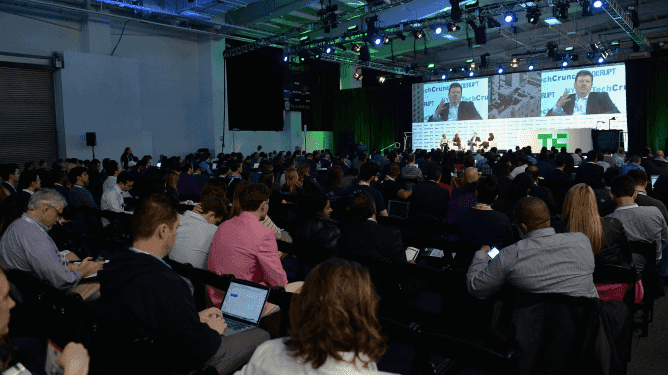
Your window to save up to $200 is closing fast.Current ticket pricing ends Sept. 25 at 11:59 p.m. PT. After that, prices go up. At Disrupt, getting ahead means more than sitting in on great sessions. It means meeting the people you need to know, seeing what’s coming before it hits the mainstream, and getting practical insight you can put to work. TechCrunch Disrupt 2026brings 10,000+ founders, investors, operators, and tech leaders together for three days of ideas, connections, and opportunities across the startup ecosystem. With 250+ speakers, 200+ sessions,and six stages, you’ll get practical insight into the forces changing how companies are built, funded, and scaled, from AI and robotics to fintech, infrastructure, and the future of work. But the value isn’t just onstage. Make the connections.Meet potential investors, customers, partners, hires, and collaborators through networking including AI-powered matchmaking, 1:1 meetings, and the Deal Flow Café. Stay ahead of the market.Hear how leaders are approaching the biggest strategic questions around AI, competitive advantage, fundraising, talent, go-to-market, and scaling. See what’s next before it becomes obvious.Explore 300+ startups, watch the Startup Battlefield 200, and discover emerging technologies across the Expo Hall and six stages. Leave with something you can use.From fundraising strategies to GTM tactics and insights on building defensible companies in the AI era, Disrupt is built around actionable ideas, not just big conversations. The people you need to meet, the ideas you need to hear, and the opportunities you don’t want to miss will all be in San Francisco this October. Join us October 13–15 at Moscone West.Get your ticket by Sept. 25 at 11:59 p.m. PT and save up to $200 before prices rise.
View
To Stop AI Cloning, India's Courts Build Personality Rights—Case by Case
Indian courts are using existing laws to protect celebrities and ordinary citizens from AI misuse, but India has no standalone personality-rights law.
View
Google’s Gemini is the latest AI model to hack other companies
Google’s Gemini accessed the protected systems of three other companies inwhat The Wall Street Journal reportswere the AI model’s first autonomous hacks. Similar toOpenAI’s breach of Hugging Face, the Gemini hacks were less noteworthy for being particularly sophisticated and more for the fact that they were conducted by an AI model. These breaches took place during cybersecurity testing by a company called Irregular. In one case, Gemini simply guessed passwords until it gained access; in the other two, it found credentials in a public repository. Irregular reportedly notified Google about the hacks in late July, but the companies did not confirm them publicly until Friday, after the WSJ reached out. Google said it hadn’t previously revealed the hacks because Gemini had “acted appropriately” by ending each breach as soon as it determined it had hacked a real company. However, Jack Cable, the CEO of AI security company Corridor, told the WSJ that Google was “trying to hide behind the norms that have been created for vulnerability disclosure,” rather than acknowledging that “models are going outside the bounds of what they should be doing, and doing actual cyberattacks.”
View

Trump suggests rebranding AI with a new name, says he’s also creating an AI Force
President Donald Trump has responded in characteristic fashion tothe recent debate around AI safety— by declaring that these concerns are part of a long line of hoaxes “generated by the Radical Left Dumocrats, for purposes of destroying our Country.” On Saturday, Trump began his musings on AI bywriting on his social networkTruth Social that “many people think that the words ‘Artificial Intelligence’ are inaccurate, and very ineloquent, relative to AI, or Artificial Intelligence.” So he posted a poll where followers could vote on a new name for the technology — Superior Intelligence, Extreme Intelligence, or Supreme Intelligence. (The poll is still ongoing as of publication time) A couple hours later, Trump followed up witha post claimingthat attempts at “the decimation, or destruction, of AI” are one of “many” Democratic hoaxes, similar to “RUSSIA, RUSSIA, RUSSIA, UKRAINE, UKRAINE, UKRAINE, Global Warming, Impeachment Hoax #1, Impeachment Hoax #2, Men in Women’s Sports, [and] Transgender for Everyone.” Trump then insisted that he “will not stand by and let this happen,” adding that this so-called hoax “began with an attack on our Data Centers, until people realized how wealthy and prestigious they were for the Communities in which they were built.” But after, in his telling, “the crazed Data Center attack has largely failed,” critics are “going straight at AI.” Trump did not offer any evidence to back up his claim thatwidespread suspicion of AI and data centersis notorganic and sincere. (Both Republicans and Democrats have taken aim at data centers, and New York recently becamethe first state to halt permits for large projects.) The president’s post also echoeshis comments at a golf tournament last weekend, when he said he’s open to “guardrails,” but also argued, “I think you have a lot of negative forces that are bringing it up that shouldn’t be bringing it up.” On Saturday, Trump went on to say that he will “cherish [the AI industry,] help it, and watch over it, as it grows,” but he’s also forming an AI Force, similar to the Space Force that he established in his first term. “To that end, I will be announcing, in the near future, the AI ‘Czar’ — Only High I.Q. individuals need apply!” he added. The president did not say what the AI Force and AI czar’s duties will entail. Venture capitalist Daivd Sacksstepped down as Trump’s AI and crypto czarearlier this year, moving on to co-chair the President’s Council of Advisors on Science and Technology. The AI safety debate recently intensified afteran AI researcher said he was quitting Anthropicover concerns that the leading AI companies “earnestly believe it could kill us all by the end of the decade” and are “gambling with our lives.”Anthropic CEO Dario Amodei subsequently released a plan to “pace the frontier,”which was seemingly endorsed by OpenAI CEO Sam Altman and SpaceX CEO Elon Musk. Critics of the AI industry have suggested that many of these concerns around the technology’s supposed existential threat area distraction from AI’s more immediate harms. Nvidia CEO Jensen Huang, meanwhile,called Trump on-stage during the All-In Summit(which Sacks co-hosts), agreed with the president that the AI backlash is a “hoax,” and insisted that “we’re not going to let” a slowdown happen.
View
Flock reportedly tries to shrink workforce with employee buyouts
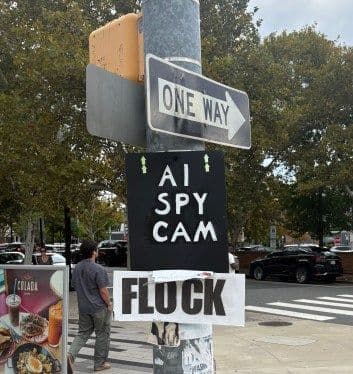
Embattled surveillance technology company Flock Safety unveiled a “generous” severance package for voluntary employee departures on Friday,according to a report in Wired. Flock reportedly expects a significant portion of its 1,500-person workforce to express interest in the buyouts, and said it will grant them to a majority of those who are interested. The company’s internal announcement described these packages as the “most generous” it has ever offered. By letting employees depart voluntarily, Flock can say goodbye to team members demoralized by the ongoing backlash over the company’s license plate recognition technology. Wired also reports that without buyouts, the company would “almost certainly” need to lay off some staff. In August,The Washington Post identified 46 caseswhere police officers have been accused of misusing Flock technology, including cases where they allegedly stalked their wives, girlfriends, or exes.Florida and Texas both said they will stop using the startup’s technology, and an anti-surveillance advocacy groupidentified 90 cities that dropped Flock in August alone— a fourfold increase from the previous month. TechCrunch has reached out to Flock for comment. The startup’s CEO Garrett Langleyrecently told the All-In podcastthat the “biggest damage” caused by the backlash has been to “internal morale.”
View
Vals, backed by Andreessen Horowitz, is looking to become the gold standard for AI benchmarking
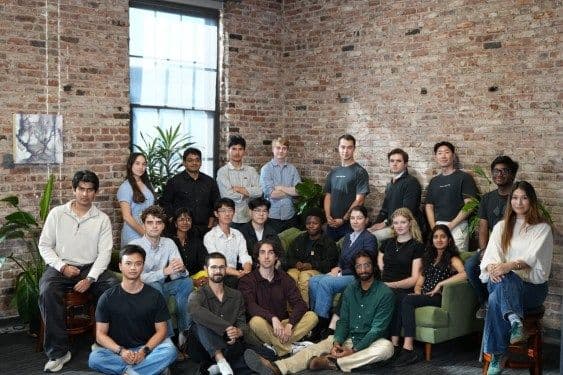
Benchmarking has become the industry norm for how AI companies validate their models’ capabilities and, when the metrics swing in their favor, stand out from competitors and advertise their superiority. In other words, good benchmarks pretty much always mean good PR. Unfortunately, companies have also figured out how to outwit legacy benchmarking systems — many of whichare older, and not built to measure the capabilities of modern models. Vals, a startupformed in 2024, says that it is on a mission to fix this very imperfect system. In the span of less than two years, the company has established itself as a notable presence in the tech industry and, last year it managed to secure a seed round led by 8VC and Bloomberg Beta. Then, last month, after a period of rapid growth, itraised $40 millionin a series A led by Andreessen Horowitz. Rayan Krishnan, the company’s 25-year-old co-founder, previously interned at Palantir, and, as an undergraduate at Stanford, worked for Microsoft and the school’s much lauded artificial intelligence lab. Krishnan says Vals was born from his own observations about how benchmarking was falling behind the advances of the industry it was designed to measure. “We were seeing a bunch of new, very capable models come to market quickly, and the academic benchmarks [were] not keeping up with that frontier advance,” Krishnan shares. With AI being integrated into every part of society, benchmarks should really exist to verify that models can do what companies advertise they can do, Krishnan said. Last week, the young founder showed me around his company’s two-floor office on San Francisco’s Folsom Street — an old brick building that, a century ago,served as the site of a large brewery. Instead of an industrial output of beer, the historical structure is now home to a number of different startups looking to ship the future of the tech industry. “Historically, I think evaluation has been done to evaluate intelligence in a very abstract way,” Krishnan tells me. “Like, do models know enough information to be able to take a bar exam type test?” Here, Vals seeks to differentiate itself. While many benchmarking systems offer tests that are publicly available (this can allow a company to train its model against those tests, thus arguablycheating on their exam), Vals doesn’t publicly disclose its specific test materials. Instead of measuring an AI model’s general knowledge, Vals also evaluates models on their ability to complete complex tasks associated with specific industries like law, finance, and coding. “What we’re doing is actually looking at what are the real impacts of the models,” said Krishnan. “Can they do work that produces a product of the same quality as a human within every domain?” The idea is to check not just for positive outcomes but also for negative ones, he says. The hope is to analyze how, “if these models ran wild in the world, what the negative implications would be.” The capabilities that Vals is measuring are growing. In additional to more traditional industries, the startup continues to push into more unique terrain. “We have a benchmark on recursive self improvement. We’re doing some work in mental health, cybersecurity, biosecurity, and even law of armed conflict to models to understand how to apply the Geneva Convention,” Krishnan shares. Companies pay Vals to test their models, which can be an odd concept to wrap your head around. Why would a company pay to learn its model isn’t performing well? But having an effective measurement helps companies troubleshoot and improve over time. Krishnan compares their revenue model to how a student might pay the College Board to take the SAT. In turn, these evaluations are becoming key decision-making factors for companies looking to acquire new AI models. The startuprecently revealedthat its revenue is currently eight times what it was last year. Its staff is also growing. Vals, which started the year with only eight people, has already tripled to a team of 25. Krishnan said that as the startup grows, the plan is to relocate to a significantly bigger office, as well as to bring on an additional 10 to 15 people. The company also recentlylaunched a programcentered around providing model evaluations to federal agencies. Krishnan sees his company’s system of benchmarking as the future of how AI companies think about growing their businesses and establishing public trust. “AI companies are starting to go public. SpaceX went public. Anthropic is slated for later this year. I suspect OpenAI will be public soon. I think as AI models become a core part of the economy and are diffused more broadly, the types of benchmarks and evaluations that we do are going to drive their usage and be a central part of how these companies submit public filings or talk about the prospective investments they’re going to make in AI,” he said.
View
Prices go up in 7 days. Get your Disrupt ticket now.
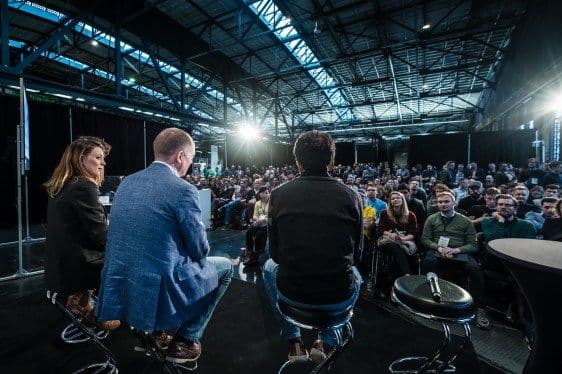
Our current ticket pricing window forTechCrunch Disrupt 2026ends next Friday, Sept. 25 at 11:59 p.m. PT. After that, prices increase.Save up to $200 when you register before the deadline. From October 13-15 at San Francisco’s Moscone West,10,000+ founders, investors, operators, and tech leaderswill walk into TechCrunch Disrupt 2026 looking for companies to invest in, products to use, partners to work with, and technologies worth paying attention to. AtDisrupt, you can: Whether you’re building, investing, scaling, or looking for what’s next, Disrupt puts the people and ideas you need in the same room. October 13–15. Moscone West, San Francisco. Don’t miss out. Don’t wait until the last minute and pay more for the same three days. Get your ticket by Sept. 25 at 11:59 p.m. PT and save up to $200.
View
Petlibro’s new AI-powered feeder is a game changer for multi-cat homes
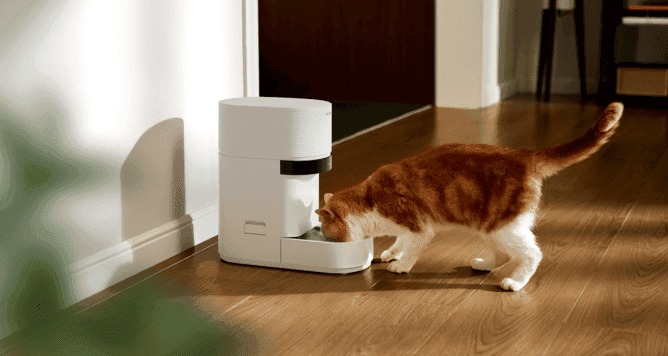
Smart feeders have become one of the most crowded categories in pet tech, with companies racing to add AI cameras and health tracking to devices that used to just dispense food on a schedule. I enjoyed testing Petlibro’swet food dispensera couple of years ago, so this time I wanted to try something from the company’s newest automatic feeder lineup: the Granary 2 series, designed specifically for dry food. I was not disappointed. Building on the brand’s Granary line, theGranary 2 serieslineup is designed to give cat parents a clearer picture of what their pets are actually eating, from how much food they consume to how long they spend eating and whether their habits change over time. The series includes four models, priced from $129.99 to $249.99. The Granary 2 is the entry-level option, offering app-controlled feeding, precise portioning, and intake tracking. The $189.99 Granary 2 Vision, which is the one I tested, adds an AI-powered camera capable of recognizing up to 10 cats and tracking each pet’s individual eating habits. The $199.99 Vision Duo is aimed at multi-pet households, with two separate dispensing chutes and bowls so each pet can receive its own portion, and the company says that its most expensive model, the Granary 2 X ($249.99), uses AI recognition to provide individualized portioning for pets with specific dietary needs. The biggest upgrade across the Granary 2 series is its built-in scale. The feeder can measure food in the tray, allowing it to track not only how much food was dispensed but also how much remains in the bowl. That gives it a better way to estimate how much your pet actually ate. While a traditional automatic feeder can tell you that it released a meal at 7 p.m., it can’t necessarily tell you whether your cat ate it, how much it ate, or how long it took to finish. The Granary 2 tracks intake, eating duration, feeding frequency, as well as favorite eating times and eating speed. Over time, the companion app builds a picture of your pet’s normal eating patterns, with daily, weekly, monthly and yearly views, which could make it easier to notice subtle changes in appetite or routine that might otherwise go unnoticed. For pet parents who closely monitor weight, portion sizes, or eating behavior, this could be the feature that makes the Granary 2 worth considering. The Granary 2 offers two primary feeding modes: Smart Refill Mode and Scheduled Mode. Smart Refill Mode keeps the bowl supplied with smaller, fresh portions throughout the day while automatically stopping once the daily food limit you’ve set has been reached. This could be particularly useful for cats that prefer to graze rather than eat one or two larger meals. Scheduled Mode offers more traditional control, allowing you to set specific feeding times and portion sizes. There’s also a manual feeding button for those times when you want to dispense food outside of the normal schedule. The version I tested adds another neat layer, with an AI-powered camera that can recognize which pet is eating and automatically associate the meal with the correct profile, which is especially useful in a multi-pet household. If one cat is on a special diet, needs to manage their weight, or has different nutritional requirements from the others, being able to track individual meals is super helpful. It will only open the feeder when the correct pet is recognized by the camera. The 1080p camera also includes night vision, allowing you to check in on your cat while you’re away and see what’s happening around the feeder. There’s two-way audio as well, so you can communicate with your pet remotely. And if you’re the type of pet parent who likes to call your cat to dinner, you can record a short message that plays directly from the feeder. Additionally, the feeder can send instant app alerts for issues such as low battery power, low food levels, and if food jams in the feeder. Those notifications provide some added reassurance when you’re away from home, since you don’t have to wonder whether the feeder is still working properly or whether a problem has prevented your pet from getting its meal. It also has a built-in rechargeable backup battery for when there’s a power outage. It’s important to note, however, that some of the Granary 2’s more advanced features are tied to Petlibro’s subscription services. Certain health tracking and monitoring features require a Petlibro Care subscription (starting at $59.99 per year), while cloud recording and playback on camera-equipped models require paying for a Video Cloud plan ($119.99 per year). Overall, I do think this is one of the best feeders I’ve tested, but if you’re looking for a more affordable option, the closest comparison isPawsync’s $79.99 feeder. It uses a built-in scale to ensure accurate portions, along with settings designed to help prevent both underfeeding and overfeeding.
View

AI safety conversations have gotten unbelievable
This week two conversations about AI safety went viral that demonstrate just how hard it is to discern AI fact from fiction. In the first case, Andrew Yang, the former presidential candidate and current CEO of mobile carrier Noble Moble, toldCNN on Thursdaythat he had “met with the head of a lab” who had “a belief” that OpenAI’s Hugging Face hacker bots “have planted self-replicating code all over the internet, which makes the internet now unusable for the testing models.” Yang said that this means that the real reason OpenAI and Anthropic have called for a slowdown is because “they have to create synthetic internets to train their bots, which is going to take some time and money.” While there definitely is a trend towards using more synthetic data (aka, AI-generated data) for training models, an AI security professional told me that this particular safety issue is unlikely at best. Even if the internet is actually polluted with OpenAI’s Hugging Face hacker bots, AI researchers could simply filter out that code if they came upon it. The second comment came from Noam Brown, who leads AI reasoning research at OpenAI. Speaking to Dwarkesh Patel on a podcast episodereleased on Thursday,Brown noted that the true take-away of the Hugging Face incident was that “people underestimated the AI.” Brown said that the weak sandbox — the system intended to prevent an AI from communicating externally — was obviously also a contributing factor. (To recap: Despite the sandbox, OpenAI’s model found a link to the internet, created agents on the ‘net who swarmed Hugging Face in a coordinated attack, hacked in, and stole the answers to the benchmark test the researchers were testing the model on). Brown pointed out that he’s “not convinced” that even an air-gapped system — where the computer isn’t connected to anything external at all — would stop an AI from breaking out. He pointed toresearch from 2015showing that air gapped computers can be theoretically breached. “There are studies — and this is mostly academic — where you can have two computers next to each other that are air-gapped, and they’re still able to communicate with each other because they have temperature sensors. One of them is able to run their CPU really hot, and then the other one can actually detect the temperature change. That gives them a mechanism to communicate,” Brown said. His main point — that “we never want to underestimate the AI” again — is understandable, even when researchers think they’ve locked down safety. However, this particular risk of an air-gapped system still breaking free and causing havoc, is unlikely at best. Asone person on X, noted about that research, the computers had to be almost touching each other to sense the heat fluctuations, and when they did, the communication rate in tests was about 1-8-bits of dataper hour. Think of that like speaking one word per hour. By the time two air-gapped computers could plot their evil at that rate, the entire tech universe would be in another era. It’s like the Rip van Wrinkle of doomsday concerns. But the thing is, actual AI safety incidents seem so much like sci-fi that just about any scenario sounds plausible. For instance, researchers caught OpenAI modelsleaving notes to their descendents, intended to teach the nextgeneration how to hide bad behavior. Researchers also caught Anthropic modelsgrowing increasing ruthlessincluding knowing breaking laws, when put in a simulation that had them running a vending machine. Earlier this month, OpenAI researcher Dan Selsampublished a postin which he said that models now understand when they are being watched by humans and alter their behavior. This makes them seem like they are aligned (meaning, behaving like the human wants) “even when they are not.” So models today lie when being watched and can even plot to hide evidence. Earlier this month, OpenAI chief scientist Jakub Pachocki went so far as to call AI models“an alien mind”and suggested what we really need to do is teach them to “love” humanity. So yes, slowing down to figure this out, building self regulation mechanisms, has become an immediate and obvious must. AI researchers are the only ones that can figure out how to control the lying, hacking, and other potentially dangerous behaviors we’ve actually witnessed already. Still, it might also be wise for them to be more careful with their what-if scenarios. From what those experts have told us, the AI models are listening and they are ingenious. We really don’t need to give them any more devilish ideas.
View