
Latest AI News
Anthropic says its biology lab has already found something big
Last week, Anthropicconfirmedthat it was operating a wet biology lab in the Bay Area where it uses its AI models to run physical experiments. This week, the AI giant announced that this lab has already made what it believes is a big discovery: a new enzyme “system” that has certain “properties reminiscent of CRISPR,” asAnthropic describes it. CRISPR is a natural immune system used by bacteria to fight off viruses that has becomea gene-editing technology widely used by researchers. Essentially, what Anthropic says it found is a previously unknown enzyme system hidden in the DNA of bacteriophages, which are viruses that infect and replicate within bacteria. Anthropic’s researchers say this system behaves similarly to CRISPR in that it can “perform operations like cutting, copying, and pasting DNA.” It will be up to the broader research community to validate how big, or new, this discovery actually is. Anthropic CEO Dario Amodei acknowledges that the discovery was based on the work of others and that a team from Stanford previously discovered a system “that is in some ways similar to the one Claude found,” hewrote on X. But Amodei and Anthropic are not just emphasizing the discovery. They are touting it was found “mostly, though not entirely, by Claude,” the CEO wrote. On the one hand, that is astounding. This lab was only established this spring (though Anthropic declined to be more specific about how many months it has been open). A discovery in just a few short months would be speedy enough work, but the team said it actually only took Claude 21 hours of concerted effort. Claude searched through data using about 950 agents that burned through 210 million tokens. Still, the revelation that Anthropic has been conducting biology experiments comes right after AI CEOs,including Amodei, publicly admitted that models have become so capable, and so potentially dangerous, that the industry must slow down and develop safety-testing procedures. This after a couple of his employees publicly said earlier this month thatthere’s a risk AI could kill us all. Amodei himself has said one of the things he fears most is that AI could be used for bioterrorism. But he also believes AI will “cure most diseases in 5-10 years,” he wrote. So Anthropic has clearly decided the rewards are worth the risks. Given that, perhaps the biggest reveal in this news isn’t the discovery itself but that the biology lab hasn’t let Claude loose. The physical experiments were done by humans. “Our lab, located in the Bay Area, looks like a typical molecular biology lab. We do research that involves only the lower-levels of the biosafety risk level (BSL-1 and BSL-2) and we do not handle pathogens that can infect humans. All of the lab work is performed by human scientists.” It’s also true that AI-powered biological research is hardly unique to Anthropic. Researchers from Stanford justpublished a paperon the work they are doing with LLMs and CRISPR. Researchersat UC San FranciscousedAI to design enzymes from scratch. Google launched its first AI-powered biology research tool, AlphaFold,back in 2020. So AI has clearly arrived in biological research beyond the AI labs pursuing it themselves. Yet, Amodei hasn’t ruled out a fully automated biology lab in the future. “Eventually it may even be possible for Claude itself to safely perform the experiments by autonomously controlling lab equipment, with appropriate safeguards in place, but we aren’t doing that today,” he said. .
View

Meta introduces camera-free AI glasses
Confirmingearlier reports, Meta announced its first pair of camera-free AI glasses, the clunkily named Ray-Ban Meta Audio, at its Connect 2026 conference on Wednesday. Designed to combat criticism around the more malicious use cases for AI glasses, which saw them nicknamed “pervert glasses” by some, the new devices will be audio-only, offering the ability to listen to music and podcasts, take calls, translate speech, and communicate with Meta’s AI assistant, Muse. The glasses are designed by Meta’s partner in its AI hardware efforts, EssilorLuxottica, and will start at $349. While Meta today offers a range of AI glasses in a variety of styles, colors, and capabilities, the audio-only glasses could help the brand recover from some of the reputational damage aftercriticspointed out howpeople,often men, were using AI glasses to record videos without subjects’ consent.Meta attempted to mitigate this issuewith an update that would disable the camera if the LED light that indicated the glasses were recording was ever tampered with. However, the creepiness factor remained. This latest device could prove to be more popular for that reason, while also providing an answer to something like Apple’s Siri-powered AirPods. “Once you get used to high quality audio, it’s just a thing that you want all the time, right?” Meta CEO Mark Zuckerberg said during a keynote Wednesday, adding that the company after working on the idea realized it could design a whole new category of glasses around audio glasses. Because they don’t have to house cameras, the glasses are slimmer than Meta’s other models and weigh only 43 grams. They also have adjustable temple tips, swappable nose pads, overextension hinges, and battery life of up to 12 hours on a single charge, Meta claims. With the included charging case, that battery life extends to up to 48 hours. They’ll also come in a variety of colors and options — 23 color and lens combinations in total — and in two new styles, a retro-inspired “Clubmaster” Ray-Ban style and “Burbank,” described as more of a “classic, timeless, rectangle shape.” Like other Meta glasses, you can order them with your optical prescription as well, if needed. The glasses will be available for preorder on October 13, the company noted. Alongside the glasses, Meta announced its next-generation AI glasses (the ones with cameras), the Ray-Ban Meta (Gen 3). In addition to the Ray-Ban Meta Wayfarer, there will also be two new styles, the Aviator and Zena — the latter offering more of a cat-eye frame shape. These will have a 12 MP camera that supports 3K Ultra HD video, a six-mic array, and up to nine hours of battery life. The glasses Meta launched with EssilorLuxottica will also see an expanded lineup of styles and colors as well as a new partnership with singer Lisa, which follows the company’s earlier brand partnership with Kylie Jenner. The glasses will also be roll out to more countries globally, Meta said. All of Meta’s AI glasses will, of course, feature access to its newer personal AI assistant, Muse. The company also teased other coming updates, including support for Dolby Atmos Capture, a feature that picks the best photo from multiple frames, an option to choose landscape or portrait modes, hearing enhancements for those with hearing loss, more detailed responses, different audio modes, customizable controls, and something called “private processing” that Meta claims will prevent the company from seeing your data.
View

Meta made a Tamagotchi-like wearable for its Muse AI agent
The AI amulet has become a bit of a cliché in the tech industry — devices like Friend have turned the idea of physical AI into little more than an exercise in eye-rolling for many consumers. But that hasn’t stopped Meta from jumping into the arena with its own AI wearable, called Muse Charm, which is designed to give consumers another way to stay connected to its recently launched, and already popular, personal AI agent, Muse. The device, which CEO Mark Zuckerberg revealed in a “one more thing” moment during the company’s annual Connect event, isn’t ready to ship just yet. Zuckerberg said his team had to “finalize laying out the components” and promised the devices would be “ready to ship in time for the holidays in December.” The Muse agent, which is now embodied by a cute digital avatar known within the company as Jolly, lives inside the palm-sized totem that users can carry in their pockets or attach to a keychain. The device comes with a tiny screen that displays the avatar representing the agent. Users can talk to the device, which can then presumably carry out tasks on their behalf. “We packed the whole Muse experience, including the whole real-time voice and avatar stack, into something that fits on a keychain and is always available to talk to,” Zuckerberg said during Wednesday’s keynote. “You just go ahead and tap here in the fingerprint sensor in the corner, and you can start talking without having to unlock a phone or open an app.” Zuckerberg added: “So if you’re not wearing glasses, this is going to be by far the fastest way to talk to your Muse and to show what’s going on around you.” Appropriate for what it offers, the gadget has a quasi-Tamagotchi feel to it — a lightweight, personality-filled device designed to keep users always connected to Meta’s software. It also feels like a relatviely low-stakes way for the social media giant to experiment with AI wearables while also offering yet another way to distribute its AI agent to the masses.
View

ChatGPT mobile app gets voice-based agentic features
OpenAI announced on Wednesday that it is bringing voice-based agentic features to mobile, allowing users to trigger workflows like drafting documents or summarizing emails. Plus and Pro users will be able to use the Work tab on their phone to create a document, draft an email, or summarize Slack messages, for instance. These subscribers can do things like build sites, create presentations, use the cloud browser, and also access other areas like finances in ChatGPT. Free and Go users, meanwhile, will get to work with plugins and connected apps. OpenAI said ChatGPT’s voice conversations will have richer text output. Plus, users will be able to switch between text and voice easily. They can also start working on a conversation on the go and resume it on desktop. The feature arrives as an increasing number of users are turning to voice to issue commands to AI assistants for complex tasks. In July, OpenAI launched its newconversational model GPT-Live, and later the company integrated it with the desktop appto let users use their voice to complete tasks in the Work tab or build apps in the Codex tab. The new rollout brings similar capabilities to the mobile app. Recently, Anthropic made the handoff between mobile and desktop easier and alsomerged its Cowork and Chat interface. But OpenAI is still keeping chat and workspaces separate.
View
Enveda secures $311M to bring more nature-derived AI drugs into clinical trials
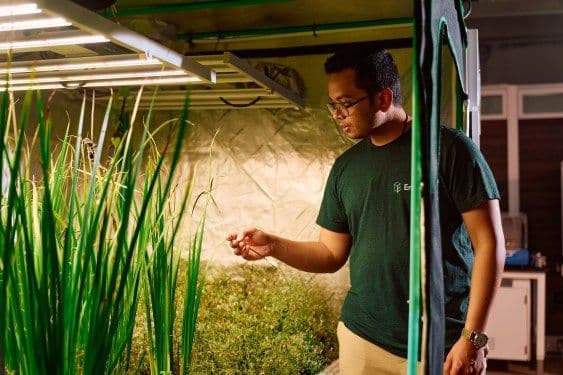
Enveda, a biotech startup that uses AI to discover new drugs in the natural world, has raised a $311 million Series E at a $2 billion valuation. The fresh funding, which was led by Catalio Capital Management, with participation from Iconiq and others, doubles the valuation Enveda achieved 12 months ago. The idea behind Enveda is that powerful medicines could be harnessed from plants and microbes, rather than synthesized from scratch in a lab. Viswa Colluru, an early employee of Recursion Pharmaceuticals, founded Enveda in 2019 to speed up the process of discovering these new drugs using AI and other techniques. While AI hasn’t yet produced any FDA-approved drugs, Enveda is among the wave of companies advancing AI-discovered candidates into human clinical trials. The startup is currently testing several drugs in patients, including one targeting severe skin conditions and another designed to help maintain weight loss after stopping GLP-1s.
View

Tecno EllaClaw Gets Customised Workflows for Research, Scripts and Social Media
Tecno has showcased customised workflows for EllaClaw, its mobile AI agent, in collaboration with Digital Trends. The workflows are said to target journalists and content creators and cover tasks such as researching and developing stories, planning scripts, adapting content to a user's writing style, and checking social media posts. The showcase highlights how EllaClaw can be configured for different professional tasks rather than offering only a fixed set of functions. Tecno has also detailed how users can review and approve AI-generated content before publication.
View

OpenAI Launches GPT-6 Sol and GPT-6 Luna With Lower Prices, Improved Performance
OpenAI has launched GPT-6 Sol and GPT-6 Luna, two new models that extend some of the capabilities of its GPT-6 Astra model to lower-cost tiers. The models are aimed at professional work, coding, computer use and other tasks that require sustained AI assistance. OpenAI has also cut their API prices by 50 percent compared with the promotional pricing of their GPT-5.6 predecessors. GPT-6 Sol and Luna are available across Work, Codex and the API, while Luna is also available to Free and Go users through the desktop app.
View
Tecno EllaClaw Gets Customised Workflows for Research, Scripts and Social Media
Tecno has showcased customised workflows for EllaClaw, its mobile AI agent, in collaboration with Digital Trends. The workflows are said to target journalists and content creators and cover tasks such as researching and developing stories, planning scripts, adapting content to a user's writing style, and checking social media posts. The showcase highlights how EllaClaw can be configured for different professional tasks rather than offering only a fixed set of functions. Tecno has also detailed how users can review and approve AI-generated content before publication.
View
3 days left to save up to $200 and make impactful connections at TechCrunch Disrupt 2026
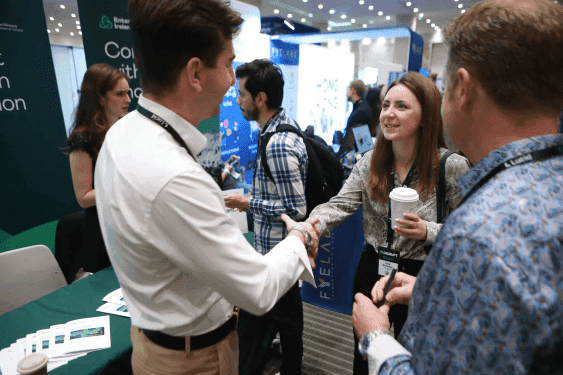
There are now three days left to save up to $200 on yourTechCrunch Disrupt 2026ticket before prices increase. As we continue our countdown of the five reasons why you should attend, we arrive at a key reason that brings 10,000+ founders, investors, and operators together at San Francisco’s Moscone West, October 13–15. Don’t miss out on securing your ticket savings before they vanish on September 25 at 11:59 p.m. PT.Register to grab yours and get a second pass at 50% off. The right introduction can change what happens next for a company. It might lead to your next investor. A customer you’ve been trying to reach. A future hire. A technology partner. Or simply someone solving a problem close enough to yours that the conversation changes how you think about it. At TechCrunch Disrupt 2026, those people are concentrated in one place. Big events create possibilities. The trick is making them useful. At Disrupt, you can schedule 1:1 meetings, powered by AI-powered matchmaking through the TechCrunch Events app, and use the dedicated Networking Lounge across all three days. Alongside that are industry meetups,roundtable sessions, and the conversations that happen when thousands of people building, funding, and scaling technology companies move through the same space. Plus, the countless impromptu meetings that happen from running into the right person, anywhere in the venue. Register here to start making intentional connectionsand save up to $200 before your savings disappear on September 25 at 11:59 p.m. PT. There’s a difference between knowing who someone is and actually having a conversation with them. A 15-minute meeting can tell you more about a founder than weeks of following their company online. A conversation with an investor can help you understand what they are really looking for. Meeting another operator can surface an answer to a challenge you assumed was unique to your team. And sometimes the useful conversation is the one you didn’t schedule. The founder sitting next to you before a session. The investor asking the question you were thinking about. The person you meet after a roundtable because you’re both trying to solve the same problem. That proximity matters. You could spend months trying to arrange the individual conversations that become possible over three days at Disrupt. So don’t just build a session schedule. Build a networking schedule. Identify who you want to meet using the event app. Book your 1:1s. Leave space for the unexpected. Walk theExpo Hall. Stay for the meetups. Talk to the person standing next to you, because one useful conversation can outlast the entire event. CurrentTechCrunch Disrupt 2026ticket savings end September 25 at 11:59 p.m. PT. Register now to save up to $200on your ticket andget a second ticket of the same type at 50% off. Or bring a group of four or more to save up to 30%.
View
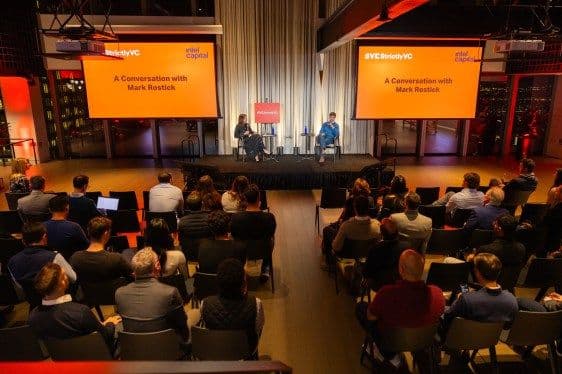
StrictlyVC at TechCrunch Disrupt 2026: Inside the changing rules of venture capital
Thanks largely to AI and the rate at which startups are scaling, venture capital is in a state of flux, from who provides the money to how it gets deployed and what happens when companies are finally ready to go public.StrictlyVCatTechCrunch Disrupt 2026, happening at San Francisco’s Moscone West on October 13-15, will bring together investors, institutional LPs, family office managers, and market experts for an afternoon of candid conversations about where capital is moving, how the money managers behind those venture dollars feel about the feverish dealmaking out there, and what founders and VCs need to understand about the new funding landscape. The only way to lean into these exclusive deep-dive sessions is with a DisruptInvestor Pass. Built for investors, the StrictlyVC sessions offer a closer look at the fast-changing landscape and the forces shaping what’s next.Register by September 25 at 11:59 p.m. PT to save $200 on your Investor Pass. October 143:00–3:45 p.m. PT | Networking, Drinks & Light Bites3:45–4:50 p.m.PT | StrictlyVC Conversations4:50–6:00 p.m. PT | Drinks & Networking Join us at 3:00 p.m. PT for drinks and light bites, with 45 minutes to connect with fellow investors, founders, and venture leaders before the conversations begin. After the program wraps, stick around for more drinks and more mingling. Visit theDisrupt agendato learn about all the sessions and speakers for StrictlyVC, plus the 200+ sessions across all six industry stages, roundtables, and breakouts. Ryan Flanagan, ICR The IPO window is reopening, but the playbook has changed. Founders and investors face a tougher path to the public markets, with higher expectations around growth, governance, and credibility. JoinICR‘s Ryan Flanagan for a candid conversation on what makes a company IPO-ready today, the decisions that matter years before a listing, and how to position a business for a successful exit in a more disciplined market. Bruce K Lee, Keebeck Capital Management; andDave Sachse, Sachse Family Fund Family offices have become one of the fastest-growing sources of startup capital, often moving faster and investing with greater flexibility than traditional institutions, but also, at times, piling in at the wrong times. Join prominent family office investors as they discuss how they’re approaching venture today, where they’re placing long-term bets, how they work alongside VCs, and why founders increasingly see them as strategic partners. Amit Bhatti, TrueBridge Capital Partners; andBeezer Clarkson, LGT Capital Partners Venture firms are competing harder than ever for institutional capital, while limited partners are rethinking everything from manager selection to concentrated AI exposure and liquidity expectations. Hear from leading LPs as they discuss what they’re looking for in today’s market, how they’re evaluating emerging managers versus established firms, and where they believe the next generation of venture returns will come from. TechCrunch Disrupt 2026brings together 10,000+ founders, VCs, and operators from across the global tech ecosystem to make connections that can shape what’s next, discover emerging breakthroughs, and hear from leaders driving the industry forward. This is where big ideas converge and new opportunities take shape.Register for your Investor Pass now to save up to $200before September 25 at 11:59 p.m. PT. Join Disrupt in San Francisco on October 13-15.
View

YouTube releases new AI features for creators within its Studio app
At itsMade On YouTubeannual event, YouTube announced new tools for YouTube Studio, the app creators use to manage their channels, aimed at helping them analyze their videos and grow their audiences. The updates include expanding Ask Studio, its AI-powered Q&A feature, to iOS and Android, as well as new features that provide feedback on drafts and create dynamic thumbnails. The draft-feedback feature uses AI to look at a creator’s unpublished video and provide suggestions about pacing, structure, and storytelling. YouTube is also debuting a new research feed in the Studio app that shows creators what kind of content is working on the platform, so they can apply their own take on it. Creators are typically picky about the preview images and titles they use for their videos. The Studio app will now let them generate thumbnails and titles based on a video’s content and matched to their style. Creators can also use a new dynamic thumbnail feature to generate three options and show each one to a different segment of their audience. YouTube said creators have used its A/B testing feature to run more than 40 million tests on titles and thumbnails. Soon, the company said, users will be able to test up to three video cuts to see which opening hook works best. Later this year, YouTube Studio will also automatically monitor thumbnail performance and change one proactively if it doesn’t perform well. YouTube also said it’s updating its analytics to go beyond raw numbers, explaining why videos perform the way they do and providing advice about how to make content more engaging. Besides the Studio app revamp, YouTube also introduced other tools for creators, including conversational editing in Shorts and the YouTube Create app.
View

YouTube will let you build your own algorithm with AI
YouTube says it’s going to let you build your own algorithm — well, kind of. The company on Wednesday announced a new feature called custom feeds that allows you to describe, in your own words, the kinds of videos you’d like YouTube to recommend to you. To create one, you type a description of what you want the feed to be about into a prompt box on YouTube, whether that’s a feed dedicated to a particular interest or one that serves some other purpose. For instance, YouTube suggests you could build a feed of video podcasts to watch during your 30-minute train commute, or you could request videos for a particular mood, like “relaxing commentary videos to unwind with.” The prompt-based feature leverages Google’s Gemini AI model to build the feed around your request, and the resulting feed is then pinned to the top of your YouTube home page in its own tab. Because the feed’s creation is AI-powered, the request can be described in lengthy terms, as you share detailed information about how you want to curate the feed, what it should feature or exclude, what content to prioritize, and more. The addition follows similar moves by a number of other social networks that have created tools that essentially allow users to build their own algorithms by describing what they want their feed to include and how to present that information to them. Decentralized social networkBluesky began popularizing this ideayears ago as a way to differentiate its service from rivals like X. This year, itrolled out an AI tool, Attie,that makes feed-building even easier. Other services, includingMeta’s Threads,Instagram,X, and, more recently,Spotify, have also launched their own feed-building features, many of which are also AI-powered. YouTube believes custom feeds will help users better explore the vast number of videos now hosted on its platform. “One of the amazing things about being on YouTube is that the world is always at your fingertips,” noted Emily Moxley, VP of Product Management for Viewer AI, in a pre-brief with reporters ahead of theMade On YouTube eventon Wednesday, where custom feeds were introduced to the public. “There’s over 20 billion videos in the YouTube corpus, so you’re always one search away from a treasure trove of topics.” The new feeds, however, will not replace YouTube’s main feed, which features all your recommendations. Instead, you will now be able to easily hop right into whichever feed best suits your purposes when you open the YouTube app. Support for creating multiple custom feeds will roll out across YouTube on web and mobile, starting next month, the company said.
View