
AI Styling Studio — Infinite avatar looks from just 1 photo.Try it now.

BestAITools

Submit your Tool

8000+ AI tools already listed
8K+Tools
100K+/moViews
25K+/moVisitors

Latest AI News

SoftBank’s CEO isn’t the only one with questions about Elon Musk’s orbital data center hype

SoftBank’s CEO isn’t the only one with questions about Elon Musk’s orbital data center hype

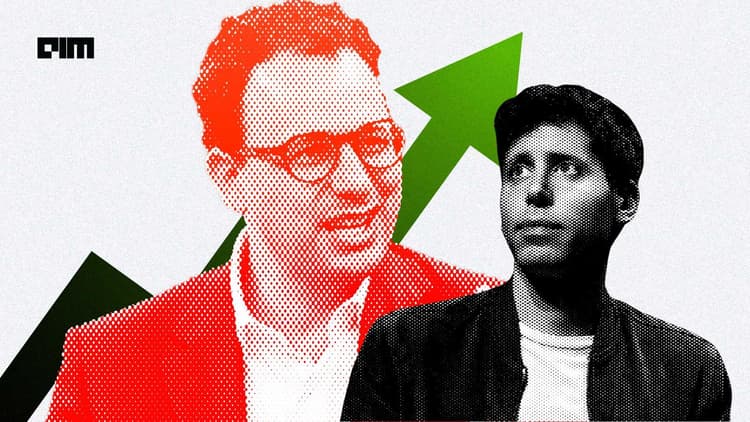
Not everyone is buyingElon Musk’s vision for orbital data centers. Masayoshi Son, the founder and CEO of Softbank,argued at a recent shareholder meetingthat building data centers in space won’t do much to cut costs and will take too long when “in the battle for AI, the next few years will be far more important than what might happen a decade or so from now.” On the latest episode ofTechCrunch’s Equity podcast, Kirsten Korosec, Sean O’Kane, and I discussed Son’s remarks as part of a broader discussion that includedOpenAI’s plans for custom chips, chipmakerGroq’s new $650 million funding, and much more. Kirsten noted that it’s “very ironic” that Son is playing the skeptic here, given SoftBank’s “long history of wild bets.” Sean, meanwhile, said that when Musk talks about “making a constellation of satellites — satellites that need to be replaced every few years as well —  to make up an ‘orbital data center,’” he’s just “guaranteeing that much more business” for SpaceX. Keep reading for a preview of our conversation, edited for length and clarity. Sean O’Kane:Listen, neo-clouds are the new oil, and everybody who wants to make money is pivoting to a neo-cloud. I’m proud to announce that TechCrunch is now a neo-cloud, give us all your money. I mean, this is the thing you do. It seems like there are so many players that are compute constrained, so anybody who has a shot at being able to lease out that compute is taking it, whether that’s Groq, a company that was semi-hollowed out by Nvidia, or Allbirds, which went into bankruptcy and and emerged from it as a new neo-cloud provider instead of selling shoes — Tim Fernholz didan interview with the new CEO of of that new effortthat I would definitely recommend people go read. Or whether you’re SpaceX, where your idea was: I’m gonna build an AI platform that’s gonna have an addressable market the size of U.S. GDP, but before we get there, we’ll just rent out our compute.  And we saw this continue to happen with SpaceX, where it’s not as big as the deals that they’ve struck with Google or Anthropic, butthey just signed another deal, [their] first post IPO deal, to rent out compute to another smaller player. They’re continuing down that road. You know, I can see this being a business for Groq in the near term. The question with all of these is how durable is it in the long term. Anthony Ha:If we’re talking about SpaceX and their AI business and data center business, we also have to talk about these comments that Masayoshi Son, the CEO of SoftBank, made recently, where he basically said:What is the point of data centers in space?Which is a question we’ve asked on this show. And it speaks to, again, this sense in the industry of being really, really compute constrained — they need to build as many data centers as possible, [and] there’s all kinds of reasons why that is proving to be challenging here on Earth, so maybe space is the answer. But I think Son makes some pretty fair points about: All this stuff we’re talking about, even if it all works — and the costs are going to be very, very serious to make it work — this is not happening for years and years and years, so this is not a solution to any immediate problem, as far the current need for data centers goes. Kirsten Korosec:I just want to point out that SoftBank has a long history of making wild bets. I think it says something when Son comes up and asks the question that a lot of people have asked. I mean, there are a lot of VCs and founders [who] have been swept up into the idea of orbital data centers and it seems like suddenly everyone’s on board. When just a couple of years ago, I think, if someone had mentioned that, it would get slapped down a little bit. So I do think it’s an important part of the process that someone who has a pretty high profile is asking that question. But it is very ironic to me thatheis the one asking it, because if you look athis pitch deck, they’ve thrown a lot of money at some pretty bold ideas. Sean:WeWork! Listen, we’re going to be saying this for a lot over the next couple years. The idea of putting these things in space is going to be an interesting engineering challenge and certainly an interesting economic challenge. Anthony, what you said is definitely right to a certain extent. Elon Musk is a person who hates red tape and you know, there are no NIMBYs in space so of course he’s going to try and do that. To me, it comes down to: The business as it stands now for SpaceX, especially its launch business, is just overwhelmingly reliant on Starlink. The reason that they are 80 or 90% of the launch market globally is not just because they’ve done all these things that are better than pretty much every other launch provider around the globe, it’s also because they have Starlink that is driving up that number. If you remove Starlink from the equation, they would be closer to — I don’t know, maybe 20% or 30% of the launch market, or 40%, but it certainly wouldn’t be 90%. And when you talk about making a constellation of satellites — satellites that need to be replaced every few years as well —  to make up an “orbital data center,” quote unquote, you’re just guaranteeing that much more business for your launch business. And I just can’t stop myself from coming back to that point. Kirsten:I want to really quickly say that [SpaceX’s] other big business is renting out their compute, by the way. So back to the chip conversation. We’ve come full circle. Anthony:One of the other themes that may run through this episode is this idea oftalking your own book. This is not a new phenomenon. Executives at tech companies, or any other company, what they’re predicting for the future is ultimately the future that is going to be advantageous to their business. But I think it’s something that’s just always worth remembering when we’re having these conversations about big AI companies, because it is this moment of incredible uncertainty, and we’re all wondering: What does the job market look like in the future? What effect is this going to have on the environment? What are the skills I need to learn? All these AI CEOs or AI investors, they all have thoughts on that. And it’s not that they’re wrong or that they are being deliberately misleading, but in each case, there’s an asterisk to these predictions. In Musk’s case, he’s talking about something that would be very good for SpaceX’s business. In SoftBank’s case, they arevery, very heavily invested in data center projectshere on Earth. Sam Altman is the other notable figure who’srolled his eyes a bitat the orbital data center idea — and again, he and Elon Musk obviously havea long and complicated history together. All of which is to say that there’s just no objective, impartial observers here. It’s all these people with baggage and tremendous amounts of money at stake.

24 days ago

View

Apple Vision Pro exec is reportedly leaving for OpenAI

Apple Vision Pro exec is reportedly leaving for OpenAI

Paul Meade, the Apple vice president in charge of the Vision Pro headset, is leaving the company to join OpenAI’s hardware team,according to Bloomberg’s Mark Gurman. Meade also reportedly led the development of the AI-powered smart glasses thatApple plans to launch next year. The costly Vision Pro was not a hit, but Apple is hoping that more affordable smart glasses willhelp it compete with wearable devices from Meta. Gurman frames this departure as a byproduct ofJohn Ternus’ imminent elevation to Apple CEO, and of Ternus’ decision to shake up the hardware engineering team, which left some of the company’s vice presidents feeling like they’d been demoted. OpenAI, meanwhile, is already working with Apple’s former chief design officer Jony Ive on an AI device that CEO Sam Altman has claimed will bemore peaceful and calm than an iPhone, though reports last fall suggested the company wasstruggling to get the details right. TechCrunch has reached out to Apple and OpenAI for comment.

24 days ago

View

Asian AI startups launch Mythos-like  models as Anthropic’s export ban drags on

Asian AI startups launch Mythos-like models as Anthropic’s export ban drags on

On Wednesday, Chinese cybersecurity firm 360reportedlyunveiled Tulongfeng, an AI tool it says can go head-to-head with Anthropic’s Mythos. That’s the cybersecurity-focused AI model that is reportedly so powerful, the Trump Administrationhas currently banned it and its more restricted version, Fable 5, from the hands of non-Americans. Earlier the same week Sakana AI, a Tokyo-based AI startuplaunched Fugu, a model named after the Japanese word for blowfish. The company says this frontier AI model “stands shoulder-to-shoulder with leading models like Anthropic’s Fable 5 and Mythos Preview.” It is also designed for agents, with an ability to orchestrate access to other models though their APIs. The two new Asian model products come as the U.S. government’s ban drags on. It’sorder that prevents Anthropicfrom global access to Mythos and Fable occurred two weeks ago. A spokesperson at Sakana AI told TechCrunch that release of its new model was “entirely coincidental,” yet that hasn’t stopped it from capitalizing on the moment. It’s website advertises “delivering frontier capability without the risk of export controls.” “Sakana Fugu is something we have been building since last year — the research behind it was presented at ICLR this spring, and it reflects an approach that is central to how we deliver frontier-level value at Sakana AI. We were confident in the product on its own merits; the timing simply happened to coincide with a moment that brought it more attention than we expected,” the spokesperson said about launching during the Mythos/Fable export ban. Sakana, co-founded in 2023by former Google researchers Ren Ito,  Llion Jones and David Ha, makes affordable generative AI models that work well with small datasets and are optimized for the Japanese language and culture. While the company is targeting Fugu at Japanese businesses and government agencies looking to reduce their exposure to tightening export controls, it isn’t yet proclaiming a lasting shift away from U.S. AI in Asia. “U.S. models remain important to Asia,” the spokesperson said, a view consistent with remarks co-founder Ren Ito made atthe G7 summit in Evianlast week, where AI access and export controls were one of the central topics. “We’d characterize the current moment in those terms rather than as a permanent realignment toward any one set of players.” Sakana co-founderRen Itoelaborated on that view in an op-ed published in the Project Syndicate last week. He urged the US federal government, that consider that its “first priority should be to preserve access,” for America’s closest allies, and argued that “AI should not become a technology that is hoarded; it should be one that is developed together.” David Ha, co-founder and CEO of Sakana, described Fugu as more than just a land grab during a vulnerable moment for a US competitors. It is designed to coordinate agent usage among many models. “Orchestration Models are the next frontier, beyond bigger models,”he wrote on X.Relying on a single provider for national infrastructure, he argued, is a risk the recent export controls made impossible to ignore. “Access to top models can disappear overnight,” he wrote. “Collective intelligence is the practical hedge against this concentration of power.” While Tokyo-based Sakana positioned Fugu as a hedge strategy, a way to preserve access to frontier AI, not replace it, China’s 360 wasn’t hedging. The Chinese firmreportedlyunveiled two AI security tools. Tulongfeng is designed to automatically discover software vulnerabilities, and Yitianzhen is built to automate cyber defence and incident response. The product launch, however, came with a message. According to Reuters, 360’s founder Zhou Hongyi described vulnerability-finding AI as a national strategic asset, and flagged what he called the risk of “one-way transparency”, a situation in which some actors could access advanced vulnerability-detection capabilities while others could not. Anthropic had been on a historic growth trajectory. The US AI lab saidits run-rate revenue crossed $47 billionin May 2026. How much of that depends on Asian enterprise customers is not publicly known. But in the weeks since the export order took effect, at least two companies, one in Tokyo, one in Beijing, have stepped into the space it left behind. Even if US companies could win back trust should this ban ever end, local alternatives, trained to better understand local language and nuance, are already filling the gap. 360 did not respond to a request for comment.

24 days ago

View

The fittest founder in the room got cancer. Here’s how he used AI to fight back.

The fittest founder in the room got cancer. Here’s how he used AI to fight back.

Conno Christou doesn’t leave things to chance. He tracks his sleep with a Whoop band, cross-references it with an Oura ring, and gets nearly 100 biomarkers checked every year. He had been doing the annual bloodwork for four consecutive years, following the protocols of longevity researchers like Peter Attia and Rhonda Patrick. He was optimizing his supplements, his circadian rhythm, his protein intake. At 35, building his second company, he was as dialed-in on the latest in health research as anyone he knew. His last checkup, in 2025, was green across the board. “It was the best I’d had in years,” he says. Then, after a workout, his arm swelled. He didn’t think much of it at first. A week passed before he saw a doctor, who found two blood clots in his veins and scheduled surgery. But the pre-op exams changed everything. A doctor walked back into the room and told him the procedure wasn’t happening. “We see an 11-by-11-by-8 centimeter mass behind your sternum,” the doctor said. A biopsy confirmed what Christou had never before even contemplated. He had an aggressive, fast-growing form of non-Hodgkin’s lymphoma — a rare diagnosis affecting roughly one in 420,000 people, caused by a random genetic mutation with no connection to lifestyle, diet, or stress. The tumor had only existed for about three months. In three more weeks, it would have reached stage four. “Lucky in my unluckiness,” Christou told this editor this week from his home in Athens, where he lives part time. “It was only found because I went in for something else entirely.” What followed was an education in the limits of the medical system, and in what a determined patient can do about that with tools now available. His first oncologist, a renowned specialist, recommended the lighter of two available chemotherapy regimens. Christou booked his first infusion three days out. Then, the night before, he sought a second opinion. That second doctor didn’t hesitate. He recommended the harder regimen — continuous in-hospital infusion, cycling every three weeks across six months — citing Christou’s specific pathology. The lighter treatment carried roughly a 60% success rate for his presentation. The aggressive one brought that number to around 85%. Two world-class doctors. Diametrically opposite recommendations. “As founders, we hold the wheel,” Christou says of the propensity of many people to accept what they are told — and why more should not. “You hear many things. You don’t have to follow the first advice.” He didn’t opt to just follow the advice of the second physician, either. Over the next two days, he gathered 12 opinions in total — drawing on his professional network, reaching out to hematologists and oncologists in the US and abroad, calling in every favor he could. Eleven to one voted in favor of the harder path. He took it. The decision, he says, didn’t feel brave so much as logical. He was already a data-driven person, and now the stakes felt existential to him. Over six months of treatment, Christou approached chemotherapy the way he approached building a company, as a marathon of sprints — each of them with a finite cycle and each week filled with data points. He had done a mandatory 25-month military service in Cyprus at age 18 and he borrowed from that experience, too. He was going to be a good soldier, he told himself. Trust the process. Six cycles. Get through it. He wore his Whoop throughout, and found it remarkably accurate at predicting the days his immune system would bottom out, sometimes flagging them before symptoms arrived. He kept a symptom journal using voice transcription, logging every shift, every side effect, every medication and counter-medication. He narrowed his focus to three variables: sleep, nutrition, and, first and foremost, psychology. (“It moves the needle more than anything,” said Christou. “I never asked ‘why me’ — not once. That question has no useful answer.”) He fed all of it — blood results, scan data, wearable output, journal entries — into Claude. He’s far from alone in turning to chatbots for medical guidance. Apublic opinion pollreleased in March found that a third of American adults now use them for health information and advice. Thestoriesaccumulating online suggest that for some patients, AI is delivering what the system couldn’t. Experts urge caution; Danielle Bitterman, clinical lead for data science and AI at Mass General Brigham, has told the New York Times in recent months that general-purpose chatbots arefrequently wrongand “have not been thoroughly evaluated” for personalized diagnoses. Christou doesn’t disagree. “It didn’t replace the doctors,” he says, but it “helped me ask the right questions.” For a condition as rare as his — one an oncologist might see once a year — access to a model that had absorbed the full body of medical literature was, he says, simply not the same as a Google search. The model proved critical at the end of treatment. His final PET scan — the imaging used to detect active disease — came back ambiguous. His oncologist began discussing a second line of therapy, potentially radiotherapy, near his heart and lungs. It was an alarming development. Christou again did his homework. He read that for this specific lymphoma, the false-positive rate on end-of-treatment PET scans is around 60% — a statistic that still astonishes him. “It’s 2026,” he says. “Sixty percent.” He fed all three of his PET scans and his MRI into Claude, which flagged a known but easily overlooked phenomenon: in patients under 40 recovering from this type of lymphoma, the thymus gland can reactivate after chemotherapy, showing up on imaging as what appears to be active disease. Given his age, his specific scan characteristics, the model put the probability of that explanation at roughly 90%. He sought three more opinions. The fourth doctor confirmed it: thymus rebound. There was no active disease. No radiotherapy was needed. He was clear. Christou is still unfolding what the last year has meant, for his health, how he works, and how he thinks about time. He built Keragon, his current company, before any of this happened; it’s an AI-powered platform that helps medical practices automate their administrative operations. But going through the system as a patient has given him new perspective. He watched nurses and doctors buried under tasks that had nothing to do with care. He received the same chemotherapy protocol as an 80-year-old woman, the side effects managed through a cascading chain of additional drugs, each causing problems of their own. He says he’s certain that we will look back at this era of treatment and cringe. He takes Sundays off now, mostly. He tries to be present — at lunch with friends, at home with his dog, in conversations that might once have felt like a distraction from work. A VC friend told him something years ago that he said he kept replaying during treatment: Be happy now. He says it’s among the hardest things to do and yet he finally appreciates its importance. He says he’d be happy to talk to anyone going through something similar to share notes, compare experiences. He seems to means it. “It’s not happening in 10 years,” he says of what AI can already do for patients willing to use it. “It’s happening today.”

24 days ago

View

When AI Walks the Fashion Runway

When AI Walks the Fashion Runway

AI is replacing cameras with prompts, shrinking production timelines from days to hours. For fashion brands, it's a breakthrough. For thousands of creative professionals, it's a reckoning.

24 days ago

View

OpenAI Launches GPT-5.6 as US Government Clears Anthropic’s Mythos 5 Return

OpenAI Launches GPT-5.6 as US Government Clears Anthropic’s Mythos 5 Return

Both companies are phasing access to their latest AI models while working with Washington on a framework for deploying increasingly capable systems.

24 days ago

View

Trump Admin releases Anthropic  Mythos to be used by more than 100 US companies, agencies

Trump Admin releases Anthropic Mythos to be used by more than 100 US companies, agencies

Two weeks into the ban that causedAnthropic to pull its powerful cybersecurity-oriented models, Mythos 5 and Fable 5, from the market, the Trump administration is softening its stance. It is now allowing Anthropic to make Mythos 5 available to more than 100 specific U.S. government agencies and companies, including allowing the non-American employees at those organizations to access to the model, bothSemaforandReutersreport. This list also includes Anthropic’s own non-American employees, who were included in the original ban that forbade non-Americans from accessing the models. “I have determined that appropriate safeguards are in place to permit certain trusted partners to access the Claude Mythos 5 Model,” Commerce Secretary Howard Lutnick wrote to Anthropic’s chief compute officer Tom Brown on Friday, according to the missive seen by Semafor. Apparently, the administration did not address therelease of Fable 5 in this directive. This is a version of Mythos 5 that was widely released a couple of days before the ban because it was said to have more protections. Both models were pulled after those guardrails were allegedly bypassed easily by security researchers. Anthropic did not immediately respond to our request for comment. Anthropic on Friday publicly acknowledged the progressin a post on X, writing: “Since June 12, we’ve been working closely with the US government to restore access to Claude Mythos 5 and Fable 5. Today, the government notified us that Mythos 5, our strongest cybersecurity model, can be redeployed to a set of US organizations that operate and defend critical infrastructure. We’re restoring access for these organizations quickly, and we’re continuing to work with the government to expand access to Mythos 5 and make Fable 5 available for general use again.”

25 days ago

View

OpenAI’s Jalapeño chip is Big Tech’s spiciest move away from Nvidia

OpenAI’s Jalapeño chip is Big Tech’s spiciest move away from Nvidia

Nvidia has dominated the AI chip market for years, but the era of total dependence might be ending. OpenAI just shared its plans to spice things up withJalapeño, its custom inference chip built with Broadcom, joining Google, Apple, and SpaceX in a growing list of companies building their way out of single-supplier risk. The goal is less of a clean break and more of a hedge. Custom silicon means more control, hardware tuned to specific needs, and the kind of performance gains Apple unlocked when it ditched Intel. On this episode of TechCrunch’sEquitypodcast, hosts Kirsten Korosec, Anthony Ha, and Sean O’Kane dig into what the custom chip trend means for the industry and a few deals of the week worth watching. Listen to the full episode to hear more about: Subscribe to Equity onYouTube,Apple Podcasts,Overcast,Spotifyand all the casts. You also can follow Equity onXandThreads, at @EquityPod.

25 days ago

View

It’s not about Anthropic vs. OpenAI anymore

It’s not about Anthropic vs. OpenAI anymore

The U.S. government is set to take an awful lot of control over which AI models get released. Two weeks after the U.S. governmentpulled Anthropic’s Fable and Mythos models, OpenAI’s new model seems to be headed for the same limbo. The Informationbroke the news Thursdaythat GPT 5.6 would be released only into limited preview, with the government approving the release “customer by customer” until a general release can be approved. If that preview only lasts a “couple of weeks,” as Altman reportedly projected, that might not be a particularly big problem. But Mythos has already been in preview for months, and there’s no indication it will make it to general release any time soon. Even a few weeks spent in review could significantly limit the economic upside of a costly new system, at a time when AI labs are trying desperately to improve their bottom lines. If the pace of model development slows as a result, it’s likely to put a similar chill on the ongoing data center buildout. If this goes bad, the entire industry could be at risk. Critically, OpenAI and Anthropic are now in the same exact position with the same problems facing them and the same disaster waiting if they fail. Conversations within the tech industry tend to focus on the role of one side or another in bringing this on, either accusing Anthropic of running a regulatory capture scheme or accusing OpenAI of cozying up to Trump to ice out a rival. It’s understandable; many of the most prominent people in the industry have billions of dollars riding on one company or the other. But what’s happening now is bigger than that. The cost of implementing a haphazard government approval process for every frontier model is obvious, and there’s no fix that helps one lab without helping the others. The most immediate problem is simply establishing a release process that makes sense. It’s fine for the government to test models before release (this is how it works for lots of consumer products) — but as GMU fellow (and soon-to-be OpenAI employee) Dean Ball detailedin an eloquent post this morning, it’s not clear what kind of safety assurances could be put in place to satisfy regulators. The U.S. government doesn’t have the expertise or capacity for the kind of testing that would be needed here. It’s not even clear what regulators would be trying to protect against, since there’s been no effort to articulate what risks the government is actually concerned about. It’s tempting to see the government process as the whole of the problem itself, but there are real concerns underneath. Even if you don’t believe the Mythos hype, there’s clear evidence of how AI tools are revolutionizing cybersecurity. There are similar processes at work inbioriskand alignment. Restricting model releases can’t be the whole answer in itself — that will only limit what’s available to the public — but there are real concerns to be addressed. The best ideas for addressing them, as laid out by Ball, will mean working together. It will mean trusting independent groups to guide the process, even if they don’t completely align with your goals. It will mean lining up behind the least-bad regulatory options available, instead of fighting every regulation tooth and nail. And most of all, it will mean fighting for AI as an industry, instead of seeing safety and regulation as opportunities to gain an advantage. For a lot of people working in AI, that will be a tough sell. Unfortunately, AI models have progressed to the point where their capabilities have real political consequences. Dealing with those consequences will require collective action. In the weeks to come, we’ll find out if that’s something the industry is capable of.

25 days ago

View

Why everyone from OpenAI to SpaceX is building their own chips (and turning up the heat on Nvidia)

Why everyone from OpenAI to SpaceX is building their own chips (and turning up the heat on Nvidia)

Loading the player… Nvidia has dominated the AI chip market for years, but the era of total dependence might be ending. OpenAI just shared its plans to spice things up withJalapeño, its custom inference chip built with Broadcom, joining Google, Apple, and SpaceX in a growing list of companies building their way out of single-supplier risk. The goal is less of a clean break and more of a hedge. Custom silicon means more control, hardware tuned to specific needs, and the kind of performance gains Apple unlocked when it ditched Intel. On this episode of TechCrunch’sEquitypodcast, hosts Kirsten Korosec, Anthony Ha, and Sean O’Kane dig into what the custom chip trend means for the industry and a few deals of the week worth watching. Subscribe to Equity onYouTube,Apple Podcasts,Overcast,Spotifyand all the casts. You also can follow Equity onXandThreads, at @EquityPod.

25 days ago

View

OpenAI poaches Uber India chief to lead its biggest market outside the U.S.

OpenAI poaches Uber India chief to lead its biggest market outside the U.S.

OpenAI is making yet another big, visible bet on India. It has appointed former Uber India and South Asia president Prabhjeet Singh as its first managing director for the country to scale its presence in what it has called its second-largest market after the U.S. Singh, who announced his resignation from Uber on Friday, will join OpenAI in September and report to Kiran Mani, the company’s managing director for Asia-Pacific, the company told TechCrunch. He will be responsible for OpenAI’s performance in India across consumer growth, enterprise adoption, partnerships, regulatory engagement, and operations, the company said. The hire marks OpenAI’s latest investment in India. The companyopened its first office in New Delhilast August and earlier this year said it wouldestablish new offices in Mumbai and Bengaluru. In 2024, it hired former Truecaller and Meta executive Pragya Misra to lead public policy and partnerships before expanding her role to head of strategy and global affairs last year. OpenAI had earlierbrought on former Twitter India head Rishi Jaitlyas a senior adviser to help establish its engagement with the Indian government on AI policy. Over the past few months, OpenAI struck partnerships in the nation spanninghigher education,enterprise payments,AI-powered commerce, andweb streaming, whilealso becoming partof the country’sgrowing data center build-out. OpenAI has pointed toIndia’s rapidly growing adoption of ChatGPTas a sign of the market’s importance. Indian conglomerates Reliance and Tata Group are also among its early partners in the market. The company has simultaneously ramped up hiring in India, withopeningsincluding AI deployment engineers, developer experience engineers, a developer marketing lead, a partner director, and solutions engineers. India has emerged as one of the key battlegrounds for U.S. AI companies, driven by its vast developer base, more than a billion internet users, and surging demand for generative AI. Rival Anthropicopened its India office in Bengaluruin late 2025 and earlier this yearnamed former Microsoft India managing director Irina Ghoseas its India head.

25 days ago

View

OpenAI limits GPT-5.6 rollout after government request, says restrictions shouldn’t be the norm

OpenAI limits GPT-5.6 rollout after government request, says restrictions shouldn’t be the norm

OpenAI is limiting the release of its newest AI models to a “small group of trusted partners” at the behest of the U.S. government, the company said Friday. The next generation GPT-5.6 lineup includes Sol, its flagship model; Terra, a more balanced model for everyday use; and Luna, a faster, lower cost option. Although Sol is the company’s most powerful mode, the Trump administration has restricted the release of all three. OpenAI said the preview is limited to partners “whose participation has been shared with the government.” The administration’s requestcomes as the US government puts new pressure on AI companies to restrict their most advanced systems. After Anthropic released its most powerful public model Fable 5, the administration ordered the company to remove access for any foreign national, prompting Anthropic to take the model down entirely. The incident has brought up questions of how much power the government should have over AI model releases. Dean Ball, a former White House AI advisor andsoon-to-be OpenAI employee, says President Trump’srecent executive order— which asks certain AI companies to voluntarily submit their most advanced models for government review up to 30 days before release — has created ade facto involuntary licensing regimefor frontier AI, leading to heavy-handed restrictions. The problem compounds, Ball argues, when the government doesn’t have clearly defined safety standards, which could lead to endless launch delays that might not only give a hand to China in the AI race, but also jeopardize the billions of dollars going to AI infrastructure buildouts. And while OpenAI did as the administration asked this time around, the AI firm made it clear it wasn’t happy with the arrangement. “We don’t believe this kind of government access process should become the long-term default,” reads a Fridayblog post.“It keeps the best tools from users, developers, enterprises, cyber defenders, and global partners who need them.” OpenAI called the preview a “short-term step” that will put GPT-5.6 on the path to broader availability in the coming weeks, as the company works with the administration to develop a new executive order framework on cybersecurity, as well as a “repeatable process for future model releases.” OpenAI says GPT-5.6 Sol is its strongest model yet, with improved agentic capabilities in coding, biology and cybersecurity. Sol introduces a “max” reasoning effort mode and an “ultra” mode that uses coordinated subagents to solve highly complex tasks (just the sort of neat trick that sends your token usage skyrocketing). GPT-5.6 excels at several benchmarks, says OpenAI, including being slightly better at coding workflows than Anthropic’s Claude Mythos 5, which the Trump administration also effectively banned this month. OpenAI says GPT-5.6 Sol is also competitive with Mythos preview, but uses a third of the output tokens. To assuage any fears of its powerful models being unsafe, OpenAI says Sol includes its most robust security stack yet. It is, OpenAI says, heavily hardened against adversarial attacks and intentionally optimized to favor defensive cybersecurity work over offensive exploits. In other words, it’s designed to be hard to jailbreak, while prioritizing showing users how to defend against exploits, rather than how to hack into systems. OpenAI also says its safety guardrails are built directly into the core model’s behavior, rather than relying on a separate filter on top of it. The firm is likely trying to avoid the trap that caught Anthropic with Fable 5. In the brief moments when Fable 5 was available, whenever the model’s classifiers detected a high-risk topic— like cybersecurity, biology, or chemistry — it wouldn’t just block the prompt; it would route the request to an older model. The whole over-cautious flow and invisible downrouting led to many false positives and user backlash. While the GPT-5.6 models are initially available only to a select group of partners, OpenAI plans to make them more broadly available to people using ChatGPT, Codex, and the API soon. GPT-5.6 comes in three sizes with tiered pricing: Sol costs $5 per million input tokens and $30 per million output tokens; Terra costs half that; and Luna costs $1 and $6, respectively. OpenAI says it has also improved prompt caching to make repeated prompts cheaper and more predictable.

25 days ago

View

PreviousPage 39 of 274Next