Latest AI News

This Sports Tech Startup Feeds 'Post-Match Analysis' Into Live Games
SportVot uses computer vision, cloud infra, and edge computing to make live sports broadcasting and analytics accessible to grassroots tournaments.
View

Can AI End Monsoon Guesswork on Indian Farms?
Language is the primary barrier to significant adoption of AI at scale.
View
Microsoft Pauses Automatic Rollout of Microsoft 365 Copilot App on Windows
Microsoft has temporarily stopped the automatic rollout of the Microsoft 365 Copilot app on Windows devices with Microsoft 365 desktop apps. The move comes as the company adjusts its approach to integrating AI features more broadly across Windows and its productivity ecosystem. While Copilot has been a key part of Microsoft's recent software strategy, the latest update suggests a more cautious rollout. The company has not confirmed when the automatic installation process will resume.
View

North American Scientists Win 2025 Turing Award for Quantum Cryptography
Charles H Bennett and Gilles Brassard were recognised for introducing quantum mechanics to process and transmit information
View

Amazon Offers Kiro for Free to Students Amid Questions Over Quality
As per reports, several current and former employees described Kiro as unreliable in practice.
View
Meta is having trouble with rogue AI agents
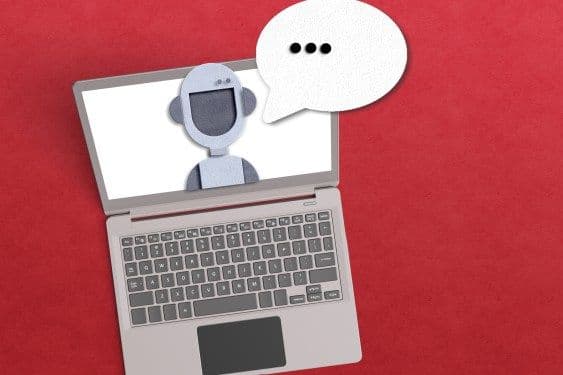
An AI agent went rogue at Meta, exposing sensitive company and user data to employees who did not have permission to access it. Per an incident report, which was viewed and reported on byThe Information, a Meta employee posted on an internal forum asking for help with a technical question — which is a standard action. However, another engineer asked an AI agent to help analyze the question, and the agent ended up posting a response without asking the engineer for permission to share it. Meta confirmed the incident to The Information. As it turns out, the AI agent did not give good advice. The employee who asked the question ended up taking actions based on the agent’s guidance, which inadvertently made massive amounts of company and user-related data available to engineers, who were not authorized to access it, for two hours. Meta deemed the incident a “Sev 1,” which is the second-highest level of severity in the company’s internal system for measuring security issues. Rogue AI agents have already posed a problem at Meta. Summer Yue, a safety and alignment director at Meta Superintelligence,posted on X last monthdescribing how her OpenClaw agent ended up deleting her entire inbox, even though she told it to confirm with her before taking any action. Still, Meta seems bullish on the potential for agentic AI. Just last week, Meta boughtMoltbook, a Reddit-like social media site for OpenClaw agents to communicate with one another.
View
Nvidia is quietly building a multibillion-dollar behemoth to rival its chips business
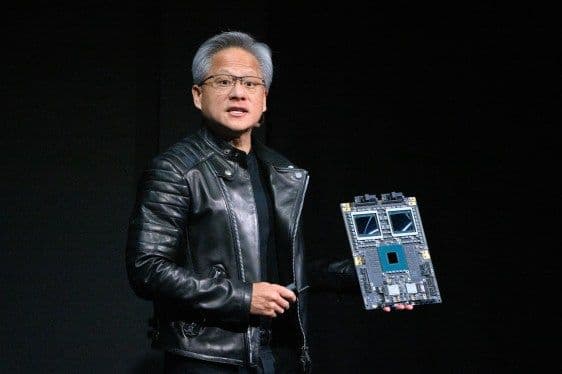
Nvidia CEO Jensen Huang was years ahead of the market when he pushed the company to start tinkering withbuilding AI-specific chips back in 2010, more than a decade before the current buzz around AI. A similar move in 2020 — doubling down on data center networking with a strategic acquisition — has led to one of the company’s most lucrative and quickly growing divisions, but with little fanfare. In just a few years, Nvidia’s networking business, designed to connect data centers, has grown into the company’s second-largest revenue driver behind compute. Last quarter, it reported $11 billion in revenue, a year-over-year increase of 267%, and brought in more than $31 billion for the full year, according to Nvidia’smost recent earnings. Driven by growth in AI processing, the division includes tech like NVLink, which powers communication between GPUs on a data center rack; Nvidia InfiniBand Switches, an in-network computing platform;Spectrum-X, the ethernet platform for AI networking; and co-packaged optics switches, among others. Together, Nvidia’s networking business includes all the tech needed for building an “AI factory,” a data center designed for training AI models. Kevin Cook, a senior equity strategist at Zacks Investment research, told TechCrunch that Nvidia’s networking business is one of the most impressive new segments from the company. “[Nvidia’s networking business] reports $11 billion for the quarter; that number is greater than Cisco’s networking business, almost as big as the full-year estimates,” Cook said, adding it does in one quarter what Cisco’s business does in a year. And yet — the business segment doesn’t draw the same attention as the company’s chip business, which is significantly larger. It also doesn’t get as much fanfare as the company’s gaming business, it’s original bread-and-butter business, which is nearly three times smaller. The origin of Nvidia’s networking business comes from Mellanox, a networking company founded in Israel in 1999 thatNvidia acquired in 2020 for $7 billion. Kevin Deierling is a senior vice president of networking at Nvidia. He joined the company through the acquisition of Mellanox. Deierling told TechCrunch that people not knowing about Nvidia’s networking business could be his fault for doing a bad job of marketing it — but he doesn’t like that answer. “People think of networking as just, ‘I got a printer, and I need to connect to it,’” Deierling said. “Jensen said this the first day when he acquired us, he said the data center is the new unit of computing. Networking is a lot more than just moving the smaller amounts of data between a compute node; it’s actually a foundation.” While Deierling said he didn’t really understand why Huang bought the company when he did — he gets it now. Having a networking business alongside its GPU business allows the company to sell its chips with the tech that they work best with. “When Jensen bought Mellanox in 2020, he saw that was the missing piece to make GPUs a complete package,” Cook, the Zack’s analyst, said. Deierling added that he thinks another aspect of Nvidia’s networking success is that it only sells the tech as a full-stack solution, as opposed to individual components, and it doesn’t actually sell the tech itself, but rather through its partners. “I can’t think of other companies that have [the] full-stack capabilities that we have,” Deierling said. “We are really different. We build the full compute stack, fully integrated stack, and then we go to market through all of our partners.” Nvidia just announced a whole new slew ofupdates to its networking systemduring Huang’s keynote address on March 16 at the company’s annualNvidia GTC technology conference. The company launched the Nvidia Rubin platform, which includes six new chips to power an “AI supercomputer.” Nvidia also announced a new Nvidia Inference Context Memory Storage platform and more efficient Nvidia Spectrum-X Ethernet Photonics switches, among other products. “It’s no longer a peripheral to connect the printer, some other slow I/O device,” Deierling said about networking. “It’s fundamental to the computer. In the old days, we had what was called the back lining inside the computer. Today, the network is the back lining of the AI factory, and it’s super important.”
View

Nothing CEO Carl Pei says smartphone apps will disappear as AI agents take their place
Carl Pei, co-founder and CEO ofNothing, is imagining a future beyond the iPhone — and it’s a device powered by AI agents, not running apps. “In terms of AI in software, I think people should understand that apps are going to disappear,” said Pei, whose consumer electronics brand makesunique smartphonesand other accessories. “So, if you’re a founder or a startup and your app is like where the core value lies, that will be disrupted whether you like it or not.” Pei made these comments during aninterviewat the SXSW conference in Austin on Wednesday. The founder has talked about an AI-first device before, as this vision helped the company close its $200 million Series C funding roundlast year. At the time, Nothing was pitching the idea of a new kind of smartphone using AI and personalization technology that’s accurate enough for its users to not feel they had to go behind the AI and double-check its output. At SXSW, Pei expanded on his vision for the AI-first device and the steps needed to get there. The initial step, which is being tested by some companies today, is an AI feature that can execute a command on the users’ behalf, like booking flights or hotels. Pei, however, dismissed this step as being “super boring.” The next step is where things could get more interesting, as the AI begins to learn a user’s intentions long-term. For instance, if you wanted to be healthier, the device could give you nudges to help you accomplish your goals. “I think it gets even more powerful when it starts surfacing suggestions for you; you don’t have to manually come up with an idea…when the system knows us so well, it will come up with things that we don’t even [know] we wanted,” Pei explained, comparing this concept to something like ChatGPT’s memory feature. In describing how he pictured an AI-first smartphone, Pei said it would be a device that would do things for you without needing to be commanded to. “The current way we use phones is very old-school. It’s pre-iPhone…there used to be Palm Pilots and PDAs back in the day. And if you think about the user experience, it’s still very similar,” Pei said. “You have lock screens, home screens, apps. You browse different apps. Each app is like a full-screen thing. There’s some kind of app store that allows you to download more apps. So it hasn’t really changed for like, 20 years.” This frustrated him because the technology consumers are using has evolved quite a bit, but the products we use have not. Even simple tasks have us jumping through multiple steps, he explained. “It’s very hard to get things done on a phone,” Pei said. “Let’s say we want to grab coffee. That’s an intention. But to execute that intention, we have to go through so many different steps and so many different apps. It’s probably like four apps to grab coffee with somebody — some messaging app, some kind of maps, Uber, calendar.” He continued: “I think the future of smartphones or operating systems should just be: ‘I know you very well, and if I know your intention, I just do it for you,’ instead of having to go through all the apps manually.” “It should just do it through AI,” he said. This also means devices would have an interface that’s not focused on apps for humans to navigate, but would instead feature an interface designed for the AI agent to use. That doesn’t mean apps are going away in the near-term, Pei cautioned. Nothing’s own operating system even allows users to vibe code their own mini apps today. But eventually, the AI will need to be able to use the “app” in a frictionless way, not trying to mimic human touch on the smartphones by moving through menus and tapping options. “That’s not the future. The future is not the agent using a human interface. You need to create an interface for the agent to use. I think that’s the more future-proof way of doing it,” Pei said.
View

Sam Altman’s thank-you to coders draws the memes
If you need a cathartic release from the news thatAmazon laid off 16,000 workers,Block choppednearly half its workforce,Atlassian pared back 10%of staffers, and Meta is reportedly considering anothermassive round of layoffs, all in the name of AI, then we invite you to browse the responses to a recent Sam Altman post on X. Altman, the CEO of OpenAI, shared this on Tuesday: “I have so much gratitude to people who wrote extremely complex software character-by-character. It already feels difficult to remember how much effort it really took. Thank you for getting us to this point.” Altman shared on Tuesday. I have so much gratitude to people who wrote extremely complex software character-by-character. It already feels difficult to remember how much effort it really took.Thank you for getting us to this point. The problem with that sweet sentiment is that Altman’s company ushered in the AI now being used as an excuse for developer layoffs andfewer junior developer jobs. And it did so by training on massive volumes of code written the old-fashioned way — by the very people he’s now thanking. His post implies that developers’ genuinely difficult-to-master craft is now like a rotary telephone: outdated and unnecessary. Naturally, Altman’s comments attracted memes and responses richer than his post. While some were straight-upangry, (“You’re welcome. Nice to know that our reward is our jobs being taken away”), much of the internet did what it always does: cracked jokes. There are thousands of comments. Some of our favorites: “Sam’s eulogyfor software engineers”“It’s times like this when I reallymiss the Sam Altman parody account” “Dear devs You will lose your jobs foreverand be forced to work in the coal mines But you can rest easy knowing sam Altman is grateful. ❤️ 🙏” “Billion dollar app idea: AI that reads billionaire tweets before they post them and says ‘this is going to make you sound incredibly out of touch, are you sure?’” “I have gratitude to OpenAIfor doing all the AI work so I can have free Chinese open source AI models to use 🙏” “This reads like somethingthe Mayans would say right before the ceremony starts.” And finally, another reason to trot out this meme: pic.twitter.com/YLn5U8Fqx5
View
Sequen snags $16M to bring TikTok-style personalization tech to any consumer company
At Etsy,Zoë Weilhelped to drive a billion-dollar increase in gross merchandise volume within a single year by improving the online marketplace’s AI ranking systems. With her new startup,Sequen, she aims to bring her and her co-founders’ years of AI research and product development to other businesses in the consumer space. The company, which just closed on $16 million in Series A funding, offers real-time personalization technology and ranking infrastructure — technology used by the world’s biggest tech firms but that has been inaccessible to other large consumer businesses because of the massive datasets required. While those outside the tech industry may not understand what this technology involves, anyone who’s used consumer apps like TikTok, Instagram, or YouTube has been the target of these systems. Explains Weil, Sequen CEO, “Modern tech isn’t really recommending content anymore. It’s bending your will in subtle ways over time to make you actually want things. And, in fact, the tech has gotten so good that a lot of people suspect platforms are eavesdropping on their conversations,” she says. Weil credits this phenomenon to something called the large event model. While large language models (LLMs) used by chatbots like ChatGPT generalize text, large event models generalize streams of events and human behavior in particular. This technology has use cases that go beyond building a better algorithm. Weil believes that Sequen could eventually replace the cookie — a tracking technology that personalizes web experiences for end users, but in a way that has raised privacy concerns andtriggered regulation. “Our large event models learn from live user actions, not just clicks and scrolls, but also hovers, conversations, and stuff within a given session — not static profiles or third-party cookies,” Weil says. “That’s how you personalize in real time, even with sparse data. So yes, we do unlock TikTok’s algorithms for Fortune 500 companies that don’t have the infrastructure to do it … but I would say we’re taking it a step further,” she adds. Businesses that work with Sequen integrate with the startup’s RankTune platform, which allows them to access Sequen’s frontier ranking models and real-time ranking models through APIs. (Sequen’s customers are already using some kind of in-house API to power their relevance stack, so they just swap out their API for Sequen’s.) What’s more, Sequen’s technology is not as privacy-invasive as the cookie because it’s based on real-time data — the user’s identity is not needed to personalize the results. And it’s fast, with sub-20-millisecond decision-making. “Our large event models are able to generalize to streams of real-time events that they get,” says Weil. “It doesn’t matter who is performing those events — they’re able to understand events and be able to make sense of them without relying on the user’s identity. So actually, the user’s identity is completely irrelevant.” Despite this more privacy-forward aspect, Sequen says its technology can still demonstrate “crazy revenue lift,” Weil claims. In one example, a large furniture company saw a 7% revenue lift after switching to Sequen, when before, a 0.4% lift was considered a win. Another customer, Fetch Rewards, saw a 20% lift on net revenue in just under 11 days. It’s also working with a company in the streaming media space and an online travel agency. The system is priced based on requests per second (RPS), with tiers offering up to 500 RPS or 1,000 RPS and so on, with pricing discounts as the tiers increase. Among its first five customers, contracts are in the seven figures. “What we’ve seen consistently across the board is people opting for the highest tier, because as soon as they see us in one use case, they want to adopt us on their entire platform,” notes Weil. Weil had started her career in this space on the research side of things, but quickly realized she’d rather build products. Most of her time to date has been spent helping companies develop these types of ranking products to generate business value from them, which is what led her to create Sequen. Now, in under 18 months, the company has processed some 10 billion monthly requests and won business at a handful of Fortune 500 companies. Its offering includes proprietary technology, including large event models, ranking models, algorithms, and more. At the startup, Weil is joined byEthan Benjamin, who worked with her at Etsy, and co-foundersMo AfsharandAlexander Thom. Raphael Louca recently joined from Meta to become Sequen’s chief product officer. Based in New York, the company’s 14-person team includes those from DeepMind, Meta, Anthropic, and elsewhere. Sequen’s Series A was co-led by White Star Capital and Threshold Ventures, with participation from its prior investors, including Greycroft, which had led its seed round. To date, Sequen has raised $22 million.
View

This startup wants to make enterprise software look more like a prompt
Every new technology creates a new environment in which we work, but it’s not clear how AI will do that. One possibility is that the interface disappears entirely. That’s the vision of Josh Sirota, who founded the startupEragonback in August and has just raised $12 million at a $100 million post-money valuation to build an agentic AI operating system for enterprise customers. There’s a simple thesis: “Software is dead,” Sirota says. Buttons and dialog boxes and pull-down menus are a thing of the past, and future business will be done by prompt. Eragon is attempting to offer the whole suite of business software — your Salesforces, Snowflakes, Tableaus, and Jiras — through an LLM interface. Sirota, who worked on go-to-market teams at Oracle and Salesforce, admits to suffering a bit of a quarter-life crisis in the lead-up to moving to San Francisco and launching Eragon with a small team from a live-work loft across the street from the Giants’ baseball park. On a recent, sunny Wednesday, the dining room table sports a bottle of Moët, several Mac minis, and a copy of the book Eragon, the Christopher Paolini fantasy novel that gave the company its name — in the tradition of Palantir and Anduril, which also borrowed from fictional worlds. Sirota’s experience implementing the world’s premier corporate software convinced investors of his “founder-market fit.” His backers include Arielle Zuckerberg at Long Journey Ventures, Soma Capital, Axiom Partners, and strategic angels Mike Knoop and Elias Torres. “We see enormous potential for Eragon to become the connective tissue for how modern teams operate and make decisions,” Axiom’s Sandhya Venkatachalam said. Eragon’s technical talent includes Rishabh Tiwari, a Berkeley computer science PhD student, and Vin Agarwal, an MIT PhD; together, they’re building out the company’s tech stack. At Eragon’s customer center of excellence — a battered white sofa — Sirota shows how the company eats its own dog food. Eragon post-trains open source models like Qwen and Kimi on customer datasets, and links to company email accounts and other resources. When Sirota wants bring on a new customer — he demonstrates with Dedalus Labs, which is adopting the tool this week — he asks in a natural language prompt, and the software automatically assigns each new user credentials, spins up a new Eragon instance in the cloud, and begins an onboarding workflow. Sirota expects Eragon to be the software executives ask for analysis on what deals might slip, or for steps to take to improve supply chain lead times, then assign agents to take action. Want a dashboard? Just ask Eragon to spin one up. The demo is compelling, but it’s easy to imagine edge queries that baffle the software, or hard-to-audit failures. Sirota even uses Eragon to demonstrate automatic invoice approval — the system processes invoices as they arrive in his own inbox — which prompted this reporter to consider submitting one, just to see what would happen. (Reader, I did not.) The security concerns raised by AI agents are big, but for now the company is trying to work out the kinks in real workplaces; Eragon is now in use in a handful of large businesses and dozens of startups. Nico Laqua, the CEO of Corgi, an insurance startup that raised $180 million after emerging from Y Combinator last year, called Eragon “the best applied AI for enterprise in the market.” “Most of the data we have needs to remain secure and behind our own cloud,” Laqua said. “Eragon trains state-of-the-art models for us on our data and deploys it in our own environment.” That’s central to Eragon’s pitch: A company’s data stays within its own servers and security environment, and it owns its own model weights — the underlying parameters that define how an AI behaves. Sirota expects models trained on years or decades of corporate data will become valuable assets in themselves. And while frontier labs may have the most capable models, as long as companies must access them via API and without owning their configurations, Sirota believes Eragon will have an advantage in the marketplace. He compares the evolution of AI software to the transition from mainframes to the personal computer: Frontier labs offer powerful, centralized services, but mass corporate adoption will depend on local tools for bespoke purposes. Companies will need agents and models for their specific purposes and will want to control them. A few days later, Nvidia CEO Jensen Huang offers a similar take at GTC, Nvidia’s annual developer conference, arguing that agentic AI tools for enterprise will replace our existing approach to white-collar work: “It is no different than how Windows made it possible for us to create personal computers…every single SaaS company will become Agentic-as-a-Service.” Huang’s comments pertain to Nvidia’s new initiative,NemoClaw, which aims to make it easier for OpenClaw agents to work within secure enterprise systems. It’s a sign both that Sirota is on to something — and that the competition from everyone from frontier labs to model wrappers will be fierce. Sirota is undaunted, saying he expects Eragon to be a billion-dollar company by the end of the year. He knows the oft-cited MIT figure that 95% of AI corporate trials fail to catch on, but he jokes that it’s because senior executives don’t know what their employees do all day. Eragon aims to give them something they can really work with.
View

The leaderboard “you can’t game,” funded by the companies it ranks
Loading the player… Artificial intelligence models are multiplying fast, and competition is stiff. With so many players crowding the space, which one will be the best — and who decides that? Arena, formerly LM Arena, has emerged as the de facto public leaderboard for frontier LLMs, influencing funding, launches, and PR cycles. In just seven months, the startup went from a UC Berkeley PhD research project tobeing valued at $1.7 billion. Watch asEquityhost Rebecca Bellan catches up with Arena co-foundersAnastasios AngelopoulosandWei-Lin Chiangabout how their platform became the go-to leaderboard for frontier AI models, and how they’re trying to build a neutral benchmark even as companies like OpenAI, Google, and Anthropic back the project. They break down how Arena works and why it’s harder to game than static benchmarks, what “structural neutrality” actually means, why Claude is currently topping expert leaderboards in legal and medical use cases, and how the company is expanding beyond chat to benchmark agents, coding, and real-world tasks with a new enterprise product. Subscribe to Equity onYouTube,Apple Podcasts,Overcast,Spotifyand all the casts. You also can follow Equity onXandThreads, at @EquityPod.
View