
Latest AI News
Enterprise AI Has a Massive Problem, and It’s Not the Models
Organisations recognise that good data quality and governance are crucial for sustainable AI in personalised customer engagement.
View

PwC India, Leah Expand Alliance to Drive Enterprise AI Adoption
Partnership focuses on agentic AI deployments across finance, HR, procurement and enterprise ops.
View

Airbus, BMW Partner with Mistral AI as Europe Pushes for AI Independence
The partnerships highlight Europe’s push to build trusted AI US alternatives for aerospace, defence and automotive industries.
View

CHiPS Deploys Salesforce MuleSoft for Chhattisgarh’s Digital Dwaar Platform
CHiPS plans to expand API integrations across state departments and applications, strengthen governance and security frameworks.
View

Bring Back Purpose-Built Machine Learning, Says Zoho’s AI Research Head
The answer to token maxing is not less AI. It is purpose-built machine learning and right-sized models, says Zoho’s Ramprakash Ramamoorthy.
View

AI Infrastructure and Sovereignty Imperative: Why the Stakes Have Never Been Higher
A new report from the World Economic Forum and Bain & Company states that the infrastructure decisions governments make today will shape their economic competitiveness for decades to come.
View
DuckDuckGo Installs Rise 30% Amid Backlash Over Google AI Search
DuckDuckGo says users are increasingly turning to its AI-free search options and privacy-centric browsing experience.
View

OpenAI Codex Usage in India Jumps 27x in 2026
India is now among the top five countries globally for Codex adoption and among the top ten for engagement.
View

Employees Want to Share Data for AI-Powered Healthcare, But They’re Nervous About It
To what extent are employees willing to share their personal health data, and who gets access to it?
View

Anthropic Surpasses OpenAI With $965 Bn Valuation, Launches Claude Opus 4.8
Anthropic reported that its annualised revenue run rate crossed $47 billion.
View
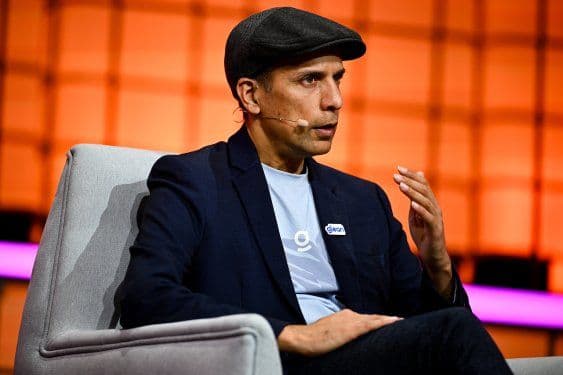
Glean’s top line crosses $300M as AI budget-cutting becomes its major selling point
Glean, a company often described as the Google for enterprise, said it has reached $300 million in annual recurring revenue (ARR), a three-fold increase from the $100 million milestone it reached just 15 months ago. While many AI startups are growing at a blistering pace, Glean’s progress is particularly remarkable. After years of essentially being the only player in the category, the seven-year-old startup is accelerating its growth as tech giants enter the enterprise AI search market with rival products. “The first four or five years of our existence, we had no competition,” Glean CEO Arvind Jain told TechCrunch. “Given how important search is to make AI work in the enterprise, every single company in the world wants to be in this space.” Tech heavyweights building Glean-like tools include Google, Microsoft, OpenAI, Anthropic, Salesforce, and Atlassian. Jain maintains that there’s value in being a first mover in the space, but that it’s also equally important to offer a better product. What Glean does better than its competition, according to Jain, comes down to the deep understanding that its AI tools have of customers’ business needs. Glean’s AI achievesthis knowledge— a concept captured by the new, popular term “context graph” — by connecting to and learning from enterprises’ internal software systems. Jain claims that Glean’s context graph also helps enterprises cut AI computing costs. “If you connect your AI to Glean, it gives you all the information that you need to do your work, and that results in AI consuming far fewer tokens compared to if you unleash AI onto your systems directly,” Jain said. That’s because with Glean, AI ends up performing fewer operations, he added. At a time when many companies are blowing through their AI budgets, those token cost savings have become a major selling point for the company. “One of the things you know our customers really like about Glean is the fact that we can reduce your AI bill significantly,” he said. The company, which was last valued at $7.2 billion when it raised a $150 million Series F last June, offers various pricing structures to its customers, which include Databricks, Reddit, Pinterest, and Samsung. According to Jain, Glean offers both a consumption-based model, where clients pay per use, and a hybrid model that combines a fixed monthly fee for active users with separate usage fees for model consumption. Glean is definitely not the first company to do this, but it’s worth pointing out that the company’s $300 million milestone cannot be fully described as traditional ARR, because a consumption model by definition doesn’t have a strictly recurring component. Pure consumption pricing models depend on fluctuating user activity rather than predictable subscription renewals, therefore a portion of Glean’s topline is more accurately described as anannualized revenue run rate. Glean did not immediately respond to a request for comment; this post will be updated if the company replies.
View

Just like gold and oil, we’ll soon be able to trade AI token futures
The most important market of the future could be in LLM tokens — and financial groups are rushing to build new infrastructure for them. China’s Shanghai Futures Exchange is currently designing a derivatives market for AI tokens, Reutersreports. The news comes as major derivatives exchangeCME Groupand theIntercontinental Exchange(the owner of the NYSE) have separately said they’re working on launching futures contracts for renting GPUs. GPU markets are still maturing, but given the wide range of companies using, selling, and renting GPUs, there’s a robust market for spot prices on GPU rental, typically charged by the hour. According to data fromAI Mining Co., which tracks daily GPU rental pricing across 28 marketplaces and cloud providers, median prices for Nvidia H100 GPUs ranged from $1.40 to $4.27 per hour across 13 marketplaces, while the average price for H200 GPUs were between $2.34 and $5 per hour across 10 marketplaces. And just over the past seven days, average H100 prices ranged from $2.79 to $3.33. But while mature markets exist for GPUs, there’s less infrastructure around tokens themselves — the fundamental building blocks of contemporary AI models. Enterprise plans for major AI companies are commonly denominated in tokens: OpenAI, for example, charges $5 per million input tokens, and $30 per million output tokens if you want to use the API for its latest GPT-5.5 model. Even cloud providers are increasingly offering the opportunity to charge per token, as inAmazon’s Bedrock system. The effort comes amid an unprecedented buildout of AI infrastructure. Cloud service providers, private equity firms, and infrastructure players alike have poured hundreds of billions into building data centers, anticipating that demand for GPUs and compute will continue to rise. An emerging crop of globalneocloud companiesis also vying for a piece of this demand. Some of these new entrants are specializing, focusing on inference, while others are competing with cloud giants like Oracle, AWS, and Google Cloud to offer their services to AI companies. By targeting AI tokens, the Shanghai exchange’s derivative product would be tied to how AI companies price their services, giving businesses, investors, and data center operators a way to hedge against the cost of compute.
View