
Latest AI News

‘AI is Going To Worsen the Divide Between Haves & Have-Nots,’ Says Aadhar’s Founding CTO
Srikanth Nadhamuni argues that AI can dismantle India's procedural complexity, but only if it is built the way Aadhaar was: for everyone.
View
Sarvam AI Raises $234 Mn in HCLTech-Led Series B Round at $1.5 Bn Valuation
HCLTech also acquired a 10.46% stake in the company through an all-cash minority investment.
View

Adani Group, Jabil Partner to Build AI Data Centre Hardware Platform in India
The companies intend to build multi-gigawatt AI rack manufacturing capacity in India to serve hyperscalers, colocation operators and enterprise data centre customers.
View

The AI layoff wave is becoming a powder keg
Something strange is happening in tech right now. Companies are posting record profits and revenue while laying off tens of thousands of people, citing AI as the official explanation. So far this year, there have been an estimated363 layoffsat tech companies this year, affecting nearly 150,000 people — a pace of about 974 people per day, 44% faster than last year — according to TrueUp, a tech job board and recruiting platform that also runs one of the most widely cited tech layoff trackers. The trend appears to be accelerating. Tech layoffs hit theirhighest single month in two yearslast month, with nearly 40,000 cuts, and AI was the most-cited reason for layoffs across every industry for the third month running, according to outplacement firm Challenger, Grey & Christmas. There’s growing skepticism that AI is really the culprit, though — that it’s more of a convenient cover story than the actual cause. Few examples illustrate the pushback better than what happened at the payments outfit Block earlier this year. After getting hammered over laying off nearlyhalf the companyearlier this year, Jack Dorsey denied the cuts were a sign of trouble, insisting instead that AI tools “are enabling a new way of working which fundamentally changes what it means to build and run a company.” But pressed by commenters on X about the bloat he’d created during the pandemic, Dorsey later acknowledged that Block had, in fact, over-hired. Other voices have also begun to weigh in, including famed VC Marc Andreessen, who recently called AI the “silver bullet excuse” for layoffs that are really about mismanagement in some cases. Inconversationwith podcaster-investor Harry Stebbings, Andreessen said, “Essentially, every large company is overstaffed. It’s at least overstaffed by 25%. I think most large companies are overstaffed by 50%. I think a lot of them are overstaffed by 75%. Now they all have the silver bullet excuse: Ah, it’s AI.” What makes this combustible is that at the very moment that tens of thousands of workers are being shown the door, a small cohort of AI insiders is becoming wealthy on a scale that’s hard to comprehend. Early last month, AI chipmaker Cerebras Systemsclosed its first dayon the Nasdaq up68%from its $185 IPO price, giving the chipmaker a market cap of roughly $67 billion — the largest US tech IPO since Snowflake’s 2020 debut. By the close, co-founders Andrew Feldman and Sean Lie werebillionaires. (The company’s shares have since fallen 30%.) SpaceX meanwhile went public on Friday and enjoys, as of this writing, a $2.1 trillion market cap, turning Musk into a paper trillionaire and potentially minting an estimated 4,400 millionaires, and around400 centimillionairesin the process — assuming the shares don’t fall. Anthropic and OpenAI arequickly inchingtoward the public market, too, both at valuations of roughly $1 trillion or more. The effects are showing up closer to home, too. In San Francisco — now home to dozens of AI companies, including the big AI labs — high-end homes are routinely selling formillions of dollars over asking price.Then there’s Mark Zuckerberg. In early March, he purchased a$170 million mansionon Miami’s “Billionaire Bunker,” setting the all-time record for the most expensive home sale in Miami-Dade County history. Two months later, Meta announced it would lay off8,000 people, or roughly 10% of its workforce. Tech titans routinely shell out jaw-dropping sums on their real estate portfolios. But these extremes come at a moment when many Americans are getting squeezed harder than they have been in years. Consider that workers with employer-sponsored health insurance face premium increases of about6% to 7%this year, more than double the rate of inflation, the cost of private health insurance has roughly doubled since 2008, and median home prices have climbed28% since early 2020, while mortgage rates have nearly doubled. In a January 2026 New York Times/Siena poll,65% of voterssaid a middle-class lifestyle is out of reach, and a more recent poll found76% of Americansnow name cost of living as their top economic concern, up sharply from 58% a year earlier. This is about more than job losses in isolation, in short. It’s tens of thousands of laid-off workers hitting an unusually unforgiving cost environment at the same time that tens of thousands of AI insiders are seeing once-in-a-generation paper wealth materialize, and being told that AI is why they’re out of a job. Whether or not that’s the real explanation — many economists point instead to tariffs, war in the Middle East, and broader economic uncertainty as the actual drivers of corporate caution — the optics are what they are. One group is getting unfathomably rich off the advancements that are supposedly replacing the other. It isn’t hard to find a precedent for what happens when that divide gets wide enough. In 2008, a financial crisis that began with loose lending and over-the-top risk-taking on Wall Street ended with bailouts for the banks that caused it, while millions of Americans lost jobs and homes in the Great Recession that followed. Three years later, that anger crystallized into Occupy Wall Street. That movement could look quaint in comparison if the current trajectory holds. Occupy Wall Street emerged from a crisis and the public anger was, at its core, about who paid for the cleanup. This time, there’s no crash to point to. Companies are profitable, AI itself is minting a new class of overnight fortunes, and the layoffs are happening anyway, with AI cited as the driver. If the optics of 2008 were, “We’re bailing out the people who broke the economy while you lose your job,” the optics here could end up being, “We’re getting richer than ever off the very tech we’re using to replace you.” Many companies — Block, Atlassian, Cloudflare, among them — have watched their stocks surge when they point to AI as the reason for cuts, so the strategy makes sense on its face. Still, they might want to consider whether that’s really the message they want to send to the people they’re laying off, and to everyone else now watching.
View

India’s AI Boom Could Double Data Centre Water Consumption by 2030: Report
A CEEW report highlighted the environmental cost of AI growth, estimating that a single 100 MW hyperscale data centre can consume nearly 20 lakh litres of water every day.
View
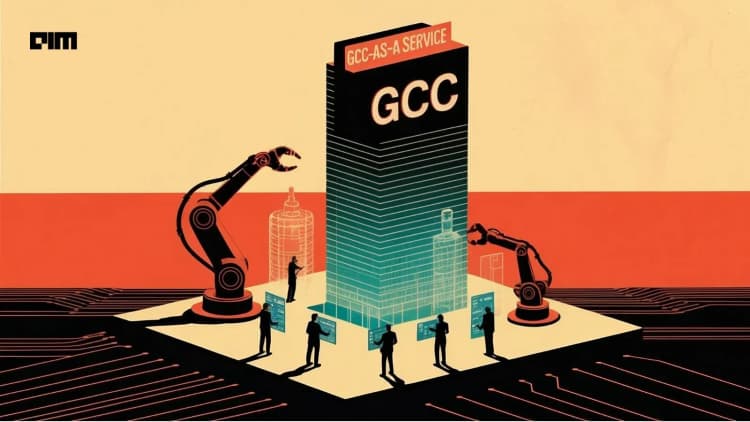
Indian IT Once Feared GCCs. Now, it is Racing to Monetise GCC-as-a-Service
GCCs are evolving into a major growth strategy as IT firms seek new revenue pools in building and running AI-native captive centres.
View

EXL Strengthens India Presence with Expanded Chennai AI Hub
The expansion reflects EXL’s broader AI strategy with nearly 60% of the company’s revenue now generated from data and AI services, according to company executives.
View
LTM Launches AI-Native Managed Services Platform as it Looks Beyond Manpower-led Delivery
As AI reshapes IT services, LTM's new agentic AI platform aims to automate technology operations and reduce dependence on traditional manpower-led support.
View
Google DeepMind Publishes Roadmap to Superintelligence
Researchers argue progress beyond human-level AI could come through scaling, self-improvement, paradigm shifts, or multi-agent systems.
View
Equal AI Raises $30 Mn Led by Prosus Ventures, Tomales Bay Capital to Scale AI Call Assistant
Equal AI will expand its AI assistant platform as it scales its consumer business and deepens its presence in India's growing AI applications market.
View

‘Human Capital Does Not Become Less Valuable as Token Capital Grows,’ Says Satya Nadella
The Microsoft chief warned against a future in which a handful of AI models capture most of the economic value created by AI.
View

What is UiPath’s Moat in 2026?
“UiPath is no longer an RPA company. We are an RPA plus process orchestration plus solutions company,” says CTO Raghu Malpani.
View