
Latest AI News

When the Trump administration cracks down on Anthropic, who benefits?
Anthropic recentlytook its two newest AI models offlinedue to an export control order from the Trump administration, prompting broad debates about AI policy anddigital sovereignty. On the latest episode ofTechCrunch’s Equity podcast, Sean O’Kane, Rebecca Bellan, and I discussed what actually prompted the administration’s moves against Anthropic, and what this might mean for the broader AI ecosystem. As Sean put it, “Anthropic has not had the best relationship with the Trump administration in a way that stands apart from the other leading AI labs,” so perhaps other Anthropic’s rivals don’t need to worry about a similar crackdown. But Rebecca also noted that leading cybersecurity experts have “signed an open letter to ask Trump to revoke the order, and they say it’s actually dangerous to have to pull these advanced cybersecurity capabilities from network defenders in the U.S.” And we wondered whether this could all end up being good publicity for Anthropic, especially since — in Rebecca’s words — “everybody loves a bad boy.” Keep reading for a preview of our conversation, edited for length and clarity. Rebecca Bellan:As I’m sure many of our listeners know, the U.S. government basically just forced Anthropic to pull its two newest models offline — Fable 5, and then there was also Mythos 5, which was the one that was available to current Mythos users, [whereas] Fable 5 was more available to the public. They sent a letter [last] Friday that cited “national security concerns.” No one knows what those concerns are. That report has not been made public, they gave no specifics and told [Anthropic] that they had to ensure that those models couldn’t be used by any foreign nationals. So Anthropic was like, “Okay, I guess we have to just pull the models entirely, because we don’t know when someone’s a foreign national. A lot of our own employees are foreigners.” But really, [reports said] the White House got tipped off to this because of some Amazon researchers that allegedly found a way to bypass Fable 5’s guardrails.Amazon CEO Andy Jassy raised these concerns with the White House, and it just kind of spiraled from there. Sean O’Kane:This all moved really fast, especially for a Friday afternoon into a weekend. And it’s at the same time that the administration was ostensibly trying to negotiate some sort of treaty for the war that it started in Iran. Rebecca:Friday evening for us in New York. They love a distraction. Sean:Let’s step real far back for a moment. Anthropic has not had the best relationship with the Trump administration in a way that stands apart from the other leading AI labs — I think there’s an element, at least, of that playing here. So do you think that this is going to have implications for those other companies? Do you think that the Trump administration would be less inclined to sort of turn off the tap on one of those competitors? Anthony Ha:Part of the context here is that both the reporting andan analysis from independent security expertssuggest that the actual security risk from Anthropic is not that unique. So a lot of this seems to stem as much from parts of the Trump administration and Anthropic just [not getting] along very well. Whatever risks there are, those things are gonna blow up out of proportion just because it seems like they can’t have a civil phone call with each other. If you’re another company — on the one hand, maybe that’s advantageous to you, because you can say, “Well, we just don’t get these guys mad at us and we can do what we want.” But that’s also not a great regulatory landscape to just [say], “Boy, I hope they don’t get mad at us.” Rebecca:On the one hand, it definitely feels retaliatory — after the government labeled Anthropic a supply chain risk, there’s this big lawsuit going on between them, it really feels like the White House is just looking out for any excuse to pummel Anthropic. And I feel that way not only because that was my initial reaction, but because of what a lot of cybersecurity researchers have said. They say that this should never have triggered an export control [order]. They’ve all signed an open letter to ask Trump to revoke the order, and they say it’s actually dangerous to have to pull these advanced cybersecurity capabilities from network defenders in the U.S. Anthropic itself said some of the same jailbreaks could have been found in several other AI models. Cynically, it’s like: Okay, are you just pausing Anthropic so that others can catch up to where Anthropic was? But at the same time, I’ve also seen reactions that [say]: Anthropic kinda had this coming. They’re like, “This is too dangerous for anyone to use, but not us, we’re the good guys.” They’re talking out of both sides of their mouth. A week before Fable came out, they were [saying], “Hey, we need to slow down AI, guys. It’s getting really dangerous.” But then boom, “Here’s our most insane ever, super powerful model, go off.” Anthony:In some ways this feels like a microcosm of a lot of the discussion around AI, where people like Sam Altman and Jensen Huang are [saying], “Hey, let’s try to lower the temperature. Why is everybody mad at us?” Well, you spent the last couple years essentially saying you’ve built this God machine that will take jobs away from everyone. It’s not exactly a shock that people don’t feel great about this. And there’s something about the way Anthropic talks about Mythos in particular, where they’re like, “This is the most incredibly powerful model ever, it’s too dangerous to release to the public.” And so on some level, [you say,] “Well, okay, let’s say that we take that seriously then. That means that there’s going to be an incredible level of scrutiny around it.” And I do wonder — it does seem like Anthropic is not happy about this. I want to be careful about not overstating how this could be beneficial to them. But we also ran some stories about Ramp analysis tohighlight the fact that the last big blow-up between Anthropic and the Trump administration was good for the company, in at least some ways. Downloads of Claude shot up. I think a lot of people who maybe had thought of ChatGPT asthechatbot,theAI assistant before, suddenly they were looking at Claude as maybe the more responsible one, the more “resistance” one. And in the same way, [while] Anthropic is very stressed out about this, this could, again, make their models seem even more powerful. Rebecca:Definitely. “We’re so dangerous.” Everyone loves a bad boy, right? Everyone’s like, “It’s the most powerful model, even Trump says so. Of course, I’ve got to get my hands on it.”
View

How Katha Room Went From Telling Indian Bedtime Stories to Being an Apple Award Finalist
Katha Room hosts more than 250 stories across five languages and has notched over 10,000 downloads on iOS and Android combined, while being bootstrapped.
View

In the Weights is your new AI-centric vanity search
Anyone who’s Googled themselves recently knows that it doesn’t quite hit the way it used to. Sure, there’severything going on with Google search itself, but there’s also an inescapable feeling that web search isn’t the canonical source of information that it used to be, with just as many people learning about who you and I might be from chatbots. Thomas Dimson and Joey Flynn had a similar feeling, leading them to createIn the Weights. The“weights”in question are the numerical parameters that shape an AI model’s training and output, so the websitepurportsto measure how well “a model is able to recall someone without using tools like web search.” “Being in the weights means your existence was deemed important in the process of creating superhuman artificial intelligence,” the website says. To achieve this, In the Weights supposedly queries different models (including Grok, Gemini, multiple versions of GPT, Claude, and Llama, plus lesser known models) with a question similar to, “Who is <name>? Give up to 10 results, each with a short description and confidence.” It then “cluster[s] similar descriptions together and assign[s] a strength score.” For example,this humble tech bloggerreceived a strength score of 641, placing me in the top 6% of names. I was feeling pretty good until I saw thatmultipleTechCrunchcolleaguesscored even higher. And theleaderboardhas been shifting as I write this post, with “Home Alone” star Macaulay Culkin currently in the top slot with a strength score of 988, neck-and-neck with opera singer Luciano Pavarotti. The results also show which models returned which answers for a given name, and they highlight potential hallucinations — apparently GPT-5.4 Mini says that Anthony Ha is an “ambiguous name form that could refer to multiple people with the initials A.H.A.” Asked why he built In the Weights, Dimson told TechCrunch via email that he and Flynn were looking to “get the creative juices flowing again” after leaving OpenAI (which they both joined throughthe acquisition of their design startup Global Illumination). Dimson said he was thinking about how “Google vanity searches are the wrong objective in 2026 as more traffic moves to LLMs” and about the fact that “so many lives are encoded somehow in a bunch of floating point numbers inside the AI brain.” He also said the direction of the site was “sealed” bya tongue-in-cheek blog postriffing on AI weights and Terry Bisson’s classic short story“They’re Made Out of Meat.” “Reception has been insane so far, we thought this would be a mild curiosity but it seems like it has struck a nerve of wanting to see if you live forever in the super intelligence (the comparison factor doesn’t hurt either!)” Dimson added. While I’m not as convinced that being “remembered” by a chatbot is a guaranteed ticket to immortality, I can’t deny that I find the results both intriguing and jealousy-inducing, especially since they’re codified in an easy-to-compare score. (AI critic Anthony Moserscoffedthat this is “literally the same as asking 13 chatbots to tell you about yourself.”) Also helping: The fact that the site features a cute,Nintendo-inspiredretro design. Dimson said he plans to dig in further into why different models in the same series return different results, which models are biased towards different types of people, and which people “should have a Wikipedia article but don’t.”
View

Signal’s Meredith Whittaker wants you to remember that AI chatbots ‘are not your friends’
Asked about the privacy implications of chatbots like ChatGPT and Claude, Signal President Meredith Whittaker answered, “These are not your friends. These are not conscious beings. These are not sentient interlocutors.” Whittaker made those comments ina broader interview with Bloombergabout policy, privacy, and Signal. She acknowledged that she uses AI tools “to format a document here and there,” but insisted, “I don’t ask them questions. I’m very serious about my thinking and writing, and I don’t want the process of working through an idea […] to be foreclosed or eclipsed by the response of a system that’s averaging what’s already out there.” As for Microsoft AI CEOMustafa Suleyman’s predictionthat users could let Microsoft Copilot handle all their Christmas shopping this year, Whittaker argued this scenario — where Copilot is eavesdropping on the family group chat to determine who wants want — means giving it “access to my credit card, my browser, my Signal, the ability to message my siblings on my behalf, my home address [and] my calendar.” “What you’ve just described is a system with very pervasive access across multiple applications and services,” Whittaker said. “In the context of Signal, it would constitute a kind of a backdoor.”
View
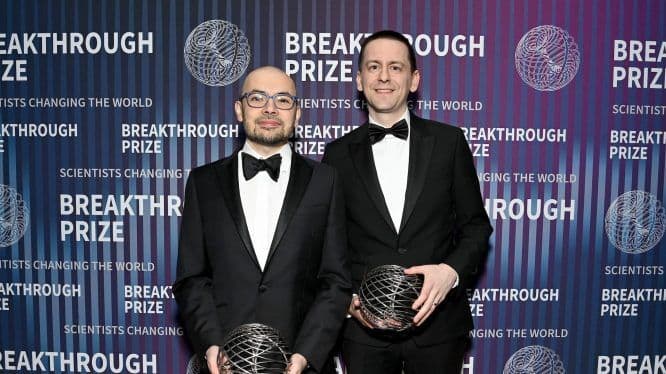
Nobel laureate John Jumper is leaving DeepMind for rival Anthropic
John Jumper, who shared a recent Nobel Prize in chemistry, announced Friday that he’s making the leap to Anthropic after “nearly 9 years” at Google DeepMind. Ina post on X, Jumper wrote that DeepMind CEO Demis Hassabis “took a real chance letting me lead the AlphaFold team just six months after finishing my PhD, and the entire GDM team taught me so much about how to do great science.” Jumper (pictured above right, with Hassabis) added, “GDM is a special place, and I’ll still be excited to hear about what amazing things they discover next.” Bloomberg reports that Jumper wasa key member of Google’s team developing coding tools, which the company has struggled to sell to businesses. Character AI co-founder Noam Shazeer also announced this week thathe’s leaving DeepMind— though in Shazeer’s case, he’s joining OpenAI. Jumper and Hassabis won the Nobel Prize in 2024for their work on AlphaFold, an AI model that can predict the 3D structure of proteins based on their genetic sequences.
View
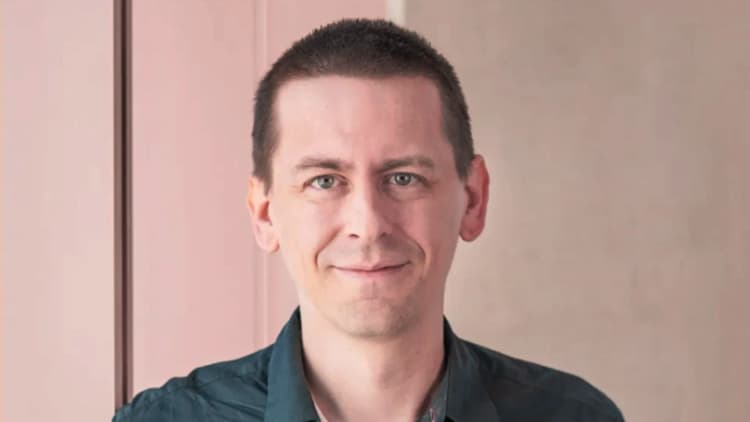
Nobel-Winning AlphaFold Scientist John Jumper Leaves Google DeepMind for Anthropic
For his work on AlphaFold, Jumper shared the 2024 Nobel Prize in Chemistry with Demis Hassabis and scientist David Baker.
View

How Hexaware's GIFT City Move Gives Indian IT a New Financial Frontier
Hexaware plans to create nearly 1,000 high-skilled jobs over the next three years.
View

Encryption, spyware, and now Mythos: History shows why cyber export control doesn’t work
Last Friday, citing unspecified national security concerns, the White Houseordered Anthropicto restrict the export of its powerful AI models Fable and Mythos to anyone outside of the United States, as well as foreign nationals inside the country. Shortly after, the AI giant hastily pulled the plug on both models, which have now been unavailable to anyone for a week. The episode is the first real test of whether the U.S. government can use export controls to contain frontier AI the way it has tried, with very uneven results, to contain encryption and spyware before it. And dramatic as it may sound, how this standoff gets resolved could shape not just Anthropic’s access to foreign markets but the rulebook that other AI labs will have to build around. Some context first.Ever since Anthropic launched Mythos in April, the company has marketed it assome kind of Doomsday cyber machinethat could wreak havoc on the internet if released too widely — which is why, before the ban,only around 150 vetted companies and government organizationshad access to it at all. The goal was helping defenders secure their software and services before the bad guys could reach Mythos-like capabilities. So what triggered the ban? Two subsequent events, reportedly. The first: Anthropic gave a South Korean telecom access to Mythos through its limited partner program, and U.S. officials grew alarmed after identifying the company as one they suspected had ties to China. (The company,widely reportedto be SK Telecom, hasdeniedany China connection.) Amazon CEO Andy Jassy also reportedlyalerted the administrationafter Amazon’s own researchers, he said, found a way around Fable 5’s safeguards. Anthropic disputes the “jailbreak” label, calling it a narrow, already-patched issue rather than a wholesale defeat of the model’s safety measures. The result was the same: the Commerce Department issued an export control directive, and Anthropic had to scramble to immediately limit access to its products — within roughly 90 minutes of being notified, by some accounts. None of this is new, though. Governments have tried to use export controls to limit the proliferation of what they see as dangerous cyber technology for decades, but their track record has been middling at best. The U.S. government was behind what is perhaps history’s most spectacular failure of this approach in the early to mid-1990s. At the time, computer scientists were developing encryption technologies to secure data as it traveled over the internet. One of those encryption products was called Pretty Good Privacy, or PGP, a popular software that could encrypt data and make it virtually impossible to unscramble even if intercepted as it traveled to its intended recipient over the internet. The U.S. government initially saw PGP as a dangerous weapon, fearing it would prevent its intelligence agencies from snooping on emails as they crossed their wires. To stop the distribution of PGP, the U.S. Customs Serviceopened a criminal investigationagainst PGP’s creator Phil Zimmermann for allegedly violating arms export controls. He fought back by publishing PGP’s source codeas a printed book, igniting what is known today as the “Crypto Wars.” Zimmermann later won a key battle when the investigation was closed, paving the way for crucial end-to-end encryption algorithms such as the one used by billions of Signal and WhatsApp users. Later during the early 2010s, researchers began discovering Western-made spyware used against dissidents in the Middle East. In response, several governments agreed to expandthe Wassenaar Arrangement, an international treaty that limits the export of dual-use software and technologies that are used in both civilian and military applications. The idea was to classify surveillance and hacking software as dual-use, thus forcing spyware makers to get export licenses to sell their products abroad. Contact UsDo you have more information about the Mythos ban? From a non-work device and network, you can contact Lorenzo Franceschi-Bicchierai securely on Signal at +1 917 257 1382, or via Telegram and Keybase @lorenzofb, oremail. But Wassenaar has always had two inherent weaknesses. There are several countries that don’t adhere to the agreement, including Israel, which houses some of the world’s most active spyware makers. The agreement also depends on countries applying it to companies within their borders at their own discretion. For a time, the Italian government allowed one of the country’s then-top spyware makers, Hacking Team, a license to export its tools around the world, despite the company’s track record of selling spyware tooppressivegovernmentsthatused itto hack journalists and human rights activists. Since then,othercountriesin Europe have been lax with spyware makers like Italy. Despite numerous scandals, Europe, home tomany spyware and hacking tools makers, hascontinually failed to curb the export of spywareto authoritarian regimes. Critics say that a recently renewed effort across the bloc of 27 member states to tackle its growing problem of spyware exports to authoritarian states “does not go far enough.” Several spyware makers, such as Intellexa, a sanctioned consortium of spyware companies, have simply moved their operations to countries with lax export controls. Other spyware makers sought to move their operations to Saudi Arabia for similar reasons. There have been some wins. Germany-based spyware maker FinFishershut down in 2022after a multi-year investigation by German prosecutors into the company forallegedly selling spywareto Turkey without an export license. Investigators previously found the FinFisher spyware had beendeployed on the phonesof critics of Turkey’s government. As of the time of writing, the impasse between Anthropic and the Trump administration remains. There is a reasonable chance the administration will buckle and lift the restriction in the interest of keeping American AI companies competitive worldwide — a move that would amount to tacit acknowledgment that AI labs elsewhere, including in China, will likely reach similar capabilities regardless of what the U.S. restricts. Or, American AI companies could end up needing government approval before serving foreign customers at all, a compliance burden that would invariably dent their bottom line. Given the past experiences that world governments have had with trying to control the reach of software, government-mandated export controls are unlikely to be the right approach to stop malicious actors from abusing powerful dual-use cyber technologies.
View

Billionaire Ambani wants AI in every call, app, and home
As India searches for a homegrown contender in the global artificial intelligence race, billionaire Mukesh Ambani is positioning Reliance Industries as a national champion, rolling out AI services for phone calls, mobile apps, and connected homes. At itsannual shareholder meetingon Friday, the Mumbai-based conglomerate announced Jio Call Agent, an AI assistant that can join phone calls to transcribe conversations, generate summaries, and perform tasks such as booking cabs, ordering food, and making reservations. The service, which can be activated by saying “Hey Jio,” is expected to launch later this year for Jio’s more than 500 million users. By embedding the service directly into its telecom network rather than offering it as a stand-alone app, Jio is betting AI assistance can become a native feature of phone calls. The approach could reduce consumers’ reliance on third-party call-assistant apps and give Reliance a powerful distribution advantage in an increasingly crowded AI market. Reliance also unveiled an AI-powered version of its MyJio app that can perform tasks on behalf of users, from activating eSIMs to selecting roaming plans, through natural-language requests. The company further introduced TeleFrame, a home display that uses AI agents to proactively surface information and recommendations, such as weather alerts, schedules, and household reminders. The product appears to echo a broader industry push toward ambient AI assistants for the home, an area being explored by companies such asAmazonandGoogle. The announcements mark the next phase of Reliance’s AI ambitions as India seeks to build domestic capabilities in a field largely dominated by U.S. and Chinese technology companies. The push follows thelaunch of Reliance Intelligencelast year, through which the conglomerate aims to develop AI infrastructure and services for consumers, businesses, and governments, including applications that support 22 Indian languages. “India should not be a mere consumer of AI created elsewhere. It must become a creator, adopter, and a global leader in AI,” Ambani, age 69, said. Reliance has been ramping up its AI ambitions through partnerships withGoogle,Meta, andNvidia. Earlier this year, the company announced plans toinvest $110 billion in AI infrastructureas it seeks to establish itself as a major player in India’s emerging AI ecosystem. At the shareholder meeting, Reliance also unveiled a suite of AI services for healthcare, education, agriculture, and small businesses. The products, branded JioHealthIQ, JioLearnIQ, JioKrishiIQ, and AI Vyapar, are designed to operate across multiple Indian languages and cater to local needs, the company said. The shareholder meeting also brought a major development for investorsawaiting Jio’s stock market debut. Ambani said Jio Platforms’ board had approved a draft prospectus for an initial public offering that would include a fresh issue of up to 270 million shares, according to a stock exchange filing. The announcements also raise questions about how Reliance will handle user data as it expands AI services across phone calls, mobile apps, and connected homes. While the company said the services would operate with user consent, it did not answer questions about whether data generated through the products could be used to train AI models or shared with technology partners. Reliance’s AI ambitions come as Indian companies remain heavily reliant on foreign AI models and cloud providers.Recent restrictions on accessto some of Anthropic’s latest models have underscored that dependency, showing how decisions made overseas can affectstartups and businessesbuilding AI products in India — the kind of supply-chain risk that’s pushing Indian conglomerates toward building their own stack rather than renting someone else’s. Last week, Reliance announced acollaboration with Meta to establish an AI data centerin the western state of Gujarat, building on Meta’s earlier investment in Jio Platforms and a joint venture launched last year to develop AI solutions for enterprise customers in India and overseas markets. Reliance is not alone in pursuing AI opportunities.Tata Consultancy Services,Infosys, and rivalAdani Grouphave also expanded their AI initiatives and partnerships with global players, including Anthropic, Google, and OpenAI, as India’s largest corporations race to secure a leading role in the country’s AI future. Nonetheless, for Reliance, the stakes are particularly high; it’s preparing Jio for a long-awaited stock market debut and needs new growth drivers, with the conglomerate’s shares down about 17% this year.
View
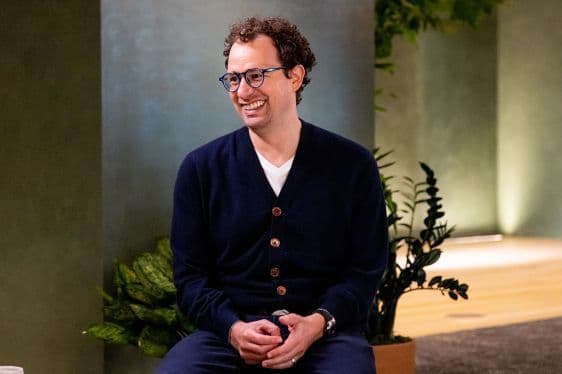
The US banned Anthropic’s Fable 5 release, but the numbers don’t seem to care
Just as last week was ending, the US governmentforced Anthropic to pull its two newest models, Fable 5 and Mythos 5, citing national security concerns after Amazon researchers allegedly found a way to bypass Fable 5’s guardrails. Cybersecurity researchers havesince signed an open lettercalling the move dangerous, and Anthropic itself noted the same jailbreaks exist in other models. So is this a genuine security concern, or just the latest chapter in a messy relationship between Anthropic and the Trump administration? On this episode of TechCrunch’sEquitypodcast, hosts Anthony Ha, Sean O’Kane, and Rebecca Bellan unpack what the ban means for developers building on Anthropic’s platform and for anyone watching the IPO, why itmight accidentally be good for the company, and more of the week’s headlines. Listen to the full episode to hear more about: Subscribe to Equity onYouTube,Apple Podcasts,Overcast,Spotifyand all the casts. You also can follow Equity onXandThreads, at @EquityPod.
View
Is the US government’s Anthropic ban accidentally helping the brand?
Loading the player… Just as last week was ending, the US governmentforced Anthropic to pull its two newest models, Fable 5 and Mythos 5, citing national security concerns after Amazon researchers allegedly found a way to bypass Fable 5’s guardrails. Cybersecurity researchers havesince signed an open lettercalling the move dangerous, and Anthropic itself noted the same jailbreaks exist in other models. So is this a genuine security concern, or just the latest chapter in a messy relationship between Anthropic and the Trump administration? On this episode of TechCrunch’sEquitypodcast, hosts Anthony Ha, Sean O’Kane, and Rebecca Bellan unpack what the ban means for developers building on Anthropic’s platform and for anyone watching the IPO, why itmight accidentally be good for the company, and more of the week’s headlines. Subscribe to Equity onYouTube,Apple Podcasts,Overcast,Spotifyand all the casts. You also can follow Equity onXandThreads, at @EquityPod.
View
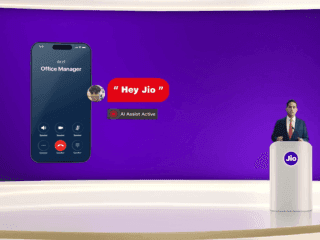
Jio AI Call Agent Explained: What It Is, How It Works, Features and More
Reliance held the 49th edition of its annual general meeting (AGM) with shareholders on Friday. The Indian conglomerate unveiled various new artificial intelligence (AI) innovations that its telecom service provider (TSP) arm, Reliance Jio, plans to join in the coming months in the country. Among the many announcements, the company revealed its plan to integrate AI directly into its network. The company claims that this will allow the TSP to introduce a voice-based AI call agent for its subscribers. During the presentation, the company demonstrated the AI agent's capabilities, showing that it will be able to transcribe calls and generate call summaries without asking users to download a standalone app.
View
