Latest AI News
Anthropic Introduces Claude Sonnet 5 With Enhanced Agentic Capabilities; Confirms Return of Claude Mythos 5, Fable 5
Anthropic has released its latest Claude Sonnet 5 AI model. The new AI model is claimed to bring enhanced agentic capabilities compared to the Claude Sonnet 4.6 model. Moreover, the new AI model is claimed to offer agentic search capabilities at par with the Opus 4.8 model. Along with improved performance, the AI model focuses on cost efficiency. It is claimed to offer similar performance as more capable AI models at lower costs. Separately, the AI giant has announced that the US government has lifted export restrictions on its Claude Mythos 5 and Mythos-class Fable 5 AI models. This comes weeks after the company was asked to restrict the availability of the two AI models for foreign nationals.
View
Google Expands Gemini Spark to macOS for AI Desktop Automation Across Files, Apps
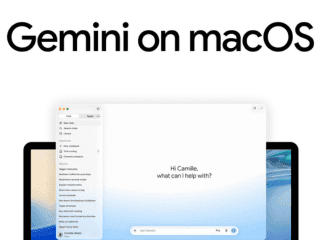
Google on Tuesday announced the rollout of Gemini Spark to the Gemini app on macOS in beta. First unveiled at Google I/O 2026 in May, the personal AI agent can automate multi-step tasks across apps and services. The Mountain View-based tech giant says users can interact with desktop files and apps on Mac computers to eliminate repetitive workflows, including organising documents, creating spreadsheets, and managing schedules. Alongside, Google also introduced new connected app integrations, support for custom Model Context Protocol (MCP), and proactive monitoring capabilities for Gemini Spark.
View
Meta, like SpaceX, looks to turn excess AI compute into cash
Meta has spent billions of dollars developing AI and building out data centers to support it. But now, the company may be preparing to put those data centers to a more immediately profitable purpose. On Wednesday,Bloomberg reportedthat Meta is developing plans for a cloud infrastructure business, selling access to both AI compute power and models. The move would pit it against the big cloud providers like Amazon Web Services, Google Cloud, and Microsoft Azure. Meta’s decision to sell off excess compute comes weeks after SpaceX, viaxAI, announced similar plans. In early May, SpaceX signed a deal with Anthropic to buy out all of the compute capacity at SpaceX’s Colossus 1 data center. SpaceX has signed similar leases since with Google and Reflection AI. The fact that Meta is doing the same is a signal that the winners of the AI race may not be the ones providing the best models and services, but rather the ones who own the data centers. That is, if the demand for compute continues to hold, and if data centers retain their value. Some skeptics have warned the race to build out AI infrastructure is creating a bubble that leansheavily on rapidly depreciating chips.Othershave questioned whether AI companies can generate enough end-user revenue to justify the trillion-dollar bets. Those concerns haven’t stopped Meta from investing heavily in infrastructure for AI compute. As of the end of the first quarter, Meta hadcommitted to spending $182.9 billionon AI infrastructure in the coming years, including massive ongoing projects inLouisianaandOhio. The Ohio project, which Zuckerberg said would bethe size of Manhattan, is expected to come online this year. Unlike Google and OpenAI, Meta hasn’t seen significant demand for its own AI models and services. Meta doesn’t break out its revenue from Meta AI or from Llama, its open-weight AI model family, in its earnings, and executives have mostly emphasized the internal corporate uses of AI in public statements. That could mean that Meta’s AI endeavors don’t yet represent a material standalone revenue line. To get a return on some of its own colossal spend, Meta may copy CoreWeave’s business model and sell access to “raw” compute capacity, according to Bloomberg. The outlet also reported Meta is considering following AWS’s lead and selling access to various AI models — including its recently launched closed-weight model,Muse Spark— hosted on its AI infrastructure. The new business line will be part of a new initiative reportedly dubbed Meta Compute, which is led by head of infrastructure Santosh Janardhan, Meta Superintelligence Labs leader Daniel Gross, and president Dina Powell McCormick. The report confirms Zuckerberg’s May statements that a Meta cloud computing business is“definitely on the table”as a way to get a return on some of the massive investment into its strategy to develop AI “superintelligence.” TechCrunch has reached out to Meta for comment.
View
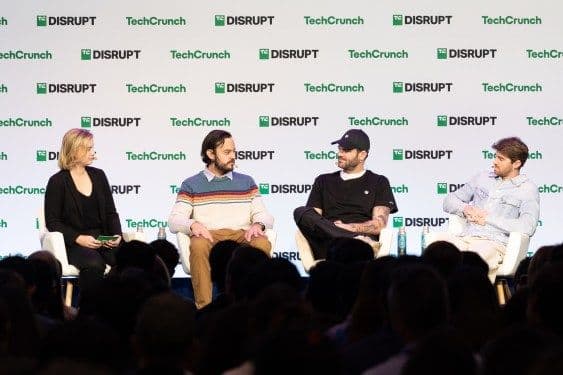
Builders Stage agenda revealed: Practical strategies for scaling startups at TechCrunch Disrupt 2026
The Builders Stage is returning toTechCrunch Disrupt 2026, bringing together founders, startup operators, and investors for practical conversations on what it takes to build and scale successful companies. Hear from startup and venture leaders shaping the tech ecosystem, including Grant Lee, CEO and co-founder of Gamma; Leah Solivan, founder and general partner at Precedent.vc; Robby Stein, VP of Product at Google;and more. Through candid conversations and real-world case studies, speakers will share actionable insights on fundraising, hiring, go-to-market strategy, AI, and the operational decisions that fuel startup growth. Join more than 10,000 founders, investors, startup operators, and technology leaders at Moscone Center in San Francisco on October 13-15.Register today and save up to $330before ticket prices increase. Building a startup is one thing. Building a company that can scale is another challenge entirely. The Builders Stage isone of six industry-focused stages at Disrupt 2026, dedicated to helping founders navigate the challenges of growth, from raising capital and hiring top talent to building go-to-market engines and preparing for the jump from Seed to Series A. Every session delivers practical strategies you can put to work immediately, plus opportunities to engage directly with speakers during live Q&A.Secure your pass to Disrupt 2026 todayand save up to $330 before rates increase. Without further ado, here’s your first look at the Builders Stage agenda, withmore speakersand sessions to be announced as we get closer to the event. How to Win When You’re Not Building AI WithShan Shan, Investment Manager, Baillie Gifford and more speakers to be announced AI may dominate the world of venture, but many enduring companies won’t be those that sell AI models or agents. This session is for founders competing for attention in an AI-obsessed market. Panelists break down what actually matters now: efficient growth, retention, revenue quality, and disciplined execution, and why fundamentals, not hype, still build breakout businesses. What Happens When OpenAI Ships Your Roadmap WithMichel Tricot, CEO and Co-founder, Airbyt;Rob Toews, Partner, Radical Ventures; andLinda Tong, CEO, Webflow Nearly all AI founders have the same worry these days: what if OpenAI or Anthropic launches a product that competes with mine? Even strong products are at risk of becoming features of the larger players. This session explores where defensibility exists and what founders can do if they do face competition from rapidly evolving AI giants. Winning Pre-Seed Without a Product With Puneet Agarwal, Managing Partner, True Ventures;Austin Clements, Managing Partner, Slauson and Co; andSandhya Venkatachalam, Founder and Managing Partner, Axiom Partners Founders are increasingly expected to compete for capital before they even have a product. At the pre-seed stage, investors are betting on story, conviction, and founder-market fit. This session breaks down how to build credibility before revenue exists so investors will cut that first check. From MVP to Billions of Users: How Product Decisions Must Change at Scale WithRobby Stein, VP, Product, Google The instincts that win when building your first minimum viable product can break you at a billion-user scale. In this fireside, Robby Stein shares how product decision-making changes when every update impacts billions of users. Hear how teams balance speed with trust and innovation with reliability at one of the world’s largest product organizations. Hiring When AI Is a Co-Founder WithJosh Reeves, CEO and Co-founder, Gusto and more speakers to be announced Early-stage companies are no longer just building with AI; they’re hiring it. As AI agents take on engineering, support, and operations, the definition of an early team is being rewritten. This session explores how founders decide what humans should own versus what gets delegated to AI, and how high-growth startups are building hybrid teams without losing speed, accountability, or culture. M&A Is Now an Early-Stage Strategy WithKarl Alomar, Managing Partner, M13;Aklil Ibssa, Head of Corporate Development and M&A, Coinbase; andLindsey Mignano, Founder, Mignano Law Group The smartest founders today aren’t just building for IPOs; they’re also building with possible acquisitions in mind from day one. As exits shift and capital tightens, understanding M&A early has become a competitive advantage. This session breaks down how founders can create the possibility of such an option through product strategy and partnerships. It delves into how big-dollar startup outcomes actually happen, even for small companies. The Series A in 2027 Jahanvi Sardana, Partner, Index Ventures;Shailendra Singh, Managing Director, Peak XV; and Janelle Teng Wade, Partner, Bessemer Series A is getting harder, with VCs growing more demanding. For founders planning to raise in the next 1–2 years, this session breaks down what “fundable” will actually mean in 2027. Hear how top investors are redefining the metrics, teams, and traction that matter now, what outdated fundraising playbooks no longer work, and how companies can separate from the pack in the next funding cycle. The 90-Day GTM: Why $0–$10M ARR Is the New Baseline (And How to Actually Get There) WithRyan Meadows, Chief Revenue Officer, Lovable; Tomasz Tunguz, General Partner and Founder, Theory Ventures; and more speakers to be announced The definition of traction has changed. What once took years is now expected in months, and $0–$10M ARR is increasingly becoming the new early-stage baseline. This session breaks down how AI-enabled execution, faster distribution, and shifting investor expectations are compressing GTM timelines, and the tactical levers founders need in the first 90 days to accelerate revenue and stand out fast. The real Tokenmaxxing: How the Best AI Companies Navigate a Multi-Model World WithMo Jamma, Partner, Capital G;Zuzanna Stamirowska, CEO and Cofounder, Pathway; and more speakers to be announced The frontier is moving faster than any single model can keep up with, and the teams building the most successful AI products are increasingly orchestrating across many models rather than betting on just one. This panel brings together founders and operators at the center of that shift to discuss how they evaluate new models, manage cost and reliability at scale, and architect products that can evolve as quickly as the underlying technology. PMF Red Flags: How to Tell If You Really Have It WithRajeev Dham, Partner, Sapphire Ventures;Rahul Vohra, Founder & Head of Superhuman Mail; and more speakers to be announced In an AI hype cycle, product-market fit signals are easier to fake and harder to trust. Founders are mistaking early excitement, usage spikes, and pilot wins for durable traction. This session breaks down what false PMF actually looks like, how investors and operators separate real retention from hype driven adoption, and the signals that indicate whether a company has true pull or just temporary momentum. The Zero-to-1K Playbook: How to Get Your First 1,000 Customers Without a Marketing Budget WithGrant Lee, CEO and Co-Founder, Gamma and Leah Solivan, Founder and General Partner, Precedent.vc Early customer acquisition is not about marketing spend; it’s about founder-led distribution and relentless execution. Most startups at zero to one do not have budget, brand, or scale, only urgency and creativity. This session breaks down how founders are landing their first customers through community building, product-led growth, founder-led sales, strategic outbound, and word-of-mouth momentum. Yes, It’s Hard to be a Founder: An Honest Conversation WithNell Daly, Co-Founder and Managing Partner, Revenge Capital;David H. Rosmarin, Associate Professor, Harvard Medical School; andJack Withinshaw, Co-founder and Chief Commercial Officer for Airspeeder Company building is as psychologically demanding as it is strategic, and most founder narratives understate that reality. In this candid conversation, founders and mental performance experts unpack the hidden costs of high growth environments, from burnout and decision fatigue to the identity strain of sustained pressure, and share the systems, habits, and mental frameworks that help leaders endure and perform at a high level. So You’ve Got a Hit Product. How Does Your Company Do It Again? WithFilip Kaliszan, CEO and Co-Founder, Verkada; and more speakers to be announced Most startups stall out because they build a single great product instead of a repeatable multi-product engine. Join a venture capitalist and two founders as they reveal the precise operational playbook for capital allocation, systemizing internal innovation, and engineering a compounding “Second Act” before the core product’s growth curve flattens. Hiring, Compensation and Culture in the Most Competitive Market Ever WithMatt Birnbaum, Founder, Wylder.co;Atli Thorkelsson, VP, Talent Network, Redpoint Ventures; and more speakers to be announced No question about it, the growth of AI startups has made hiring and retention for all tech companies more difficult. From competing for AI talent to secondary sales, founders are rethinking the human infrastructure of their startups. As hiring, incentives, and employee expectations rapidly evolve, this session explores how companies are adapting compensation, culture, and team-building strategies to attract and retain top talent in a fundamentally changed startup environment. How To Create Viral Growth and Capitalize On It WithZach Yadegari,Founder, Cal AI Startups can go from zero to viral overnight, but sustaining that momentum is a completely different challenge. In this fireside, Zach Yadegari shares how Cal AI navigated rapid growth, product pressure, and the realities of building in a distribution-driven market. Hear the lessons behind turning breakout attention into durable retention and long-term company building. The High-Conviction Filter: What We Learned from the Battlefield With Alexa Von Tobel, Inspired Capital and more speakers to be announced What separated the breakout companies from the rest at Disrupt 2026? In this candid debrief, Battlefield judges unpack the trends and founder qualities that stood out in real time, from shifting investor expectations to the narratives that resonated most this year. The conversation will also explore how startup storytelling is evolving and what happens after the spotlight, including the realities of maintaining momentum and surviving the critical 12 months after a major launch, funding round, or Battlefield appearance. If you’re ready to build smarter, scale faster, and learn from the leaders shaping the future of startups,secure your pass to TechCrunch Disrupt 2026 todayand save up to $330 before rates increase.
View

Gemini Spark, Google’s agentic assistant, is now available on Mac
Gemini Spark, Google’s AI agent that can help with aspects of your digital life, is now available on Mac. The company on WednesdaysaidSpark is being added to the existing Gemini desktop app, as well as several updates and new features, including the ability to stay up to date on topics in real time, and connect to more apps like Google Tasks and Google Keep. The macOS launch allows Gemini Spark to better compete with desktop AI agents like Claude Desktop, Microsoft’s Copilot, OpenClaw, and others, as it will be able to work with files on the computer, and later, handle remote tasks. Though not available at launch, Google says users will “soon” be able to assign multi-step tasks to Spark on their phones, such as calling up the desktop agent to pull information from a file on their Mac. In the meantime, you can use Spark to sort and organize files, or use files on your computer as the source for a new Google Workspace doc or spreadsheet. For instance, Google suggests Spark can turn invoices on your computer into a budgeting worksheet. Gemini Spark for macOS (beta) is available only to Google AI Ultra subscribers in the U.S. for the time being. When Spark was launched last month, wespecifically called out the lack of an integration with Keep, Google’s notes app, as a big point of frustration during our early tests. It makes sense that short lists and other notes belong in apps like Google Keep, not in Google Docs, which seems like overkill for something like a simple vacation packing list. Clearly we weren’t the only ones to suggest this, as Google has now added support for Tasks and Keep. Spark now also integrates with other third-party apps, including Canva, Dropbox, Instacart, OpenTable, and Zillow Rentals. That will allow Spark to perform all sorts of tasks, like reserving tables, ordering weekly groceries, designing flyers, or booking apartment tours. In addition, Gemini Spark can now track topics and react to events in real time, which will improve its performance for tasks that involve things like tracking sports scores, stock movements, or breaking news. Plus, it means Spark will be able to keep an eye on other areas, like social media, blogs, online shopping, and weather. Plus, Google says it’s rolling out support for custom Model Context Protocol (MCP), which will allow you to connect your favorite apps directly into Spark to build an assistant better tailored to your needs.
View
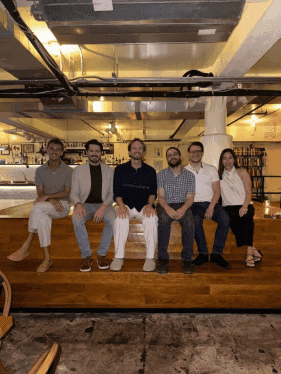
Venice AI becomes a unicorn with $65M Series A as its privacy-first AI platform takes off
Concerns over the impact of AI chatbots onmental health, personalsafety,harassment, anddisinformationhave forced AI developers to implement safeguards to better control how and what their AI models are allowed to respond or do. But concerns and worries can’t erode demand. AI offers a lot of promise, and people don’t want a faceless tech company to restrict their access to that potential. And if they can preserve their privacy while they use AI models however they want, why not? Venice AI, which offers access to more than 200 AI models while allowing users to retain their privacy, is raking it in thanks to that demand. Just two years in, the company already has more than 850,000 unique visitors to its website, and serves more than 3 million active users and an average of 1.7 million API calls per day. The startup hosts “uncensored,” open-source models on its own data centers, and routes queries to closed-source models, such as those by OpenAI or Anthropic. All user input is encrypted and unencrypted client-side, and routed through an external proxy before it is processed and returned, with no data stored on Venice’s own systems. It also provides end-to-end encryption on some models, though you have to pay for a subscription to get that feature. The company is already profitable, with annualized run-rate revenues of over $70 million, its CEO Erik Voorhees (pictured above, in the center) told TechCrunch during an exclusive interview. Understandably, investors have flocked to get a piece of that traction. Venice AI on Wednesday said it had raised a $65 million Series A at a $1 billion valuation, its first external fundraise. The round was led by crypto-focused venture firm Dragonfly, with participation from Coinbase Ventures, North Island Ventures, and others. The overlap between Voorhees, Venice’s focus on privacy, and its new crypto investors is hard to miss, especially given the CEO’s background and past work. An early bitcoin advocate, Voorhees has founded a few crypto companies, including bitcoin gambling siteSatoshi Diceand cryptocurrency exchangeShapeShift, and has long advocated in favor of preserving users’ privacy. In fact,when a Wall Street Journal investigation accused ShapeShift, which initially didn’t require its users to identify themselves, of processing millions of suspect funds, Voorhees reportedly said: “I don’t think people should have their identity recorded to catch an occasional criminal.” He struck a similar note when asked how Venice AI thinks about offering access to AI models in light ofrecent cases of AI psychosisand resulting harm, saying his team treats their service as a “neutral tool or a neutral platform.” “This is the same principle that you have in Bitcoin, where Bitcoin, as a neutral protocol, works the same way for all people,” he said. “I think it’s actually quite dangerous from a safety perspective, for the world to enter this next phase and have everyone be constantly watched. To me that is actually much more dangerous than any particular person asking a controversial question or something that might be considered bad.” There’s a considerable focus on giving users agency, too. Users can freely choose from AI models that can generate text, images, audio, and video — all of which vary in their performance, quality, and the amount of censorship applied. The website prominently features several AI “characters” that you can customize and chat with, and the company proudly states it offers an “uncensored” experience. “We’re optimizing for freedom and actually respecting users as adults, which is, I think, rare these days,” Voorhees said. The founder said Venice also works on some open models’ system prompts to instruct them to answer more openly, though it doesn’t add any restrictions to the models. Unsurprisingly, there are two crypto tokens associated with the effort. Venice launched a token called “VVV” in early January, in a bid to attract users, Voorhees said, and in August last year added another, called “DIEM.” Users can buy VVV and then stake it to mint DIEM, which generates $1 worth of AI credits per day that you can spend on Venice. However, Voorhees said only about 8% of the company’s users pay with crypto. The founder credited the company’s growth to the good performance of the crypto tokens, though he said the strongest driver was getting close to feature parity with ChatGPT. “When we launched, we were very far away from what ChatGPT could do, but people would use us because it was private. And today, we’re very close to what ChatGPT can do […] so as we’ve closed that gap, it’s become an increasingly compelling alternative,” he said. Looking forward, Venice AI wants to use the fresh cash to start buying GPUs and building its own data centers so it can stop leasing GPUs and increase its gross margins.
View
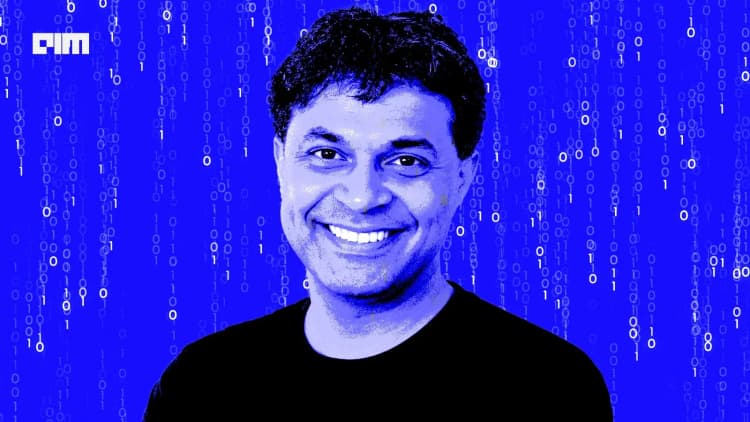
India Should Build ‘Frontier Minus One’ Models, Says Sarvam’s Vivek Raghavan
Sarvam co-founder Vivek Raghavan says India cannot expect 7-billion-parameter models to deliver comparable performance for strategic applications.
View

IIT (ISM) Dhanbad, AGI Partner to Build AI Models for Critical Mineral Exploration
The partnership aims to accelerate critical mineral exploration by combining AI with geological, geophysical and GIS data analysis.
View

Healthcare Co Roche to Launch Second India Technology Hub in Hyderabad
The new facility will support digital applications and IT services, with operations set to begin in early 2027.
View
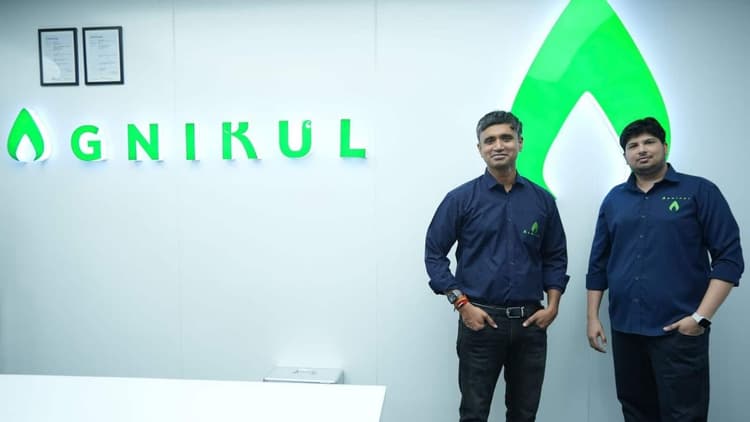
Agnikul, Finland’s ICEYE Partner for India’s SAR Satellite and Launch Capability
The partnership aims to combine satellite manufacturing and launch services to support sovereign Earth observation programmes.
View
Meituan Open-Sources LongCat-2.0 Model Trained Entirely on Chinese AI Chips
The model supports a one-million-token context window and introduces a new sparse attention architecture for coding and agentic workloads.
View

Google Expands Personalised Gemini AI Image Creation to US Users; Nano Banana 2 Lite Unveiled
Google introduced Gemini's personalised image generation feature in April this year. During the announcement, the company confirmed that the AI image generation feature is limited to paid Google AI Pro and Google AI Ultra users. That is changing now, as Google confirmed that personalised image generation is rolling out to more users. The feature can be accessed by all users aged 18 and above who are signed in with a personal Google account. Currently, the feature supports a few languages.
View