
Latest AI News

Meta’s Muse launches on iPad just a month after its mobile debut
If there’s any doubt about how seriously Meta is taking AI, here’s a new signal: The company on Wednesdayannouncedthat its Muse assistant is now available in a dedicatediPad app. That’s a milestoneit took Instagram some 15 yearsto reach, despite constant user demand. Muse, meanwhile, hit the iPad just a month after launching on iPhone. (To be fair, it may not be as difficult to bring something like Muse to iPad, given its text-heavy interface, where image and video resolution and formatting matter less.) Since launching on iOS and Android on September 8, Muse has topped 6.6 million installs, according toestimatesfrom market intelligence firm Sensor Tower. The app, which is now one of dozens of consumer-facing AI agents, lets users connect their accounts to stay on top of email, meetings, bills, and more, and to complete tasks like booking reservations, ordering groceries, setting goals, and making purchases. To make that work, Meta has been adding partners in the effort, which appear in Muse as “connectors.” Users can add and sign in to them selectively, depending on which parts of their online life they’re comfortable letting an AI agent handle. With the iPad release, Meta has updated this list with several of its neweradditions, including connectors aimed at small businesses, like Asana, Canva, Dropbox, Figma, QuickBooks, GitHub, Klaviyo, and Zoom, as well as connectors for Meta ad accounts. It also added Notion and Granola. In addition, Meta recentlyannouncedmore retail partners, like Best Buy, Gap, Sephora, Walmart, and Wayfair. These allow the agent to shop those retailers’ sites and complete transactions on users’ behalf. Because this technology is still new, these experiences can still run into issuesas websites mistake agents for bots and block their access. On Tuesday,Meta announced thatit’s working with industry partners on a technological solution to this problem in the form of an open standard that would allow personal AI agents to identify themselves to businesses. That would help businesses sort the good bots from the bad.
View

Microsoft releases new Nvidia-chip AI PCs with revamped Windows 11
Back in June, Nvidiaannouncedthat it had secured agreements with Microsoft and a host of other PC makers to develop AI- and agent-ready PCs for Windows based on its RTX Spark chip, but details on the machines were scant at the time. On Wednesday, at an event held in San Francisco during the city’s Tech Week, Microsoft revealed the specs and price for its newSurface Laptop Ultra. The PC comes in two base models, one that starts at $2,600 and one with a more powerful chip that starts at $3,700. Prices rise from there with options for more memory and storage, up to $5,900. (Microsoft says the highest-end device is already out of stock.) Microsoft also revealed its new workstation powered by the RTX Spark chip: the Surface RTX Spark Dev Box, which starts priced at $6,000 and comes equipped with Microsoft dev tools like VS Code, GitHub Copilot CLI, WSL, and PowerShell 7. The pitch for both this PC and workstation is that they are designed to run AI models on-device locally (and for free) with the CPU, GPU, unified memory, and other hardware modifications, like superior cooling, necessary to handle them. Plus, they are running a revamped version of Windows 11 that includes a feature called “Execution Containers.” This makes it easier to sandbox AI agents, the company says. That feature will be available for all Windows 11 users, Microsoft CEO Satya Nadellasaid at the event. Nadella explained: “One of the things we realized in the last 3-4 years is that just having a model doesn’t do much for anything. You really do need to orchestrate, and you need to have memory outside of the model. You need to have this harnessed layer that is able to take multiple models plus context, plus memory, and the action space.” He added that Microsoft is enabling that “not just for our apps but apps for anyone’s agent. That’s what the Windows platform is all about going forward.” The devices are clearly aimed at developers, so much so that Microsoft is offeringup to $1,000 offto people who trade in a MacBook Pro, as Macs have become a popular choice for developers and AI agent enthusiasts, particularly in Silicon Valley. Still, these Surface PCs, with such powerful graphics processing, are also capable of content creation,video processing, and gaming, the company promises. Microsoft wasn’t the only PC company to announce the specs for its new Nvidia-RTX Spark AI Windows PCs on Wednesday. Dell alsoannouncedthe details of its previously announced Dell XPS 16 Creator Edition PC. It’s available for pre-order now for a later October delivery atBest Buy, priced at $3,800.
View

Nous Research confirms it hit $1.5B valuation, launches AI agents for business users
Nous Research, the startup developing the open-source Hermes agent,has raised a $90 million Series Bat a $1.5 billion valuation, confirming TechCrunch’searlier reporting. The round was led by Robot Ventures, with participation from other backers including Nvidia, Union Square Ventures, Menlo Ventures, Samsung, and 1789 Capital, where Donald Trump Jr. is a partner. The new financing brings the three-year-old startup’s total funding to $158 million. Popular among developers and individuals, the open-source Hermes agent has been cloned more than 24 million times, driving roughly 2.5% of global AI token usage, according to the startup’s estimates. The capital will fund Nous Research’s push into the enterprise sector with “Hermes for Businesses,” allowing companies to deploy customized AI agents that can handle multi-step workflows while keeping their data private and secure. Nous was at roughly $36 million in annualized revenue by mid-September 2026 and expects to pass $100 million before the end of 2026,The Wall Street Journalreported.
View

Claude for Google Workspace With Docs, Sheets and Slides Support Launched in Beta for Paid Users
Anthropic has introduced Claude to Google Workspace. Google Docs, Sheets, and Slides users can now work with the AI assistant directly alongside their files. Claude can read the content they have open, work on selected text, cells or slides, and make changes without requiring them to switch apps. Anthropic has also introduced connectors that let users create and edit Google files from Claude. The integration is now in public beta for all paid Claude plans, with options to review or automatically apply edits.
View
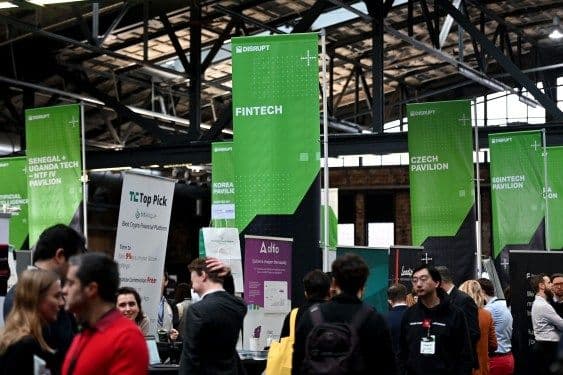
6 days to TechCrunch Disrupt 2026: Save on your pass before doors open
In six days, 10,000+ people from across the global startup and tech ecosystem will come together at San Francisco’s Moscone West forTechCrunch Disrupt 2026. If you’re planning to be one of them, register for your ticket now before prices increase at the door. Discounted online pricing is available before doors open on October 13, withpass savings of up to $100. Plus, bring a colleague, co-founder, or friend and get 50% offa second eligible pass. Laid off? There’s a$75 Expo+ Passwith your name on it. From October 13-15, the Expo Hall is where hundreds of startups and technology companies bring their latest ideas to life. Spend your time discovering emerging products, new business models, and companies that could be shaping the next wave of technology. If the event’s activations and impactful connections are what bring you to Disrupt, there are also200+ sessionsacross six stages, roundtables, and breakouts, featuring250+ tech leaderscovering everything from AI and fundraising to fintech, robotics, infrastructure, product, hiring, and scaling. The lineup includes Mark Wahlberg, co-founder of Municipal; Dots product lead at OpenAIAlexander Embiricos, Rivian founder and CEORJ Scaringe; Inspired Capital founder and managing partnerAlexa von Tobel; Cerebras Systems CEOAndrew Feldman; Anthropic’sCat de Jong; Nvidia’sLes Karpas; and many more. And don’t missStartup Battlefield 200, where 20 finalists will compete live on the Disrupt Stage for the $100,000 prize and the attention of investors, media, and the global startup ecosystem. This is the pitch competition to watch if you’re thinking of or are currently scaling. You’ll learn from top VCs what it takes to make a winning pitch and what makes a viable startup. Six days remain until theDisruptdoors swing open at Moscone West.Save up to $100 on your pass now and get 50% off a second eligible passwhen you register before the event. Laid off?Get an Expo+ Pass for just $75.
View
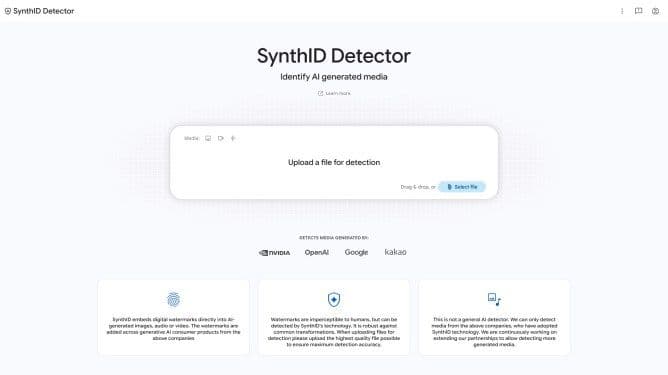
Google’s new SynthID website can identify AI-generated media
Google on Tuesday launcheda new sitethat lets anyone verify whether a piece of media, be it an image, a video, or an audio clip, is generated using AI. The company made this tool available to selectjournalists, media professionals, and researchersfor testing at Google I/O last year, and is now opening up access to the tool to everyone. The site supports JPG, JPEG, PNG, BMP, WEBP, AVIF, HEIC, HEIF, TIFF, TIF, and GIF formats for images; MP4, MOV, and WEBM for videos; and WAV, MP3, OGG, FLAC, AAC, and M4A for audio. Google is using SynthID,which it introduced in 2023, to identify whether media is AI-generated. The company’s Nano Banana, Veo, and Lyria models, as well as tools with generation capabilities, like Gemini, Flow, ProducerAI, and Vids, all use SynthID to watermark any media they generate. OpenAI, Nvidia, and Kakao also support SynthID, and OpenAI maintainsits own sitefor checking content. Apple is said to be adding support soon, too. Google has baked SynthID verification into the Gemini app and Google Chrome. The company said people currently make 1 million requests to verify content every day. MicrosoftandMetahave their own standards for watermarking and verifying content. However, these tools are not infallible,often failingto identify content created by their makers’ models.
View
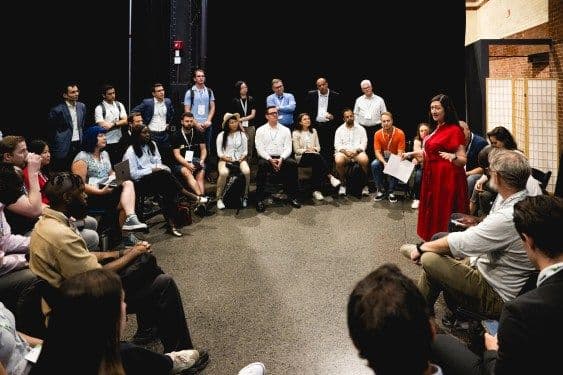
Get hands-on: The full lineup of interactive roundtables at TechCrunch Disrupt 2026
TechCrunch Disrupt 2026is seven days away, bringing 10,000+ founders, investors, operators, and tech leaders to Moscone West in San Francisco from October 13-15 for three days of conversations, connections, and ideas shaping what comes next. Included in your Disrupt pass, which you can currentlysave $100 on, plus 50% off a second, you’ll have the opportunity to take part in a series ofinteractive, deep-dive roundtables, where you’ll join founders, investors, operators, and industry experts tackling the same challenges you are. Bring your questions, share your experience, and get practical perspectives on everything from fundraising and AI to hiring, enterprise software, physical AI, and scaling a company. Don’t miss the chance to spark meaningful connections in roundtables and throughout the event.Register now to save up to $100 on your pass and get a second pass at 50% off. This year’s sessions run across two dedicated roundtable spaces throughout Disrupt. Here’s the full lineup currently on the agenda.Explore the Disrupt agendato learn more about all the sessions. Radha Basu, Founder and CEO,iMerit Physical AI needs more than bigger models. Basu explores the data challenges behind robotics and autonomous systems, including edge cases, multimodal data, and building pipelines that can operate reliably in the real world. Rajeev Singh, CEO,Smartsheet AI isn’t necessarily replacing SaaS — it’s exposing the fragmentation underneath it. Rajeev Singh explores why orchestration, organizational context, and intelligence across workflows could define the next generation of enterprise software. Eléonore Crespo, Co-founder and Co-CEO,Pigment; andSofia Fatakhova, Senior Vice President, Finance and Capital Markets,Chime IPO readiness starts earlier than it used to. Learn how AI-enabled finance teams can automate, document, and build the financial discipline needed well before a company files to go public. Dani London, Investor,Base10 Partners As models improve, specialized data is becoming an increasingly important differentiator. Explore where valuable datasets come from, which applications need them most, and the businesses emerging around this new layer of the AI stack. Join these sessions and more at Disrupt.Register now to save up to $100 on your pass and get a second pass at 50% off. Rob Biederman, Managing Partner,Asymmetric Capital Partners Some of AI’s biggest opportunities may lie outside traditional tech. Biederman explores where outdated workflows and underserved industries are creating room for a new generation of startups. Cal Amir, Keynote Speaker and Founder,Introduction Lab Your first minute with an investor, customer, or potential hire matters. Learn what makes an introduction memorable, which common approaches fall flat, and how to stand out without immediately launching into a pitch. Jackson Feder, VP, Investment,MetaProp AI is moving from digital workflows into construction, property, infrastructure, and energy. Explore where physical AI creates opportunities — and why building for the physical world requires a different approach from traditional software. Logan Farrell, Co-founder and CTO,Rugged Robotics; andAustin Yount, Partner,Brick & Mortar Ventures A great robotics demo isn’t the same as a useful product. This conversation gets into reliability, workflow integration, trust, ROI, and what physical AI needs to deliver before customers adopt it at scale. Srishti Chaudhary, Senior Manager, Product,Walmart eCommerce Commerce is moving from understanding search terms to understanding intent. Explore what agentic shopping means for personalization, transactions, LLMs, and ultimately who owns the relationship with the customer. Speaker details to be announced Quantum computing is getting closer to commercial relevance. This session gives investors a practical grounding in the technology, emerging opportunities, and the milestones that matter when separating genuine progress from hype. Brian Butler, Partner,Questa Capital Healthcare’s adoption of generative AI has moved unusually fast. Butler explores why, what barriers remain, and where founders can build durable value as healthcare organizations rethink the way they buy technology. Alex Li, Partner,MVP Ventures A fundraise is more than a pitch. Learn how to choose the right investors, secure introductions, manage a competitive process, negotiate terms, and build a cap table that helps rather than hinders future growth. Dr. Maha Achour, Co-founder and CEO,Kodamai; andPankaj Kedia, Founder and Managing Partner,2468 Ventures Why do so many enterprise AI projects stay stuck in pilot mode? Explore what needs to change to move agentic systems into trusted, verifiable, scaled production environments. Stephen Ward, Founder and Managing Partner,Brightmind Partners Ward shares lessons from mistakes made during his CISO career, from taking on unsustainable risk to approaching organizational maturity too early — and what other leaders can do differently. Jack Hidary, CEO,SandboxAQ; andStacie Calad-Thomson, Global BD Lead, Life Science Labs and Manufacturing,Nvidia The next wave of AI won’t just generate text. Explore AI grounded in physics, chemistry, biology, and mathematics — and the opportunities opening across healthcare, materials, energy, finance, and industrial systems. Kevin Hawkins, Head of Partnership Development and Media Distribution,New York Stock Exchange; withDrew Boyles, El Segundo City Councilmember Sponsored by New York Stock Exchange Why has El Segundo become such a magnet for space, defense, and hard tech startups? Hear what’s attracting founders, capital, and talent — and how a city can create an environment where hard tech companies can thrive. Cassie Kozyrkov, Founder,Kozyrand former Chief Decision Scientist, Google Sponsored by Signify Business Cash World Elite Mastercard by Wells Fargo Bring a real business challenge. Kozyrkov leads an interactive discussion about making better founder decisions, where AI can help, and where human judgment remains essential. Vishal KumarandTushar Kumar, Private Wealth Advisors and Co-founders,Twin Peaks Wealth Advisors Sponsored by Twin Peaks Wealth Advisors An IPO, acquisition, or tender offer creates a new set of decisions. Explore tax, concentration risk, lockups, liquidity, and how founders can protect what they have spent years building. Piotr Byrski, CEO and Co-founder,Molecule.one What happens when AI can test thousands of scientific ideas instead of a handful? Byrski explores autonomous experimentation, AI-driven discovery, and how these systems could change the pace of scientific progress. Aditi Maliwal, General Partner,Upfront Ventures Get inside the decision-making process behind an early institutional investment. Learn which founder signals matter before traction exists, how to tell your story, and what can kill an investment before it gets started. Marshall Egger, Founder and COO,Spacemilk Growth can look good while quietly draining cash. Bring your own questions and explore forecasting, inventory, retail terms, cash flow, and how to grow without losing sight of the P&L. Ankita Mehta, Senior Product Manager,Databricks Everyone wants agents, but not every workflow needs one. Learn where companies are seeing measurable value, why pilots stall, and how to evaluate agentic AI before committing infrastructure and teams to it. Mercedes BentandVanessa Larco, Co-founders and Managing Partners,Premise Open-weight models are creating more choice for AI builders. Explore the trade-offs around cost, security, performance, control, and where open models may offer startups a genuine advantage. Harrison Rolfes, Senior Research Analyst, Private Company Coverage,PitchBook With extraordinary amounts of capital flowing into frontier AI, is the market already locked up? Dig into where defensibility really sits and what capital concentration means for founders and investors outside the biggest labs. Itamar Novick, Founder and General Partner,Recursive Ventures; andBrian Sparkes, CEO,Silicon Valley Venture Corp. Sponsored by Silicon Valley Venture Learn when to start raising, how to build an investor narrative, generate momentum, and navigate the journey from an initial VC conversation to a closed institutional round. Kevin Bai, Member of Technical Staff,Anthropic Forward-deployed engineers sit somewhere between software engineering, product, and consulting. Learn when startups need them, where they fit commercially, and why the model can improve enterprise retention and expansion. Neil Sequeira, Founder and Partner,Defy.vc More capital isn’t always better. Sequeira explores overfunding, dilution, investor alignment, and how founders can raise enough to execute without creating expectations or incentives that hurt the business later. James Joaquin, Co-founder and Managing Director,Obvious Ventures Joaquin has built through multiple technology cycles. Hear why he sees AI as fundamentally different, where its real-world impact is already emerging, and how founders can operate when innovation is moving faster than conventional planning cycles. Parul Singh, Investment Partner,645 Ventures Agents are moving from helping people complete work to completing entire workflows themselves. Explore which categories could benefit most and where founders and investors see the biggest opportunities emerging. Naren Krishna, CEO and Co-founder,Balerion; andTravis Skelly, Partner,Pruven Capital Fortune 500 companies want AI without ripping out the systems their businesses depend on. Explore why intelligent agent layers could be a bigger near-term opportunity than replacing enterprise systems of record. Maryanne Alhallak, Co-founder and CEO,Lumeria;Anthea Guo, Co-founder and CTO,Lumeria; andKeith McAleer, Chief Marketing Officer,UC Berkeley SCET Sponsored by UC Berkeley Sutardja Center for Entrepreneurship and Technology (SCET) Explore UC Berkeley’s approach to entrepreneurship, hear directly from founders emerging from its ecosystem, and learn how investors, companies, and entrepreneurs can get involved. Join these sessions and more at Disrupt.Register now to save up to $100 on your pass and get a second pass at 50% off. Roundtables are where theDisrupt agendabecomes a conversation. Instead of just hearing how someone else approached a problem, you can ask the questions that matter to your company, compare experiences with the people around the table, and leave with ideas you can put to work. TechCrunch Disrupt 2026takes place October 13-15 at Moscone West in San Francisco. It’s the startup epicenter where 10,000+ tech leaders come together for insights designed to push the needle and spark meaningful connections. Register before doors open to save up to $100 on your pass and get 50% off a second ticketfor a co-founder, partner, colleague, or peer.
View

OpenAI’s Alexander Embiricos is coming to TechCrunch Disrupt 2026 — days after the launch of Dots
OpenAI just made one of its biggest bets yet on what comes after the chatbot. Now, the person leading that product is coming toTechCrunch Disrupt 2026, happening October 13-15. Alexander Embiricos, product lead for Dots at OpenAI, will join us at Moscone West in San Francisco just days after the company unveiled its new always-on personal AI agent. Dots are designed to go beyond answering prompts. They have their own cloud computers, can connect to the apps people use every day, and can keep working toward a goal in the background, potentially giving AI far greater access to our work and digital lives. Don’t miss this conversation, happening exclusively on theAI Stageat Disrupt.Register now to save up to $100 on your ticket and get a second pass at 50% off. That increased autonomy also raises some much harder questions. How much control are we actually willing to hand over to an AI agent? What should it be allowed to do without asking? And as these systems learn more about us and gain access to increasingly sensitive information, can companies like OpenAI earn enough trust for people to use them? At Disrupt, Embiricos will sit down with TechCrunch for his session called “What Comes After the Chatbot?” to talk about the thinking behindDots, where OpenAI believes personal agents are headed, and why privacy and trust could ultimately determine whether they take off. Join Alexander Embiricos and 250+ tech leaders spearheading the conversations across 200+ sessions in the six industry stages, roundtables, and breakouts at TechCrunch Disrupt, October 13–15 at Moscone West in San Francisco. Don’t forget about 10,000 founders, investors, and operators that you can spark meaningful connections with. Disrupt is just seven days away.Save up to $100 on your ticketbefore rates increase and get a second pass at 50% off.
View
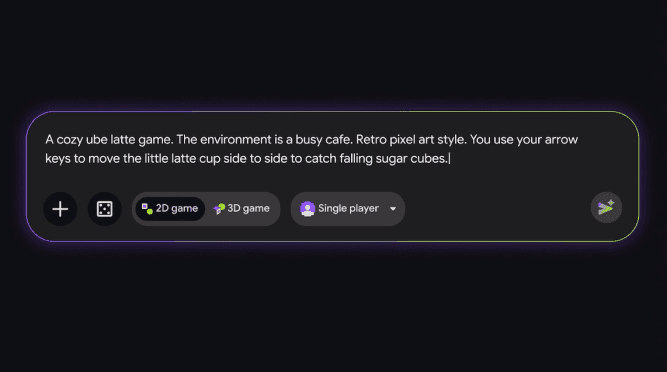
Google experiments with an AI-powered gaming platform
The barriers to entry for game creation are rapidly diminishing as AI makes game development more accessible to people without traditional programming, design, or illustration skills. The latest example is an experiment from Google Labs. On Wednesday, the tech giant’s public incubator and experimental platformlauncheda new AI-powered game-creation platform called Playground, which allows users to build browser-based games using simple text prompts, eliminating the need for coding expertise. With Playground, creators can select a genre, such as trivia or racing, or start a project from scratch. They can specify whether they want a 2D or 3D game and choose between single-player and multiplayer experiences before describing the desired mechanics, gameplay, and visual style. Playground also allows users to upload visuals that its AI can transform into game assets tailored to the game’s overall art style. Once created, games can be played on both mobile devices and computers. Projects can remain private, be shared through a link, or be published to Playground’s Explore gallery. Published games can support features such as leaderboards, while creators can continue modifying their projects even after they have been released. Google also indicated that it plans to add Unity Spark integration in a future update. The integration could give Playground users access to additional 3D capabilities and “professional-level” game mechanics through Unity’s technology, further expanding what can be created through the platform. Playground is initially available to users aged 18 and older in the U.S., with Google planning to expand availability to additional countries. Browsing and playing games in the catalog is free, while game generation relies on a weekly token system. The free tier provides a limited number of tokens, while Google One AI subscribers receive higher usage limits. Google’s launch places Playground within a growing market of AI-assisted game-development tools.Roblox,for example, announced its own Build feature in July, enabling users to create games through natural-language prompts. The initiative also builds on Google’s broader interest in gaming. The company previously explored cloud gaming throughStadiaback in 2022, and later on continued incorporating games into other platforms, includingYouTube Playables, a dedicated hub offering a selection of instantly playable web-based games.
View

Tony Fadell on why the first wave of AI gadgets failed — and what comes next
When Tony Fadell takes the stage at the inauguralMIT Future Fest, he projects a slide with three images of once-hyped AI devices that have already been discontinued: the Rabbit R1, the Humane Ai pin, and the Limitless pendant. “These were kind of the ‘Gen 1’ AI products, and because of my background, these companies called me and asked me to help them,” Fadell said. “I didn’t.” It’s no surprise that these companies want Fadell’s advice. He’s credited as the “father of the iPod,” a co-creator of the iPhone, and the founder of Nest, the smart thermostat company acquired by Google. “You have to really understand what you’re trying to do, what pain you’re trying to solve,” he said. “In each of these cases, each one of them didn’t meet any kind of need — it was just interesting technology for geeks, and you’re like, ‘Okay, that’s neat, but it doesn’t really apply to my life.’” These early AI devices promised the convenience of having a personal assistant, but didn’t actually work that well. Even if they did, most people have never had an assistant and know how they would use — or grow to trust — a personal robot helper. “It’s less than 0.01% of the world population that has ever had a human [assistant] do anything, and so when [companies] say, ‘Oh, we want an assistant,’ that’s a bunch of people who have assistants saying it,” he said. “Most consumers don’t even know what an assistant is.” Fadell goes on to explain to those of us in the 99.99% that hiring a trustworthy personal assistant isn’t as straightforward as pulling the most promising resume out of a pile of applications. “It took me a couple of years first to understand how best to utilize [an assistant], and then to trust them with the most sensitive data, and have them be an agent where they’re setting up meetings with people and working with my bank,” he said. “I understand we have this vision of the future, but there’s a lot of steps to get the general consumer and even the general business on this path.” It’s hard to talk about the struggles of building trust in your personal assistant without sounding a bit entitled, but Fadell has a point. When you hire a human assistant, you’re not giving them your bank account login on day one. We’re heading into a world where anyone can have a personal AI assistant, but these tools are only valuable if we can trust them to be completely secure. At this point, establishing trust with an AI assistant seems even harder than relying on a human. Metarecently launched Muse, its all-purpose AI assistant, but users have reason to be wary. A security researcher quickly found a seriousvulnerabilityin Muse after launch, and a recent404 Media reportstates that some Meta employees discovered security issues that prompted multiple teams to embark upon a “mad dash” to fix these problems before launch, working overtime. “Trust and safety are going to be paramount with anything that we turn over to some kind of intelligence,” Fadell said. “The only company I could see right now — maybe one other — is Apple who could do this. Apple has all the hardware, they have all the chips, they have all the pieces, but they don’t have all the AI stuff.” Even if it’s not Apple that ultimately produces the stickiest AI agent, Fadell predicts that a successful agent will have to operate on-device only, both for the sake of privacy and to keep the tech lightweight. “When you’re hearing all of these things about, ‘Oh, data centers are going to conquer the world,’ … I don’t believe it,” he said. “I’ve seen this before. I’ve seen this play out in the internet days and what have you. We have so much power on the device now, and even more compute, and they’re still battery operated.” By keeping sensitive data on-device, rather than transmitting it through the cloud, Apple has garnered trust from users to share their biometric data through features like Face ID. As Fadell notes, Apple seems to have more goodwill with consumers than its competitors when it comes to privacy, but unlike other top tech companies, Apple doesn’t have a world-class AI model of its own — the new Siri AI runs on custom-built versions of Google’s Gemini. While Apple lags in proprietary AI, it is leaps ahead in hardware. Fadell theorizes that companies likeMetaandOpenAIare turning their attention toward gadgets because they don’t have billions of devices in circulation like Apple does. “It’s because they don’t have access to the sensors on your phone. They’re like, ‘Oh, we’ll need video,’ and you have to check, ‘Yes, I’ll give you video.’ Then they say, ‘Well, we need audio.’ Check. ‘We need your GPS location.’ Check. And before you know it, it becomes a list of 20 things or more than you have then allowed them to have,” he said. “So what do they do? They go and make a device with all that stuff in it without a screen… and then they just Bluetooth or Wi-Fi into your phone and then back up to the web, or into a 5G network, so they can get all the sensor data.” Given his history creating the iPhone and iPod, it might seem like Fadell is still looking at his former employer through rose-colored glasses. While he may give Apple credit where due, he hasn’t been shy tocall Apple outwhen he thinks they’re messing up. When an audience member asks about the luck involved in finding product-market fit, Fadell points out that it’s more difficult for startups to manufacture that luck, since a failed product can spell the end of the company. “Because it’s a startup, you get one shot,” he quipped. “It’s not like Apple with the Vision Pro.”
View

Healthleap raises $38M for its AI that flags hospital patients who may need a closer look
Healthleap, a startup building an AI platform that reads patient records to identify patients at risk of undiagnosed illnesses, has raised $38 million in seed and Series A funding, TechCrunch has exclusively learned. The financing includes an $8 million seed round co-led by Sequoia Capital and First Round Capital, and a $30 million Series A led by Hummingbird Ventures. The company is not disclosing its valuation. Founded inSouth Africa in 2022by siblings Jemima and Josiah Meyer (pictured above), the startup initially offered a clinical nutrition tool Jemima had built for dietitians. But the company later pivoted and built a more general-purpose platform that aims to identify patients admitted to hospitals who may be suffering from conditions like malnutrition or delirium that aren’t often identified early enough, CEO and co-founder Josiah Meyer told TechCrunch. “A patient’s chart holds two kinds of data. Labs, weights, and vital signs sit in structured fields, but the most telling signs sit in clinicians’ written notes: poor appetite, recent weight loss, muscle loss, trouble swallowing. Our developing approach is extracting affirmative or negated mentions of these clinical concepts in an easily extensible and scalable way,” Josiah said. The company’s platform is currently deployed in more than 50 hospitals, where it screens patients for conditions such as malnutrition and delirium, he said. The startup has also built programs to identify aspiration pneumonia, pressure ulcers, and risk of readmission for congestive heart failure, which Josiah said are undergoing further clinical validation. To find patients that may be at risk of an illness or were undiagnosed, Healthleap plugs into a hospital’s electronic health record system and uses language models to pull information from written notes, such as references to recent weight loss or difficulty swallowing. That analysis is then fed into its risk models, alongside structured information such as lab reports and vitals to surface patients who may need a closer look. The company notes that its software doesn’t diagnose patients, only highlights items for additional review. “Each night, we analyze every adult inpatient’s record: lab results, vital signs, weights, medications, diet orders, diagnoses, clinicians’ notes, and more,” Josiah explained. “Each morning, we write a risk score into the care team’s existing workflow with a dashboard accessible that holds additional information about the patients’ trends.” Malnutrition likely served as a useful starting point for Healthleap, as it’s a condition thatoften goes undiagnosedand can adversely impact patient recovery in a variety of ways. Researchsuggests20% to 50% of hospital inpatients are malnourished, and somestudieshave linked malnutrition with longer stays, impaired wound healing, infections, and other complications, as well as higher morbidity and mortality. Josiah said Healthleap has grown from three hospital partners to more than 50 over the past year, and its customers now include Penn Medicine, Cedars-Sinai, Intermountain, Houston Methodist, and Emory Healthcare. Revenue has grown more than 10x over the same period, he said, though he didn’t disclose specifics. The startup sells three-year contracts priced according to a hospital’s licensed bed count, and also uses an outcome-based pricing model. “We use the hard ROI that the hospital finance team validates and attributes to us as the measurable ROI. Based on that, we contractually ensure that we deliver multiples of the contract price. To date, every customer has seen a 5x hard ROI or more, in some cases over 20x annual total ROI,” Josiah said. At the Hospital of the University of Pennsylvania, Healthleap says its malnutrition program resulted in $23.8 million in annualized financial impact, of which $6.3 million came from additional reimbursement and $17.5 million from shorter hospital stays. Healthleap plans to spend the fresh cash on engineering, product, sales, and customer success as it adds support for identifying more conditions. Meyer said the company ultimately wants to cover more than 40 major health conditions and expand into outpatient and home care.
View
Meta rolls out new AI tools to detect ads that secretly lead to child sexual abuse material
MetaannouncedWednesday that it took action against 33.2 million pieces of child sexual exploitation content on Facebook and Instagram in the first half of 2026. At the same time, the company is rolling out new AI tools to find ads and accounts that may be used to secretly direct people to illegal child abuse material. More than 97% of the content Meta acted on was found by its systems before users reported it, the company said. In India, Meta acted on 5.3 million pieces of child sexual exploitation content during the same period, with more than 98% detected before users reported it. Meta said its latest AI tools are aimed at people using ads that look harmless to send users to illegal content outside Meta’s platforms. The company has introduced a new large language model (LLM) system to detect what it calls “signposting.” This refers to ads that may look normal but are suspected of directing users to illegal content or other harmful activity elsewhere online. Meta says this is a tactic it has recently seen bad actors use as they continue to change their methods to avoid detection. While the ads themselves may not contain illegal material, they can still act as a gateway to websites hosting child sexual abuse material. Because of this, Meta said it’s now looking at where an ad sends users, and not just what the ad contains. The company can use this information to block websites or other destinations that break its rules and take action against the accounts behind them. Meta is also using additional AI-driven scans to find child exploitation content that earlier systems may have missed. The company said it will continue adding new signals as it learns more about how these networks operate. Another new tool is a “red-teaming AI agent” that tests Meta’s own safety measures. It looks for weaknesses that bad actors could use to get around the company’s protections. Meta said this could help it find new methods of abuse before they become more common. Additionally, the company is improving its systems for finding people who return to its platforms with new accounts after their previous accounts have been removed. The new measures come as Meta continues to face pressure over the safety of children on its platforms. The company has faced lawsuits and criticism from lawmakers over the risks its social media services may pose to young users. In August, Meta reached an agreement to payup to $18 billionto settle a child safety lawsuit involving 29 U.S. states, addressing concerns regarding the protection of children online. Meta has introduced several child-safety features this year, includingparental controls for Meta AI,pre-teen accountson WhatsApp, andalertsfor parents when children search Instagram for self-harm content. In September, WhatsApp addedmore controlsfor parents. They can limit how teenagers use Channels, control who can see their status updates, and decide who can add their children to groups. Parents can also choose to receive notifications about certain group activity.
View
