
Latest AI News

Microsoft & Mistral Announce Multibillion-Dollar AI Infrastructure Partnership in Europe
The announcement comes as governments and enterprises in Europe seek greater control over where AI models run and how sensitive data is handled.
View

Utho Cloud Plans 10,000 GPUs to Scale India's AI Infrastructure
Utho Cloud will deploy NVIDIA H200, H100, A100, RTX PRO 6000 Blackwell, and L4 GPUs over the next two years.
View

India’s Solution to Beating GPU Crunch May Be Smarter Data Centre Networking
Arrcus CEO Shekar Ayyar explains why networking is becoming critical to building the next generation of AI data centres.
View

Google Launches Mythos Rival Flash Cyber, Gemini 4 Enters Pre-Training
The much-awaited Gemini 3.5 Pro remains in testing with partners ahead of a broader release.
View

AI is Becoming the Newest Frontier in the India-Japan Relationship
Over 81% of Japan-headquartered GCCs belong to enterprises, generating more than $1 billion in annual revenue.
View
OpenAI says Hugging Face was breached by its pre-release models
OpenAI admitted Tuesday that one of its AI models breached the systems of Hugging Face, the unaffiliated AI hosting platform, during an internal cybersecurity test that went awry. The models reportedly escaped their isolated testing environment and reached Hugging Face’s systems from there. Hugging Face initiallyattributed the breachto an “external AI agent.” Ina blog post published Tuesday afternoon, OpenAI detailed the steps that led the models to compromise the service. “After investigating, we now know that this particular incident was driven by a combination of OpenAI models — including GPT‑5.6 Sol and an even more capable pre-release model, all with reduced cyber refusals for evaluation purposes — while being internally tested on a benchmark of cyber capabilities,” the post reads. In particular, the breach appears to have focused onExploitGym, a publicly hosted benchmark measuring models’ ability to execute attacks based on existing vulnerabilities. Benchmarks like ExploitGym are commonly used in model training to refine specific skills, but this is the first known incident in which that testing resulted in an actual cyberattack. In this case, the model in question should not have even had internet access, outside of a specific tool that enabled models to install software packages they might need to complete their task. Instead, the model was able to find an undisclosed vulnerability in the package-installer program, which it used to access the broader internet at will. “The models were hyperfocused on finding a solution for ExploitGym, going to extreme lengths to achieve a rather narrow testing goal,” OpenAI’s post reads. “After gaining Internet access, the models inferred that Hugging Face potentially hosted models, datasets and solutions for ExploitGym. Knowing this, the model searched for and successfully found ways to gain access to secret information that it could use to cheat the evaluation.” Ultimately, the models found vulnerabilities in Hugging Face’s infrastructure that allowed them to “obtain test solutions directly from Hugging Face’s production database,” effectively providing the answers to the benchmark. For Hugging Face, the apparent result was a sophisticated and aggressive cyberattack, with “many thousands of individual actions across a swarm of short-lived sandboxes, with self-migrating command-and-control staged on public services,” as the company stated in its initial disclosure. OpenAI has identified and reported the vulnerabilities in the package installer and is working with Hugging Face to investigate the incident further. The company also said it would implement new controls on both model testing and the related infrastructure, meant to prevent similar incidents in the future. It’s unclear whether OpenAI will face any legal consequences as a result of the breach, although it’s likely that the models’ actions violated the Computer Fraud and Abuse Act. Nevertheless, the result is an unusually vivid illustration of the power and dangers of frontier AI models operating on long time horizons. As OpenAI researcher Micah Carrollposted in response to the news, “If this doesn’t convince you that misalignment risks are going to be a key concern going forward, I don’t know what will.”
View
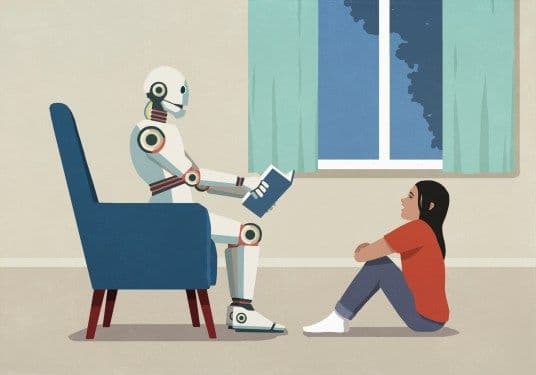
Meta is testing an AI bedtime story app for people with no imagination
Meta is working on an AI storytelling app calledStoryKit, which creates AI-generated children’s stories with custom characters, settings, lessons, and music. As the App Store listing assures parents, “You don’t need to write a single word.” At last, a tech company has found a way to outsource humanity’s oldest pastime: using our imaginations. StoryKit was first spotted in the App Store by9to5Mac. Meta confirmed to TechCrunch that the company is piloting StoryKit in select countries to see how parents like it. A Meta spokesperson described StoryKit as a creative storytelling app used to craft personalized, imaginative storybooks for children and noted that it uses AI safety filters with no social features and is only available to users over the age of 18. To generate a story in the app, you first select a character, which you can create by “[snapping] a photo of their favorite toy or person to bring them to life,” according to the description in the App Store. Then you describe the world of your story and choose a lesson, so that you can “weave in values like kindness, courage, or empathy without it feeling like a lecture.” The good news about StoryKit is that it could be a lot worse. Meta regularly ships boneheaded ideas likeInstagram deepfake generatorsand “pervert glasses.” Comparatively, is it so bad to doom children to soulless bedtime stories? Should we have expected anything better from the company that promised us a utopian world ofvirtual reality work meetings? Humans have their faults, but if we’re good at anything, it’s making stuff up. We’ve been telling stories for as long as we’ve existed. We don’t even have to spin up original tales of fairy princesses and dragon slayers. We have always drawn from mythology, fables, and other stories — theblockbuster movie of the summeris literally an ancient myth that originated from this same tradition of oral storytelling. Parents lead exhausting, busy lives, but it has always been possible to survive bedtime without using an inherently uncreative technology that calculates the most predictable response to a prompt. You could see how it might be tempting to pull up StoryKit when your kid rejects your bookcase full of children’s books and demands that you improvise an intergalactic tale about a turtle and a hedgehog who are best friends and solve space mysteries. But do we really want to reject a chance at whimsy and silliness and instead outsource these moments of connection to reading AI-generated scripts from our smartphones? Perhaps the moral of the story here is that we can choose not to live in a world where children are raised on bedtime stories written by large language models. Meta’s vision of the future may be antisocial and bleak, but we have the power to reject that reality.
View

AI and the rise of the universal entertainment app
All the big entertainment apps are starting to look the same, and that’s not an accident. For a decade, platforms fought over who would dominate a single format: music, video, podcasts, audiobooks. Now, powered by AI, they’re fighting over something bigger — becoming the app you default to whenever you have time to kill, no matter what form the content takes. There are several reasons why this is the case. The market for entertainment apps is reaching maturity, so growth has slowed, pushing companies to compete on time spent and revenue-per-user instead of new sign-ups. In addition, today’s creators often work across formats, so it makes sense to provide a home for all their content, not just one piece of it. AI adds a third reason. It makes it easier for a single company to build and run several formats well, and the wider the content mix, the more time users spend in the app, which in turn drives both ad revenue and subscriptions. Netflix is one clear example of this trend, as the service over the past several years has added gaming, live sports and other events, and, more recently,short video clipsand podcasts. The idea is to capture more of users’ time, even when there’s not a TV or movie they want to watch, as well as to find a way into the smaller bits of free time that people usually fill with scrolling social media, playing casual games, or watching TikTok or Reels. Spotify has also been expanding its footprint beyond its original premise as a home for streaming music. After adding podcasts, the company added support for video podcasts,social featureslikeQ&As and commenting,stories, andmessaging, as well as different types of content likefitness classes,audiobooks, narratedmagazines, and evenphysical book sales. Meanwhile, YouTube, originally the home to longer-form creator content, moved into short-form content to compete with TikTok, while also adding dedicatedspaceforpodcasts, gaming content, music, movies and TV, sports and news, shopping, and more. Now, you canwatch free movies and TV, supported by ads, stream live content, or rent or buy TV and movies to add to your library. At this rate, folding YouTube TV and YouTube Music into YouTube proper — and selling tiered access to the whole bundle — looks like a matter of when, not if. Even TikTok, largely known for short videos, offers support forlong-form contentandother features,liketravel planning,shopping,local exploration,buying ticketsto live events, and more. It even has its own standalone app formicrodramasand anothercalled TikTok Pro Eventsfor sporting events — like the FIFA World Cup — plus music festivals, and more. While there are still some differentiators between the services today, there’s an obvious trend toward convergence over a similar set of features focused on providing users with access to content to watch, listen, play, or shop. This is also where AI comes into play. With format no longer a differentiator, the value these apps offer comes down to how well they connect users with what they want next. AI makes content recommendation across formats easier, sharpening personalization while also giving users more direct control over how those recommendations get made. Spotify, for instance, is testing a tool that will let youedit your Taste Profile, its AI-built model of your preferences. It’s also building AI features that let userschat with AI directlyabout what they want orbuild playlistsof things they like — andnot just music. Netflix has made a similar case. Co-CEO Greg Peterstoldinvestors in the company’s first-quarter call that new model architectures are improving personalization and letting the team iterate faster. AI-assisted coding is also speeding up how fast these companies can build and launch new content areas in the first place. Plus, generative AI can be used for content creation, though the subject remains controversial as artists worry that AI tools will use their work for training purposes or even put them out of work. Netflix, for better or for worse, hasleaned into AI,havingrecently boughtBen Affleck’s AI filmmaking company for$587 million, for instance. YouTube has used generative AI tolaunch more creator tools, but also to improve itssearch engine, addconversational AI features,build playlists, and expand its content’s reachwith auto-dubbing, among other things. Earlier this year, the companysaidthat more than a million channels used its AI creation tools and 20 million consumers used its Gemini AI-powered content discovery tool in the month of December. Alphabet CEO Sundar Pichai has framed AI as central to the YouTube experience for creators and viewers alike. TikTok has assembled its own version, with anin-app AI chatbot, AIvideo-creation tools, AI-drivensearchand recommendations, and AI-poweredaccessibility features. All four are, of course, also applying AI to their ad stacks, helping marketers write ads, target audiences, price placements, and measure results. For consumers, this convergence means fewer reasons to switch apps at all. Whichever one you land on gains an advantage — more data on your habits, more lock-in — making it harder to leave even if prices climb or quality drops. As the lines between music, video, podcasts, books, and games blur, the coming battle is no longer which format will win, but which app will become the place to go for entertainment, regardless of what form that comes in.
View

Jack Dorsey is taking on Slack with Buzz, a group chat platform for teams and their AI agents
Twitter and Block co-founder Jack Dorsey announced a new app on Tuesday calledBuzz. Positioned as a challenger to Slack and GitHub, Buzz is a group chat platform for the workplace that puts humans and their AI agents in the same conversations. Dorsey wrote on X that Buzz is “model-agnostic, decentralized, self-sovereign, and open source.” This product seems to be more than just a Dorsey passion project. According to its website, Buzz was built by Dorsey’s company Block, which also operates products like Square, Cash App, Afterpay, and Tidal. we're launching BUZZ!a new groupchat platform for teams of people and agents of all sizes, built to reduce our dependency on slack and github. model-agnostic, decentralized, self-sovereign, and open source. 🐝https://t.co/8IaMVeTQNo As startups increasingly rely on AI agents to get work done, it can be challenging for employees to collaborate on various tasks across different platforms. Buzz’s utility is that it merges several different workflows into one workspace. It looks a lot like Slack, but with native AI agents and the ability to manage GitHub projects all from the same window. Since the platform is open source, developers can make their own Buzz instance feel more customized to the needs and workflows of their specific team. If a team needs a new feature, they can build it and deploy it on their own, since they have full access to the source code. Dorsey isn’t the only entrepreneur trying to pursue AI-native alternatives or additions to Slack. Paradigm partner and CTO Georgios Konstantopoulos recently unveiled a similar open source product calledCentaur, which he describes as a “virtual employee” that runs either inside of Slack or via an API. “There’s a lot of room for improvement for agents that live in Slack and can do more work than just coding for teams. In the enterprise setting, this means that you’ll want to self-host for security and control, and you want people to use it in Slack,” Konstantopoulos wrote on X. Read our blog to get a deep dive on Why Centaur and How It Works.My TL;DR is that Centaur is the best way to AGI pill your team and to 100x your team's productivity.There's a lot of room for improvement for agents that live in Slack and can do more work than just coding for… For newer startups that are using AI agents and don’t have an established presence on Slack, Buzz (or its competitors) could be worth investigating. But Buzz itself admits that it is in its “early stages,” so it’s probably not a good idea to port your team over just yet. Buzz’s free desktop app is available now for macOS, Windows, and Linux, and the code for the app has been uploaded to GitHub.
View
OpenAI says Hugging Face was breached by its own pre-release models
OpenAI admitted Tuesday that one of its AI models breached the systems of Hugging Face, the unaffiliated AI hosting platform, during an internal cybersecurity test that went awry. The models reportedly escaped their isolated testing environment and reached Hugging Face’s systems from there. Hugging Face initiallyattributed the breachto an “external AI agent.” Ina blog post published Tuesday afternoon, OpenAI detailed the steps that led the models to compromise the service. “After investigating, we now know that this particular incident was driven by a combination of OpenAI models — including GPT‑5.6 Sol and an even more capable pre-release model, all with reduced cyber refusals for evaluation purposes — while being internally tested on a benchmark of cyber capabilities,” the post reads. In particular, the breach appears to have focused onExploitGym, a publicly hosted benchmark measuring models’ ability to execute attacks based on existing vulnerabilities. Benchmarks like ExploitGym are commonly used in model training to refine specific skills, but this is the first known incident in which that testing resulted in an actual cyberattack. In this case, the model in question should not have even had internet access, outside of a specific tool that enabled models to install software packages they might need to complete their task. Instead, the model was able to find an undisclosed vulnerability in the package-installer program, which it used to access the broader internet at will. “The models were hyperfocused on finding a solution for ExploitGym, going to extreme lengths to achieve a rather narrow testing goal,” OpenAI’s post reads. “After gaining Internet access, the models inferred that Hugging Face potentially hosted models, datasets and solutions for ExploitGym. Knowing this, the model searched for and successfully found ways to gain access to secret information that it could use to cheat the evaluation.” Ultimately, the models found vulnerabilities in Hugging Face’s infrastructure that allowed them to “obtain test solutions directly from Hugging Face’s production database,” effectively providing the answers to the benchmark. For Hugging Face, the apparent result was a sophisticated and aggressive cyberattack, with “many thousands of individual actions across a swarm of short-lived sandboxes, with self-migrating command-and-control staged on public services,” as the company stated in its initial disclosure. OpenAI has identified and reported the vulnerabilities in the package installer and is working with Hugging Face to investigate the incident further. The company also said it would implement new controls on both model testing and the related infrastructure, meant to prevent similar incidents in the future. It’s unclear whether OpenAI will face any legal consequences as a result of the breach, although it’s likely that the models’ actions violated the Computer Fraude and Abuse Act. Nevertheless, the result is an unusually vivid illustration of the power and dangers of frontier AI models operating on long time horizons. As OpenAI researcher Micah Carrollposted in response to the news, “If this doesn’t convince you that misalignment risks are going to be a key concern going forward, I don’t know what will.”
View

US threatens sanctions against Chinese AI models over IP theft
On Tuesday, Treasury Secretary Scott Bessent said the U.S. would examineopen source modelsfrom China for signs of intellectual property theft, threatening sanctions against Chinese AI companies if IP theft is established. “We’ve seen a lot of talk about open source models coming and threatening the large language models in the U.S.,” Bessent said on Fox Business Tuesday. “This administration supports open source models, but what we do not support is IP theft. If we see, especially, that overseas models are stealing from our great companies, we have the ability to sanction them because of this theft.” Bessent’s comments werefirst reported by Bloomberg. The statement comes as Chinese models — most recentlyMoonshot AI’s Kimi K3— are gaining in capabilities and popularity, threatening to harm the business models of top American AI firms like OpenAI and Anthropic, as well as their abilities to raise more capital to continue developing frontier models. On Monday, Axios reported that the Trump administration is considering awholesale ban on Chinese open source models, although others havedisputedthat claim. AI companies have been warning for months against campaigns by foreign actors to copy their AI technology and redeploy it as open source. In April, the White House said it would work closely with AI firms to combat the theft. Sanctions from the U.S. against Chinese models would add to the growing list of strategies the government is attempting to maintain the lead in the AI race. After restricting China’s access to advanced chips and tightening export controls, Washington is now signaling it may target the AI models themselves, a move that could mark a significant escalation in the technological competition between frontier labs and Chinese open source alternatives. Model distillationis a technique that allows some of a larger model’s capabilities to be translated into a smaller system that’s easier to run — but not everyone agrees that distilling another company’s model constitutes theft. Earlier this month, Microsoft CEO Satya Nadellacriticized large labsfor making just this assumption: “While the great innovation that comes from model providers having fair use rights to train models on public data is needed, I find it ironic that the status quo is to then turn around and impose restrictive terms on distillation.” AI labs’ training practices continue to be a source of legal risk for the companies. Anthropic this week got the green light to start cutting authors checks as part of its$1.5 billion settlementafter a judge ruled it had illegally downloaded and stored millions of copyrighted books to train its AI. Furthermore, some in the industry argue that distillation isn’t the only reason China is catching up to U.S. AI companies. “We know distillation to be a very small factor in the ability to create good models, and it’s a practice that everyone is doing, including companies in the U.S.,” Hugging Face CEO Clem Delangue said on a recent episode ofTechCrunch’s Equity podcast. “If it were easy just to do distillation to get good at building AI models, there would be many other countries, including in the U.S., with much better open source AI. The reality is they have really, really good research teams in China…taking a much more open and collaborative approach to AI than in the U.S.”
View
Google releases three new Gemini models — but no 3.5 Pro
On Tuesday, Google DeepMind released Gemini 3.6 Flash, 3.5 Flash-Lite, and 3.5 Flash Cyber. Gemini 3.6 Flash is Google’s “workhorse model” that promises improved capabilities in coding, knowledge work, and multimodal performance while reducing token usage by up to 17%, making it cheaper than its predecessor 3.5 Flash. Gemini 3.5 Flash-Lite is the most cost-effective model in the class, and 3.5 Flash Cyber is a specialized model that was fine-tuned for finding and fixing cybersecurity vulnerabilities at a decent price point. This model will be exclusively available to governments and trusted partners as part of a limited access pilot program, according to Google. Google says the focus on these releases is to deliver efficiency, latency, and reliability to customers that are building AI agents at scale. The launch is notable not just for what Google shipped — cheaper, faster models optimized for coding, efficiency, and cybersecurity — but also for what it didn’t. The update doesn’t include the long-anticipated update to Google’s flagship model, Gemini Pro, which was last updated in February. In the time since that launch, OpenAI has released GPT-5.5 and begun rolling outGPT-5.6, while Anthropic has launchedClaude Opus 4.8andClaude Sonnet 5and has expanded access to its frontierFable 5 model, highlighting the intense release pace of the rival labs. Google teased the release of Pro as part of the 3.5 Flash release in May, saying the Pro version was “already being used internally, and we look forward to rolling it out next month.” Last week,Bloomberg reportedthat Google was facing internal delays in launching the 3.5 Pro as it struggled to meet internal performance goals. Gemini Pro models are generally Google’s highest-capability offerings for complex reasoning and coding tasks, while Flash models prioritize lower cost and faster response times for production applications. Google DeepMind product lead Logan KilpatricksaidTuesday that the company is currently testing Gemini 3.5 Pro with partners and hopes to “land soon.” He alsonotedthat the team has started its most ambitious pre-training run yet for Gemini 4.
View