
Latest AI News
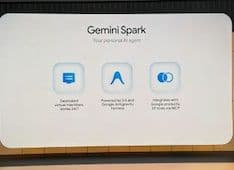
Google Gemini Spark Personal AI Agent Launched in India, Adds Agentic Features to Gmail, Docs, and More
Google unveiled its new personal AI agent, Gemini Spark, during this year's Google I/O keynote. While showcasing the capabilities of the AI agent, the Mountain View-based tech giant announced that the agent will be released to users “later this year”. Now, the company has announced the launch of Gemini Spark in India, which will soon be generally available to paid Google AI users in the country. Google's new AI agent is capable of taking actions on behalf of users in the background. Users can choose to grant permission to Gemini Spark to connect to multiple apps and platforms.
View
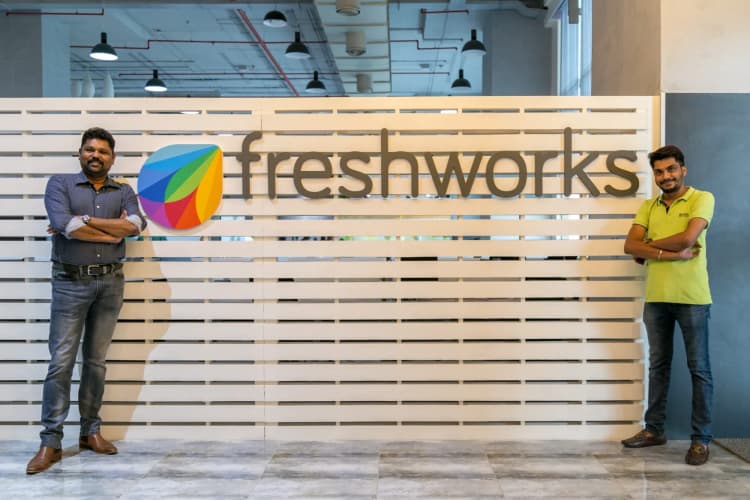
Freshworks Appoints Ex-ServiceNow exec Ryan Manning as Chief Product and Technology Officer
Manning will oversee Freshworks’ global product roadmap and engineering organisation across the company's software portfolio.
View
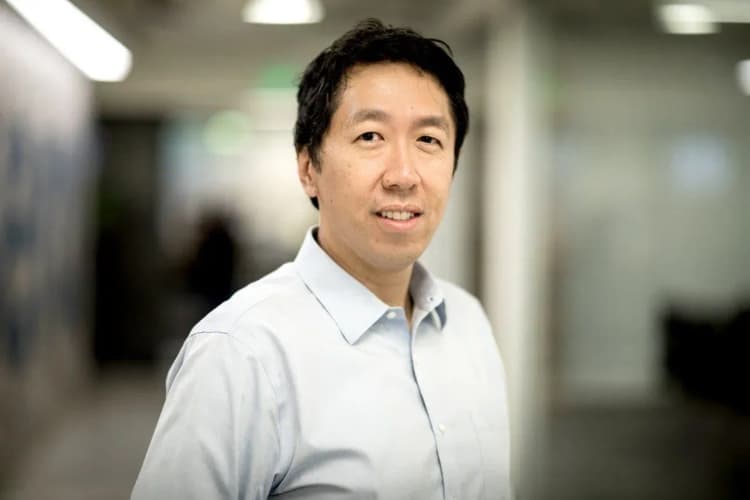
Andrew Ng Launches AI Education Startup With $100 Mn Investment From Coursera
The venture will build AI learning guides that adapt to each learner's progress instead of relying on conventional chatbots.
View
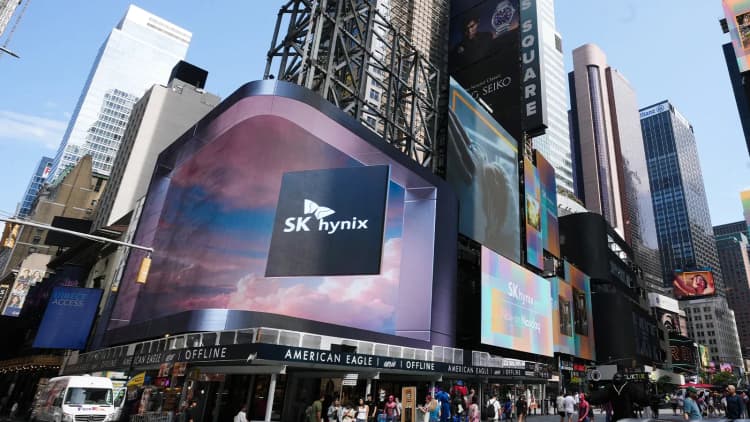
SK Hynix Stock Crashes Even as Profit Jumps 557% YoY on AI Supply Deals
The South Korean memory chipmaker said it has signed multi-year supply agreements with 10 AI customers as it forecast stronger second-half earnings.
View

Mysuru Has Tech Talent and Temper. So What’s Stopping It?
Industry leaders say Mysuru’s biggest hurdles are no longer talent, but execution, infrastructure, and ambition.
View

Over 1,100 Developers, Leaders Call for Global Framework to Pace Frontier AI
Signatories say the world currently lacks the tools to manage rapid advances in frontier AI across competing labs.
View
Cyera agrees to acquire Oasis Security for $1B to safeguard proliferating AI agents
Data security company Cyera, which recently raised$600 millionat a $12 billion valuation, announced Tuesday that it signed a letter of intent to acquire Oasis Security for approximately $1 billion in a deal expected to be paid mostly in cash, with the remainder in Cyera shares. Oasis focuses on non-human identities, primarily AI agents. As the number of AI agents proliferates, companies must deploy cybersecurity software that monitors these agents’ behavior and grants them permission to access other software. Founded in 2022, Oasis has raised about $195 million from Accel, Craft Ventures, Cyberstarts and other investors. The deal highlights a surging market for cybersecurity providers defending enterprises against AI-weaponized threats. Cyera, which shares investors Accel and Cyberstarts with Oasis, has been on an acquisition spree, recently purchasing Index Ventures-backed Ryft and the less-than-one-year-old Genie Security. Post-acquisition, Cyera plans to integrate Oasis’s technology into a unified identity and data security platform. Although Cyera recently surpassed$150 millionin annual recurring revenue (ARR), the company is far from profitable, TechCrunch reported last month. The five-year-old company has raised about $2.3 billion in total funding.
View

Sam Altman is ready to decelerate
OpenAI CEO Sam Altman says that it may be time to “pace” AI development so the world will be ready for it. “We may have to pace the rate of AI development to give ourselves enough time for society to harden around some of these new capability levels,” hetoldPatrick O’Shaughnessy, the host of the Invest Like the Best podcast, while also “trying to figure out how we do that in a way that does not feel like regulatory capture for anyone and also does not feel like collusion among the frontier labs.” BothOpenAIandAnthropiccame out in support ofa petitioncirculated by employees at the frontier labs, calling on the US government to “support an international effort to develop the technical and governance tools needed to deliberately pace the frontier of automated AI development.” Altman has avoided signing on to past campaigns to slow AI progress,callinga 2023 open letter that proposed a similar slowdown “missing most technical nuance about where we need the pause.” Apparently, he’s softened on the idea, thanks in part tothe incidentwhere one of OpenAI’s advanced models managed to break out of a secure computing environment and hack into Hugging Face, an online model database, using several zero-day exploits. On the podcast, the OpenAI co-founder called it an “extremely sci-fi cyber incident…[t]his is the first security incident that I have felt very viscerally.” OpenAI researchers have paused training on that model while they work out how to keep their sandbox secure. But Altman said that as models become more powerful, the need to “pace” their development could become key to safe deployment. While model safety and alignment has always been a concern in the AI world, the arrival of Anthropic’s highly capable Mythos model earlier this year has turned hypotheticals into real-world problems. However, the industry has a trust problem, and challenging economics that give major players an incentive to play up the dangers of their systems in ways that experts disagree about — for example, whether or not Anthropic’s Fable model should have been briefly banned from use or not. Similarly, when Kimi K3, a large, open-weight model built in China, was released, OpenAI head of strategic futuresDean W. Ball said that it threatened the economics of frontier labs, making it difficult to separate their safety concerns from their financial interest. “I think a lot of the talk about safety concerns is well-founded, and then a lot of it is about people that just really, even if it’s slightly subconscious, want to concentrate power,” Altman mused, in what reads as a dig at his rival, Anthropic CEO Dario Amodei, who signed the petition. “I am terrified of a world where the very real fears of AI are used as a way to say, ‘Only this small group of people can have it because it’s too dangerous, and only they understand it, but don’t worry, like, they’re gonna make the right decisions for all of us.’ I don’t believe in that.” Still, OpenAI has pushed back against efforts to develop government rules for AI models, instead preferring an industry-led approach where AI labs would create ostensibly independent organizations that would evaluate the security of models and the safety approach of their makers.The challenge for both that approach to regulation and any efforts to slow AI development will be getting the various players in the industry on the same page, whether they are rival frontier labs in the U.S. or competitors in China. This story was updated to include OpenAI and Anthropic’s support of the “Pacing the Frontier” petition.
View

MCP startup Runlayer accuses Rippling of stealing its product idea
Runlayer, a startup that offers a secure Model Context Protocol gateway — a standard for letting AI models and agents securely pull in outside data and tools — has filed a lawsuit against HR software startup Rippling, according to the complaint seen by TechCrunch. The lawsuit is a cautionary tale for anyone selling AI infrastructure to enterprise customers, especially to other tech companies, that increasingly have the engineering muscle to just build the thing themselves. In the suit, Runlayer describes an extensive product trial conducted by Rippling as a prospective customer, during which the MCP startup shared everything from its product roadmap to its actual source code. The parties signed a mutual non-disclosure agreement and Rippling signed a product trial agreement with a clause that forbade it from copying Runlayer’s intellectual property or making derivative works, which is standard boilerplate in enterprise software trials. Runlayer says in the complaint that Rippling’s evaluation involved “nearly a year of intensive engineering collaboration.” But in the end, the two could not agree on a price, so Runlayer ended the product trial. Shortly after that, Runlayer alleges that a “Rippling insider” texted Runlayer founder and CEO Andrew Berman to inform him of “a project internally to build essentially a clone o[f] Runlayer … it’s almost a 1 to 1 copy of Runlayer.” Runlayer claims in the suit that Rippling’s product must have been based on the startup’s intellectual property and therefore constitutes trade secret misappropriation, unfair competition, and breach of contract. Rippling has confirmed to TechCrunch that it is indeed launching its own MCP gateway, though a spokesperson denies Runlayer’s allegations about misusing its IP. “Runlayer’s panicked effort to avoid competition by fabricating claims is not an effective way to deal with its business failures. Rippling is launching a superior product for connecting AI tools to business data using only our proprietary information — we have every reason to win in this market,” a Rippling spokesperson tells TechCrunch. Runlayer has retained white-shoe law firm Sullivan & Cromwell. That doesn’t mean Runlayer will, or even should, win this suit, but the same way a marquee VC lends a startup some credibility, a marquee law firm lends a lawsuit some credibility, at least optically. The more interesting part about this suit is really the inside peek it provides at the trials and tribulations of selling complex AI infrastructure into the enterprise, particularly to other tech companies. Enterprise sales notoriously take a long time to close, often because they hinge on this kind of deep, hands-on trial. MCP gateways in particular are getting crowded.Anthropic launched MCP as an open source protocolin November 2024. It’s now one of the basic building blocks of AI interoperability, giving models and agents a secure way to access external data sources and services. MCP gateway products add control, security, and other features, especially for managing agents, and the field has grown considerably more competitive since Runlayerlaunched its productin the middle of last year and raised a total of$42 million, including from Khosla Ventures and Felicis. Even after an intense trial, an enterprise may simply opt to build the tool in-house. Both sides are stuck between a rock and a hard place.
View

Bot-detection startup Spur nabs $200M from Insight
Spur Intelligence, a cybersecurity startup based in Lake Mary, Florida, has raised a $200 million round led by Insight Partners. Spur, founded by two former Defense Department engineers in 2017 — five years before ChatGPT’s public launch — was prescient. The startup’s tech helps enterprises distinguish legitimate human users from increasingly well-hidden bot traffic to help identify fake users and threats. “As sophisticated criminal VPNs, residential proxy networks, and anonymization infrastructure proliferate, organizations are increasingly operating with a critical blind spot: they can see the activity, but not the infrastructure behind it,” Insight’s Thomas Krane said in a written statement. Detecting malicious traffic has, of course, been a hill corporate security teams have been climbing for eons. But nothing compares to the onslaught facing them today. As of mid-2026, bots are nowmore activeon the internet than humans, Cloudflare reported last month. “Thought it would be end of 2027, then early 2027, but agentic traffic growing so fast that bots have now passed human traffic online for the first time in the Internet’s history,” Cloudflare founder and CEO Matthew Prince postedon X last month, pointing to his company’s latest traffic report.
View

Data centers may face temporary power cuts to prevent blackouts on largest US grid
The largest electrical grid in the U.S. has struggled to cope with an onslaught of data centers. Now, after an auction to add more generating capacity fell short, the grid’s operator, PJM Interconnection, has said it will cut off data centers and other large users during power shortages. The decision arrives as the breakneck pace of data center construction has grid operators scrambling to generate power. By 2035, data centers are expected to use4x more electricitythan they do today. PJM won’t start curtailing supply until June 2027, and the cuts will only apply to data centers that are 50 megawatts or larger. The grid operator is running another auction for new generating capacity. Similar to other demand response programs, which have existed for decades and typically include large users like manufacturers, the customers who have their power cut will be compensated. Such programs typically give customers advance notice, ranging from 30 minutes to a few days, depending on forecasted demand. The move will likely spur many new data centers — and potentially existing ones — to set up their own sources of on-site power. Those that don’t will probably rely on backup generators, which tend to be costlier to run and frequently more polluting. Many data centersfavor diesel generatorssince the fuel is widely available and can be stored on-site.Federal regulationsallow such generators to be used for up to 50 hours per year for demand response events, and up to 100 hours per year for events like emergencies and maintenance. This week, Vantage Data Centers came under fire for itsapparent coordinationwith Virginia environmental regulators to cast doubt on a report that said diesel backup generators could contribute totens of millions of dollarsin annual health damages for people living near a96 megawatt data centerin Northern Virginia. PJM hascome under firein recent months for the way it has managed new generating capacity and large new users, including data centers. The grid operator’s territory runs from Virginia to Illinois, covering 67 million customers. Over the last year, wholesale electricity prices havenearly doubled, and PJM’s independent market monitor blamed data centers for much of the increase.
View

Exclusive: Samsung's JB Park on Galaxy AI Costs, Monetisation, and What Stays Free
For years, the smartphone industry has operated on a principle where consumers paid upfront for the latest hardware, and the software benefits were bundled at no extra cost. Every camera upgrade, display enhancement, and new-gen processor factored into the retail price of the overall device. However, the dawn of generative AI (short for artificial intelligence) has fundamentally disrupted this economic principle for the industry.
View