
Latest AI News
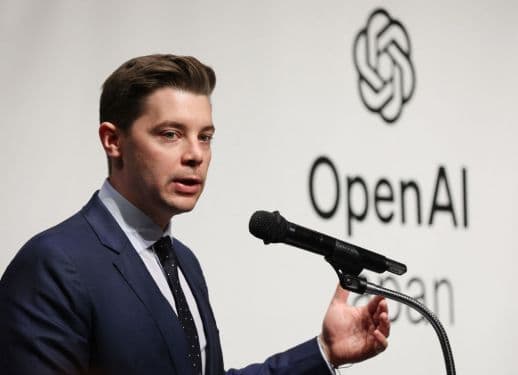
Brad Lightcap, OpenAI’s longtime COO, is leaving to ‘start something new’
Brad Lightcap, one of the longest-serving executives at OpenAI, is leaving the powerful AI lab to “start something new.” In an internal message thatLightcap shared online Tuesday, the outgoing executive told OpenAI staff that it was “bittersweet to share that I’ll be moving on from OpenAI to start something new.” Lightcap, who joined the company in 2018, spent four years as OpenAI’s chief financial officer. He then ascended to chief operating officer, where he served from 2022 until earlier this year when, amidst a shakeup of executive roles,he transitionedto lead special projects at the company. Prior to OpenAI, Lightcap alsoworked withCEO Sam Altman at venture capital firm Y Combinator. “I had the privilege of building the first versions of most of our operations and business teams – from Finance to Legal, People, CorpSec, GTM/Gov, Partnerships, and more,” Lightcap wrote in his message Tuesday. “Among the most rewarding parts of this journey for me has been watching each of these teams mature under brilliant leaders.” In his note, Lightcap also looked ahead and hinted at a future venture while giving scant details as to what it might be. “Over the last few months, I’ve been focused on the next horizon and what would stand in the way of mission success,” Lightcap said. “I believe there are a few important new things the world will need to get right as we enter this next period. I’ll have more to share soon, but I believe in OpenAI more than ever and am excited to help you all advance the mission from a different vantage point.” As OpenAI preps for anIPO of industrywide significance, the company has been undergoing a shakeup of top-level executives. In July, the company’s No. 2 executive, Fidji Simo, who led AGI development,announcedshe would be stepping down. Other executives from less central areas of the company — includingBill Peebles, who formerly headed the company’s now deadvideo generator Sora, andKevin Weil, the vice president of the company’s Science vertical — have also recently left the firm.
View
Google’s Gemini app surges to one billion users
In a significant milestone for Google, CEO Sundar Pichaiannouncedvia X that the Gemini app has become one of the company’s fastest-growing products, recently surpassing 1 billion monthly active users. Pichai also noted it was the 14th Google product to hit the 1 billion mark. With this rapid growth, Gemini is keeping pace with OpenAI’s ChatGPT, which hit1 billion monthly active usersback in June. The company has been steadily integrating Gemini across its products, from Search and Workspace to Android and its standalone app. Google’s AI Mode in Search, in particular, has achieved a lot of success, with over 1 billion monthly active users globally. But today’s figure refers specifically to the Gemini app, and does not include AI users from other channels. The company also continued rolling out new models and features, includingGemini 3.5 Flash, which Google says is designed to improve coding and autonomous AI-agent tasks. Google also shared numbers at how people are actually using the chatbot, with 63% of Gemini users talking directly to the assistant using the voice feature. Plus, Gemini now generates more than 150 million images every day, according to Google. And Gemini’s growth isn’t limited to Google’s own products. The company says it now has more than 100 million active users on iOS. The milestone comes right after its Q2 2026 earnings call, where the company celebrated havingover 950 million monthly users, with daily active users tripling this past year. The announcement also comes ahead of its Made by Google event, where it’s expected to have more Gemini-powered features launching across Pixel devices.
View

OpenAI launches ChatGPT desktop app for Linux
ChatGPT is on desktops across the world, but there’s been one place where it’s been lacking: the Linux community. Certain sectors of the open source developer communityhave been clamoringfor OpenAI to bring its chatbot to their neck of the woods. As of this week, OpenAI has rectified this oversight,launchinga dedicated ChatGPT app for Linux. “Linux has been one of the most-requested platforms for the desktop app, and this launch extends ChatGPT and Codex across every major desktop operating system,” the company said Tuesday. The new app, which is being released in preview, will give Linux users the ability to use ChatGPT, ChatGPT Work, and Codex on a number of different distributions. The release is worldwide, as of Tuesday. OpenAI says that the distros that will be supported include desktop variants of Ubuntu 24.04 and 26.04 LTS, Debian 13, and Fedora 43 and 44. The totality of the Linux community compriseshundreds of distributions, although the distros that OpenAI has chosen here act as the base for a variety of “downstream” desktopdistros or “flavors,”which should also be compatible with OpenAI’s apps as a result. OpenAI is a little behind Anthropic,which releaseda Claude desktop app for Linux about a month ago. Anthropic’s appis availablefor Ubuntu 22.04 or later and Debian 12 or later.
View

OpenAI Launches GPT-5.6-Cyber Model Through Daybreak to Strengthen Cyber Defence
OpenAI has expanded its Daybreak cybersecurity programme by introducing two access tiers alongside the GPT‑5.6‑Cyber model. The GPT‑5.6‑Cyber model is available through Daybreak Red, and it is trained to offer improved performance in specialised cybersecurity tasks. The ChatGPT maker says the GPT‑5.6‑Cyber helps trusted defenders conduct legitimate security activities. The company said the GPT-5.6-Cyber has been used to discover previously unknown vulnerabilities in V8. OpenAI says GPT-5.6 Cyber is only available to select companies.
View
Anthropic says it will watermark text generated by its AI models
Anthropic will watermark text generated by its models, including Claude, to comply with European regulations, the company now says. The AI model maker confirmed the watermarking inan updated support page. EU AI Act’s Transparency Code, which took effect on August 2, requires AI companies to mark AI-generated or edited content in a way other systems can identify them. Anthropic said that all models released after August 2 will automatically have tech to watermark both computer-generated text and files. For files, the company is using the C2PA open standard. The company said it will extend support for older models as well, adding that the watermark will travel when users copy and paste the text. “Because the watermark is part of the text, it will travel with the text when it’s copied and pasted elsewhere, and may persist through some editing. Watermarking will be applied at the model level, which means it will be present no matter which Claude product or surface the text comes from,” the support page reads. It’s not clear how much editing users need to do to remove the watermark. We have asked Anthropic to clarify and will update the story if we hear back. The company noted that watermarking will apply to different products like Claude platform API, Claude, Claude Code, Claude Cowork, and Claude Tag. Platforms are now rushing to watermark AI-generated content after backlash from users and to avoid regulatory scrutiny. Last week, AI music platformSuno said it will mark tracks created on its platformafter a spate of legal challenges. Last month, newsletter serviceSubstack teamed up with Pangramto flag AI-generated content. The company’s CEO, Chris Best, called outClaudefishing, a term used for people using AI to generate content. Apart from Anthropic, other companies like Black Forest Labs, Google, Meta, Microsoft, OpenAI, and Synthesia have committed toadhering to the EU’s code.
View

Spotify will label ‘AI Persona’ profiles and exclude their music from recommendations
Spotify will begin labeling AI-generated artists with “AI Persona” profile tags and ban their music from its editorial and algorithmic recommendations, the company announced on Tuesday. In mid-September, Spotify users will see “AI Persona” badges appear on some artists’ profiles that signal the artist’s identity is AI-generated, instead of representing a real person. While Spotify will allow artists to identify themselves as AI Personas, the company says it won’t rely on self-disclosure alone. It will also review artist profiles and identify those where the artist’s name and imagery appear to represent photorealistic AI-generated identities. Spotify said it will begin its review with profiles that have met pre-defined audience thresholds to ensure the more listened-to artists are covered first. Once labeled, the AI Persona badges will appear on the artist’s profile in the banner and the About section, in Search, and on track rows across playlists. By default, Spotify won’t include AI Personas in its editorial or algorithmic recommendations, nor will it add AI Personas’ music to users’ personalized recommendations — unless they happen to follow an AI Persona. Only users can choose to follow an artist, so it’s an explicit signal that the user wants to hear more music from that person or group. The move is the latest expansion of Spotify’s AI policies, which detail guidelines for how AI-generated music appears on its service. Firstannouncedin September 2025, Spotify’s current policy identifies and labels AI music usingindustry-standardtechniques, and bans unauthorized AI voice clones and deepfakes from its platform. Like others in the music industry, Spotify is attempting to balance innovations driven by AI, like its own AI-poweredPrompted Playlists,AI DJ, andchat, and forthcoming AI remixes, while still managing to thwart thedeluge of AI-generated slop— low-quality content that AI has made it easier to mass-produce. Allowing slop to proliferate could lead to a poor user experience and subscription cancellations. Spotify also notes that artists will be able to appeal their AI Persona label if they think it’s been incorrectly applied. Signaling its understanding of a growing consumer backlash against AI-generated art, Spotify wrote in its announcement that, “while we believe all artists have creative choice in determining how they present themselves, Spotify’s programming is focused on elevating music from authentic artists building careers in music.” However, the company clarified that an AI Persona is a judgment on the artist’s profile, not the music. “Although there’s a broad spectrum in how artists use AI as a creative tool, the question of whether a profile represents an actual human is one where Spotify can help make a clear determination. This badge is about the artist’s public identity, not about how the music was made,” the company said. Information about how the music itself was made will continue to be available through Spotify’s otherfeatures, likeAI CreditsandSongDNA. In the months ahead, Spotify will also roll out a tool that allows users to report artist profiles that appear to be AI Personas that haven’t yet been labeled. The addition of the labels will also help Spotify users to differentiate between AI Personas and the forthcoming AI-generated remixes and covers, soon to be permitted bySpotify’s recent licensing dealswith labels UMG and Merlin. The latter will allow for fan-made remixes and covers, while still funneling money back to the participating artists. As for the AI Personas, Spotify says artists will be able to self-disclose starting on August 11, 2026, through Spotify for Artists. The labels themselves will appear starting next month.
View

NASA Wants ISRO to Join its Moon Base Programme
The invitation marks a new step in US-India cooperation on lunar exploration and deep space missions.
View

The ₹1.27 Lakh Cr Semiconductor Pivot: Why India is Betting on Design Over Fabs
While India has begun attracting investments into semiconductor manufacturing, the larger value creation lies upstream which is in chip architecture, product development, and IP ownership.
View

IBM and Together AI Sign $240 Mn Deal to Build NVIDIA B300 Inference Cluster
Together AI will use the infrastructure to increase inference capacity and bring down the cost of serving open-source models to enterprise customers.
View

NVIDIA Releases Nemotron 3.5 Lightning and NeMo Switchyard for Agentic AI
Nemotron 3.5 Lightning delivers up to four times faster output and 30% faster agentic task completion than other models in its class.
View

xAI Co-Founder Igor Babuschkin’s Startup River AI Raises $1.1 Bn to Build Custom AI Models
River’s API lets enterprises fine-tune and run reinforcement learning on open-weight models without building or managing their own AI infrastructure.
View

Piyush Goyal Calls for AI-Enabled Government e-Marketplace for Intelligent Procurement
Union Minister Piyush Goyal said there needs to be deeper AI use in price intelligence, price sanity, and marketplace integrity as government procurement crosses ₹20 lakh crore.
View
