
Latest AI News

China’s CXMT Claims Memory Breakthrough, Challenging Samsung and SK Hynix
The Chinese chipmaker plans to launch server memory based on the new architecture by year-end, following the mass production of its fifth-generation DRAM platform and LPDDR6 chips.
View
Anthropic Warns ‘AI Worms’ Could Replicate Across Smart TVs, IoT Devices Without Data Centres
In a controlled experiment, Anthropic researchers demonstrated that the Gemma4-26B-A4B model could run inference across 15 inexpensive, off-brand Android TV boxes.
View

Troubled AI Chatbot App Character.AI Files for Bankruptcy Amid Legal Scrutiny
Character.AI filed for Chapter 11 bankruptcy and expects the sale process to conclude by late November or early December.
View

Zoho Freezes Salary Hikes as Sridhar Vembu Warns of Grim Outlook for Software Jobs
The company is trying to control expenses while reinventing its business over the next three to five years.
View

Microsoft Unveils Maia 300 With 40% More Tokens Per Megawatt
The company plans to make Maia its primary inference system for its products and services.
View

HCLTech's Advanced AI Revenue Hits $219 Mn as FY27 Guidance Tightens
Deal wins rose 27% year-on-year to $3.3 billion, while HCLSoftware revenue fell 11.2% in constant currency during the quarter.
View
Sarvam AI in Talks to Raise $300 Mn at $3 Bn Valuation: Report
The Bengaluru-based startup is looking to expand its AI research, enterprise deployments and presence in global markets.
View

Meta Launches Muse Wonder AI Models for Personal and Professional Agents
Meta said Muse Wonder has the strongest safeguards to date against cyber misuse, but retains access to advanced cyber capabilities for defensive use.
View

Honeyjar offers AI tools to improve PR and comms at every company
Journalists, entrepreneurs, and even some public relations professionals will tell you that the PR process is broken (buy me a drink sometime, and I’ll give you my rant). But could AI actually make things better? Honeyjar, which will be attending this week’sTechCrunch Disruptas part of theStartup Battlefield 200, wants to use AI to make the expertise and judgment of the best PR pros available to everyone, including founders who have no idea where to start. The startup’s founders, CEO Michelle Masek and CCO Nadia Jamshidi, certainly fit the bill when it comes to PR expertise. They’ve both spent decades in the field, doing in-house communications and working at agencies. Masek recently served as senior vice president of marketing and communications for Ev Williams’ venture firm,Obvious Ventures. As Masek described the challenges involved in “helping with the why and when of comms and marketing for 110 portfolio companies” (the startups her firm had invested in), I flashed back to my own brief stint leading marketing at anearly-stage VC firm, where founders were constantly asking for help getting into TechCrunch. So I wasn’t surprised that Masek found herself asking, “Is there a way to scale the senior-level expertise into AI [in a way] that actually helps users do the work of comms in the proactive and skilled way that we do?” Honeyjar is her answer to that question. It automates processes like writing announcements, finding the best journalists to pitch, and identifying the most promising speaking opportunities. But Jamshidi told me in a follow-up email that Honeyjar’s vision goes beyond getting press coverage and beyond specific AI tools. “Honeyjar can find reporters, build media lists, scan news and social, track coverage, and surface opportunities,” she said. “Those capabilities are important, but they’re just one piece of what we’re building. The bigger idea is bringing the whole communications workflow together: signals, context, strategy, judgment, timing, and execution.” And it’s not just for founders. Masek said she’s come to realize there are “millions and millions of unassigned communicators responsible for the work of comms.” “They don’t have the title of comms, but they’re marketers, investors, authors, creators, school superintendents, sports team leaders,” she added. “It’s incredibly horizontal, this need to nail strategic communications. It’s always passed around, but the problems are very often not solved.” Nor is Honeyjar trying to replace PR professionals. Masek said she and Jamshidi built the tool they wanted to use themselves. She argued that Honeyjar can make PR firms and in-house comms teams more effective, while allowing individual PR practitioners to “take on that third client without any scaling cost.” When Honeyjar opened its waitlist, it received 10,000 signups in the first 24 hours, said Masek. Beta testers include Nextdoor, tech startup Coco Robotics, investor Bloomberg Beta, and agencies Mission North and Full Picture. That sounds promising for companies looking to get more attention, but it could be a nightmare for journalists. We receive more pitches than we can respond to, many of them already written by AI chatbots. When I raised my fears about getting inundated with even more PR slop, Masek noted that while Honeyjar can draft a pitch email or a social media post in the customer’s voice, the customer actually has to hit send or publish. “We never want a world where the human is removed from the loop,” she said. And that’s also where judgment is key. Masek said she and Jamshidi tried to “infuse and encode Honeyjar with our wisdom.” Through a broader initiative called the Comms Lab, they’re now training the product on the judgment of other PR pros as well. “For us, judgment is knowing what to do, what not to do, when to act, and how to adapt to the situation,” Jamshidi added. “That comes from understanding a company’s goals and priorities, what’s happening inside and outside the organization, and knowing what to say, to whom, where, and when.” In some cases, Masek said Honeyjar might even tell a founder that they’re simply not ready for coverage. “We hear from reporters all the time who want better pitches, who want to hear from experts directly,” she said. “We actually see a future where there are more credible pitches in your inbox from sources who you actually want to hear from.”
View

Meta releases its first frontier model, Muse Wonder
Meta’s Superintelligence Lab releaseda pair of new state-of-the-art modelson Monday, Muse Wonder and Muse Wonder Full, representing the company’s first attempt at a frontier model. Where Muse Spark aimed to be a lightweight model that could perform at low latency, the Wonder models are larger and said to be more capable, with higher benchmark scores and better results on complex tasks like coding. According to Meta’s testing (presented inthe model card), Wonder and Wonder Full achieve comparable benchmark scores to Fable 5.1 and GPT-6 Astra. “Together, they mark the next step on our scaling ladder and a major leap toward personal superintelligence,” Meta’s blog post about the models reads. That scale is reflected in the pricing: Accessed through the Meta Model API, Wonder will cost $4 per million input tokens and $20 per million output tokens, making it roughly equivalent in cost to GPT-6 Sol or Opus 5.5. Notably, Wonder Full will only be available to Muse Code subscribers and will not be served through the API. Both models will also be used to power the Muse agent. In keeping with Meta’s interest in developing personal assistants that can perform tasks over a long period, the company placed particular emphasis on the new models’ ability to retain and synthesize information given by the user, a property Meta calls “active memory.” To achieve better recall, Meta highlightedthe MemoryBench benchmark, which challenges continual learning and memory construction frameworks. According to the company’s testing, Muse Wonder now scores higher on MemoryBench than Fable, Opus, or Astra. “We put a tremendous amount of effort into making sure your model can remember what’s important to you over days, weeks, months, and beyond,” said research scientist Kavya Kopparapu in a video accompanying the launch. The new models are the first frontier model release since Scale AI founder Alexandr Wang restructured Meta’s AI effortsin August of last year. Since then, Meta has released its lightweight Muse Spark model andMuse agentbut has avoided the kind of state-of-the-art model releases OpenAI and Anthropic are known for. According to the post, the models were trained at Meta’sPrometheus data center in central Ohio, which came online earlier this year.
View
TechCrunch Disrupt 2026 starts tomorrow: Your final chance to secure up to $100 ticket savings
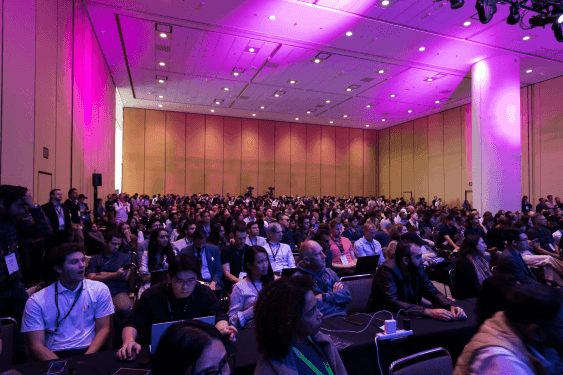
Tomorrow at 8 a.m. PT, it all begins — 10,000+ founders, investors, and tech operators will gather at San Francisco’s Moscone West forTechCrunch Disrupt 2026for three days of ideas, connections, and startups shaping what comes next. If you’ve been waiting to decide, the wait is over — this is your last 24 hours to secure ticket savings of up to $100. Register now to save on your pass, plus bring your co-founder, investor, colleague, or peer at 50% off a second pass of the same ticket type. Bringing a group of four or more? Unlock additional savings with community passes. If you’ve been laid off, you can still join us with a last-minuteExpo+ Pass for just $75. Come to the Expo Hall to discover 300+ exhibiting emerging startups, meet founders, see new products, and make connections across the startup ecosystem. The Expo Hall is where all 10,000+ leaders converge. Come for the200+ sessionsacross six stages, interactive roundtables, and Q&A breakouts to hear from250+ tech leaderswho’ve made waves in the ecosystem, dig into the issues shaping the industry, and watch 20 Startup Battlefield finalists compete live on the Disrupt Stage for the $100,000 prize. Or make the most of both and build your own Disrupt agenda across the three days. That’s what sets Disrupt apart: Founders looking for investors. Investors looking for promising startups. Department heads searching for solutions. Tech leaders seeking fresh ideas. However you choose to experience Disrupt, you’ll be surrounded by people building, funding, buying, and shaping what comes next. And with AI-powered matchmaking in the event app, it’s easier than ever to make meaningful connections that spark new opportunities. TechCrunch Disrupt 2026starts tomorrow, October 13, at 8 a.m. PT, and runs through October 15 at Moscone West.Save up to $100 on your pass, plus get a second pass at 50% off! Bringing a group of four or more? Unlock even more savings. Recently laid off? Join Disrupt with a$75 Expo+ Pass. Don’t pay more at the door for the same event.Get your Disrupt 2026 pass now.
View

This AI startup says it can generate permit-ready blueprints in minutes
Nearly two decades ago, a young college student wrote his final thesis about software capable of generating design documents for school buildings. Al Dram was studying architecture — following in the footsteps of his parents and grandfather — but it was technology that really intrigued him. There was just one problem: The technology his idea required didn’t exist yet. “Then ChatGPT came along,” said Dram, recalling when OpenAI released the generative AI chatbot that uses large language models (LLMs) in November 2022. His old idea suddenly seemed a lot more possible. Within six months, he launched the concept of Blueprints AI, a startup that uses AI to produce code-compliant and permit-ready architectural construction blueprints in minutes from a 2D sketch or PDF. Blueprints AI, which Dram officially incorporated in 2025 in Santa Monica with co-founder Coco Cao, was selected for the2026 Startup Battlefield 200, a cohort of promising early-stage startups that have earned a spot to exhibit at this year’sTechCrunch Disrupt, taking place this week from October 13 to 15 in San Francisco. During that 20-year lead-up to Blueprints AI, Dram earned his bachelor’s and master’s degrees in architecture from the University of Tehran and completed two years of Ph.D. coursework on digital design at the European Graduate School in Switzerland. He moved to the United States and opened an architecture firm in 2018 called Drams Architects. Then, after obtaining a general contractor’s license, he added a construction business in 2021. Dram should have been satisfied. He wasn’t. “I was saying, okay, maybe I can build new projects that change people’s life in that area, but it wouldn’t be a big impact,” he said. “What makes me very excited about technology is the impact, the hours saved, the energy saved of people doing the same thing over and over and over.” Blueprints AI will unveil a more capable second-generation version of its software at Disrupt. Dram and Cao say it will make a big impact because it takes over the repetitive drafting work that fills most of an architect’s day. “It will make better spaces for people because now architects have the time to design,” said Dram. He said architects spend about 80% of their time on drafting and only 20% on design. “I want to flip that to be 20-80.” Dram and Cao met at an AI conference several years ago and combined their skills to build the company. Cao, a data scientist from Hong Kong, handles sales and go-to-market strategy as chief commercial officer. The pair trained their models using eight years of approved drawing sets from Dram’s design and construction firm, which is still in business. Its first-generation software produces architectural construction documents and costs between $3,200 to $8,500 a month, depending on the plan. Custom pricing for enterprises is also available. The startup’s second-generation software will deliver a considerable upgrade. Customers can start with a description or sketch of a project and create blueprints for every aspect of a building at once, including architecture, structural, mechanical, electrical, plumbing, and interior design. Version 2 allows users to design and make changes to the project, an upgrade over the first iteration. Importantly, one design change updates the entire project and is checked against local building codes. Early customers are already using the second version, and Dram said it will become publicly available this week. The startup is already working on a third version of its software that will add in structural analysis and electrical panel design. The technology doesn’t replace licensed architects, according to the co-founders. Licensed professionals still review the documents and affix their seal before submitting them for permits. The judgment stays human, they say. Blueprints AI is targeting two groups with its new software. Professional architecture, engineering, and design firms make up one group, while developers and real estate owners make up another. The startup offers its software as a subscription and may add a one-time flat-fee option for those who just want it for a single project. To learn more about Blueprints, catch hundreds of other startups, and learn from headliners like RJ Scaringe of Rivian and Amjad Masad of Replit,join us at Disrupt,kicking off Tuesday in downtown San Francisco.
View