AI Styling Studio — Infinite avatar looks from just 1 photo.Try it now.

BestAITools

Submit your Tool

8000+ AI tools already listed
8K+Tools
100K+/moViews
25K+/moVisitors

AI NewsxAI burned $6.4B last year — SpaceX’s IPO filing shows why the spending is far from over

xAI burned $6.4B last year — SpaceX’s IPO filing shows why the spending is far from over

6:53 AM IST · May 21, 2026

xAI burned $6.4B last year — SpaceX’s IPO filing shows why the spending is far from over

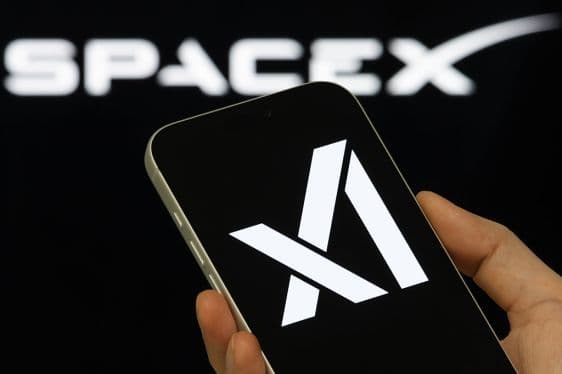
Elon Musk’s xAI lost $6.4 billion from operations on just $3.2 billion in revenue in 2025, according toSpaceX’s IPO filings. And the losses are poised to grow. SpaceX’s filing reveals plans to scale Grok to “multiple trillions of parameters,” a dramatic boost that will likely require significant additional compute spend. Elon Musk merged his AI company xAI — which had previously acquired his social media platform X (formerly Twitter) — with his rocket and satellite companySpaceX in Februarybefore announcing that he’d take the combined company public this year. While AI competitors OpenAI and Anthropic are also eyeing public debuts in 2026, SpaceX’s is expected to be one of the largest in history with a potential $1.75 trillion valuation. Thefilingmarks the first public glimpses into xAI, and therefore X’s, financials. In 2024, xAI recorded a loss of $1.56 billion on $2.62 billion in revenue. By 2025, losses had ballooned to $6.4 billion on $3.2 billion, meaning the gap between what xAI earns and spends is widening. Meanwhile, competitor (and customer) Anthropicreportedlyexpects a 130% revenue jump to $10.9 billion in the second quarter, leading to its first operating profit. The jump in revenue from 2024 to 2025 came in large part from “AI solutions and infrastructure revenue” totaling $465 million, which includes $365 million in X and Grok subscription revenue and $88 million in data licensing. An additional $116 million came from advertising. AI segment capital expenditures climbed from $12.7 billion in 2025 to $7.7 billion in the first quarter of 2026 alone. That’s an annualized capex run rate of about $30.8 billion, more than doubling year-over-year. So far, that investment has resulted in growing, but still limited, user numbers. Per the filing, SpaceX recorded 117 million monthly active users (MAUs) for Grok AI features as of March 2026, out of 550 million total MAUs across Grok and X combined. That implies only one-fifth of the combined ecosystem is actively using Grok AI features. Still, SpaceX intends to soldier on with Grok; its next-generation AI is expected to scale to “multiple trillions of parameters,” which the filing describes as a “step change in reasoning in depth and overall intelligence.” It’s an ambitious target, and one that’s now recorded in the audited annals of SEC history. It’s also a target that will undoubtedly require more investment. The SpaceX filing’s “use of proceeds” section mentions an “expansion of ourAI compute infrastructure.” Per the filing, xAI’s Colossus and Colossus II data centers — both of which came online in 122 days and 91 days, respectively — collectively provide about 1 gigawatt of compute power. These are both used for Grok’s training and inference. SpaceX claims that owning the compute infrastructure and vertically integrating across the AI stack lets them “train and iterate frontier models at lower cost and higher velocity.” Another way that SpaceX might assuage investor fears about spending is by performing training and inference on orbital data centers, which Musk has promised to be a much cheaper alternative to terrestrial data centers. That sci-fi vision isn’t likely to happen for several years, though. The filing says SpaceX intends to begin deploying its orbital AI compute satellites as early as 2028 — the first concrete timeline set for such a launch. “The future of AI will be determined by control of the physical stack,” the filing reads.

read more


Latest AI News

View All News →
Rocket engine startup Impulse raises $500 million to hire people, not AI

Rocket engine startup Impulse raises $500 million to hire people, not AI

Impulse Space, a startup founded by SpaceX engine guru Tom Mueller to build highly-maneuverable spacecraft, announced a $500 million Series D this week that it will use to hire as many as 200 new employees. The round, led by 137 Ventures and BANNER VC, with participation from Founders Fund, Lux Capital, and Linse Capital, reflects investor interest in space and defense tech as the U.S. government hurls cash at national security problems and SpaceX gears up for its IPO. Impulse is focused on in-space mobility. The company has developed a highly maneuverable platform called Mira that is targeted at U.S. Space Force buyers. It’s also building Helios, a vehicle designed to carry satellites rapidly to high orbits after they are dropped off in space closer to Earth. President and COO Eric Romo told TechCrunch that the new capital will help the company build and test more space vehicles and emphasized the company’s hiring plans at a time when aerospace talent is in high demand. While the company’s software teams are adopting AI coding tools, Romo said that when it comes to solving engineering problems in the real world, deep learning models aren’t quite ready for prime time. As the 13th employee at SpaceX back in 2003, Romo’s job was creating computer simulations of the company’s engine design to assess its performance. “I considered it success if I got within 20% of the right answer, because the simulations were just not that good,” Romo said. “They’ve improved, but they’ve not improved that much, and so there’s not really any substitute for designing the thing, analyzing the thing, building it, and then getting it on the test stand.” Romo suspects AI tools for hardware design may be slower to arrive because the right training data is hard to find, compared to the amount of text and code available on the internet to train LLMs. “If you want to go, say, find the best designs for a turbo pump seal package in the world, you’re not going to find those online,” he points out. Impulse started with a focus on propulsion and evolved to build spacecraft, requiring the company to add more expertise in the form of engineers who build vehicle structures and flight computers. One reason the company recently opened an office in Colorado is that aerospace talent has more options today — instead of just going to Los Angeles, engineers can find work in Seattle, Denver, or Texas. Next up for the company is another launch of its Mira spacecraft, which made its third flight late last year. That flight wasn’t without incident — a problem with its navigation system led it to expend much of its propellant early on. Romo said the company is prepping a new Mira mission that is expected to launch before the end of the year.

24 minutes ago

View

ZeroDrift raises $10M to protect AI models from themselves

ZeroDrift raises $10M to protect AI models from themselves

As enterprises troubleshoot their AI systems, governance has emerged as a key challenge. Some are taking a dual approach: One model to handle incoming queries, and another to keep the first one from getting into trouble. That’s the premise ofZeroDrift, a new AI compliance service that on Tuesday said it had raised $10 million in a seed funding round that saw investments from a16z Speedrun, Reign Ventures, PitchDrive Ventures, and U&I Ventures, among others. The company deals entirely with the second part of the system, sitting between AI models and end users to flag and replace any messages that might present a compliance problem. It might seem strange to build an AI tool to correct other AI systems’ mistakes, but ZeroDrift says its system has a few architectural advantages over the models it will be correcting. The system is triggered by conventional programs that deterministically apply known compliance standards like SOC 2 or GDPR, and the LLM only comes into play once a message has been flagged, rewriting a compliant version of the same message. “We’re able to identify, deterministically, what are all the regulated areas, what’s the violation that’s being broken, and then we have LLMs that can do the rewrites,” CEO Kumesh Aroomoogan says. Critically, the company says its entire system can be run with lower latency and more reliability than a conventional LLM. This is what ZeroDrift touts as its primary advantage over big labs like OpenAI and Anthropic, which are often already present in the underlying system. The most obvious use case is for AI chatbots, which are already deployed in front of consumers where there can be serious consequences for rogue answers. But Aroomoogan sees a much larger total addressable market, potentially spanning AI-generated messages that are generated only within automated systems that humans will never see. So far, it’s a relatively small market, but it’s one that will grow as AI proliferates. If the fundraise is any indication, there’s a lot of pent-up demand for such products. “It was probably the fastest fundraising I’ve done in my life,” Aroomoogan says, crediting Andressen Horowitz for helping structure the seed round. “We closed within three weeks, and we will be oversubscribed by 3x on the amount.”

24 minutes ago

View

Cricketer KL Rahul Partners With str8bat to Launch AI-Powered Batting Platform

Cricketer KL Rahul Partners With str8bat to Launch AI-Powered Batting Platform

The partnership brings KL Rahul’s batting philosophy to str8bat’s AI platform allowing players to learn from professional-level insights tailored to their game.

24 minutes ago

View

Coforge Launches Nexa Agentic Platform for Insurers

Coforge Launches Nexa Agentic Platform for Insurers

Nexa aims to automate and streamline underwriting, claims processing, product development and modernisation of legacy systems.

24 minutes ago

View