AI Styling Studio — Infinite avatar looks from just 1 photo.Try it now.

BestAITools

Submit your Tool

8000+ AI tools already listed
8K+Tools
100K+/moViews
25K+/moVisitors

AI NewsWith Gemini 3.5 Flash, Google bets its next AI wave on agents, not chatbots

With Gemini 3.5 Flash, Google bets its next AI wave on agents, not chatbots

2:51 AM IST · May 20, 2026

With Gemini 3.5 Flash, Google bets its next AI wave on agents, not chatbots

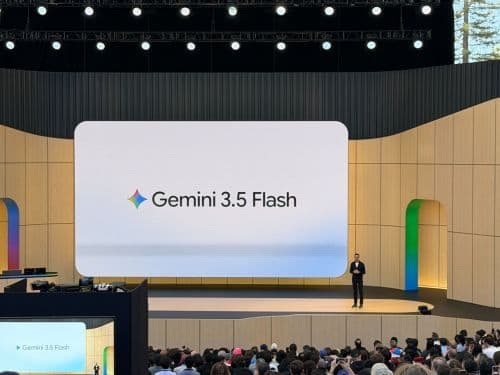
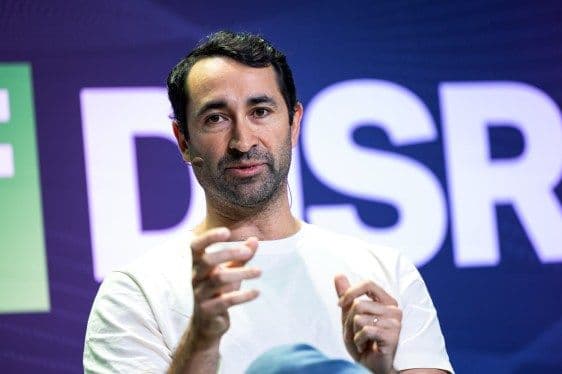
Google launched on Tuesday Gemini 3.5 Flash, a new AI model that the company says is its strongest yet for coding and autonomous AI agents. The model, which was introduced at the company’s annual Google I/O developer conference, can independently execute coding pipelines, manage research projects, and, in internal tests, build an operating system entirely from scratch. The release signals Google’s shift from pitching AI as a conversational tool to AI as an agentic tool. It’s not just answering questions, but planning, building, and iterating on real work with minimal human input. Koray Kavukcuoglu, DeepMind’s chief technologist, told reporters on Monday ahead of the public launch: “3.5 Flash offers an incredible combination of quality and low latency. It outperforms our latest frontier model, 3.1 Pro, on nearly all the benchmarks,” including coding, agentic tasks, and multimodal reasoning. He added that it is 4x faster than other frontier models, a speed that’s ideal for coding and agentic tasks, but that Google has “taken it to another level” by developing an optimized version of Flash that’s 12x faster with the same quality. That speed is central to Flash’s design for agentic work, where multiple AI agents run at the same time on long-running tasks, according to Kavukcuoglu. Onstage at I/O, Google engineer Varun Mohan, demonstrated agents spawning off to work on separate components before coming together to build a full operating system inside Antigravity, the company’s agentic development platform and IDE. Kavukcuoglu said Flash 3.5 was co-developed with Antigravity so that agents could have a “native environment where they can live, work, and execute.” At I/O, Google released Antigravity 2.0, a stand-alone desktop application designed around agent-first development. The gains are showing up beyond demos. Google says 3.5 Flash’s agentic capabilities are already creating impact among partners, like banks and fintechs automating multi-week workflows, or data science teams finding insights in complex data environments. The model can run autonomously for multiple hours, though Tulsee Doshi, Google’s senior director and head of product, said it will at times pause and ask for user input when it hits a decision point or permission issue that requires human judgment. When Google releases its forthcoming 3.5 Pro model, the two are designed to work in tandem. Doshi told TechCrunch that “3.5 Pro becomes your orchestrator, your planner, and then it actually can leverage Flash to be the various sub-agents. I think it really comes down to where do you really want that reasoning power, where you actually want that larger model that can really push on the reasoning side versus where do you have tasks that really do merit good brute force tool use capabilities?” Now, 3.5 Flash is the default model in the Gemini app and in AI Mode in Search globally. At I/O, Google also announced agentic capabilitiescoming to Search, letting users create, customize, and manage AI agents directly on the platform. The new model will also powerGemini Spark, Google’s new personal AI agent designed to run 24/7 to help consumers manage their digital life. Providing that level of AI capability for average consumers comes with scrutiny. Google is currently facing a lawsuit after a man nearly committed a mass casualty event and died by suicide following weeks of chatting with Gemini last year. The implications for harm only grow when making powerful autonomous agents available more broadly. Google says Gemini 3.5 has strengthened cyber and CBRN (chemical, biological, radiological, and nuclear) safeguards and is better calibrated to engage with sensitive questions rather than refuse them outright. Gemini 3.5 Flash is available generally today via Antigravity, the Gemini API, and Gemini Enterprise, as well as through the Gemini app and AI mode in Search.

read more

Latest AI News

View All News →
Anthropic scales Claude Mythos  to critical infrastructure in 15+ countries

Anthropic scales Claude Mythos to critical infrastructure in 15+ countries

Anthropic is expandingProject Glasswing, its joint industry initiative to find and fix critical software vulnerabilities using AI, to about 150 new organizations across more than 15 countries, the companysaidTuesday. The news comes a day after Anthropic said it hadfiled confidentiallyfor an initial public offering, following a$65 billion fundinground at a nearly $1 trillion valuation. Anthropic’s Claude Mythos is at the heart of Project Glasswing. The AI firm dubbed the model its most powerful yet, able to identify thousands of zero-day vulnerabilities over several weeks. In early April,Anthropic gave 50 initial partners, including the U.S. government, access to Claude Mythos Preview to scan their codebases for vulnerabilities and security flaws. The expanded list of organizations with access to Mythos as of today covers power, water, healthcare, communications, and hardware — industries that weren’t “well-represented” in Anthropic’s initial cohort, the company said. Many who will now have access are companies or nonprofits that maintain codebases which other organizations and governments rely upon, Anthropic noted in the blog post. “What each partner has in common is that a successful attack on their codebase could be catastrophic,” the company said. “For most partners, we estimate that a major attack could affect more than 100 million people, with important ramifications for both global and national security.” The expanded group includes organizations in countries friendly to the U.S., including Australia, Canada, France, Germany, Italy, Switzerland, the Netherlands, Spain, Belgium, Sweden, India, Japan, New Zealand, and South Korea, according toFinancial Times, citing a person familiar with the matter. The FT also reported several organizations that have been given access to Mythos, including: U.S.-based identity and security management tool Okta; South Korean companies Samsung, SK Hynix, and SK Telecom; NATO, the U.S.-led military alliance headquartered in Brussels; and the EU’s cybersecurity agency ENISA. TechCrunch has reached out to Anthropic to confirm. Anthropic has said it expects other AI companies to soon develop models as capable as Mythos Preview, which is why the firm is racing to establish safeguards within Project Glasswing. Since releasing Mythos, rival OpenAI released its own cybersecurity-focused model GPT-5.5-Cyber, which it has rolled out to a large group of partners for testing.

20 minutes ago

View

OpenAI launches new Codex tools for white-collar work

OpenAI launches new Codex tools for white-collar work

OpenAI is getting serious about courting enterprise users. On Tuesday, the AI labreleased a new set of capabilities for Codex, meant to expand the agentic tool’s uses in the workplace. Together with the new tools, the company releasedan internal reporton how Codex is being used for knowledge work, finding its uses go far beyond software engineering. “Codex now has more than 5 million weekly active users, up more than 6x since the launch of the desktop app in February,” readsa blog post introducing the report. “While developers remain the largest user group, knowledge workers now represent about 20 percent of users and are growing more than three times as fast.” To further court those users, OpenAI released a set of six plug-ins aimed at specific jobs: data analytics, creative production, sales, product design, equity investing, and investment banking. Available fromwithin the Codex app, each of the new tools bundles integrations, instructions, and context to allow Codex to approximate a specific job. Like any AI tool, the plug-ins will grow more effective with user customization, but they’re meant to be effective tools out of the box. The new tools come after a similar push for agentic plugins from Anthropic, whichlaunched its Enterprise Agents programin February. (A more specific set of finance-oriented agentslaunched in May.) With its traditional consumer focus, OpenAI has been slower to court enterprise customers, only introducing plugin support for Codexin March. Together with the plug-ins, OpenAI introduced a new Sites feature, which allows Codex to output its work product as a hosted interactive website, instead of just a local file. As part of that system, OpenAI is partnering with Wix, Base44, Replit, Lovable, Figma, and Emergent — although the company plans to develop a larger partner ecosystem to support the service. A new Annotations feature will also allow users to designate a specific part of a document or file within Codex, allowing for more specific commands and context operations. The new enterprise features come just three weeks after OpenAI launched a new joint venture for enterprise clients, dubbedthe OpenAI Deployment Company. The venture includes more than $4 billion in funding from global investment firms, with the aim of integrating OpenAI tools more deeply into businesses around the world. “AI is becoming capable of doing increasingly meaningful work inside organizations,” OpenAI Chief Revenue Officer Denise Dresser said in a statement at launch. “The challenge now is helping companies integrate these systems into the infrastructure and workflows that power their businesses.”

20 minutes ago

View

Trump signs narrower executive order on AI oversight after industry objections

Trump signs narrower executive order on AI oversight after industry objections

President Donald Trump signedan executive orderon Tuesday designed to give the government a chance to review powerful AI models before they are released. The order asks certain AI companies to voluntarily submit their new models to the government for testing or evaluation 30 days before releasing the products to the public. A previous draft of the order had called for a voluntary review up to 90 days in advance, though AI industry insiders had pushed for something closer to a two-week window. Trump had been slated to sign the more demanding version of the order in late May, butdelayedafter industry pushback, including from venture capitalist and former White House AI czarDavid Sacks. The president said at the time that he didn’t want to do anything to get in AI firms’ way of leading against China. “Nothing in this section shall be construed to authorize the creation of a mandatory governmental licensing, preclearance, or permitting requirement for the development, publication, release, or distribution of new AI models, including frontier models,” reads the order, published Tuesday. Trump had planned to sign the EO with a bevy of Silicon Valley’s top CEOs in attendance, but ended up signing the current version privately. In addition to the voluntary governmental AI model review, the EO directs the Department of Justice to treat crimes like AI-assisted hacking and unauthorized access as a high-priority enforcement area. This isn’t the president’s first EO on AI. Last December,Trump signed an orderdirecting the development of “one rulebook,” or a national AI policy framework, intended to preempt state AI laws.

20 minutes ago

View

Anthropic Expands Project Glasswing to 150 Organisations Across 15 Countries

Anthropic Expands Project Glasswing to 150 Organisations Across 15 Countries

The new group includes organisations from sectors such as power, water, healthcare, communications and hardware.

20 minutes ago

View