AI Styling Studio — Infinite avatar looks from just 1 photo.Try it now.

BestAITools

Submit your Tool

8000+ AI tools already listed
8K+Tools
100K+/moViews
25K+/moVisitors

AI NewsWith AI, investor loyalty is (almost) dead: At least a dozen OpenAI VCs now also back Anthropic

With AI, investor loyalty is (almost) dead: At least a dozen OpenAI VCs now also back Anthropic

8:26 AM IST · February 24, 2026

With AI, investor loyalty is (almost) dead: At least a dozen OpenAI VCs now also back Anthropic

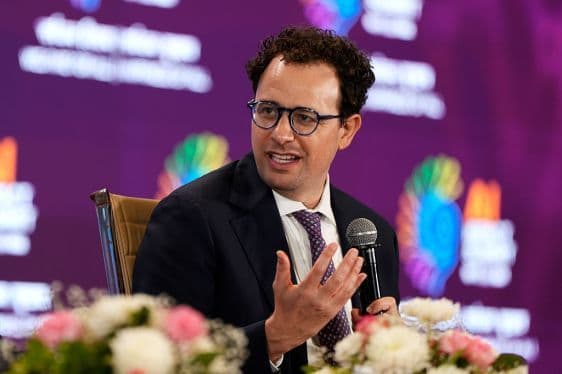
With OpenAI onthe verge of finalizing a new $100 billion round, and Anthropic just closing its own monster$30 billion raise, one thing is clear: The concept of investor “loyalty” is only hanging on by a thread. At least a dozen direct investors in OpenAI wereannouncedas backers in Anthropic’s $30 billion raise earlier this month, including Founders Fund, Iconiq, Insight Partners, and Sequoia Capital. Some dual investments are understandable if they come from the hedge fund or asset manager worlds, where their focus is still largely investing in public stocks (competitors or not). These include D1, Fidelity, and TPG. One of these was a bit shocking. Affiliated funds of BlackRock joined in Anthropic’s $30 billion raise even though BlackRock’s senior managing director and board memberAdebayo Ogunlesiis also on OpenAI’s board of directors. In that world, it’s true that if various BlackRock funds get a chance to own OpenAI stock, they are likely to take it, never mind the personal association of a member of their senior leadership. (BlackRock runs every type of fund, including mutuals, closed-ends, and ETFs). And we all know thehistory of OpenAI and Microsoft’s relationshipand why Microsoft is hedging its bets. Ditto for Nvidia. But venture capital funds have — until now — operated differently. VCs market themselves as “founder friendly” and “helpful,” the idea being that when a VC firm buys a chunk of a startup’s company, the investor will help that startup be successful, particularly against its major rivals. If you are an owner of both OpenAI and Anthropic, who does your loyalty belong to, besides your own investors? Additionally, startups are private companies. They typically share confidential information with their direct investors on their business status — data that isn’t disclosed publicly the way it is with public companies. In many cases, the VCs also take board seats, which carries another level of fiduciary responsibility to their portfolio companies. What makes this particular case even more interesting is that Sam Altman comes from the world of venture capital, as a former president of Y Combinator. He knows the drill. In 2024, he reportedly gave his investorsa list of OpenAI’s rivalsthat he didn’t want them to back. It largely included companies launched by folks who left OpenAI, including Anthropic, xAI, and Safe Superintelligence. Altman later denied that he told OpenAI investors they would be barred from future rounds if they backed his list of perceived rivals. Altman did admit that he said if they “made non-passive investments,” they would no longer receive OpenAI’s confidential business information, according todocuments in the lawsuitbetween Elon Musk and OpenAI,Business Insider reported. AI is also breaking the mold because of the record-breaking amounts of money that the largest AI labs are raising as they experience never-before-seen growth (and never-before-seen data center needs). At some point, when the hat is being passed around, the needs are so great and the possibilities of returns are so large, who can be expected to say no? It turns out that not all venture investors have yet slid down the slippery slope. Andreessen Horowitz backs OpenAI but not (yet) Anthropic. Menlo Ventures backs Anthropic but not (yet) OpenAI, for instance. In fact, in our admittedly not exhaustive research, we found a dozen investors that appear to only have direct investments in one of these companies, not both. Others include Bessemer Venture Partners, General Catalyst, and Greenoaks. (Note: We originally asked Claude to give us the list of dual investors. It got almost as many entries wrong as it got right, so all this for a very cool tech whose work sometimes remains less trustworthy than an intern’s.) Still, as we previously reported, the fact that this longstanding rule has been tossed by some of the most respected firms in the Valley,like Sequoia, is notable. One investor we reached out to simply shrugged and said that as long as the firm doesn’t have a board seat, no one sees the harm in it anymore. Still, conflict-of-interest policies should now become another thing that founders ask about before signing that term sheet, no matter who it’s from.

read more
Latest AI News

View All News →
Mark Zuckerberg tells staff that AI agents haven’t progressed as quickly as he’d hoped

Mark Zuckerberg tells staff that AI agents haven’t progressed as quickly as he’d hoped

Replacing people with AI doesn’t seem to be that easy to do, if Meta can be seen as an example. Reutersreportsthat at an internal town hall Thursday, CEO Mark Zuckerberg told staff that the pace of AI agent development had not “accelerated in the way” executives had previously expected them to. Earlier this year, Metalaid off some 8,000 employees— approximately 10% of its corporate workforce — and reassigned another 7,000 to various AI groups, including one called Agent Transformation,Bloomberg reported. During this week’s meeting, Zuckerberg apparently commented on these job cuts — noting that they were not as “clean” as they should have been. The cuts were made because top officials at the company “were worried that we weren’t going to move fast enough ‌to adapt” to the changing landscape of the tech industry, Zuckerberg reportedly added. The corporate leader also apparently said that the perceived upside of the new AI-focused company structure hadn’t “come to ​fruition yet,” although he said that he believed the company would begin to see improvements from its AI investments during the next three to six months. Several other investigative reports have depictedMeta’s months-old AI unit as a soul-crushing gulag,according to some of the engineers assigned to it. Meta has invested heavily in AI and is expected to spend as much as $145 billion on AI infrastructure this year,Reuters reports. TechCrunch reached out to Meta for comment.

2 hours ago

View

Jersey Mike’s IPO illustrates how bad the AI hype has become

Jersey Mike’s IPO illustrates how bad the AI hype has become

I can’t tell the exact tipping point from realistic excitement over a new technology, to hype, toaww-come-on— but I’m pretty sure when a sandwich shop with Danny DeVito as its public face talks about AI in its IPO documents, we must be getting close. So it is with Jersey Mike’s. Because of investor thirst for all things AI these days, I understand why tech companies feel the need to sprinkle AI dust all over their pitches. This is as true for non-AI startupsraising venture capitalas it is forBending Spoons’ public debut, a company in the business of buying aging, “not-AI” tech companies to rehabilitate. Just for kicks, I took a look at Jersey Mike’s IPO documents to see how far this compulsion may go. Surely a sandwich shop would have no need to mention AI in itsS-1. But lo and behold! The term artificial intelligence and its acronym “AI” were mentioned 22 times. In this case, the company can’t claim to be selling AI software. It sells submarine sandwiches. AI products are what investors are really hungering for (terrible pun intended). Still, it found a way to mention AI in its investor-risk warnings. That may be even more funny. It doesn’t explain what it’s using AI for that could be dangerous to investors, beyond a hand-wave of a phrase, “We are beginning to use AI Technologies in our business.” In all fairness, as a company that operates franchisees, it does rely on software (mentioned 52 times) and data (112 mentions), as all businesses do. Its AI risk warning was boilerplate copy, perhaps even necessary, as such disasters have already happened to other food businesses, likethe half-baked AI inventory toolthat Starbucks rolled out, which couldn’t count and was recently scrapped. Still, I’m going to go out on a limb here and predict that the risk of an AI disaster for a company that produces real-life sandwiches, not AI slop, is about the same as, say, a franchise shop getting hit by lightning. That actuallyhappened, by the way,to a shop in Texas in 2021. Yet weather was only mentioned five times in the S-1. And lightning? Not once.

6 hours ago

View

OpenAI proposed donating 5% of its equity to a US sovereign wealth fund

OpenAI proposed donating 5% of its equity to a US sovereign wealth fund

OpenAI CEO Sam Altman has proposed giving 5% of the company’s equity to a U.S. sovereign wealth fund,the Financial Times reported on Thursday, citing two people familiar with the matter. Under the proposal, other AI companies would donate similar stakes, although significant questions remain about the specifics. According to the FT’s reporting, the donation would be meant to “secure good relations with the administration and … address political blowback.” Similar discussions werereported by CNBC in Juneand were subsequently confirmed by President Trump, who said he had discussed “concepts where pieces could be given to the American public, where the American public essentially becomes a partner with the companies.” At the time, no specific size for the proposed equity stake was given. The talks remain preliminary and, per the FT, it’s likely that any formal action would require congressional approval, which would significantly complicate the matter. The idea of a public AI fund has also been publicly discussed by Altman, and OpenAI has grown increasingly specific in its proposals for how such a fund could be structured. Most recently, a policy paper titled “Industrial Policy for the Intelligence Age,” released by OpenAI in April, proposed a public wealth fund that could invest directly in AI labs and companies deploying their technology. “Returns from the Fund could be distributed directly to citizens, allowing more people to participate directly in the upside of AI-driven growth, regardless of their starting wealth or access to capital,” the document reads. A more aggressive version of the policy wasproposed by Sen. Bernie Sanders(I-VT) in June, calling for a one-time 50% tax on AI company stock, with the collected shares being deposited into a public wealth fund. The bill, called the American AI Sovereign Wealth Fund Act, would apply to all “systemically important” AI companies, including those dealing with data centers, infrastructure, or robotics. Under the proposal, companies like Google and SpaceX that include AI as only part of their business would be allowed to spin off non-AI portions of the company to avoid taxation. The bill has yet to advance to committee.

10 hours ago

View

Anthropic is discussing a new custom chip with Samsung

Anthropic is discussing a new custom chip with Samsung

Back in April, Reutersreported thatAnthropic was toying with the idea of producing its own AI chips as a means of responding to chip shortages. Now, it would appear that the company is getting serious about this idea. On Thursday,The Information reportedthat Anthropic was in contact with Samsung to explore a collaboration around the pending chip. However, Anthropic hasn’t yet decided what the chip will be used for, how it will fit into the server, or how powerful it will be, according to the report. When reached for comment, Anthropic told TechCrunch that a diversified hardware stack that includes chips from Google, Amazon, and Nvidia will continue to be pivotal to its compute strategy. On the topic of a potential Samsung partnership, the company said it had nothing further to add. A number of AI companies have sought to develop custom chips — both as a way to create unique hardware for specific compute tasks and to gain a certain amount of independence from Nvidia, which continues to be the undisputed leader of the chip industry. Anthropic’s announcement may also be a response to one made last week by its key competitor, OpenAI, which hasteamed up with Broadcomto announce its own custom built inference processor, dubbed “Jalapeño.” OpenAI says that the chip is more efficient, demonstrating better performance-per-watt, than other competitor chips.AmazonandGoogleboth offer custom-built TPUs as part of their cloud offering. Samsung is already embedded in the AI industry, and acts as a major partner of Nvidia,producing chipsthat the company needs to train or run its AI models. In turn, Samsung uses Nvidia’s software to manufacture its chips. The duo areworking on an AI chip factoryin South Korea. Samsung has alsodiscussed partneringwith Google on its chip-making efforts.

10 hours ago

View