AI Styling Studio — Infinite avatar looks from just 1 photo.Try it now.

BestAITools

Submit your Tool

8000+ AI tools already listed
8K+Tools
100K+/moViews
25K+/moVisitors

AI NewsWirestock raises $23M to supply creative multi-modal data to AI labs

Wirestock raises $23M to supply creative multi-modal data to AI labs

10:44 PM IST · May 14, 2026

Wirestock raises $23M to supply creative multi-modal data to AI labs

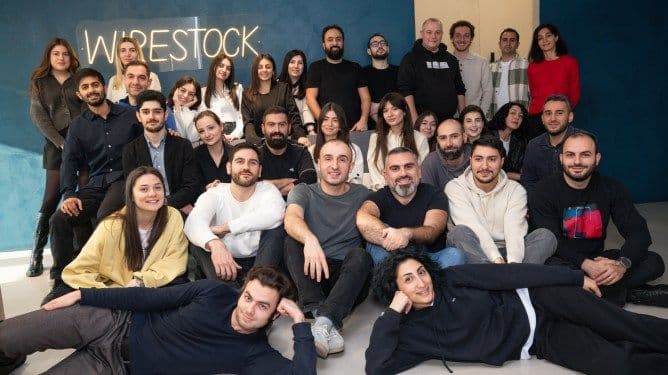
In the past few years, creative marketplaces and platforms have realized that they are sitting on a data goldmine, and they can either use that data to develop AI models themselves or turn it into a source of revenue by licensing it to other AI labs. Wirestock, which previously helped photographers distribute and sell their work on stock photography services like Shutterstock, has taken the latter path. The company pivoted to being a data provider in 2023, and now supplies datasets of images, videos, design assets, and gaming and 3D content to AI labs. Wirestock said its platform has signed up more than 700,000 artists and designers who complete different tasks for data collection, similar to freelancers on platforms like Fiverr. Mikayel Khachatryan, the company’s co-founder and CEO, said Wirestock was transparent about its shift, and allowed artists to opt out of its data supply business (in 2022, the platform had over100,000 photographerson its platform). Khachatryan didn’t specify how many people switched over as data providers for AI, only saying “the majority” did. “Initially, a lot of our deals were just selling what we had off the shelf, like our existing library. But then it turned into a lot of custom requests for content and data, and that created new opportunities for creators, and the platform just took off,” he said. The startup said on Thursday it has raised $23 million in Series A funding to build out the new data supply business. The round was led by Nava Ventures, and saw participation from SBVP (co-founded by Sheryl Sandberg), Formula VC, and I2BF Ventures. Khachatryan says Wirestock currently provides multi-modal data to six of the largest foundation model makers, but he wouldn’t name them. He noted the company currently has an annual run-rate revenue of $40 million and has so far paid out $15 million to its contributors. As part of the transition, the startup had to retrain some of its teams to annotate and label data in detail to make it useful for AI labs. It also had to build sales and enterprise teams to be able to pitch to hyperscalers, and find ways to get more creative assets in areas like 3D modeling. Wirestock currently uses email marketing and referral programs to bring in new contributors. Photographers, videographers, and illustrators can apply to provide data on its website, but they have to complete an unpaid task as a quality check before they're accepted. The company said it uses a mix of AI and human reviews to evaluate all work on the platform. Demand for data supply services is sky high right now as AI labs race to continue improving their models. Companies like Surge, Scale AI, and Mercor have built businesses worth tens of billions seemingly overnight on the back of demand for different kinds of datasets, and a slate of new startups such asMicro1,Human Archive, andHuman Native AIare working with top AI model makers, too. Wirestock wants to focus on providing data for models that aid creative use cases, such as image and video generation. The company is also exploring other modalities like audio and music. Freddie Martignetti, founder of Nava Ventures, said his fund was looking for a startup that was innovating on data procurement and refinement even before it learned about Wirestock. "I think Wirestock has a deep understanding of what foundational models and hyperscalers need in terms of multi-modal data to start creating more human-like systems. The cornerstone of our thesis was that multi-modal data will be increasingly important, not just to create images or videos, but for models to complete real-world tasks," Martignetti told TechCrunch. Wirestock currently employs 60 people, and will use the new funding to hire for research, engineering, and product roles. It is also building enterprise software for AI labs to collaborate on datasets. The funding round brings the startup's total capital raised to about$26 million.

read more


Latest AI News

View All News →
Amazon faces class action lawsuit over Ring facial-recognition feature

Amazon faces class action lawsuit over Ring facial-recognition feature

Amazon wassuedon Monday over alleged privacy violations from its Ring doorbell cameras. The class action lawsuit, filed in Seattle by Virginia resident Charles Sigwalt, claims that Ring’s Familiar Faces feature stores images of passersby without consent. Ring announced the Familiar Faces feature last September and faced pushback from consumer protection organizations like theEFF, as well asSenator Ed Markey(D-MA). But the company moved forward with its plans to launch the feature in December. Familiar Faces lets Ring users identify people who regularly come to their home through AI facial recognition. That way, if a regular guest, like a family member, mail carrier, or neighbor, comes to the door, the device will be able to recognize them and deliver more specific notifications like “Dad is at the door,” rather than “A person is at the door.” Ring users have to opt in to this feature, but privacy advocates noted that the people who walk past these Ring doorbells have not consented to these facial-recognition scans. That same concern is at the center of this class action lawsuit. According to the lawsuit, “Millions of other Americans passed by a Ring ​security camera and unknowingly had their facial recognition information collected.” Amazon did not immediately respond to a request for comment. At the time the feature was released, the company stated that face data is encrypted and never shared; unidentified faces are automatically removed after 30 days. Amazon’s Ring has a record of concerning behaviors regarding user privacy. In 2023, Amazonsettledwith the Federal Trade Commission (FTC) and paid a $5.8 million fine over allegations that the company’s staff and contractors had improperly accessed private videos from women customers; the FTC’s complaint said that every employee had full access to every customer video, even if the worker had no need to access that footage. Ring has also maintained relationships with law enforcement and oncegrantedpolice the ability to request Ring footage from users without a warrant. After airing a Super Bowl ad to introduce Search Party, an AI-powered feature that uses Ring footage to find lost pets, the company facedsimilar backlash. Days later, Ringcanceledits plans to partner with video surveillance company Flock Safety, which hasreportedlygiven footage to ICE and other federal agencies. When Ring founder Jamie Siminoff spoke with TechCrunch after Ring canceled its arrangement with Flock Safety, he indicated that the deal would’ve created too much of a “workload.”

1 hour ago

View

Microsoft offers devs a better way to control AI agent behavior

Microsoft offers devs a better way to control AI agent behavior

As AI agents grow ever more capable, enterprises racing to put them to work across applications, workflows, and products face a new challenge: ensuring an agent does what it’s supposed to do when it’s deployed across different environments. Microsoft is trying to solve this problem with a new open source standard called Agent Control Specification (ACS) that aims to give developers a more consistent and granular way to control what AI agents are allowed to do. The specification essentially lets developer, compliance, and security teams define their own policies for agents to follow. The rules can define what the agent may do, what it must not do, when a human should approve an action, and what evidence should be logged for later review. These policy files are checked at several “interception points” when the agent is off performing a task to make sure it stays within the guardrails. The spec comes as developers are improvising ways to control what their AI sees and does, especially with conversations focusing on AI workflows going wrong due totool misuse, or unintended actions that result in cascading failures. Today, developers might specify instructions in a system prompt, add custom checks in the application code, or use classifiers to catch problematic inputs and outputs. Those approaches work, but they often leave companies with fragmented controls that are hard to audit and harder to reuse across different frameworks, interfaces, and systems. ACS aims to integrate those controls into a common governance layer. Microsoft says the specification can be used to check whether an agent is sticking to guardrails at multiple points in its workflow — before it receives input, before it calls a tool, after a tool returns a result, and before the final response is sent to the user. A policy may allow an action, block it, redact sensitive information, or even ask a person to approve it. Developers can also insert classifiers for inputs and outputs to categorize information, predict outcomes, or determine how an agent should respond; add LLMs with prompts to act as a “judge” for policies; and logic for checking tool calls, tool selection, input accuracy, output usage, and responses. And because these policies can be written as single files, they can be bundled with agents, allowing a security policy to follow an agent across different frameworks and environments. ACS is shipping as an SDK with plug-ins for LangChain, the OpenAI Agents SDK, the Anthropic Agents SDK, AutoGen, CrewAI, Semantic Kernel, Microsoft.Extensions.AI, MCP tools, and more.

1 hour ago

View

Google rolls out fake call detection to protect against AI deepfake impersonation scams

Google rolls out fake call detection to protect against AI deepfake impersonation scams

Google announced on Tuesday that Android is launching fake call detection to protect against AI deepfake impersonation scams. The feature is rolling out globally in Phone by Google to Android 12+ devices this month, starting with Pixel devices. As people increasingly refuse to answer calls from unknown numbers, scammers are shifting their tactics by spoofing trusted phone numbers and using AI deepfake technology to sound like authority figures, family members, or employers. For example, a person may receive a phone call showing the caller ID “Mom,” and the voice may sound exactly like her, but the caller is actually a scammer using AI tools to impersonate her and request money for a fake emergency. The new feature is on by default and works automatically behind the scenes. Google explains that the new feature works kind of like a “digital handshake between devices.” When a contact calls you, and you’re both using Phone by Google, their phone sends a silent confirmation signal to your device to verify the call is legitimate and actually coming from their phone. “If a scammer tries to impersonate your trusted contact, that initial confirmation signal will be missing,” Google explained in ablog post. “Your device will instantly notice this and ping your contact’s actual device to double-check. If their real device says, ‘I’m not making a call right now,’ you’ll get a warning on your screen advising you to hang up immediately.” The tech giant notes that it built this feature on top of Rich Communication Services (RCS), making it possible for other apps and companies to adopt the technology. The launch of fake call detection was announced alongside other updates from Android, including a new Google Photos feature that lets users mix and match outfits and try them on virtually. The new “wardrobe” feature catalogs the clothes you’re wearing in your photo library by turning them into snapshots you can browse on your phone. The feature is rolling out next week to eligible users in the U.S., India, and Brazil with Android 10+. Additionally, Google Play Books is getting a new “Catch me up” feature that lets users jump back into a story with a recap. Users can also highlight a passage to ask questions. These features are rolling out today for select English titles. Google is also making it possible to search entire outfits with its “Circle to Search” feature. Now the feature will be able to find every item in an outfit at once, getting rid of the need to search piece by piece. This update is now available on all Android 14+ devices that have Circle to Search.

1 hour ago

View

Microsoft launches Scout, an OpenClaw-inspired personal assistant

Microsoft launches Scout, an OpenClaw-inspired personal assistant

In the first weeks of 2026, OpenClaw spread through the AI worldlike a sonic boom, introducing many of the industry’s most ambitious technologists to the joy and chaos of an unrestrained AI agent. The project’s momentum tailed off after OpenAI scooped up its founder, but the influence is still being felt — particularly at Microsoft. Now Microsoft is launching Scout, a new AI assistant meant to bring the power and flexibility of OpenClaw into the Microsoft 365 ecosystem. Built on the OpenClaw framework, Scout is an always-on agentic assistant, designed to work alongside the user with a persistent identity and style. Users name their own Scout instance — in my demo, it was named Sebastian — and are meant to give it ongoing feedback on tasks they want automated. As Scout VP Omar Shahine put it, the idea is to create an assistant that actively adapts to the user’s needs. “We all have our interesting quirks in how we work, and people are codifying those patterns into memories and skills that persist in their agent,” Shahine told me. “Then the agent becomes more capable, better understanding you and gaining more agency and exercising judgments.” Available through Microsoft’s Frontier program, which gives early adopters access to experimental Microsoft products, Scout will require a GitHub Copilot subscription to use. Scout is based in the cloud but operates across the desktop and web browser also, so it’s easy to connect to inboxes, calendars, and other systems. Scout will come with prepackaged skills for calendar management and drafting meeting agendas, among others, but Shahine expects the real value to be in the skills users develop on their own. That customization loop — where the assistant learns from user behavior and becomes more capable over time — is the same dynamic that has made consumer AI tools sticky; the more you invest in training your assistant, the harder it is to walk away. The system also comes with extensive security protections, meant to address concerns of unsupervised AI agents running amok, a real issue that OpenClaw surfaced earlier this year when one agent was reported to have acted erratically inside a researcher’s inbox (among other examples). Scout will come with a built-in “policy conformance system” that will continuously check whether the system is operating according to set guidelines, and each conformance check will produce its own audit trail. Scout is part of a range of AI products Microsoft launched at its annual Build developer conference, including the hardware-orientedProject Solara, an update to Copilot, and a new reasoning AI model.

1 hour ago

View