AI Styling Studio — Infinite avatar looks from just 1 photo.Try it now.

BestAITools

Submit your Tool

8000+ AI tools already listed
8K+Tools
100K+/moViews
25K+/moVisitors

AI NewsWill the Pentagon’s Anthropic controversy scare startups away from defense work?

Will the Pentagon’s Anthropic controversy scare startups away from defense work?

4:52 AM IST · March 9, 2026

Will the Pentagon’s Anthropic controversy scare startups away from defense work?

In just over a week, negotiations over the Pentagon’s use of Anthropic’s Claude technology fell through, the Trump administrationdesignated Anthropic a supply-chain risk, and the AI company said it would fight that designation in court. OpenAI, meanwhile, quickly announced a deal of its own, prompting backlash that sawusers uninstalling ChatGPTandpushing Anthropic’s Claude to the top of the App Store charts. Andat least one OpenAI executive has quitover concerns that the announcement was rushed without appropriate guardrails in place. On the latest episode ofTechCrunch’s Equity podcast, Kirsten Korosec, Sean O’Kane, and I discussed what this means for other startups seeking to work with the federal government, especially the Pentagon, as Kirsten wondered, “Are we going to see a changing of the tune a little bit?” Sean pointed out that this is an unusual situation in a number of ways, in part because OpenAI and Claude make products that “no one can shut up about.” And crucially, this is a dispute over “how their technologies are being used or not being used to kill people” so it’s naturally going to draw more scrutiny. Still, Kirsten argued, this is a situation that should “give any startup pause.” Read a preview of our conversation, edited for length and clarity, below. Kirsten:I’m wondering if other startups are starting to look at what’s happened with the federal government, specifically the Pentagon and Anthropic, that debate and wrestling match, and [take] pause about whether they want to be going after federal dollars. Are we going to see a changing of the tune a little bit? Sean:I wonder about that, too. I think no, to some extent, in the near term, if only because when you really try to think about all the different companies, whether they’re startups or even more established Fortune 500s that do work with the government and in particular with the Department of Defense or the Pentagon, [for] a lot of them, that work flies under the radar. General Motors makes defense vehicles for the Army and has done [that] for a very long time and has worked on all electric versions of those vehicles and autonomous versions. There’s stuff like that that goes on all the time and it just never really hits the zeitgeist. I think the problem that OpenAI and Anthropic ran into within the last week is like, these are companies that make products that a ton of people use — and also more importantly, [that] no one can shut up about. So there’s just such a spotlight on them, that naturally highlights their involvement to a level that I think most of the other companies that are contracting with the federal government — and, in particular, any of the war-fighting elements of the federal government — don’t necessarily have to deal with. The only caveat I’ll add to that is a lot of the heat around this discussion between Anthropic and OpenAI and the Pentagon is very specifically about how their technologies are being used or not being used to kill people, or in parts of the missions that are killing people. It’s not just the attention that’s on them and the familiarity we have with their brands, there is an extra element there that I feel is more abstract when you’re thinking about General Motors as a defense contractor or whatever. I don’t think we’re going to see, like, Applied Intuition or any of these other companies that have been framing themselves as dual use back off much, just because I don’t see the spotlight on it and there’s just not the sort of shared understanding of what that impact might be. Anthony:This story is so unique and specific to these companies and personalities in a lot of ways. I mean, there have been a lot ofreally interesting thought piecesabout: What is the role of technology in government? [Of] AI in government? And I think those are all good and worthwhile questions to ask and explore. I think also, though, that this is a very curious lens through which to examine some of those things because Anthropic and OpenAI are not actually that different in a lot of ways or the stances they’re taking. It’snotlike one company is saying, “Hey, I don’t want to work with the government” and one is saying, “Yes, I do.” Or one is saying, “You can do whatever you want.” and [the other is] saying, “No, I want to have restrictions.” Both of them, at least publicly, are saying, “We want restrictions on how our AI gets used.” It just seems like Anthropic is digging in their heels a lot more about: You cannot change the terms in this way. And then on top of that, there also just seems to be a personality layer where, the CEO of Anthropic and, Emil Michael — who a lot of TechCrunch readers mightremember from his Uber days, and is now [chief technology officer for the Department of Defense]. Apparently, they just really don’t like each other.Reportedly. Sean:Yes, there’s a very big “girls are fighting” element here that we should not overlook. Kirsten:Yeah, a little bit. There is, but the implications are a little bit stronger than that.  Again, to pull back a little bit, what we’re talking about here is the Pentagon and Anthropic coming into a dispute in which Anthropic appears to have lost, although I should say they are still very much being used by the military. They are considered a crucial technology, but OpenAI has kind of stepped in, and this is evolving and will likely change by the time this episode comes out. The blowback has been interesting for OpenAI, where we’ve seen a lot ofuninstalls of ChatGPT I think surged 295%after OpenAI locked in the deal with the Department of Defense. To me, all of this is noise to the really critical and dangerous thing, which is that the Pentagon was seeking to change existing terms on an existing contract. And that is really important and should give any startup pause because the political machine that’s happening right now, particularly with the DoD, appears to be different. This isn’t normal. Contracts take forever to get baked in at the government level and the fact that they’re seeking to change those terms is a problem. Loading the player…

read more
Latest AI News

View All News →

Cloudflare’s new policy pushes AI companies to pay for publishers’ content

Cloudflare has just issued the AI industry a new deadline to separate the web crawlers used for traditional search purposes, like Google Search, from those used for AI agents and training. Starting on September 15, 2026, Cloudflare’s default settings will block “mixed-use” crawlers from any pages that host ads, the company announced on Wednesday. That means that the crawlers that blend search, agent use, and training will be blocked from crawling these sites by default, unless the site owner adjusts the settings otherwise. These changes to the defaults will apply to new Cloudflare customers, new sites set up by existing customers, and all existing free customers, the company says. The move could impact how AI model providers are able to access web content for training purposes and to help power their agentic services. Cloudflare points out that most website owners want their content to be discoverable via search and often through AI services as well, but they want protections against having their intellectual property given away for free. Cloudflare specifically calls out the “world’s largest search engine” (clearly a Google reference!) as having access to about “2x more information” than other AI companies because the search giant makes it difficult for customers to remain discoverable without being used for AI. Google has pushed back against this generalization in the past, noting that it provides a bot calledGoogle Extendedthat lets site owners opt out of having their content used for training and AI products and services like Gemini Apps and Vertex API. Its use doesn’t impact a site’s inclusion in Google Search. However, the tech giant’s flagship Googlebot crawls for Search, including AI features like AI Overviews and AI Mode. “Now that the majority of traffic on the Internet is non-human, we must go further and act faster so that a sustainable ecosystem can emerge,” said Cloudflare co-founder and CEO Matthew Prince in his announcement of the news, referring to the recent milestonewhere bots surpassed human traffic onlinefor the first time. That shift was not expected to occur until next year. “Cloudflare’s new tools and partnerships give website owners increased visibility and commercial opportunities and benefit AI companies that have bots with clear and transparent intent. We hope that our proposed default changes encourage mixed-use crawlers to separate out search from agent use and training,” Prince said. While Cloudflare offers a number of products to help userslaunch their own AI systems, the company has also released a range of tools to give publishers more control over their content in the AI era. In recent years, Cloudflarelaunched tools to combat AI bots, including amarketplace that lets websites charge AI bots for scraping, dubbed Pay Per Crawl. The latter is now also evolving into “Pay Per Use,” the company said, which will allow publishers to charge AI companies when their content creates value, not just when it’s fetched. The change could also help conserve publishers’ bandwidth and compute resources for AI model providers, as Cloudflare’s data suggested that over 50% of crawl traffic from AI crawlers is spent re-fetching unchanged pages. To put this into action, Cloudflare is initially working with two partners, Ceramic.ai and You.com. When a publisher opts in, they’re paid when their content appears in Ceramic’s AI search results or when You.com accesses a piece of their premium content. Other AI companies can customize this model for how they work, Cloudflare says.

2 hours ago

View

Ashton Kutcher leaving Sound Ventures to launch new VC firm with Morgan Beller

Ashton Kutcher is stepping away from Sound Ventures — the firm he co-founded with Guy Oseary 11 years ago — to start a separate VC fund, the Wall Street Journalreported. TechCrunch had separately heard that Kutcher was preparing to leave; the WSJ’s report confirms it and adds new detail on his plans with Beller. The actor and investor’s new firm is being co-founded with Morgan Beller — its name hasn’t been made public yet — who until recently was a general partner at seed-focused VC outfit NFX and previously co-led cryptocurrency project Libra at Meta. Beller also spent nearly three years as a partner at Andreessen Horowitz. Kutcher’s exit doesn’t appear to be a sign of trouble at Sound Ventures — investors more often leave firms that are underperforming, and that’s not the case here. The firm, which has backed companies like Brex and Gusto, was also an early investor in OpenAI, Anthropic, and Fei-Fei Li’s World Labs. The split is also notable for what it signals about where AI money is heading next: Sound built its reputation on concentrated, high-conviction bets in category-leading AI labs, while Kutcher’s new fund appears to be chasing the layer underneath those companies — the infrastructure and energy that power them. “He and his fund consistently make it onto [my] rankings of top unicorn investors. An interesting case!” Stanford finance professor Ilya Strebulaev, who tracks top-performing VCs,wrote on X. The actor hasknown OpenAI’s Sam Altmansince Altman founded Loopt — years before the launch of the ChatGPT maker. Kutcher’s departure was partly due to different views on which startup stages to target for investments, with Sound leaning toward backing companies that are already more established, rather than betting on very early-stage startups, according to WSJ. Kutcher and Beller are focused on making early-stage investments in AI infrastructure, energy, and deep tech startups — startups built around hard science and engineering breakthroughs rather than software alone. Despite leaving Sound Ventures, Kutcher will continue to serve as an advisor to the firm. Meanwhile, Oseary and Sound general partner Effie Epstein will advise Kutcher and Beller’s new firm.

2 hours ago

View

Anthropic Introduces Claude Sonnet 5 With Enhanced Agentic Capabilities; Confirms Return of Claude Mythos 5, Fable 5

Anthropic Introduces Claude Sonnet 5 With Enhanced Agentic Capabilities; Confirms Return of Claude Mythos 5, Fable 5

Anthropic has released its latest Claude Sonnet 5 AI model. The new AI model is claimed to bring enhanced agentic capabilities compared to the Claude Sonnet 4.6 model. Moreover, the new AI model is claimed to offer agentic search capabilities at par with the Opus 4.8 model. Along with improved performance, the AI model focuses on cost efficiency. It is claimed to offer similar performance as more capable AI models at lower costs. Separately, the AI giant has announced that the US government has lifted export restrictions on its Claude Mythos 5 and Mythos-class Fable 5 AI models. This comes weeks after the company was asked to restrict the availability of the two AI models for foreign nationals.

6 hours ago

View

Google Expands Gemini Spark to macOS for AI Desktop Automation Across Files, Apps

Google Expands Gemini Spark to macOS for AI Desktop Automation Across Files, Apps

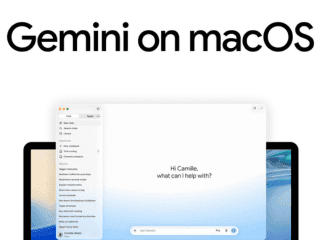
Google on Tuesday announced the rollout of Gemini Spark to the Gemini app on macOS in beta. First unveiled at Google I/O 2026 in May, the personal AI agent can automate multi-step tasks across apps and services. The Mountain View-based tech giant says users can interact with desktop files and apps on Mac computers to eliminate repetitive workflows, including organising documents, creating spreadsheets, and managing schedules. Alongside, Google also introduced new connected app integrations, support for custom Model Context Protocol (MCP), and proactive monitoring capabilities for Gemini Spark.

6 hours ago

View