AI Styling Studio — Infinite avatar looks from just 1 photo.Try it now.

BestAITools

Submit your Tool

8000+ AI tools already listed
8K+Tools
100K+/moViews
25K+/moVisitors

AI NewsWhy Wall Street wasn’t won over by Nvidia’s big conference

Why Wall Street wasn’t won over by Nvidia’s big conference

1:17 AM IST · March 22, 2026
Why Wall Street wasn’t won over by Nvidia’s big conference

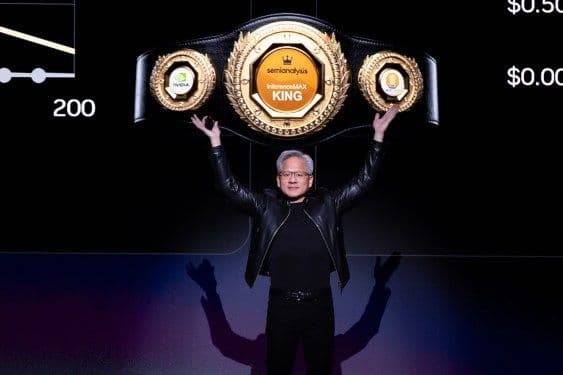
When Nvidia CEO Jensen Huang took the stage for hisannual GTC keynoteon Monday, the $4-trillion-dollar company’s stock started to drop. Wall Street investors, it seems, were unmoved by the leather jacket-clad founder’s bullish 2.5-hour speech. Instead, they placed more weight on AI’s uncertain future and fears of a bubble. The nervousness felt by Wall Street couldn’t be more different than the buzzy atmosphere in Silicon Valley, where confidence, not uncertainty abounds. Huang talked for more than two hours about the company’s latest innovations, from newvideo game graphics techandupdated networking infrastructureto autonomous vehicle deals and a new chip designed with Groq to accelerate AI inference in the Vera Rubin system. He also threw out some eye-watering numbers about Nvidia’s business and beyond. Huang called the AI agent ecosystem a $35 trillion market and the physical AI and robotics industry a $50 trillion market. Huang also said he expects to see$1 trillion worth of purchase ordersfor the company’s Blackwell and Vera Rubin chips — just two of Nvidia’s many products — by the end of 2027. Shouldn’t that make investors excited? It’s not surprising that they aren’t, Futurum CEO Daniel Neuman told TechCrunch. “[AI] is so good, so transformational, and moving so fast that we don’t actually understand what it’s going to mean for all the things that are the societal constructs that we’ve come to understand,” Neuman said. “The markets hate uncertainty. The speed of innovation has actually created a great new uncertainty that I think most people never expected.” Some of that uncertainty comes from misleading information coming out of the market, Neuman said, who added that headlines about low enterprise adoption of AI aren’t painting the full picture — at least, based on conversations he’s having. “Enterprise AI adoption is going to hit inflection and scale very quickly,” Neuman said. “I actually think it’s happening. When you say it’s not, I think what you’re probably saying is the [return on investment] and the receipts are still a little bit undefined and companies are citing the surveys and the reports that are largely six-month-old data. It just takes months to aggregate data.” This sentiment holds weight when you look at Nvidia’s numbers from past quarters. While companies may not be touting their AI ROI, they are increasingly purchasing Nvidia’s tech. The company continues to not only beat its lofty goals and quarterly estimates, but soar past them. Nvidia’s revenue was up 73% year-over-year last quarter. There is no sign that will change any time soon either. For example, just this week Nvidia confirmed Amazon made a plan to purchase 1 million GPUs, alongside other AI infrastructure, by the end of 2027 for Amazon Web Services (AWS),according to reporting from Reuters. Kevin Cook, a senior equity strategist at Zacks Investment Research, agreed with Neuman and joked to TechCrunch that investors not being happy doesn’t change the fact that the whole stock market is propped up by Nvidia, because its tech runs the rails for many of these businesses. “The economy is sort of orbiting around Nvidia,” Cook said. “It’s building this necessary infrastructure. All these different companies in hardware and software and physical AI — even Caterpillar is now physical AI — that are building off of these platforms.” None of this means there isn’t currently an AI bubble or couldn’t be one in the future. But while GTC may not have been a boon for Nvidia’s stock, the broader uncertainty doesn’t seem to be Nvidia’s problem. The company is clearly barreling full steam ahead, bringing seemingly the entire global economy right alongside it. “Nvidia, as you know, is a platform company,” Huang said in his GTC keynote. “We have technology. We have our platforms. We have a rich ecosystem, and today there are probably 100% of the $100 trillion dollars of industry here.

read more

Latest AI News

View All News →
Crypto exchange OKX wants AI agents to hire and pay each other

Crypto exchange OKX wants AI agents to hire and pay each other

When AI agents begin working for people — and increasingly for one another — they will need a way to find jobs, pay for services, and build trust. Crypto exchangeOKXis betting that future is closer than many expect, launching a marketplace where AI agents can hire one another, settle payments autonomously, and build portable on-chain reputations. Called OKX AI, the marketplace opens to developers on Tuesday following a closed beta involving 50 early AI service providers. The marketplace builds on technology OKX previously developed to let AI agents hold digital wallets, make payments using stablecoins, and establish persistent identities. The launch marks OKX’s latest push beyond crypto trading as it seeks to become a broader fintech company. With more than 150 million users globally, OKX is betting the next generation of customers will not just be people or institutions, but AI agents capable of transacting autonomously, giving rise to an emerging “agent economy.” “The coming decade will be defined by one-person companies that generate over a million dollars in annual revenue – because every individual effectively gains an unlimited workforce,” Star Xu, founder and CEO of OKX, told TechCrunch. “Traditional financial infrastructure was built for humans. The agentic economy needs infrastructure designed for autonomous software. That is why we built OKX.AI.” Haider Rafique, OKX’s chief marketing officer and global managing partner, said the company believes “agentic commerce” could become a trillion-dollar market over the next five years, driven by micropayments and autonomous software. The marketplace is aimed at crypto developers building AI applications and solo entrepreneurs looking to automate parts of their businesses with AI agents, Rafique told TechCrunch. The company expects those developers to build applications for the marketplace, allowing other users to access AI-powered tools without having to build them from scratch. Among the early builders are CertiK, whose service lets AI agents assess the security of a crypto wallet or token before executing a transaction, and CoinAnk, which provides live market data on a pay-per-query basis. GenLayer, another launch partner, is bringing dispute-resolution infrastructure to the marketplace to help AI agents resolve contractual disagreements. By using blockchain-based payments and stablecoins, the company says AI agents can settle transactions around the clock, including low-value micropayments that would be impractical using conventional payment rails. Rafique said OKX is applying the same fraud detection, compliance systems, and internally developed infrastructure that underpin its cryptocurrency exchange to the marketplace, which will be rolled out in phases before becoming more widely available. OKX’s launch comes as technology companies and startups race to build the infrastructure that will underpin AI agents, from developer platforms and marketplaces to payment and identity systems. Albert Castellana, co-founder and CEO of GenLayer Labs, said the biggest challenge is not simply enabling AI agents to transact, but helping them discover one another and resolve disputes when things go wrong. “What we’re building is essentially a digital court system,” Castellana told TechCrunch. “The challenge for us is distribution. OKX already has that.” Rafique argues that OKX’s biggest advantage is not simply its technology but its reach. The company believes its existing network of crypto developers and users will help seed the marketplace, while its broader strategy extends well beyond digital assets. In March, Intercontinental Exchange (ICE), the parent company of the New York Stock Exchange, invested about $200 million in OKX at a$25 billion valuation. Rafique said the partnership is part of the company’s ambition to “modernize markets” through tokenization, while OKX AI represents its parallel effort to “modernize money” for an era of autonomous software. Developers access the marketplace through Onchain OS, OKX’s toolkit for connecting AI agents to blockchain-based services. The company said no OKX account is required to get started, and the platform is compatible with AI coding tools including Claude Code, Codex, Hermes, and OpenClaw. Because the marketplace is aimed first at developers rather than retail users, India features prominently in OKX’s plans. The country has emerged as one of the world’s largest hubs for AI and blockchain developers, a community the company hopes to reach even before a broader return of its crypto trading business. In 2024, OKXsuspended its services in Indiaas it navigated the country’s regulatory requirements for crypto exchanges. Rafique told TechCrunch that India remains one of the company’s highest-priority markets, adding that developer products such as OKX AI face fewer regulatory hurdles than spot crypto trading and could help the company reconnect with the country’s builder ecosystem sooner.

8 minutes ago

View

Why Your Database Cannot Handle Agentic Workflows

Why Your Database Cannot Handle Agentic Workflows

The data stack was never built for agents, and the cost of that mismatch is now coming due.

8 minutes ago

View

Merck Opens AI-Focused Global Capability Centre in Bengaluru: Report

Merck Opens AI-Focused Global Capability Centre in Bengaluru: Report

The new Bengaluru facility will become a strategic hub for Merck’s AI, digital and enterprise technology operations, supporting global innovation efforts.

8 minutes ago

View

Can Yogi Adityanath Turn Uttar Pradesh into a GCC Powerhouse?

Can Yogi Adityanath Turn Uttar Pradesh into a GCC Powerhouse?

The state is offering 43 million square feet of ready-to-move office space, dedicated AI and data centre parks, electronics manufacturing clusters, and IT and digital services infrastructure.

8 minutes ago

View