AI Styling Studio — Infinite avatar looks from just 1 photo.Try it now.

BestAITools

Submit your Tool

8000+ AI tools already listed
8K+Tools
100K+/moViews
25K+/moVisitors

AI NewsWhy AI startups are selling the same equity at two different prices

Why AI startups are selling the same equity at two different prices

8:44 AM IST · March 4, 2026

Why AI startups are selling the same equity at two different prices

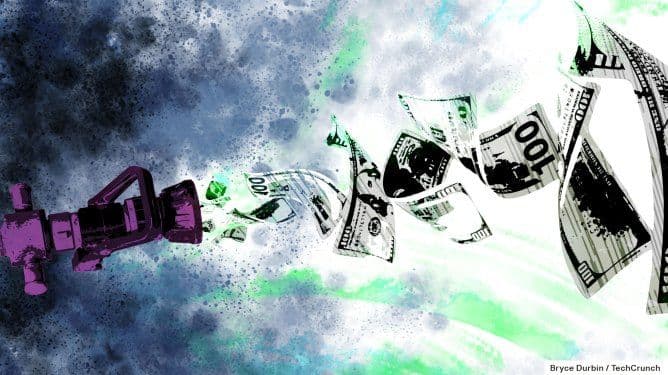
As competition among AI startups heats up, founders and VCs are turning to novel valuation mechanisms to manufacture a perception of market dominance. Until recently, the most sought-after companies raised multiple rounds of funding in quick succession at escalating valuations. However, because constant fundraising distracts founders from building their products, lead VCs have devised a new pricing structure that effectively consolidates what would have been two separate funding cycles into one. Recent rounds employing this scheme include Aaru’s Series A. The synthetic-customer research startup raised a round led by Redpoint, which invested a large portion of its check at a $450 million valuation, TheWall Street Journal reported. Redpoint then invested a smaller portion at a $1 billion valuation, and otherVCs joined at that same $1 billionprice point, according to our reporting. TechCrunch was the first to reportAaru’s financing, including its multi-tiered valuation. The approach allows desirable startups like Aaru to call themselves a unicorn — valued at more than $1 billion — even though a significant portion of the equity was acquired at a lower price. “It is a sign that the market is incredibly competitive for venture capital firms to win deals,” said Jason Shuman, a general partner at Primary Ventures. “If the headline number is huge, it’s also an incredible strategy to scare away other VCs from backing the number two and number three players.” The massive “headline” valuation creates the aura of amarket winner, even though the lead VC’s average price was significantly lower. Multiple investors told TechCrunch that until recently, they had never encountered a deal where a lead investor splits their capital between two different valuation tiers in a single round. Wesley Chan, co-founder and managing partner at FPV Ventures, views this valuation tactic as a symptom of bubble-like behavior. “You can’t sell the same product at two different prices. Only airlines can get away with this,” he said. In most cases, founders offer a discount to top-tier VCs because their involvement serves as a powerful market signal that helps attract talent and future capital. But since these rounds are frequently oversubscribed, startups have found a way to accommodate the excess interest: Rather than turning away eager investors, they allow them to participate immediately, but at a significantly higher price. These investors are willing to pay that premium because it is the only way to secure a spot on a high-demand cap table. Another startup that gave preferential pricing to its lead investor is Serval, an AI-powered IT help desk startup, according to The Wall Street Journal. While Sequoia’s lowest entry price was at a $400 million valuation, Serval announced in December that its $75 million Series B valued the company at $1 billion. While the high “headline” valuation can help recruit talent and attract corporate customers who may view the company as having a stronger market position than its competitors, the strategy is not without its risks. Even though the true, blended valuation for these startups is lower than $1 billion, they are expected to raise their next round at a valuation that is higher than the headline price; otherwise it will be a punitive down round, Shuman said. These companies are in high demand now, but they may face unexpected challenges that will make it very hard for them to justify their high valuations. In a down round, employees and founders end up with a smaller ownership percentage of the company; they can also erode the confidence of partners, customers, future investors, and potential new hires. Jack Selby, managing director at Thiel Capital and founder of Copper Sky Capital, warns founders that chasing extreme valuations is a dangerous game, pointing to the painful market reset of 2022 as a cautionary tale. “If you put yourself on this high-wire act, it’s very easy to fall off,” he said.

read more

Latest AI News

View All News →
Indian tech tycoon bets $30M of his own money to build AI alternative to Microsoft Office

Indian tech tycoon bets $30M of his own money to build AI alternative to Microsoft Office

Indian serial entrepreneur Bhavin Turakhia is making a $30 million personal bet that there is still room for another enterprise AI company. His new venture,Neo, is built on a simple premise: workplace software designed before the AI era cannot simply be upgraded with chatbots — it has to be redesigned from the ground up. Turakhia, 46, is no stranger to ambitious enterprise technology bets. Over the past two decades, he has co-founded companies including Directi, Radix, Titan, and banking software firm Zeta, largely backing them with his own cash before bringing in outside investors. He’s doing the same with Neo. Turakhia told TechCrunch he is bootstrapping this much money because he believes AI marks a technology shift significant enough to justify rebuilding workplace software from scratch. “If you want to build an iPhone, you can’t take the parts of a Nokia and somehow convert it into an iPhone,” he said. Launched internally in April this year, Neo is an enterprise work platform that combines project management, documents, file storage, and AI into a single product. The goal, Turakhia said, is to make AI an active participant in day-to-day work rather than just another assistant employees turn to separately. Turakhia argued most incumbents face a structural disadvantage when adding AI to products designed before generative AI. Neo, he said, was designed from the ground up for AI and is model-agnostic, allowing enterprises to switch between AI models rather than being tied to a single provider. He’s not alone in thinking this way. Investor Chamath Palihapitiya initially launched enterprise AI coding venture 8090 with his own capital beforeraising a $135 million funding roundthis week. Still, Turakhia’s bet comes as enterprise AI has emerged as one of the most competitive areas in technology. Microsoft, Google, and Salesforce are embedding AI across their workplace software. Meanwhile every startup from the giant labs like Anthropic and OpenAI, to the productivity companies like Notion and Superhuman are racing to reshape how businesses use AI in their daily workflow. Turakhia argued enterprise software has never been a winner-takes-all market, saying even a small share of global enterprise AI spending would represent a sizeable company. “Even if we end up with 2% to 5% market share, that’s larger than anything I’ve built so far,” he said. For the past few months, Neo has been in internal use across Turakhia’s companies, including Zeta. The company plans to begin rolling out the software to mid-sized businesses in the coming months, initially targeting knowledge workers across technology, consulting, and professional services firms. Turakhia said Neo’s initial platform was built in three months, with AI extensively used in the development process, work he estimates would have taken more than a year with a much larger engineering team before generative AI. The Bengaluru-based startup currently employs about 45 people, including 18 engineers. Turakhia told TechCrunch that it expects to grow to around 100 employees by the end of the year, with most new hires focused on AI and software engineering.

1 hour ago

View

Exclusive: Ex-GitHub CEO’s $300 Mn Startup Appoints India-Based Field CTO

Exclusive: Ex-GitHub CEO’s $300 Mn Startup Appoints India-Based Field CTO

Karthik Rameshkumar’s appointment places India at the core of Entire's product strategy.

1 hour ago

View

Meta Plans AI Cloud Business to Challenge AWS, Azure, Google Cloud: Report

Meta Plans AI Cloud Business to Challenge AWS, Azure, Google Cloud: Report

Meta is weighing both hosted AI model APIs and raw compute services for developers and enterprises.

1 hour ago

View

SpaceX has an AI device prototype, and it sure sounds phone-ish

SpaceX has an AI device prototype, and it sure sounds phone-ish

Elon Musk’s SpaceX has shown investors a prototype of a “handset-like” AI device,reports The Wall Street Journal. The prototype is reportedly sleeker and slimmer than an iPhone, making us wonder if it’s something between a small touchscreen phone and aRabbit R1. SpaceX reportedly showed the device to investors and stakeholders before it went public, and told them it’s at an early enough stage that the design could still change. Musk has denied the reporting, calling it “utterly false.” SpaceX, alongside sister company Tesla, does have the manufacturing expertise to pull off mass-producing a bunch of AI devices — not to mention access to the chips needed to power any on-device compute. SpaceX has also signaled that it’s keen to expand into wireless, with Starlink Mobile as a potential competitor to Verizon and AT&T. One analyst even went as far as to speculate thatT-Mobile or AT&Twould make fine acquisition targets for the rocket builder, though such a purchase would, undoubtedly, be pricey. It’s also not clear if SpaceX is just throwing spaghetti at the wall or if it will attempt to really mass-produce and market such a device. But one thing that seems clearer is that if OpenAI is doing it, Musk would, perhaps, want to try to do it better. As we know, OpenAI is working with Apple’s former chief design officer Jony Ive on an AI device that CEO Sam Altman has claimed will bemore peaceful than an iPhone. Reports from last autumn suggest the company has been struggling to get the details right, and OpenAI recently brought on another Apple executive to potentially help move things along. News dropped last week that Paul Meade, Apple’s VP in charge of the Vision Pro headset,has joined OpenAI’s hardware team. Like OpenAI, SpaceX’s prototype is reportedly designed to run on a proprietary operating system and integrate technology from xAI, Musk’s AI company that SpaceX acquired earlier this year. This would prevent these new devices from being trapped inside another company’s platforms (like Google’s Android). But the intent also appears to be to create something new, with native AI interfaces. That said, the graveyard is crowded with the unsuccessful launches of AI devices from companies like Humane and Rabbit. A company wanting to sell an AI device does not equate to consumers wanting to buy such a thing. Yet.

9 hours ago

View