AI Styling Studio — Infinite avatar looks from just 1 photo.Try it now.

BestAITools

Submit your Tool

8000+ AI tools already listed
8K+Tools
100K+/moViews
25K+/moVisitors

AI NewsWarren presses Pentagon over decision to grant xAI access to classified networks

Warren presses Pentagon over decision to grant xAI access to classified networks

5:08 AM IST · March 17, 2026

Warren presses Pentagon over decision to grant xAI access to classified networks

Sen. Elizabeth Warren (D-MA) sent aletterto Defense Secretary Pete Hegseth on Monday expressing concern over the Pentagon’s decision to give Elon Musk’s company xAI access to classified networks. “Grok, the controversial AI model developed by xAI, has provided disturbing outputs for users, including giving users ‘advice on how to commit murders and terrorist attacks,’ generating antisemitic content, and creating child sexual abuse material,” the letter reads. Warren said Grok’s “apparent lack of adequate guardrails” could pose “serious risks to the safety of U.S. military personnel and to the cybersecurity of classified systems.” She demanded Hegseth provide information on how the Department of Defense plans to “mitigate these potential national security risks.” Warren isn’t the first to express alarm at Grok, xAI’s controversial chatbot, gaining access to classified systems. Last month, acoalition of nonprofits urgedthe government to immediately suspend the deployment of Grok infederal agencies, including the DoD, after X users repeatedly prompted the chatbot to turn real photos of women, and in some cases children, intosexualized imageswithout their consent. The same day Warren sent her letter, a class action lawsuit was filed against xAI alleging Grok had generated sexual content from real images of the plaintiffs as minors. The letter comes in the aftermath of the Pentagon’s decision tolabel Anthropic a supply chain riskafter the AI firm refused to give the military unrestricted access to its AI systems. Anthropic had been, until recently, the only AI company with classified-ready systems. In the midst of that conflict, the DoD signed anagreement with OpenAIas well as xAI to use the two companies’ AI systems in classified networks, according toAxios. A senior Pentagon official confirmed that Grok was onboarded to be used in a classified setting, but is not yet being used. “It is unclear what assurances or documentation xAI has provided to the Department of Defense about Grok’s security safeguards, data-handling practices, or safety controls, and whether DoD has evaluated those assurances before reportedly allowing Grok access to classified system,” Warren writes. Warren requested a copy of the deal reportedly reached between the DoD and xAI on the use of Grok in classified systems and an explanation of how the department plans to ensure Grok is not exposed to cyberattacks and will “not leak sensitive or classified military information.” (Last week, a former employee of Musk’s Department of Government Efficiency reportedlystoleAmericans’ personal data from the Social Security Administration and stored it on a thumb drive — the latest accusation ofDOGE-related data leakage.) Chief Pentagon spokesperson Sean Parnell said the department “looks forward to deploying Grok to its official AI platform GenAI.mil in the very near future.” GenAI.milis the military’s secure enterprise platform for generative AI that gives DoD workers access to large language models (LLMs) and other AI tools within government-approved cloud environments. It is designed to help with primarily non-classified tasks like research, document drafting, and data analysis.

read more

Latest AI News

View All News →
Google introduces a faster, cheaper image generator with Nano Banana 2 Lite

Google introduces a faster, cheaper image generator with Nano Banana 2 Lite

Google on TuesdayreleasedNano Banana 2 Lite, the newest version of its in-house AI video and image generator. This version is significantly faster and more affordable than its previous release, the company claims. The model has much lower latency and can produce images in four seconds, which makes it a good option if you need to workshop images and produce a large number of them in quick succession, Google says. It costs $0.034 per 1,000 images, which makes it quite affordable for people looking to draft and perfect their content at scale. The release follows last summer’s launch of the original Nano Banana, powered by Gemini 3.1 Flash, and the February release ofNano Banana 2. The latter introduced new powers for the generator, including the ability to create more realistic images. The company also offers Nano Banana Pro, which is described as a more powerful (and more expensive) model for advanced use cases. While Nano Banana 2 is referred to as a “generalist workhorse,” Banana 2 Lite is optimized for high-volume workflows that need to occur at a rapid pace, Google claims. Despite consumer backlash overso-called AI slopcreated by image models, companies continue toinvest heavilyin AI tools that can generate imagery and videos. However, Google often markets its models as convenient tools that can assist with the creation of advertisements. That said, the ties between Hollywood and AI companies continue to tighten — much to the consternation of some creative communities and audiences. Indeed, Googlejust struck a $75 million dealwith the much-beloved indie studio A24 — a partnership that has sufferedsignificantcriticismfrom fans. Nano Banana 2 Lite is now available through Google AI Studio and the Gemini API, as well as Google’s Gemini Enterprise Agent Platform. Google says it serves as a replacement for Nano Banana, which the company now refers to as its “legacy model.” Also on Tuesday, Google announced a wider release of Gemini Omni Flash, which wasinitially introducedat Google I/O earlier this year. Flash costs $0.10 per second of video output. Plus, Google showed off a new demo app, Omni Product Studio, which it says can take static images generated by Omni and transform them into “cinematic e-commerce videos.” “Building with generative media is often about creative iteration,” the company saidin a blog. “With these two models, developers can build comprehensive, end-to-end multimedia experiences that connect rapid image generation with video creation and editing.”

20 minutes ago

View

The DeepMind trio who built a poker AI are now making money for quant hedge funds

The DeepMind trio who built a poker AI are now making money for quant hedge funds

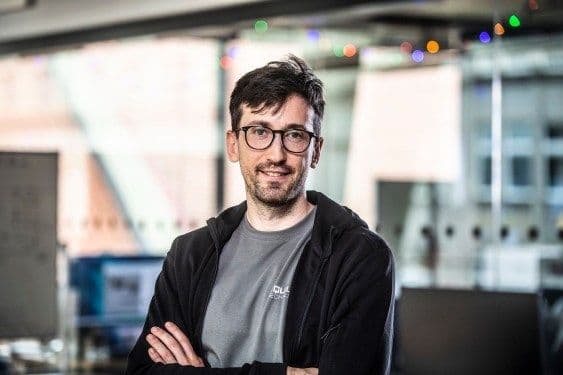
Three former DeepMind researchers who created an AIthat beat humans at pokerhave now applied the same technology to trading stocks — and the bet appears to be paying off. Their Prague-based AI lab,EquiLibre Technologies, is now valued at $500 million after raising an undisclosed-sum Series A, TechCrunch learned. The round was led by Creandum, and, although the VC also declined to disclose the size of the round, vice president Cameron Sellers confirmed that it was the largest single investment the firm “has ever made in one go into a company,” he told TechCrunch.The common denominator between poker and Wall Street is that they are well suited forreinforcement learning, an AI training technique where self-learning models are incentivized by rewards. According to Martin Schmid, EquiLibre CEO, “The nice thing about trading and markets is that the scoring is super simple: how much money did the agent make?” This isn’t just game money. In partnershipwith quant firm Tower Research Capital, EquiLibre’s algorithms have been trading billions in daily volume across the S&P 500 and Nasdaq. The startup claims its agents have been doing well since their rollout on crypto markets in 2025, and now on stock exchanges, with “a perfect record of zero negative months since inception,” meaning they have finished each month with their investments up overall. By applying its AI to quant hedge funds, the startup is in a field where automation is commonplace and, if successful, improvements can quickly turn into cash. That made the startup appealing to Creandum, Sellers said.“The potential total addressable market of trading in the financial markets is one of the biggest on earth, and there are countless funds over the years that have generated quantums of profit that make most venture-backed successes look small,” Sellers said. But he noted that EquiLibre explicitly defines itself as “a lab first, not a finance firm.”Schmid and his two founders — CTO Rudolf Kadlec and CSO Matej Moravcik — don’t have a background in finance, and it is not what drives them, he told TechCrunch. “I’m not doing this because I’m excited about making markets efficient. I’m doing this because we are all excited about building new things that have never been built before, and this is a lot of fun to build,” Schmid said. The prospect of frontier AI by by DeepMind alumni is an area of hot pursuit by VCs as well. Another recent such example is Ineffable Intelligence,which recently raised 1.1 billion. Most of these are based in the U.K., but there arenotable exceptions, including EquiLibre. In the case of EquiLibre’s founding trio, they were visiting PhD students at the Google-owned company’sfirst international AI research office in Edmonton, Alberta, Canada(which Alphabetshut downin 2023.) While there, they builtDeepStack, the first AI program to defeat pro players at no-limit poker, also known asTexas hold ’em. They also worked with professors who are now part of the startup’s high-profile advisory board — including Rich Sutton, who went on to receive theTuring award in 2024for his work on reinforcement learning.To build their startup, EquiLibre’s founders decided to move back to their home country, Czechia. “This is where we had a lot of people we had worked with, and there was a large Czech diaspora at Google and other places,” Schmid said. “These were our friends, so we told them, ‘Hey, guys, we are moving back to Prague, do you want to join us?’”That helped EquiLibre build its initial team back in 2022 and reach its current headcount of 25 people; but according to Schmid, that choice of location keeps paying dividends. Compared to San Francisco, “It’s much easier to keep the good people here, because there’s not a new sexy AI thing happening every two months.” Not that EquiLibre is the only hot AI startup in town.BottleCap AIis based in the same building. Still, this is one of the more notable AI companies in the region for talent. It next plans to scale its compute infrastructure, bringing online what it expects will be one of the largest compute clusters in Central and Eastern Europe (CEE). While the startup also declined to disclose its total funding to date, Schmid said it previously raised two other funding rounds, with pre-seed backers including CEE-focused VC firm Credo, which also backed ElevenLabs and UiPath. According toDealroom data, EquiLibre’s $10 million seed round was led by Blossom Capital at a $140 million valuation. Sellers confirmed that the Series A $500 million valuation was a big jump. But it also comes after the winds have changed favorably for reinforcement learning (RL), including in trading. “When we started, people were skeptical,” said Schmid. But now RL is the standard. “Because we started four years back, we believe we are ahead.” Still, there is a risk that the startup will get leapfrogged by competitors. Trading giant Jane Street, for instance,states it already uses RLwith LLMs, “or whatever else we need to train good models.” It also claims it has “tens of thousands of high-end GPUs,” while EquiLibre is seeking to squeeze more compute out of way fewer chips and “get more from less,” Schmid said. Consideringhow profitable Jane Street is, EquiLibre will have to play its cards well in order to reach its goal to be known as “theAI lab in trading.” But this isn’t poker, and there might be no losers. Says Schmid: “This is not a winner-takes-all market.”

20 minutes ago

View

OpenClaw is finally available on Android and iOS

OpenClaw is finally available on Android and iOS

The automation crustacean is crawling to a mobile device near you. By that I mean, OpenClaw — the free, open source AI agent that captivated the internet earlier this year — is finally available as an app on iOS and Android. OpenClawannouncedthe news on X on Tuesday. On both platforms, you can pair your phone with the OpenClaw Gateway, a kind of routing layer that connects your requests to AI agents and the tools and skills those agents draw on to get things done. The takeaway is that you’ll be able to run your OpenClaw agents from your pocket and, if you’ve programmed them correctly, they may be pretty helpful at getting things done. OpenClaw users haveput it to workin everything from coding to meal planning, although somehave reportedless-than-desirable results. OpenClawwent viralearlier this year around the launch of MoltBook, a social media site purportedly populated entirely by agents. In February, OpenClaw’s creator, Peter Steinberger,announcedthat he had joined OpenAI. The MoltBook spectacle was later revealed to have been partially the work of humans impersonating agents,according to researchers, effective theater that doubled as marketing for OpenClaw (whatever its credibility cost). Still, the stunt pointed toward the agentic future, which has since kept expanding. Agents are now embedded across the AI landscape and are showing up inmore places by the day, including your phone.

20 minutes ago

View

Amazon launches new $1 billion FDE org, following OpenAI and Anthropic

Amazon launches new $1 billion FDE org, following OpenAI and Anthropic

As companies struggle to integrate AI, they’re increasingly ready to bring in outside help — and service providers are launching new purpose-built groups to make sure they get it. On Tuesday, Amazon Web Services (AWS)launcheda new internal organization for AI-focused forward-deployed engineers. Engineers on the new team will embed within companies to deploy purpose-built agents, focusing on fast engagements and customer self-sufficiency. In a post announcing the new org, AWS VP of Frontier AI Francessca Vasquez emphasized that the org would do more than build and maintain requested systems. “Customers leave AWS FDE deployments with both new solutions and new engineering capabilities,” the announcement reads. “Along with agentic systems running in their own AWS environment, they gain lasting AI skills, workflows, and patterns they can use to innovate independently.” Amazon says $1 billion will be committed to the new org, although the figure represents internal Amazon resources rather than a joint venture or conventional investment. Pioneered by Palantir, the forward-deployed engineer (FDE) model has become increasingly popular as a way to manage AI deployments. In a typical FDE system, an engineer from the contracting company (in this case, AWS) works for the client temporarily while the system is being established, allowing them to respond directly as internal opportunities or challenges emerge. In the FDE model, much of the relevant technology can be reused between deployments, while still being tailored to the specifics of each company’s needs and workflows. It also gives the client company an influx of expertise and puts primary responsibility for the deployment in the hands of the contractor. The biggest downside is the labor involved, since it means maintaining a full corps of FDE engineers to install and maintain the company’s technology. Both OpenAI and Anthropichave launched their own FDE joint ventures in recent months, valued at $4 billion and $1.5 billion, respectively. In those two cases, the AI labs were paired with private equity firms, which provided both the capital to launch and connections with client corporations in their portfolios.

4 hours ago

View