AI Styling Studio — Infinite avatar looks from just 1 photo.Try it now.

BestAITools

Submit your Tool

8000+ AI tools already listed
8K+Tools
100K+/moViews
25K+/moVisitors

AI NewsThe best AI investment might be in energy tech

The best AI investment might be in energy tech

9:15 PM IST · March 20, 2026
The best AI investment might be in energy tech

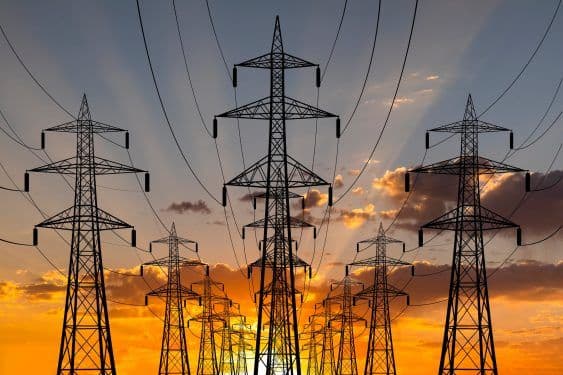
Venture capitalists have placed increasingly bigger bets on AI startups, investingover half a trillion dollarsinto the sector over the last five years. But these days, the smartest AI investment might be in energy,accordingto a report by Sightline Climate. Researchers found that up to 50% of data center projects that have been announced might be delayed. One of the biggest culprits is access to power. Of the 190 gigawatts worth of data centers the company is tracking, only 5 gigawatts are under construction. About 6 gigawatts of data center projects in Sightline’s database came online last year. A far larger percentage — about 36% — saw their timelines slip in 2025. The delays may eventually trickle down and affect large enterprises and other companies that use AI for their businesses. That supply-demand squeeze is an opportunity for investors. Here’s why. Big tech companies like Google and Meta have devoted large parts of their balance sheets to develop solar, wind, and nuclear projects. These companies are also supporting emerging technologies likeForm Energy’s 100-hour batterythrough direct investments and working with utilities to accelerate their adoption. Dozens of startups are pursuing technologies that tackle the power problem. For instance, Amperesand, DG Matrix, and Heron Power are developingnew power conversion technologies, while companies like Camus, GridBeyond, and Texture arebuilding softwarethat can manage the flow of electrons. Power remains one of the most significant constraints for data centers, a shortfall that isn’t likely to change anytime soon. AI is expected to drive data center power consumption up 175% by 2030,accordingto Goldman Sachs. These shortages on the grid are unprecedented in modern times, and they’ve been driving up electricity prices around the country. That has pushed many tech companies to explore alternative ways of powering their data centers. (The Trump administration, sensing a looming political crisis, isurging tech companiesto build their own power source, pay higher rates, or both. Most had already made plans to do so, of course.) Amazon, Google, Oracle, and other large tech companies have been working to minimize their dependence on the grid. Several data centers are being planned using on-site power or a hybrid approach that blends on-site power with a grid connection. The biggest data centers are leading the charge. Less than a quarter of projects that have identified a power source will use on-site or hybrid; together they represent 44% of total capacity. The shift has been driven in part by shortages of power generation equipment — namelygas turbines— and an antiquated grid. That’s opened a path for alternative energy sources. Google’s latest deal to power a new data center in Minnesota shows one approach to tackling the problem. The company willblend wind and solar with a massive 30 gigawatt-hour batteryfrom Form Energy. Google also worked with Xcel Energy to devise a new rate structure that it says will help encourage the adoption of new technologies in the utility’s planning process. Form Energy’s battery isn’t the only example. Grid-scale batteries are poised to take a big bite out of the power market. By the end of this year, the U.S. should have nearly 65 gigawatts of battery storage capacity,accordingto the U.S. Energy Information Administration. Like many of its peers, Form Energy is looking to capitalize on the momentum byraising a $500 million roundin advance of an eventual IPO. Energy supplies are only part of the story. Once the power hits the grid or the data center, it needs to be managed, a task that mostly falls on the humble transformer. Most of today’s transformers use massive blocks of iron wrapped in copper wire, a technology that is about 140 years old. It’s reliable, but it’s becoming far too bulky as data center power demands ramp up. By the time server racks hit 1 megawatt in power density, the power equipment needed to run them will occupy twice as much space as the rack itself, one expert told TechCrunch. It’s why investors have beenflocking to back solid-state transformer startupsrecently, which are hoping silicon-based power electronics can supplant the ancient iron-and-copper tech. They’re more expensive than existing transformers, but they are also flexible enough to replace several pieces of equipment in a data center, which should make them cost competitive. Altogether, the scale of investments in battery and transformer companies has been much smaller than some of the blockbuster rounds we’ve seen in the AI industry. That’s not a bad thing — those rounds are more tractable for investors. Plus, as the world electrifies everything from transportation to heavy industry, the need for power is only going to grow, giving investors a hedge against an AI bust. Maybe the best AI investment isn’t in AI at all.

read more


Latest AI News

View All News →
Crypto exchange OKX wants AI agents to hire and pay each other

Crypto exchange OKX wants AI agents to hire and pay each other

When AI agents begin working for people — and increasingly for one another — they will need a way to find jobs, pay for services, and build trust. Crypto exchangeOKXis betting that future is closer than many expect, launching a marketplace where AI agents can hire one another, settle payments autonomously, and build portable on-chain reputations. Called OKX AI, the marketplace opens to developers on Tuesday following a closed beta involving 50 early AI service providers. The marketplace builds on technology OKX previously developed to let AI agents hold digital wallets, make payments using stablecoins, and establish persistent identities. The launch marks OKX’s latest push beyond crypto trading as it seeks to become a broader fintech company. With more than 150 million users globally, OKX is betting the next generation of customers will not just be people or institutions, but AI agents capable of transacting autonomously, giving rise to an emerging “agent economy.” “The coming decade will be defined by one-person companies that generate over a million dollars in annual revenue – because every individual effectively gains an unlimited workforce,” Star Xu, founder and CEO of OKX, told TechCrunch. “Traditional financial infrastructure was built for humans. The agentic economy needs infrastructure designed for autonomous software. That is why we built OKX.AI.” Haider Rafique, OKX’s chief marketing officer and global managing partner, said the company believes “agentic commerce” could become a trillion-dollar market over the next five years, driven by micropayments and autonomous software. The marketplace is aimed at crypto developers building AI applications and solo entrepreneurs looking to automate parts of their businesses with AI agents, Rafique told TechCrunch. The company expects those developers to build applications for the marketplace, allowing other users to access AI-powered tools without having to build them from scratch. Among the early builders are CertiK, whose service lets AI agents assess the security of a crypto wallet or token before executing a transaction, and CoinAnk, which provides live market data on a pay-per-query basis. GenLayer, another launch partner, is bringing dispute-resolution infrastructure to the marketplace to help AI agents resolve contractual disagreements. By using blockchain-based payments and stablecoins, the company says AI agents can settle transactions around the clock, including low-value micropayments that would be impractical using conventional payment rails. Rafique said OKX is applying the same fraud detection, compliance systems, and internally developed infrastructure that underpin its cryptocurrency exchange to the marketplace, which will be rolled out in phases before becoming more widely available. OKX’s launch comes as technology companies and startups race to build the infrastructure that will underpin AI agents, from developer platforms and marketplaces to payment and identity systems. Albert Castellana, co-founder and CEO of GenLayer Labs, said the biggest challenge is not simply enabling AI agents to transact, but helping them discover one another and resolve disputes when things go wrong. “What we’re building is essentially a digital court system,” Castellana told TechCrunch. “The challenge for us is distribution. OKX already has that.” Rafique argues that OKX’s biggest advantage is not simply its technology but its reach. The company believes its existing network of crypto developers and users will help seed the marketplace, while its broader strategy extends well beyond digital assets. In March, Intercontinental Exchange (ICE), the parent company of the New York Stock Exchange, invested about $200 million in OKX at a$25 billion valuation. Rafique said the partnership is part of the company’s ambition to “modernize markets” through tokenization, while OKX AI represents its parallel effort to “modernize money” for an era of autonomous software. Developers access the marketplace through Onchain OS, OKX’s toolkit for connecting AI agents to blockchain-based services. The company said no OKX account is required to get started, and the platform is compatible with AI coding tools including Claude Code, Codex, Hermes, and OpenClaw. Because the marketplace is aimed first at developers rather than retail users, India features prominently in OKX’s plans. The country has emerged as one of the world’s largest hubs for AI and blockchain developers, a community the company hopes to reach even before a broader return of its crypto trading business. In 2024, OKXsuspended its services in Indiaas it navigated the country’s regulatory requirements for crypto exchanges. Rafique told TechCrunch that India remains one of the company’s highest-priority markets, adding that developer products such as OKX AI face fewer regulatory hurdles than spot crypto trading and could help the company reconnect with the country’s builder ecosystem sooner.

2 hours ago

View

Why Your Database Cannot Handle Agentic Workflows

Why Your Database Cannot Handle Agentic Workflows

The data stack was never built for agents, and the cost of that mismatch is now coming due.

2 hours ago

View

Merck Opens AI-Focused Global Capability Centre in Bengaluru: Report

Merck Opens AI-Focused Global Capability Centre in Bengaluru: Report

The new Bengaluru facility will become a strategic hub for Merck’s AI, digital and enterprise technology operations, supporting global innovation efforts.

2 hours ago

View

Can Yogi Adityanath Turn Uttar Pradesh into a GCC Powerhouse?

Can Yogi Adityanath Turn Uttar Pradesh into a GCC Powerhouse?

The state is offering 43 million square feet of ready-to-move office space, dedicated AI and data centre parks, electronics manufacturing clusters, and IT and digital services infrastructure.

2 hours ago

View