AI Styling Studio — Infinite avatar looks from just 1 photo.Try it now.

BestAITools

Submit your Tool

8000+ AI tools already listed
8K+Tools
100K+/moViews
25K+/moVisitors

AI NewsTechCrunch Mobility: Uber enters its assetmaxxing era

TechCrunch Mobility: Uber enters its assetmaxxing era

10:03 PM IST · April 19, 2026
TechCrunch Mobility: Uber enters its assetmaxxing era

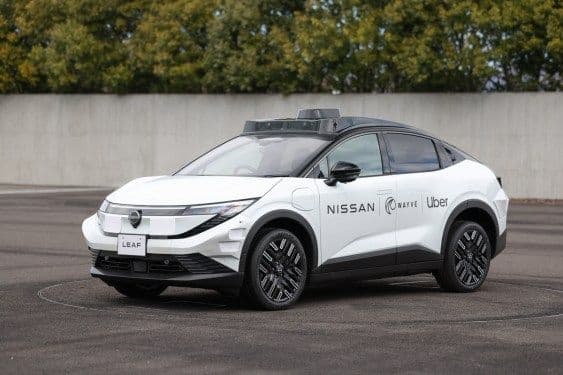
Welcome back to TechCrunch Mobility, your hub for the future of transportation and now, more than ever, how AI is playing a part. To get this in your inbox, sign up here for free — just clickTechCrunch Mobility! A few weeks ago, I wrote about howUberseemed to beeverywhere, all at oncein the emerging autonomous vehicle technology sector. The Financial Times has now put a number on it. The FT calculated that Uber has committedmore than $10 billionto buying autonomous vehicles and taking equity stakes in the companies developing the tech, according to public records and discussions with folks behind the scenes. About $2.5 billion of that is in direct investments, with the remaining $7.5 billion to be spent on buying robotaxis over the next few years, the outlet reported. We’ve reported on Uber’s numerous investments and deals with autonomous vehicle companies across drones, robotaxis, and freight. Some of its investments includeWeRide,Lucid and Nuro,Rivian, andWayve. This rather large number (and particularly that $7.5 billion) got me thinking about another transformative era in Uber’s history and how it has visited these asset-heavy shores before. Uber might have started with a plan to be asset light, but for a brief period it did quite the opposite. Uber went on a moonshot spree between 2015 and 2018. It launched electric air taxi developer Uber Elevate and the in-house autonomous vehicle unit Uber ATG, which would be boosted by itsacquisition of Ottoin 2016. It also snapped upmicromobility startup Jumpin 2018. And then in 2020, Uber pulled the asset-heavy rip cord, ostensibly leaving all of those moonshots behind. Ubersold Uber ATGto Aurora,Jump to Lime, andElevate to Joby Aviation. But it didn’t completely divest; it kept equity stakes in all of them. Uber is now entering into a new and different asset-heavy era. It’s not plunking down millions, or even billions, to develop the technology in-house, although I’m sure folks there would be quick to pipe up that there is always R&D happening over at Uber. Instead, it appears to be focused on owning (or perhaps leasing) the physical assets. That could mean interesting line items on Uber’s balance sheet in the future. Owning fleets of robotaxis built byothercompanies might not have been the original vision of Uber, or its former CEO Travis Kalanick, who has said the companymade a mistakewhen it abandoned its AV development program. But this new approach could still get it to the same end point. Earlier this month, I interviewedEclipsepartnerJiten Behlabout the venture firm’s new$1.3 billion fundand where that money might be headed. The firm, as I wrote, intends to incubate more startups (e.g., it was behind theRivian spinout Also). Behl wouldn’t give me details, only stating, “We’re definitely working on a couple of really cool ideas.” He also said Eclipse is particularly interested in startups that work across enterprises. Thanks to one little bird and some document diving by senior reporter Sean O’Kane, it looks like a seed round announcement is imminent for a San Francisco-based startup working on an autonomous hauler that I’ve been told doesn’t have a driver cab. This sounds similar to what Einride has built, but since we haven’t seen it, we’ll have to wait. The company’s roster isn’t big, but it is chock-full of Silicon Valley tech elite, including a founder who was at Uber ATG, Pronto, and Waabi. Stay tuned for more. Got a tip for us? Email Kirsten Korosec atkirsten.korosec@techcrunch.comor my Signal at kkorosec.07, or email Sean O’Kane atsean.okane@techcrunch.com. Slateis back with more capital as it prepares to put its first affordable pickup trucks into production by the end of 2026. The electric vehicle startup, which got its start with backing from Jeff Bezos, raised another$650 millionin a Series C funding round led by TWG Global. Keep your eye on TWG. This is the firm run by Guggenheim Partners chief executive (and Los Angeles Dodgers owner) Mark Walter and investor Thomas Tull. Slate has raised about $1.4 billion to date, and its previous investors include General Catalyst, Jeff Bezos’ family office, VC firm Slauson & Co., and former Amazon executive Diego Piacentini, asTechCrunch first reported last year. Other deals that got my attention … Glydways, a San Francisco-based startup developing personal autonomous pods designed to operate on dedicated 2-meter-wide lanes in cities, raised $170 million in a Series C funding round co-led by Suzuki Motor Corporation, ACS Group, and Khosla Ventures. Existing investors Mitsui Chemicals and Gates Frontier and new investor Obayashi Corporation also participated. But wait,there’s more. GMandFordare reportedly talking to the Pentagon about whether the auto industry can help the military revamp its procurement program and find cheaper, faster ways to buy vehicles, munitions, or other hardware, theNew York Times reported, citing anonymous sources. Loop, a San Francisco-based startup,raised $95 millionin a Series C funding round led by Valor Equity Partners and the Valor Atreides AI Fund, and includes investments from 8VC, Founders Fund, Index Ventures, and J.P. Morgan’s late-stage fund, Growth Equity Partners. Monarch Tractor, the startup developing electric, autonomous tractors, has moved on to (ahem) a different pasture. The startup’s assets have beenacquired by Caterpillarafter struggling to pivot to a software services business. Uberis increasing its stake inDelivery Heroby 4.5%, theFinancial Times reported. Uber agreed to buy about 270 million euros in shares from Prosus, the Dutch investment group and Delivery Hero’s largest shareholder. Doug Field, the high-profile executive who shapedFord’s electric vehicle and technology strategies over the past five years,is leaving. Notably, Ford is shaking up the organization as well, creating a “product creation and industrialization” team to be led by COOKumar Galhotra. Any guesses where Field is headed next? Perhaps he’ll return to Silicon Valley. Lightship, the all-electric RV startup, isexpandingits Colorado-based factory by another 44,000 square feet, which will allow it to quadruple its manufacturing capacity. Rivianand battery recycling and materials startup Redwood Materials partnered years ago. We’re now seeing the fruits of that relationship. Redwood is installing battery energy storage at Rivian’s factory in Illinois. The catch? Redwood is using100 second-life Rivian battery packs, which will provide 10 megawatt-hours (MWh) of dispatchable energy to reduce cost and grid load during peak demand periods. Teslacreated a new self-driving app that makes it easier for owners to subscribe to its Full Self-Driving software andsee statisticson how — and how often — they use it. This may not be huge news, but it did catch my eye because of the gamified qualities of these new stats. Waymo, as per usual, has a few news items this week. The Alphabet-owned company started testing its autonomous vehicles on public roadsin London. It also removed its waitlist in Miami and Orlando to scale its robotaxi services in the two cities. This newsletter isn’t my only project that is leaning more heavily into robotics. My podcast, theAutonocast, is too, as the worlds of autonomous vehicles, AI, and robotics mash together.Check out this interviewwithFoxglovefounderAdrian MacNeil, who previously worked at Cruise.

read more


Latest AI News

View All News →
Google DeepMind bets $75M on AI’s future in Hollywood with A24 deal

Google DeepMind bets $75M on AI’s future in Hollywood with A24 deal

A new alliance has formed between a Hollywood studio and a tech juggernaut. On Monday, Google DeepMind announceda $75 million investment (per the WSJ)into popular indie film studio A24, known for hits like “Marty Supreme,” “Everything Everywhere All At Once,” and the latest blockbuster “Backrooms.” Google DeepMind is billing the investment as a partnership, a“first-of-its-kind”that will see the two companies create AI tools for filmmaking, with Google DeepMind receiving “feedback and guidance from leading artists.” A24 has recently worked with big names like Timothée Chalamet and Anne Hathaway on several projects. “We believe the best way to develop tools that empower artists is to work directly with them,” Demis Hassabis, Google DeepMind co-founder and CEO, said in a press release. “By collaborating with filmmakers and industry leaders like A24 from the beginning, we can build new AI features to support artists in authentic, meaningful storytelling that helps enable their creative vision.” Though controversy has swirled around Hollywood over the use of AI in movies, A24 would be far from the first studio to explore integrating AI into the creative process. Netflixannounced earlier this year that it was buyingBen Affleck’s company, InterPositive, which creates AI tools for filmmakers. Last year, meanwhile, Amazon’sMGM Studios launchedan AI unit focused on developing tools for television and movie production.

58 minutes ago

View

Nvidia wants to cut data center water use, but that’s not the same as fixing AI’s water problem

Nvidia wants to cut data center water use, but that’s not the same as fixing AI’s water problem

Nvidia just announced a warm-water cooling system that it says can dramatically reduce the amount of water a data center uses — eliminating “pretty much all water usage” inside the data center, according to an Nvidia executive in apress release. “The water consumption challenge for data centers is largely solved,” Josh Parker, chief sustainability officer at Nvidia, recentlytoldAxios. But that’s only part of the water story. As long as AI data centers run on fossil fuels — a choice tech companies areincreasingly making— the savings stop at the data center’s walls. The core issue is how Nvidia measures data center water use. According to its blog post, the company essentially draws a line around the data center. Anything inside gets counted, and anything outside gets ignored. To be fair, Nvidia’s system does appear to deliver on its facility-level promise — the coolant runs in a closed loop, filled once and recirculated for the life of the facility, meaning no new water is consumed to cool the chips. In favorable climates, the company says, that can amount to a 100% reduction in on-site water use. TechCrunch has asked Nvidia to clarify the matter, and we’ll update this article if we receive a reply. The problem is, water use outside of the data center — primarily in electricity generation and chip manufacturing — candoubleortriplethe total water footprint of a facility. That means Nvidia’s solution addresses about a quarter to a third of AI data centers’ total water consumption. The new system is clever, pumping coolant into racks at 45°C (113°F). That’s hot for humans but not for computer chips. After passing through a server, the coolant emerges at 55°C (131°F), Nvidia said, bringing a significant amount of heat away from the hardware. At that temperature, the outside air in most climates can draw heat off passive radiators without evaporative cooling or, in some cases, fans. A data center without fans or chillers would not only use less water, but it would also be more efficient and quieter. But no data center can operate without an electricity supply, and many types of power plants are themselves major water consumers. Fossil fuel power plants are one of the largest water users in the U.S., consuming 2.7 billion gallons per day,accordingto the U.S. Geological Survey — most of it for evaporative cooling. Natural gas power plants use 1.17 liters of water for every kilowatt-hour of electricity they generate, according to arecent study. Coal plants are even more water-intensive, using 2.2 liters per kilowatt-hour. Fossil fuel power plants collectively generate about half of all data center power today,accordingto the IEA. Hydropower dams, which supply around 10% of data center power, don’t consume water in the same direct way, but evaporation from their reservoirs amounts to 6.8 liters lost per kilowatt-hour generated. Geothermal, a source that tech companies are starting to explore, varies widely — it can be higher or lower depending on the specific technology. Some enhanced geothermal startups, like Fervo, havepledgedto use mostly “degraded” water that would otherwise go unused. Wind and solar power, on the other hand, use vanishingly small amounts of water, about 0.01 liters and 0.03 liters per kilowatt-hour, respectively — figures that include the water needed for manufacturing and cleaning solar panels. While renewables are providing a growing share of new electricity capacity, natural gas and coal are expected to provide more than 40% of new electricity needed to meet data center demand through 2030, the IEA projects. Without major changes to that trajectory, data centers will still consume large amounts of water, regardless of what Nvidia does inside its walls.

58 minutes ago

View

AI chipmaker Groq confirms $650M raise, re-staffs after Nvidia’s $20B not-acqui-hire deal

AI chipmaker Groq confirms $650M raise, re-staffs after Nvidia’s $20B not-acqui-hire deal

What does an AI company do after one of those not-acqui-hire deals, where a rival pays investors a hefty IP “licensing” fee while poaching its critical talent? For AI chipmaker Groq, the answer appears to be raise more money from investors — who were said to have profited handsomely after a deal with Nvidia in December — hire more talent, and pivot. On Monday, Groqannounceda new $650 million funding round, confirmingearlier reports. The raise comes roughly six months after Nvidia signed a non-exclusive licensing agreement for Groq’s technology and hired away founder and CEO Jonathan Ross, president Sunny Madra, and other employees. Groq did not disclose its new valuation. It was last valued at $6.9 billion following a$750 million roundin September. Ross, who came from Google, was known in the AI chip world for helping create Google’s AI chip, theTensor Processing Unit. He teamed up with another Google engineer, Doug Wightman, to launch Groq a decade ago. Wightman stayed on after the Nvidia deal and became CEO. Groq created a chip it called a language processing unit (LPU), used for inference, and sold it as part of a cloud service or an on-premises hardware cluster. With Nvidia now owning the IP for LPUs, the GPU giant announced its own hardware cluster, theNvidia Groq 3 LPXinference hardware system, at its GTC event in March. In response, Groq has pivoted to its neocloud business, it said. That business had been run by Madra after Groq acquired his AI data analytics company Definitive Intelligence, in 2024. It has grown to 13 data centers across North America, Europe, the Middle East, and APAC and is serving over five million developers and thousands of AI companies, processing trillions of tokens each week, the company says. Groq has also been hiring replacement execs. It added Alan Rice as COO, previously at xAI and Meta, after a career in the U.S. Navy.It also added an entrepreneurial duo, Sinclair Schuller, who joins as CTO, and Rakesh Malhotra as CPO. They previously worked together at Apprenda, an enterprise cloud software company founded by Schuller; they then co-founded Nuvalence, a software-engineering firm acquired by EY in 2024. Malhotra previously spent about a decade working on Microsoft’s cloud products. Whether Groq can succeed after almost selling itself depends on how competitive its inference cloud can remain, now that the key hardware IP is shared with Nvidia. Certainly, it has a shot. Inference-related tech is an area experiencing tremendous demand (andVC investment). But it’s also seeing increasing innovation and competition. Still, others seem to have survived these sorts of deals. Scale AI’s CEO Jason Droege toldForbesthat business has reboundedafter Meta did a $14.3 billion not-acqui-hireabout a year ago, and that the company is on track to do $1 billion in revenue. In the big-money game of AI, anything seems possible.

58 minutes ago

View

The AI world is getting ‘loopy’

The AI world is getting ‘loopy’

On Friday, Claude Code creator Boris Cherny made an appearance at Meta’s @Scale conference and, surprisingly, the first question from the audience was about loops. “Are loops the next hype cycle,” the questioner asked, “or are they for real?” Cherny’s answer was an emphatic, “Yes, they’re for real.” “Two years ago, we wrote source code by hand. We started to transition so agents write the code. And now we’re transitioning to the point where agents are prompting agents that then write the code,” he continued. “As big as the step from source code to agents was, loops are just as important and as big a step.” Later in the talk (around the 32:00 mark in the YouTube video posted above), Cherny got specific about the loops he keeps running in his own work. One agent is continually looking for ways to improve the code architecture, while another looks for duplicated abstractions that can be unified. They submit pull requests like any other coder, and since the code is constantly changing, they never stop running. It’s a powerful idea, particularly with a figure as significant as Cherny behind it. With the shift to agentic AI, the focus for most users has been managing their agents as well as possible: establish clear goals, check in on discrete units of progress, and don’t let them stray too far beyond the prompt. The loop takes it a step further by authorizing a swarm of agents to work continuously in the background, endlessly. It’s a lot of trust to place in AI — but with models getting better fast, it could be the next step in getting AI to handle real work. The first thing to recognize is that this isn’t entirely new. Recursive loops — functions that call themselves in order to repeat an action, along with a condition that stops the loop — are a mainstay of intro computer science courses. These loops are following a non-deterministic logic — that is, it’s a subagent that chooses when to stop the loop instead of a clear condition — but the same basic approach is at work. As soon as programmers started using AI to complete tasks, some version of the recursive loop, with AI overseeing AI, was bound to come up. Unlike classic computing, agentic loops can be maddeningly simple. One of the most popular tricks isthe Ralph Loop(named for Ralph Wiggum), which basically sums up all the work that the model has done and asks if it’s accomplished its goal. It’s a way of dealing with AI models getting lost as they run for too long — essentially bouncing the model back and forth until the task is complete. Another way to think of loops is as part of the general push for more test-time compute. As OpenAI researcher Noam Brown observedearlier this month, contemporary models can solve nearly any problem if you throw enough compute at them. That means one way to ensure a problem gets solved is to just keep throwing compute at it until it’s finished. That’s particularly true for hill-climbing problems like improving a code base, where the model can just keep making incremental improvements until it reaches a given threshold. Or, as in Cherny’s example, it can just keep making incremental improvements for as long as there’s compute to spend on it. If that sounds expensive, it should. Like agentic AI before it, AI loops burn through tokens a lot faster than simple Q&A chatbots — and because the point is to keep the loop running all the time, there’s no ceiling to how much you can spend. That’s fine for Anthropic, which is ultimately in the token-selling business, but for everyone else, it may be a pricey way to work. Still, depending on the problem the agentic loop is trying to solve, and the right setup that allows for oversight of token spend, drift, and other classic AI issues, the benefits could be staggering enough to outweigh the costs.

58 minutes ago

View