AI Styling Studio — Infinite avatar looks from just 1 photo.Try it now.

BestAITools

Submit your Tool

8000+ AI tools already listed
8K+Tools
100K+/moViews
25K+/moVisitors

AI NewsTechCrunch Mobility: The AI skills arms race is coming for automotive

TechCrunch Mobility: The AI skills arms race is coming for automotive

10:47 PM IST · May 17, 2026

TechCrunch Mobility: The AI skills arms race is coming for automotive

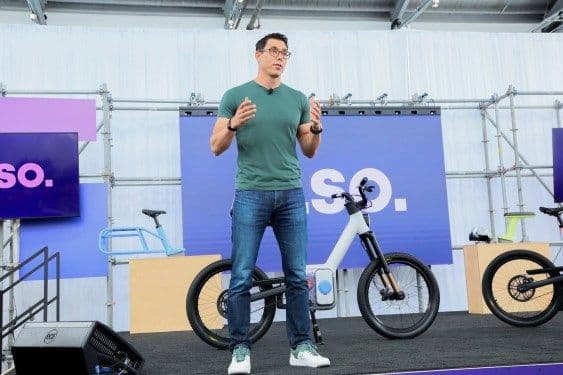
Welcome back to TechCrunch Mobility — your central hub for news and insights on the future of transportation. To get this in your inbox, sign up here for free — just clickTechCrunch Mobility! There is a bit of a theme emerging in transportation — and really every industry: AI is creating jobs for some at the loss of others. General Motors, for instance,laid off more than 10% of its IT department, or about 600 salaried employees — in a deliberate skills swap. This won’t translate into a one-to-one exchange, which means there will likely be a net-negative job loss. But GM insists it is hiring and those layoffs have made room for it to recruit IT people with AI-focused backgrounds. The most sought-after capabilities are AI-native development, data engineering and analytics, cloud-based engineering, agent and model development, prompt engineering, and new AI workflows. In practical terms, GM is looking for people who know how to build with AI from the ground up — designing the systems, training the models, and engineering the pipelines — not just use AI as a productivity tool. Those AI job losses are mounting in the automotive sector. CNBCcalculatedthat Ford, GM, and Stellantis have cut a combined total of more than 20,000 U.S. salaried jobs, or 19% of their combined workforces, from recent employment peaks this decade. While there are a variety of reasons for these cuts, they are generally connected to technological changes, including AI. Companies are leaning heavily into AI, although anecdotes from some engineers and founders suggests not all of these businesses know quite what they’re doing with it yet. Samsarais one company that seems to have figured out a revenue-generating use case. The company has spent the last decade giving its customers cameras to mount inside millions of trucks for driver monitoring, theft prevention, and helping with liability claims. The company took that mountain of data and trained its own model that candetect potholesand determine how quickly they are deteriorating. The company is pitching this product to cities and announced it has several under contract, including Chicago. Nothing this week, although I am working on a fun one! Reach out anytime with insights, tips, or just because. You can reach us via email or Signal. Email Kirsten Korosec atkirsten.korosec@techcrunch.comor my Signal at kkorosec.07, or email Sean O'Kane atsean.okane@techcrunch.com. You might have noticed that Rivian’s spinoff companyMind Roboticsraised another $400 million, just two months afterraising $500 million. And that pace got me thinking about its founder RJ Scaringe and his innate ability to get VC and institutional backers to invest in his ideas and projects. I calculated that investors have poured $12.3 billion into Scaringe’s three startups — Also, Mind Robotics, and Rivian. That figure doesn’t include the close to $12 billion in gross proceeds raised in Rivian’s IPO, nor did I count the more recent strategic deals with Volkswagen Group and Uber — which together could add nearly $7 billion to Rivian’s coffers. You can read my whole riff on the topic here. But if you don’t feel like clicking, here is one item that stood out. I spoke to a number of insiders and investors and they all mentioned Scaringe’s ability to give undivided attention to whoever he’s talking to — whether it's an investor, supplier, or exec — and make them feel like the most important person in the room. It’s yet another piece of evidence in my long-standing case against multitasking. Debate me! Other deals that got my attention … Arkeus, an Australian startup that developed perception software for autonomous drones and aircraft,raised $18 millionin a Series A round led by QIC Ventures. Other investors include R+VC, Folklore Ventures, DYNE Ventures, Main Sequence Ventures, Salus Ventures, and Beaten Zone. Aseon Labs, a Redwood City, California, startup that has developed a depot in a box for charging, cleaning, and inspecting autonomous fleets,came out of stealthwith undisclosed backing by Y Combinator. Rapidoraised $240 millionin a round led by Prosus, and that values the Indian ride-hailing company at $3 billion. Existing investors, including WestBridge Capital and Accel, participated. The round was part of a larger $730 million primary and secondary financing. Quantum Systems, a Germany-based drone startup backed by Peter Thiel, is in talks to raise around €600 million ($703 million) with companies like Airbus and Blackstone as investors,Bloomberg reported. Is Redwood Materials ready for an IPO?Senior reporter Sean O’Kane interviewed the company’s new CFO,Deepak Ahuja, whose name will be familiar to anyone who follows Tesla. Ahuja was Tesla’s former finance chief and most recently held a similar position at drone company Zipline. TeslaRobotaxis have crashed at least twice since July 2025 while ateleoperator was remotely drivingthe vehicles, according to newly unredacted information submitted to the National Highway Traffic Safety Administration. Uberisexpanding in Indiawith two new engineering campuses that can fit about 9,600 people and a data center partnership aimed at supporting its overall product development and infrastructure operations. Waymoissued a software update to its fleet of nearly 4,000 vehicles to help themavoid flooded roadsas part of a recall announced by the NHTSA. Important note: The company hasn’t fully solved the problem of how its vehicles behave in these conditions. Disrupt, our flagship annual tech conference in San Francisco, will be held in October. And while that is a ways off, I wanted to share one bit of news. We will have six stages this year, which you can read about inmore detail here. One worth noting for this crowd is ourAI in the Real World Stage.It will be here that we’ll dig into robotics, autonomous systems, manufacturing, defense, and industrial operations.

read more

Latest AI News

View All News →
Anthropic scales Claude Mythos  to critical infrastructure in 15+ countries

Anthropic scales Claude Mythos to critical infrastructure in 15+ countries

Anthropic is expandingProject Glasswing, its joint industry initiative to find and fix critical software vulnerabilities using AI, to about 150 new organizations across more than 15 countries, the companysaidTuesday. The news comes a day after Anthropic said it hadfiled confidentiallyfor an initial public offering, following a$65 billion fundinground at a nearly $1 trillion valuation. Anthropic’s Claude Mythos is at the heart of Project Glasswing. The AI firm dubbed the model its most powerful yet, able to identify thousands of zero-day vulnerabilities over several weeks. In early April,Anthropic gave 50 initial partners, including the U.S. government, access to Claude Mythos Preview to scan their codebases for vulnerabilities and security flaws. The expanded list of organizations with access to Mythos as of today covers power, water, healthcare, communications, and hardware — industries that weren’t “well-represented” in Anthropic’s initial cohort, the company said. Many who will now have access are companies or nonprofits that maintain codebases which other organizations and governments rely upon, Anthropic noted in the blog post. “What each partner has in common is that a successful attack on their codebase could be catastrophic,” the company said. “For most partners, we estimate that a major attack could affect more than 100 million people, with important ramifications for both global and national security.” The expanded group includes organizations in countries friendly to the U.S., including Australia, Canada, France, Germany, Italy, Switzerland, the Netherlands, Spain, Belgium, Sweden, India, Japan, New Zealand, and South Korea, according toFinancial Times, citing a person familiar with the matter. The FT also reported several organizations that have been given access to Mythos, including: U.S.-based identity and security management tool Okta; South Korean companies Samsung, SK Hynix, and SK Telecom; NATO, the U.S.-led military alliance headquartered in Brussels; and the EU’s cybersecurity agency ENISA. TechCrunch has reached out to Anthropic to confirm. Anthropic has said it expects other AI companies to soon develop models as capable as Mythos Preview, which is why the firm is racing to establish safeguards within Project Glasswing. Since releasing Mythos, rival OpenAI released its own cybersecurity-focused model GPT-5.5-Cyber, which it has rolled out to a large group of partners for testing.

2 hours ago

View

OpenAI launches new Codex tools for white-collar work

OpenAI launches new Codex tools for white-collar work

OpenAI is getting serious about courting enterprise users. On Tuesday, the AI labreleased a new set of capabilities for Codex, meant to expand the agentic tool’s uses in the workplace. Together with the new tools, the company releasedan internal reporton how Codex is being used for knowledge work, finding its uses go far beyond software engineering. “Codex now has more than 5 million weekly active users, up more than 6x since the launch of the desktop app in February,” readsa blog post introducing the report. “While developers remain the largest user group, knowledge workers now represent about 20 percent of users and are growing more than three times as fast.” To further court those users, OpenAI released a set of six plug-ins aimed at specific jobs: data analytics, creative production, sales, product design, equity investing, and investment banking. Available fromwithin the Codex app, each of the new tools bundles integrations, instructions, and context to allow Codex to approximate a specific job. Like any AI tool, the plug-ins will grow more effective with user customization, but they’re meant to be effective tools out of the box. The new tools come after a similar push for agentic plugins from Anthropic, whichlaunched its Enterprise Agents programin February. (A more specific set of finance-oriented agentslaunched in May.) With its traditional consumer focus, OpenAI has been slower to court enterprise customers, only introducing plugin support for Codexin March. Together with the plug-ins, OpenAI introduced a new Sites feature, which allows Codex to output its work product as a hosted interactive website, instead of just a local file. As part of that system, OpenAI is partnering with Wix, Base44, Replit, Lovable, Figma, and Emergent — although the company plans to develop a larger partner ecosystem to support the service. A new Annotations feature will also allow users to designate a specific part of a document or file within Codex, allowing for more specific commands and context operations. The new enterprise features come just three weeks after OpenAI launched a new joint venture for enterprise clients, dubbedthe OpenAI Deployment Company. The venture includes more than $4 billion in funding from global investment firms, with the aim of integrating OpenAI tools more deeply into businesses around the world. “AI is becoming capable of doing increasingly meaningful work inside organizations,” OpenAI Chief Revenue Officer Denise Dresser said in a statement at launch. “The challenge now is helping companies integrate these systems into the infrastructure and workflows that power their businesses.”

2 hours ago

View

Trump signs narrower executive order on AI oversight after industry objections

Trump signs narrower executive order on AI oversight after industry objections

President Donald Trump signedan executive orderon Tuesday designed to give the government a chance to review powerful AI models before they are released. The order asks certain AI companies to voluntarily submit their new models to the government for testing or evaluation 30 days before releasing the products to the public. A previous draft of the order had called for a voluntary review up to 90 days in advance, though AI industry insiders had pushed for something closer to a two-week window. Trump had been slated to sign the more demanding version of the order in late May, butdelayedafter industry pushback, including from venture capitalist and former White House AI czarDavid Sacks. The president said at the time that he didn’t want to do anything to get in AI firms’ way of leading against China. “Nothing in this section shall be construed to authorize the creation of a mandatory governmental licensing, preclearance, or permitting requirement for the development, publication, release, or distribution of new AI models, including frontier models,” reads the order, published Tuesday. Trump had planned to sign the EO with a bevy of Silicon Valley’s top CEOs in attendance, but ended up signing the current version privately. In addition to the voluntary governmental AI model review, the EO directs the Department of Justice to treat crimes like AI-assisted hacking and unauthorized access as a high-priority enforcement area. This isn’t the president’s first EO on AI. Last December,Trump signed an orderdirecting the development of “one rulebook,” or a national AI policy framework, intended to preempt state AI laws.

2 hours ago

View

Anthropic Expands Project Glasswing to 150 Organisations Across 15 Countries

Anthropic Expands Project Glasswing to 150 Organisations Across 15 Countries

The new group includes organisations from sectors such as power, water, healthcare, communications and hardware.

2 hours ago

View