AI Styling Studio — Infinite avatar looks from just 1 photo.Try it now.

BestAITools

Submit your Tool

8000+ AI tools already listed
8K+Tools
100K+/moViews
25K+/moVisitors

AI NewsSavi’s app aims to protect consumers from realistic AI scams like kidnappers demanding ransom

Savi’s app aims to protect consumers from realistic AI scams like kidnappers demanding ransom

8:27 PM IST · July 7, 2026

Savi’s app aims to protect consumers from realistic AI scams like kidnappers demanding ransom

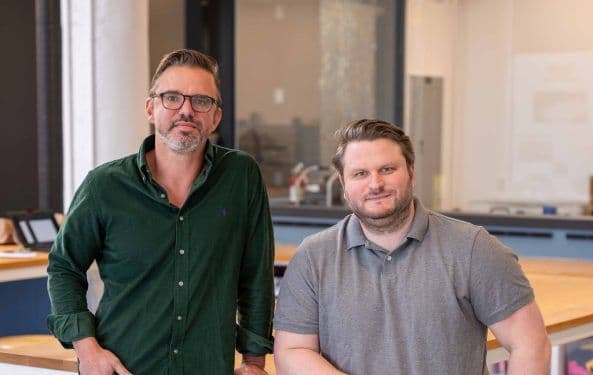
Brothers Patrick and Ryan Coughlin, each with impressive careers in the tech industry (Patrick worked in national cyber defense, and at Splunk and Cisco; and Ryan with consumer products at Apple and Spotify), have launched a new kind of security startup. Savi Securityseeks to protect everyday folks from the new crop of incredibly convincing AI-generated scams, whether they’re routed via text, emails, or phone calls. The company just raised $7 million in seed funding, and is launching its app for iPhone and Android on Tuesday. The round was led by Acrew Capital, with participation from Magnify Ventures, TTCER, and Resolute Ventures. The inspiration for the company came from a horrifying incident involving the founders’ mother. About two years ago, Patrick Coughlin’s mom called him, distraught, saying she had just received a phone call from a man saying he had kidnapped Coughlin’s sister. He was senior vice president of security products at Cisco at the time. (He landed there after Splunk bought his cloud security startup TruSTAR for a reported $82 million in May 2021. In 2024, Cisco bought Splunk.) Her mobile phone rang with the caller ID of her daughter, Coughlin recounted. During that call, “she thinks she hears my sister’s voice saying, ‘Mom, they’ve got me.’ There’s a blood-curdling scream, and then my sister says, ‘You’ve got to do what they tell you.’ And then a man comes on the phone and says, ‘If you don’t pay us $1,200 right now, we’re going to kill your daughter in the parking lot of the local Walmart,’” he continued. The scammer had accurately spoofed Coughlin’s sister’s number, her voice, and referenced the location of the Walmart she frequented. Fortunately, the mom kept her wits, called the daughter, and discovered that she was fine. The kidnapping was an AI-generated scam. Coughlin, like his mom, was shaken. “What I was thinking, after calming my mom down is: What has fundamentally changed in the underlying cybercriminal economy that we are now able to lever the same kind of sophistication that I had seen pointed at government agencies, and then later at Fortune 500 companies? And now we’re deploying that sophistication at the consumer?” The answer is, of course, cheap and powerful LLMs and other generative AI tools. Before AI, pursuing such grifts on consumers was not financially worth it. It would require in-depth research on the target, tech to spoof voices, and so on. Such attacks were primarily aimed only at deep pockets, like enterprises or governments, as was the tech to defend against them. “There’s something that’s happening right now to consumers with AI in the hands of cyber criminals,” Coughlin says. The costs to perpetrate such swindles have become negligible, and the research material, easily available. “You can clone a voice off three seconds of audio, off a publicly available social media post. So we’ve all got these traces of stuff that’s out there in the ether — like where we’re talking or narrating; commenting on a kid’s football game while videotaping it, and putting it on Facebook.” The FTCsaidlast month that people reporting online crimes collectively lost $3.5 billion to imposter scams in 2025, triple the amount in 2020. While the majority of people reporting such scams are older Americans, some research implies Gen Z is also highly susceptible. Research from 2025 by Malwarebytes, a maker of antivirus and anti-malware tools, reported that Gen Z was targeted more often with text scams than other generations, andfell for them about 25% of the time. The Coughlin brothers’ idea was to develop a real-time intervention tool. They tested their idea, and the AI scam detection model they were building, by launching a free website calledScam Wise. It is anonymous, no registration required. Just upload any suspicious texts, photos, or emails, and Scam Wise will determine if it’s likely to be bogus. “We launched that about four months ago. We’ve had 50,000 submissions, and it grows now every week by about 10,000 submissions or more,” Coughlin said. Scam Wise proved a source of in-the-wild data to help train Savi’s scam-detection AI model. The startup is currently mostly using Google’s Gemini, but has built its software on an AI gateway, which allows it to tap other AI models as needed, like voice detection-specific options. On Tuesday, Savi launched a paid product, an iOS and Android app for consumers, that can screen texts, voicemails, and incoming calls for scams. Such features are available in a lot of different products (such as Malwarebytes), but Savi’s most impressive feature is live-call monitoring. During a suspicious phone conversation, a user can opt to add the app’s live agent as a listener. Savi listens for behavioral tells that can identify if the situation is a grift while the call is in progress. Savi’s fees are also a bit unusual. It charges $8/month, discounted to $63/year, to cover an entire family, and puts no cap on the number of users. So one plan can cover a person’s kids, spouse, parents, and that uncle who always seems to need tech support. Or whoever else that the primary account holder wants to add and provide administrative support to. AI has changed the conditions for “how accessible being a fraudster is,” Coughlin said. “We’re creating fraudsters because we’re bringing down the barrier of deceiving people. So not only do we have the organized criminals and the syndicates behind this, but everyday people are sort of being tempted into playing fraud.” Savi Security’s answer is like a new generation of anti-virus-like software: one that uses AI in real time just like the bad guys do.

read more
Latest AI News

View All News →
Neil Rimer thinks the AI money is coming back out

Neil Rimer thinks the AI money is coming back out

In late May, Neil Rimer said something during a sit-down I had with him in Athens that I haven’t been able to shake. At a vibrant newtech festivalin the city, talking about the wealth piling up around AI, he said he has “a strong sense that there will be some sort of a redistribution.” He continued on. “It’ll either be voluntary or it’ll be involuntary, but it’ll happen, and I hope it’s voluntary,” he told me, adding that he thinks tech leaders “can play a leading role in seeing that through.” Coming from most people, that would sound like standard-issue populism. Coming from Rimer, a co-founder of Index Ventures, one of the most successful venture firms of the last three decades, it seemed a striking thing to say in public. Rimer stepped back from day-to-day investing in 2021, and these days spends much of his time in Athens, where his wife is from and where his children treasure their Greek passports. He turned up to our interview in a rumpled button-down and jeans, not the quarter-zips and fine knitwear that mark so many of his peers. Yet Index’s returns in recent years have been exceptional: the firm has raised roughly $15 billion from outside investors since its founding, and last year’s exits including Figma’s IPO and Google’s purchase of the cybersecurity firm Wizreportedly netted Index roughly $9 billion. Rimer has found ways to give back. He sits on the board of Endeavor Greece, which mentors entrepreneurs in emerging markets, and chaired the board of Human Rights Watch from 2019 to 2025. In late 2021, he and his father and two brothers gave $13 million to McGill University to renovate a campus building, now the Rimer Building, and found a new Institute for Indigenous Research and Knowledges. In the meantime, his comment about redistribution comes at an odd moment, to be charitable, for giving. The Giving Pledge, the promise Warren Buffett and Bill Gates launched in 2010 to get billionaires to commit half their fortunes to charity, is becoming increasingly irrelevant. One hundred and thirteen families signed in its first five years, then 72, then 43, then just four in all of 2024, per a New York Timesreport in Marchthat underscored how out-of-fashion philanthropy has become among some of the richest people in tech. (Noted that piece: “Elon Musk, the world’s wealthiest person, has said that his businesses ‘arephilanthropy.’”) The pattern appears to hold beyond the Pledge. Total American charitable giving hit a record $592.5 billion in 2024, but the number of Americans actually giving has fallen forfive straight years, down 4.5% in 2024 alone, according to the Stanford Social Innovation Review. Two-thirds of households donated in 2000; roughly half do now, and Bank of America and Lilly Family School data shows even affluent-household giving has slipped, from 90% in 2017 to81% last year. The pattern shows up in Index’s own portfolio, too, whichincludes Anthropic. Business Insider recently asked a financial planner, Alex Caswell, whether his newly wealthy clients, many of them Anthropic employees tied to effective altruism, were pledging to give away the bulk of their fortunes. Anthropic matches employee donations of up to 25% of their equity to charity, and some of Caswell’s clients have used it, he told BI, but most weren’t building philanthropy into their plans at all; they were focused on angel investing or starting their own companies. “That’s what I’m seeing more than the desire to become philanthropic,”he told the outlet. Unsurprisingly, the absence of voluntary giving is now running up against attempts to legislate the outcome instead. California voters will decide this year on a 5% one-time wealth tax that targets the state’s billionaires. Some, including Google founders Sergey Brin and Larry Page, have already moved their primary residences toSouth Floridato be on the safe side. OpenAI is reportedly consideringgoing public in 2027, and cynically, one reasonamong othersmay be that the tax, if passed, will calculate net worth based on an individual’s worldwide assets as of the end of this calendar year. As unsurprisingly, there is plenty of opposition to any kind of wealth-redistribution measure of this scale, including by Governor Gavin Newsom, and including byeconomistswho point out that many industrialized countries have repealed similar wealth taxes since 1990 after watching their wealthy residents skedaddle. Other options on the table are as controversial. OpenAI has reportedly discussed handing the federal government a5% equity stake, an idea CEO Sam Altman has framed as sharing AI’s upside with the public, but critics see it instead as a way to buy political cover in Washington. In either case, Silicon Valley has never been eager to put Uncle Sam on the cap table. Joked veteran investor Roelof Botha during aseparate sit-downwith this editor last year: “[Some] of the most dangerous words in the world are: ‘I’m from the government, and I’m here to help.’” It’s worth thinking through how much wealth sits outside these mechanisms. Musk is worth just over $1 trillion, after SpaceX’s IPO last month made him the first person to reach that mark. Forbes counted45 new AI billionairesin its 2026 rankings alone, worth a combined $2.9 trillion, and that’s before either Anthropic or OpenAI has gone public. In that same BI story about Anthropic employees, BI notes that once Anthropic and OpenAI complete their IPOs, their combined employees will hold enough wealth to buy nearly a third of all homes in the San Francisco metro area. Itfeelsunprecedented, but whether it represents an historic extreme is a matter of some debate. The share of wealth held by the top1% of U.S. households hit 31.7%in the third quarter of last year, a record since the Federal Reserve began tracking the data in 1989, and roughly equal to what the other 90% of households outside the top decile held combined. That’s still below the 45% the top 1% commanded at the Gilded Age peak in 1916. But narrow the lens to the tippy top, and the picture flips. Renowned economist Gabriel Zucman calculates that at the height of the Gilded Age, around 1910, America’s four largest fortunes were worth a combined 4% of U.S. GDP. Today, that same sliver of the population — now19 householdsinstead of four — is worth 14%. Rimer’s two paths, voluntary or forced, have precedent from the last time American wealth concentration reached this level. In 1889, at the peak of the first Gilded Age, Andrew Carnegie published an essay arguing that a rich man should treat his fortune as a trust to be distributed for the public good within his own lifetime, calling it a disgrace to die wealthy. That essay, “The Gospel of Wealth,” became the founding document of modern philanthropy and the intellectual ancestor of the Giving Pledge. It didn’t hold off the other path for long, though. By the mid-1930s, Louisiana Senator Huey Long had built a national following behind a program calledShare Our Wealth, demanding steep taxes on the rich to fund a guaranteed income for every American. Worried about losing working-class support to Long, Franklin Roosevelt pushed through what the press called the “soak-the-rich tax,” raising the top marginal income tax rate as high as 79%. It redistributed less than Long wanted, but it remains the clearest example in American history of politically forced redistribution arriving once voluntary giving failed to adequately address the pressure building underneath it. None of this is news to Rimer, who has spent his career in tech. What’s more curious to him is “the moral center of tech companies,” a fascination he traced to being a Stanford undergrad in 1984, when Apple discounted the first Macintosh for students and Steve Jobs and Apple’s other founders were, in his words, “heroes” for building something he felt was genuinely good for the world. What troubles him now, he said, is hearing his own children talk about certain tech companies the way an earlier generation talked about defense contractors or cigarette makers. Critics may note that Rimer — as an investor in Anthropic and other tech companies — is a direct beneficiary of the windfall he says will eventually need to be shared. But he’d rather see his fellow beneficiaries choose to give some of the money back than have it taken from them. There’s an easy way to do this and a hard way, and Rimer is betting on people picking the easy one before history picks it for them.

1 hour ago

View

AI-driven memory crunch jolts India’s smartphone market

AI-driven memory crunch jolts India’s smartphone market

Months after analystswarnedthat AI-driven demand for memory chips would ripple through consumer electronics, India is providing the strongest evidence yet that the disruption has arrived, with rising handset prices reshaping the smartphone market. The memory chips in question — RAM and storage components — are the same ones tech giants need by the truckload to build AI data centers. Manufacturers like Samsung, SK Hynix, and Micron have been shifting production capacity toward high-bandwidth memory, the specialized chips used in AI accelerators, because they’re much more profitable per wafer than the standard memory used in phones and laptops — leaving less capacity, and driving up costs, for everyday consumer electronics. India, the world’s second-largest smartphone market by shipments after China, saw smartphone shipments fall10% year-over-yearin the April-June quarter, according to market research firm Counterpoint Research, marking the steepest June-quarter decline in six years as higher memory costs pushed up handset prices. The impact has been more pronounced in India than in China, where smartphone shipments fell just 2% in Q2, according to Counterpoint. India has been hit harder because about 60% of its smartphone market is concentrated in the sub-₹20,000 (under $210) segment, where higher memory costs have had the biggest impact on prices, Tarun Pathak, the firm’s vice president of research, told TechCrunch. India has been a prominent market for global smartphone brands for several years. The South Asian nation, home to more than 1.4 billion people and over 700 million smartphone users, has become a bellwether for consumer demand in price-sensitive markets, making shifts in buying patterns closely watched by device makers, chip suppliers, and investors tracking the broader health of the AI supply chain. Pathak told TechCrunch that consumers are unlikely to abandon smartphones altogether. However, many of them are expected to delay upgrades, stretching replacement cycles to around four years from about 3.5 years previously, while premium brands such as Apple and Samsung remain better insulated from the slowdown. The uneven impact is already reshaping competition among smartphone makers. Samsung was the only major smartphone brand to post shipment growth in India in Q2, with volumes rising 2% year-over-year, according to Counterpoint. Apple, by contrast, saw shipments fall 3% — though that dip largely reflected supply constraints and inventory shortages limiting how many iPhones Apple could deliver. Consumers buying higher-end smartphones have proved less sensitive to price increases, with financing making expensive devices more affordable, Prachir Singh, a senior analyst at Counterpoint Research, told TechCrunch. The pain has been most acute at the lower end of the market. Shipments in the sub-₹15,000 (under $150) segment fell 45% from a year earlier, Counterpoint said. Because Chinese brands are heavily exposed to entry- and mid-tier smartphones, their combined market share fell to its lowest level for a second calendar quarter since 2020. The tougher economics are also prompting strategic shifts. This week, Chinese smartphone brand OnePlus said itwould stop launching new productsin Europe and North America, while maintaining its India business, following what it described as a careful assessment. Counterpoint data shared with TechCrunch showed China accounted for 74% of OnePlus’ global smartphone shipments to distributors and retailers in Q1, up from 59% a year earlier, while India’s share fell to 19% from 30%. In other words, OnePlus is retreating to markets where it can still turn a profit and ceding ground elsewhere — a pattern likely to repeat across other budget-focused brands as margins tighten. Indeed, Pathak told TechCrunch that running several sub-brands only makes sense if each one sells enough volume to cover shared costs, and that math stops working once margins get this thin. “Sub-brands normally have overlaps and shared resources, and you need a minimum base to justify the cut-throat margins. Profitability is the key to deciding market operations,” he said. That pressure on brands is trickling straight down to the people buying their phones. Kiranjeet Kaur, associate research director for mobile phones research at IDC, said the Indian smartphone market is shifting from volume-led growth to value growth — meaning fewer phones are being sold overall, but each one generates more revenue — as higher component costs make lower-priced smartphones increasingly uneconomical. The higher component costs are already filtering through to consumers. Smartphone prices in India have risen by between 4% and 68%, depending on the model, Pathak said, and as prices rise, consumers are either moving to higher-priced devices, delaying upgrades, or turning to the secondhand market. Financing has meanwhile become “central to affordability,” Kaur told TechCrunch. She added that brands and retailers were also building inventory ahead of the festive season to lock in lower costs before further increases in component prices. IDC also expects India’s smartphone shipments to decline by double digits in Q2, a steeper fall than the 4.1% decline in the first quarter and the 5.3% drop in the previous quarter, Kaur said. However, she noted the firm’s estimates were not yet finalized. Kaur told TechCrunch that memory shortages and elevated smartphone prices were likely to persist until at least the end of 2027, although the pace of price increases should moderate as consumers gradually adjust to higher prices becoming the new normal. “For Indian consumers, it is a double whammy as the weaker currency makes imports costlier, which has added to margin pressures for the market players, and they are passing on the cost to the consumer,” Kaur said.

9 hours ago

View

Agility Robotics plants its flag in Tesla’s backyard

Agility Robotics plants its flag in Tesla’s backyard

Agility Robotics is opening a 60,000-square-foot facility to train its humanoid robots in Fremont, California, just up the highway from the factory where Tesla is expected to start manufacturing its Optimus robots this year. Tesla has increasingly bet on Optimus. Elon Musk recently said he expects it to be “the biggest product ever” once it’s “useful outside of Tesla sometime next year.” While Agility doesn’t have Tesla’s capital, it does have a robot, Digit, that is already useful in the real world. The robot is already generating revenue, carrying totes and bins in manufacturing and warehouse settings for customers like Amazon, GXO, Schaeffler, andToyota Motor Manufacturing Canada. The company says it has secured $300 million in contract orders for its robots. “It’s great to have [Tesla] in the same area as us, because really, for a long time Agility was out there alone, and it’s good to have others in the humanoid space,” CEO Peggy Johnson told TechCrunch. “We have commercialized. We now know what it takes to walk into these facilities and meet their safety bars, their regulatory bars, compliance, plug into their IT infrastructure, plug into their warehouse management system.” Agility hasn’t disclosed how many Digits that it has built or deployed, but outside observers estimate that dozens have worked in pilot or revenue-generating deployments. The company has said, for example, that Digits havemoved 100,000totes at a GXO logistics facility. Johnson is currently leading Agilitythrough a reverse-mergerthat is expected to make it the first pure-play humanoid robot company on the public markets later this year. Founded in 2015 by a group of researchers who developed new techniques that allow robots to safely walk on two legs, Agility is trying to capitalize on its lead over a newer generation of AI-inspired robotic startups like Figure, 1X, the Bot Company, or Sunday Robotics. While the arrival of transformer-based neural networks that helped give rise to LLMs also promises major advancements in robotic behavior, Agility is taking a practical approach to autonomy. “When you think about self-driving cars, you know, as a non-humanoid example, you really don’t want the anti-lock brake controller under AI control,” Agility co-founder and chairman Damion Shelton told TechCrunch. “The analog with humanoids is all the safety stuff needs to go through a path that’s not generative AI, right? You don’t want to get creative with your safety stack.” What AI does do, however, is deliver on the promise of scale. “One of the first times [Bruce Leak, the Quicktime inventor who serves on Agility’s board] asked us how we were going to go about coding applications for the robot, we didn’t really have a good answer,” Shelton said. “The number of things you can imagine a robot doing is far larger than the number of engineers who can program robots. And generative AI answers that question definitively.” The new facility is designed to accelerate the company’s robotic deployments. Johnson says more than 30 customers are in talks with the company about deploying Digit, and the new facility will be where the six-foot-tall robot learns new skills in environments similar to those it will experience in the field. Unlike many of the newer entrants to the humanoid space, Agility isn’t planning to offer in-home humanoid robots anytime soon. It’s a view that jibes with that of most independent robotics experts, who believe today’s most powerful robots aren’t safe enough for consumer use. Digit operates in a human-free space right now, but the version 5, expected to be unveiled this fall, will have the ability to sense humans and won’t need to be kept in a robot-only zone. Co-founder and chief robot officer Jonathan Hurst said there is plenty of work to keep Agility busy in manufacturing and logistics alone. “Let’s start with the bins and the totes, and then let’s do the picking and the kitting,” Hurst told TechCrunch. “And then let’s like start working on cardboard, which is really hard, and loading and unloading tractor trailers and things like that. Okay, now we’re at 100 million robots, you know? A trillion-dollar company.”

9 hours ago

View

The Zoom hack that says, ‘Don’t record me’

The Zoom hack that says, ‘Don’t record me’

VC Jeremy Levine has a wry solution to something that routinely annoys him, according to a newWall Street Journal articleon the rise of AI transcription apps. On Zoom, he is no longer “Jeremy Levine” but instead “Jeremy Levine I do not consent to transcribing or recording.” It may sound petty or brilliant, depending on your point of view, but what’s clear is that always-on recording is becoming ubiquitous, thanks to a growing crop of AI note-taking apps and devices,manyofwhichwe’vecoveredhere at TechCrunch (we’ve evenrankedsome). VC Eric Bahn tells the outlet he now automatically assumes his meetings with founders will be recorded, even before he sees a phone slide across a conference table. One founder tells the WSJ she records most of her first dates with the Granola app, then feeds the transcript to Claude afterward to see if she could be more “engaging or empathetic,” while also assessing who did most of the talking. (Dating in San Francisco isrough.) Levine calls the whole trend “socially unacceptable behavior” that can completely kill spontaneous conversations. Others in the piece note it’s a legal minefield. But there’s another wrinkle: if every meeting, watercooler conversation, and romantic outing gets transcribed and summarized, who’s actually reading any of it? At what point does this audio landfill of every conversation stop being useful and just become another recording no one has time to play back?

9 hours ago

View