AI Styling Studio — Infinite avatar looks from just 1 photo.Try it now.

BestAITools

Submit your Tool

8000+ AI tools already listed
8K+Tools
100K+/moViews
25K+/moVisitors

AI NewsSam Altman responds to ‘incendiary’ New Yorker article after attack on his home

Sam Altman responds to ‘incendiary’ New Yorker article after attack on his home

1:50 AM IST · April 12, 2026
Sam Altman responds to ‘incendiary’ New Yorker article after attack on his home

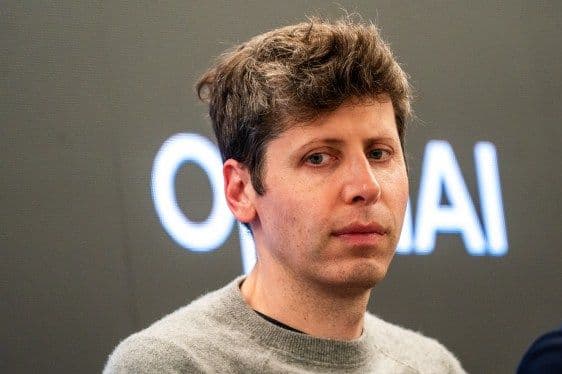
OpenAI CEO Sam Altmanpublished a blog poston Friday evening responding to both an apparent attack on his home andan in-depth New Yorker profileraising questions about his trustworthiness. Early Friday morning, someone allegedly threw a Molotov cocktail at Altman’s San Francisco home. No one was hurt in the incident, and a suspect was later arrested at OpenAI headquarters, where he was threatening to burn down the building,according to the SF Police Department. While the police have not identified the suspect publicly, Altman noted that the incident came a few days after “an incendiary article” was published about him. He said someone had suggested that the article’s publication “at a time of great anxiety about AI” could make things “more dangerous” for him. “I brushed it aside,” Altman said. “Now I am awake in the middle of the night and pissed, and thinking that I have underestimated the power of words and narratives.” The article in question was a lengthy investigative piece written by Ronan Farrow (who won a Pulitzer for reporting that revealed many of the sexual abuse allegations around Harvey Weinstein) and Andrew Marantz (who’s written extensively about technology and politics). Farrow and Marantz said that during interviews with more than 100 people who have knowledge of Altman’s business conduct, most described Altman as someone with “a relentless will to power that, even among industrialists who put their names on spaceships, sets him apart.” Echoingother journalists who have profiled Altman, Farrow and Marantz suggested that many sources raised questions about his trustworthiness, with one anonymous board member saying he combines “a strong desire to please people, to be liked in any given interaction” with “a sociopathic lack of concern for the consequences that may come from deceiving someone.” In his response, Altman said that looking back, he can identify “a lot of things I’m proud of and a bunch of mistakes.” Among the mistakes, he said, is a tendency towards “being conflict-averse,” which he said has “caused great pain for me and OpenAI.” “I am not proud of handling myself badly in a conflict with our previous board that led to a huge mess for the company,” Altman said, presumably referring tohis removal and rapid reinstatement as OpenAI CEOback in 2023. “I have made many other mistakes throughout the insane trajectory of OpenAI; I am a flawed person in the center of an exceptionally complex situation, trying to get a little better each year, always working for the mission.” He added, “I am sorry to people I’ve hurt and wish I had learned more faster.” Altman also acknowledged that there seems to be “so much Shakespearean drama between the companies in our field,” which he attributed to a “‘ring of power’ dynamic” that “makes people do crazy things.” Of course, the correct way to deal with thering of poweris to destroy it, so Altman added, “I don’t mean that [artificial general intelligence] is the ring itself, but instead the totalizing philosophy of ‘being the one to control AGI.’” His proposed solution is “to orient towards sharing the technology with people broadly, and for no one to have the ring.” Altman concluded by saying that he welcomes “good-faith criticism and debate,” while reiterating his belief that “technological progress can make the future unbelievably good, for your family and mine.” “While we have that debate, we should de-escalate the rhetoric and tactics and try to have fewer explosions in fewer homes, figuratively and literally,” he said.

read more


Latest AI News

View All News →
Anthropic’s Claude Tag is learning your company, one Slack message at a time

Anthropic’s Claude Tag is learning your company, one Slack message at a time

Anthropic is introducing Claude Tag in research preview, an “always-on Claude” that lives in Slack and acts as an AI teammate. The new feature — which allows users to tag @Claude to provide insights in chats and assign tasks — will begin in research preview, available through Slack for Claude Enterprise and Claude Team customers. Claude Tag is an evolution ofseveral integrations that already exist. Users can already DM @Claude within Slack or tag it in channels for on-demand help, andClaude Code in Slackroutes coding tasks from channel mentions to full coding sessions on the web, posting updates back into the thread. But Claude Tag adds a layer of persistent context and memory that would be difficult to maintain with previous tools. “As Claude follows along with its channel, it learns ever more about the work,” reads a statement from Anthropic. “Claude can also automatically gather facts from elsewhere in the organization, if it’s granted permission to read other channels.” With Claude Tag, everyone in a given Slack channel can access a single Claude identity, meaning “anyone can see what Claude has been working on, and can pick up the conversation from where the last person left off.” System administrators will specify which tools, information, and channels Claude can access, and each Claude identity will stay scoped to whichever channels the admins define, so that a Claude set up for legal work can’t seed memories into the engineering channel, for example. When assigned a specific task, Claude Tag will break down the task into stages and will work through them using whichever tools it has access to, responding in a Slack thread with what it has created. But Claude Tag also features an ambient mode that proactively jumps into the chat of its own accord to keep your team updated, flag things from across the organization, and follow up on threads or tasks that have been forgotten. Anthropic says this makes it feel like you’re “working with a real colleague — one that can produce work in public view, with far greater context and understanding than before.” That context is an increasingly critical part of enterprise deployments, and Anthropic isn’t the only company focused on it. Microsoft also has Graph, expressed through Copilot and Work IQ.Snowflakeand Databricks are positioning their platforms as the back-end support containing tacit organizational knowledge that agents can tap into.Glean is also building an intelligence layerthat understands company context and sits between the model and the enterprise data.

2 hours ago

View

Fika Jobs raises $4M to build a video-first hiring platform where AI agents interview candidates

Fika Jobs raises $4M to build a video-first hiring platform where AI agents interview candidates

The hiring process has long been criticized for its inefficiency and opacity. Candidates spend hours writing applications and submitting cover letters, only to disappear into what often feels like a black box. Generative AI has only made things messier, with employers increasingly relying on AI-powered screening systems to sift through an overwhelming number of submissions. Stockholm-based startupFika Jobsthinks there’s a better way. The company is building a video-first hiring platform that combines AI interview agents with short-form video profiles, creating something that feels like a cross between LinkedIn and TikTok. Instead of relying solely on resumes, candidates complete AI-powered interviews designed to showcase their personality and communication skills. Fika Jobs announced on Tuesday a $4 million pre-seed round, which will be used to continue developing the platform, grow the team, and prepare for a wider launch later this year. For job seekers, the process starts by connecting a LinkedIn profile. Fika’s AI reviews the candidate’s background and generates personalized interview questions. Candidates then complete a roughly 10-minute video interview with the AI agent, currently powered by Google’s Gemini models. After the interview, Fika automatically turns responses into short video clips and organizes them into a profile. Instead of applying to every new role, candidates maintain a live profile that employers can discover and revisit as new opportunities arise. The idea came from co-founders and brothers Jakob Dubois (CEO) and Alexander Dubois (CTO) while they were building their previous startup. “When we were building [social app] Gaff, we spent a lot of time recruiting and almost passed on a candidate because his resume did not really stand out,” Jakob Dubois told TechCrunch. “We ended up speaking with him anyway, and within minutes, his grit, drive, and ambition became obvious. Exactly the kind of person we wanted to hire.” That experience convinced the founders that some traits that employers care about most are difficult to capture on paper. Unlike most competitors (Alex,Maki, andMercor, among others) that focus on helping employers source, screen, and match candidates more efficiently with AI, Fika is building a platform where candidates maintain video-first profiles and employers browse a pool of people who have already been interviewed and evaluated by AI. If successful, Fika Jobs could help employers assess communication skills and cultural fit early in the hiring process, complementing traditional resume and application reviews. This approach may be especially valuable for early-career professionals and candidates from non-traditional backgrounds, whose potential is not always apparent from a resume alone. Of course, video profiles introduce real bias risks that are also worth acknowledging. When employers can see a candidate’s race, age, gender, physical appearance, and accent before evaluating their qualifications, it opens the door to discrimination that a resume, for all its flaws, at least partially obscures. There’s a reason some companies have moved toward blind resume screening. The platform plans to open early access to candidates this week, with a broader public launch expected this fall. The company will initially focus on Sweden before expanding internationally. Fika currently has a small team but expects to reach around 10 employees by the end of the year. More than 100 companies are on the waitlist, say the founders, though they declined to disclose which ones. Separately, they said more than 50 companies have tested the platform, including Plenty Labs, SICS.ai, Kognity, and Rebtel. The platform is free for job seekers. Employers pay nothing up front, but Fika takes 10% of a candidate’s first-year salary upon a successful hire. (The company notes that this is lower than the 20% to 30% placement fees often charged by traditional recruiters and headhunters.) The round was led by Luminar Ventures, with participation from Alliance VC and King co-founders Sebastian Knutsson and Riccardo Zacconi, the duo best known for creating the hit mobile game Candy Crush.

6 hours ago

View

4 days left to save up to $190 on TechCrunch Founder Summit 2026

4 days left to save up to $190 on TechCrunch Founder Summit 2026

Founders don’t grow alone. The best founders learn from peers facing similar challenges, gain insights from operators who have already scaled, and build relationships with investors who can help fuel the next stage of growth. You have just four days left to save up to $190 on your pass toTechCrunch Founder Summit 2026before Early Bird rates end on June 26 at 11:59 p.m. PT. On November 4 in Boston, more than 1,000 founders and investors will come together for a full day of practical insights, peer-to-peer learning, and meaningful networking designed to help startups grow faster. This is TechCrunch’s flagship founder conference, built specifically for founders. Whether you’re preparing to raise capital, scaling revenue, hiring your next team members, or planning your next major milestone, Founder Summit connects you with the people and strategies that can help move your company forward. Register by June 26 to save up to $190 on your pass.Groups of four or more can save up to 30%. TechCrunch Founder Summitis designed to deliver practical takeaways you can put into action immediately. You’ll connect with: The conversations are candid, focused, and designed to help founders solve real business challenges.Register here to save up to $190. Founder Summitprogramming focuses on the decisions that shape a company’s future. Through breakout sessions and roundtable discussions, you’ll gain insights you can apply right away. Past topics have included: Whether you’re raising your first round or scaling toward your next major milestone, these sessions are built to help you make smarter decisions and move faster.Register here to save up to $190. Previous speakers have shared firsthand lessons on company building, fundraising, and growth, including: Additional speakers have included leaders from Sequoia Capital, NFX, Underscore VC, Glasswing Ventures, Wing Venture Capital, Construct Capital, Greylock, and Precursor Ventures. The 2026 agenda is currently taking shape, with more founders, operators, and investors to be announced soon on theevent page. Interested in leading the conversation?Submit a topicfor a breakout or roundtable session for a chance to be voted onto the agenda by the TechCrunch audience. TechCrunch Founder Summit 2026is where founders come to gain practical insights, build valuable relationships, and accelerate growth. Join 1,000+ founders and investors in Boston on November 4 for a day of learning, networking, and conversations that can help shape your company’s future. Early Bird savings end in just four days, June 26 at 11:59 p.m. PT.Register now to save up to $190on your pass and up to 30% when registering as a group before prices increase.

6 hours ago

View

Tredence Acquires KMK Consulting to Expand Healthcare, Life Sciences Business

Tredence Acquires KMK Consulting to Expand Healthcare, Life Sciences Business

The company targets 25% revenue from the sector by 2028.

6 hours ago

View