AI Styling Studio — Infinite avatar looks from just 1 photo.Try it now.

BestAITools

Submit your Tool

8000+ AI tools already listed
8K+Tools
100K+/moViews
25K+/moVisitors

AI NewsSam Altman-backed fusion startup Helion in talks to sell power to OpenAI

Sam Altman-backed fusion startup Helion in talks to sell power to OpenAI

1:19 AM IST · March 24, 2026
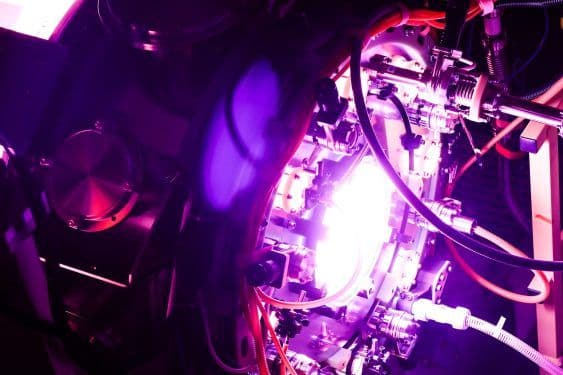
Sam Altman-backed fusion startup Helion in talks to sell power to OpenAI

OpenAI CEO Sam Altman is stepping down as board chair of the Helion — the fusion startup he backs — amid reported talks between the two companies.The deal, which wasreported by Axios, is in early stages, and it could guarantee OpenAI 12.5% of Helion’s production — five gigawatts by 2030 and 50 gigawatts by 2035. OpenAI partner Microsoftsigned a similar dealwithHelionin 2023 to buy power starting in 2028. If the figures in Axios’ report prove to be accurate, it suggests that Helion expects to be able to rapidly scale production of its fusion power plant. The startup has said that each of its reactors will generate 50 megawatts of electricity, meaning it will need to build and install 800 reactors by 2030 and an additional 7,200 by 2035. Helion wouldn’t confirm if talks with OpenAI were underway. A spokesman told TechCrunch the company has not announced any new customer agreements beyond those it already has with Microsoft and Nucor. However, the company did confirm to TechCrunch that Altman is leaving the board chair of Helion, suggesting that the two companies may eventually work together. “Sam is stepping down from Helion’s Board of Directors after more than a decade. This decision enables Helion and OpenAI to partner on future opportunities to bring zero-carbon, safe electricity to the world,” David Kirtley, co-founder and CEO of the company, told TechCrunch in statement. “We look forward to continuing to work with him in this new capacity.” Helion is racing to build its first commercial-scale reactor by that time. If the startup is successful, it would place it years ahead of the competition, which is mostly targeting early 2030s for commercial operations. The startupraised $425 million last yearfrom investors, including Altman as well as firms Mithril, Lightspeed, and SoftBank. Most fusion startups are pursuingone of two approaches— harvesting heat from the fusion reactions and using a steam turbine to turn it into electricity. Helion is taking a different tack, developing a reactor design that would use magnets to convert fusion energy into electricity. Inside the hourglass-shaped reactor, fusion fuel is first turned into plasma at either end and then shot toward each other using magnetic fields. When they collide in the middle, another set of magnets compresses the merged plasma ball until fusion occurs. The reaction pushes back on the magnets, which can convert that energy directly into electricity. Helion is currently operating its Polaris prototype in advance of its push to commercial power. In February, the company generated plasmas inside the reactor thathit 150 million degrees Celsius,almost to the 200 million degrees Celsius the company thinks will be required for commercial operations. Though Altman has stepped down from his position as chair of Helion’s board and reportedly recused himself from the discussions, his fingerprints are all over the matchmaking. Last year, Altman stepped down as board chair of Oklo, a small modular nuclear reactor startup that had merged with his acquisition company, AltC. The move was intended to allow Oklo to explore strategic partnerships with leading AI companies, including potentially with OpenAI,” Caroline Cochran, Oklo’s co-founder and chief operating officer,saidin a statement given to CNBC at the time. Update 1:30 pm ET: Added confirmation from Helion regarding Altman stepping down as board chair.

read more

Latest AI News

View All News →
The AI jobs debate just got messier

The AI jobs debate just got messier

AI-related job loss fears grow each time another companyannounces a round of layoffs. Through May of 2026, companies announced that close to90,000 job cutswere tied to AI, and, by some accounts, up to 15% of U.S. jobs areprojectedto beeliminated by AIover the next five years. Promises from the tech industry that AI will also create new jobs does little to ease fears, especially for the generation wondering if anyone will be hiring when they graduate. A recent report from Ramp and Revelio Labs, which track enterprise AI spend and workforce records from nearly 22,000 companies, respectively, complicates that gloomy narrative. The report found that companies spending heavily on AI are growing headcount faster, even in the entry-level roles that many fear are doomed. According to the report, “high-intensity adopters” — firms that spend on average $30 per employee per month on AI in the first three months — saw headcount increase 10.2%. Headcount also rose across functions, includingengineering, sales, administration, customer service, finance, marketing, and scientist roles. The strongest job growth among high-intensity adopters was in the information sector, which includes software, internet, media, and tech-adjacent firms. Despite these positive signals, the data isn’t as rosy as it seems. It skews heavily towards tech-forward, knowledge-work firms — ones that might have VC-backing and are growing fast anyway, making it difficult to say whether AI is contributing to the hiring or just showing up at companies that are expanding anyway. “This paper does not show that AI universally creates jobs,” the paper’s authors admit, “but it does counter claims that AI will lead to broad job losses.” It also counters claims that AI is killing all junior jobs.Recent researchfrom Goldman Sachs found that AI has already erased about 16,000 net jobs per month over the past year, with Gen Z and entry level workers taking the brunt of the burden. But in tech-forward firms, the report finds that entry-level headcount actually rose by 12%. So what can we take away from this? Perhaps that AI isn’t always a tool for labor substitution, but that it can be a tool for firm-expansion instead. “For software and technology firms, AI can make core output cheaper or faster to produce: writing code, debugging, building internal tools, producing technical documentation, and supporting product development,” the report reads. “Lower production costs in these workflows can raise the return to expanding the whole firm, not just the engineering team.” But companies that buy subscriptions and run pilots, yet did not go on to make sustained investments, don’t tend to see any gains in headcount, per the report. That sets up the potential for awidening gapbetween firms that have the resources — like capital, technical staff, founder networks, and management bandwidth — to turn AI adoption into actual business gains and those that are stuck experimenting with subscriptions. In other words, this report suggests that firms that already have the resources are the ones who will see the largest gains. The paper’s authors speculate such a divide may continue to grow, saying: “Firms without those channels may fall behind.”

1 hour ago

View

Gujarat Taps IBM, IAIRO to establish Industrial AI Centre of Excellence

Gujarat Taps IBM, IAIRO to establish Industrial AI Centre of Excellence

Envisioned as a ‘living lab’, the Industrial AI CoE will support the development, testing, and adoption of industrial AI applications

1 hour ago

View

CoreWeave Launches ARIA to Help Researchers Find Hidden Patterns in AI Experiments

CoreWeave Launches ARIA to Help Researchers Find Hidden Patterns in AI Experiments

ARIA analyses thousands of experiment runs in minutes, surfaces hidden patterns and recommends improvements to accelerate AI innovation

1 hour ago

View

Delhi to Roll Out AI-Enabled PUCC 3.0 Ahead of Winter Pollution Season: Report

Delhi to Roll Out AI-Enabled PUCC 3.0 Ahead of Winter Pollution Season: Report

The new PUCC 3.0 system will use AI, geotagging and encrypted data transmission to curb fraudulent vehicle emission certificates.

1 hour ago

View