AI NewsRunway CEO says AI could help Hollywood make 50 films instead of one $100M blockbuster
Runway CEO says AI could help Hollywood make 50 films instead of one $100M blockbuster
3:29 AM IST · April 17, 2026
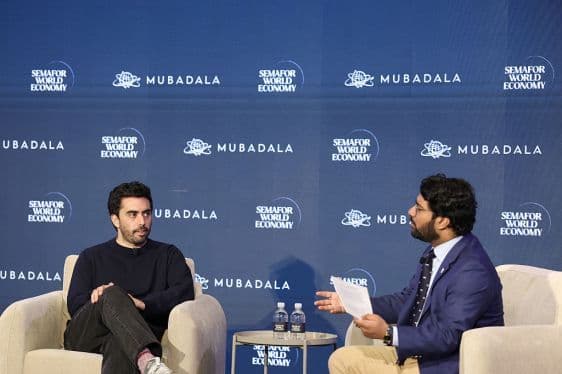
Cristóbal Valenzuela, the co-founder and CEO of AIvideo-generation startup Runway, now valued atnorth of $5 billion, may not be winning over more hearts and minds inthe anti-AI, creative crowd with his recent comments about AI’s potential in Hollywood. AtSemafor World Economythis week, the AI executive suggested that studios should take the $100 million they spend on a single film and put it toward 50 films, in order to increase their output and their chances of getting a hit. “If you’re spending a hundred million dollars on making one feature film, which is 90 minutes, imagine taking a hundred million dollars and spending it on, like, 50 movies, Valenzuela said. “Same quality. Same amount of output, visually. But you make way more content. So you have way better chances of hitting something. It’s a quantity problem.” That bumps up against the notion that a film represents a studio’s investment in a piece of art, and that the movie business is one where studios win if they back the right creative team. With AI, Valenzuela is suggesting the whole industry can be boiled down to a numbers game — and if you produce enough content, you’ll eventually succeed. In his interview, the founder acknowledged therehas been controversyabout bringing AI into a creative market like film and TV production, but stated that “things are changing fast.” He said he believes much of the early skepticism around AI came more from a place of fear and misunderstanding, but now most people understand what these powerful AI tools can do. The company has beendeveloping its AI world modelsto help the creative class do “more work better and faster,” he said. Runway works with a large number of studios and creators, and the technology is already helping to bring production costs down, the founder claimed. This is already happening. Take, for example, the soon-to-arrive $70 million “Bitcoin: Killing Satoshi” movie, which will be the first studio-quality AI feature film on the market. Its use of AI brought down production costs from an estimated $300 million,TheWrap reported. Amazon hasalso turned to AIto cut production costs for film and TV, ashave studios in India. Sony Pictures saidit’s planning to usethe technology. EvenJames Cameron has come out in support of AIas a way to keep blockbuster movies in production without layoffs. Asked which side of the business is seeing costs decline because of AI, Valenzuela said, “It’s everywhere. It’s in the pre-production side, it’s in scripting, it’s in planning, it’s in execution, visual effects — this is already beginning to be deployed at scale.” AI may make it easier to produce more content. But critics dispute the tech industry’s belief that scaling creativity with AI will automatically result in more great art. But Runway believes this to be true. “There’s a crisis of creativity in the industry because of the economic incentives of how the content is made,” Valenzuela said. He compared the production of video to something like books, where now, he said, there are some 25 million books produced yearly — more than anyone could read. “Of course, I don’t read 25 million books…but the world is in a much better place because there’s more people who manage to tell a story or say something [to] the world,” he said. (For what it’s worth, Valenzuela’s figure appears to be wrong.Data from UNESCO[the UN’s Educational, Scientific and Cultural Organization] indicates that 2.2 million new titles are published every year. But he could be counting self-published e-books and things like Wattpad stories, many of which are now also produced with AI, and are often left out of traditional estimates.) In any event, the idea is to flood the market with content, even if only some will become hits. That’s what he hopes the movie industry will now do, thanks to AI. “We have this internal saying at Runway that the best movies are yet to be made because we haven’t heard from probably, like, the billions of people who haven’t had access to this…technology,” Valenzuela said.
read more