AI Styling Studio — Infinite avatar looks from just 1 photo.Try it now.

BestAITools

Submit your Tool

8000+ AI tools already listed
8K+Tools
100K+/moViews
25K+/moVisitors

AI NewsPerplexity’s new Computer is another bet that users need many AI models

Perplexity’s new Computer is another bet that users need many AI models

12:35 AM IST · February 28, 2026

Perplexity’s new Computer is another bet that users need many AI models

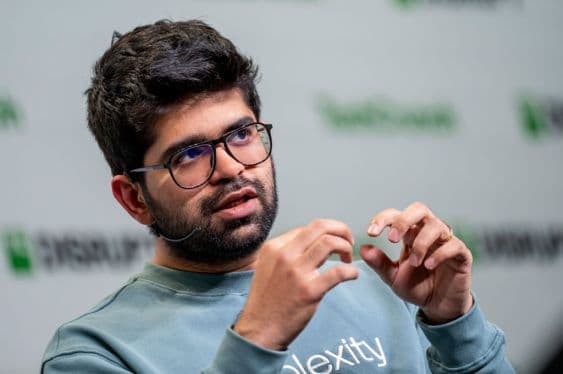
Starting this week, Perplexity subscribers will have a new agentic tool at their disposal. Perplexity Computer, in the company’s words, “unifies every current AI capability into a single system.” More specifically, Perplexity says it is a computer user agent that can execute complex workflows independently using 19 different AI models, even creating subagents to handle specific problems. The tool is available now, only on the company’s highest subscription tier, the $200/month Perplexity Max. It runs entirely in the cloud, which might spare it some of the security concerns of other agentic tools like OpenClaw. TechCrunch hasn’t done a hands-on demo of the new tool, but inexample workflowson Perplexity’s website, it is shown handling tasks that involve collecting statistics, financial, or legal data; creating analysis; and sharing its findings as finished websites or visualizations. Perplexity invited the press to a background briefing with executives last week to discuss the product and lay out the agenda for the year. The event was intended to include a demonstration of the tool, but the company cancelled the demo because of flaws found in the product hours before the event. This tool represents the evolution of Perplexity, which made a splash early in the AI boom by wrapping frontier models in familiar user interfaces, particularly its search-engine-like answer service. It then moved on to launch its Comet web browser last summer. Competitors like Google have now changed their products to be more like those built at Perplexity, one executive said, but that’s a threat as much as a compliment. The company is changing in response to a shifting ecosystem: One of the first AI companies to offer advertising, it abandoned that business late last year, saying last week that it undermined users’ trust in their answers’ accuracy. But Perplexity’s total user base—in the tens of millions of users—pales in comparison to that of OpenAI, which claims 800 million weekly users and began testing ads in ChatGPT this year. Now, Perplexity executives say they are aiming for a more boutique set of users, with products that serve people making “GDP-moving decisions.” Executives in the briefing, who asked not to be identified by name, described prioritizing enterprise subscriptions, particularly for deep research. “You don’t hear us talk about MAUs ever, because we’re not actually on a mission to get as many users as possible,” one executive said. Perplexity recently released a new benchmark for complex research tasks, called Draco, where (no surprise) its own deep research offering beats out competitors like Gemini. Perplexity says it is no longer reliant on other companies’ APIs for its web index and now has its own AI-optimized search API. But the company is doubling down on packaging frontier models in a consumer-friendly user experience, arguing that there is value in orchestrating multiple third-party LLMs to obtain the most cost-effective and accurate answers to queries. “Multi-model is the future,” one Perplexity exec argued. Models, in their view, are specializing, not commoditizing. The company has found that its users frequently switch between models to obtain the results they are looking for, with December 2025 queries for visual outputs most often sent to Gemini Flash, software engineering done by Claude Sonnet 4.5, and medical research in GPT-5.1. If one LLM is better at coding tasks and another does a better job drafting marketing copy, Perplexity’s software can automatically choose the ideal one. Another example, executives said, is running Perplexity’s own modified open-source Chinese-built LLMs to answer queries more cheaply, a technique the company got dinged for hiding from its customers last year. But done transparently, the technique could prove an efficient way to optimize LLM queries. The company also offers users the opportunity to query multiple models at once, in a feature called Model Council. But the unit economics of offering multiple queries at flat subscription rates aren’t entirely clear. Still, without expensive infrastructure projects on its books and with, the executives claimed, high margins on users fees, Perplexity believes it will remain competitive by allocating tokens to the best model for a purpose. And there is more coming: Perplexity Comet browser is coming to iOS next month, and the company is planning a developers’ conference, Ask, on March 11 in San Francisco to promote third-party use of its API. One executive said that instead of looking at the previous day’s number of queries each morning, he was now looking at the most recent revenue metrics. At least some customers are noticing a new focus on the bottom line, with the Perplexity subreddit featuring frequent complaints of new rate limits on free and subscription product tiers. However, the execs at the briefing dismisses such complaints. “Any discussions on the free tier being made worse or rate-limited is completely false,” an executive said.

read more

Latest AI News

View All News →
Yep, we’re using OpenClaw to date now

Yep, we’re using OpenClaw to date now

Ben Guez has “a bunch of potential international wives in [his] DMs,” thanks to an automated script he set up using OpenClaw, Claude code, and Instagram trial reels. “I think it’s crazy, like the potential is insane right now,”Guez, a content creator and startup founder, told TechCrunch. “I’m not sure if everyone’s gonna think it’s good, but I mean, it’s working.” How is Guez is wooing so many women? First, he uses the open source AI agentOpenClawto track World Cup match results. After each game, OpenClaw triggers Claude to create and post a nearly identical Instagram “trial reel” with the same template. In the video, Guez stares out a train car window looking dejected, with the caption: “I can’t believe {COUNTRY} lost… If any {COUNTRY} girls need emotional support… my DMs are open.” Guez has made the same post, save for the country name, more than a dozen times. But you can’t tell when you look at his profile, since trial reels don’t show up on a creator’s public page. Since he launched this automation, Guez has gotten over one million views and 200 DMs in a few days. That volume is even more impressive considering that Guez says in his profile that he will only answer DMs sent viaCanary, his AI language learning app, which means that these women have to download his app. You have to hand it to him: Guez is really taking “work smarter, not harder” to another level. But once these women realize he doesn’t actually care about Tunisian soccer, wouldn’t they feel played? “They’re not feeling angry, they’re more impressed, like, ‘Oh, you’re thinking outside of the box, you’re a genuis,’” Guez said. “I think as long as you’re open [about] what you’re doing, I think it’s fine.” TechCrunch was not able to independently verify the actual reactions of these women, so we’ll just have to take Guez’s word for it. But we can tell you that Guez isn’t the only guy getting creative with theviral AI assistant. While Guez’s methods are a bit more outrageous, other people see OpenClaw as a way to streamline the process of setting up dates. Jeff Weisbein, founder of a tech PR firm, uses OpenClaw to help him figure out where to take dates across different neighborhoods in South Florida. “I’m meeting women who are in various parts of South Florida, so I don’t know all of the restaurants or things to do,” Weisbein told TechCrunch. “I have my bot just kind of do all the research and make a document with links to why it’s a choice for whatever type of date it is.” When I fill him in on Guez’s OpenClaw scheme, he bursts out laughing. “I guess I’m not leveraging OpenClaw to the fullest,” he said. “But definitely in the realm of using OpenClaw to facilitate a task that I would manually have to do otherwise.” Like Guez, Weisbein doesn’t hide the fact that he’s using AI tools to help plan dates (it backfired, though, when one woman told him, “I hate AI agents”). In a way, asking OpenClaw where to go for happy hour in Fort Lauderdale isn’t that different from Googling the coolest neighborhood bars, but Weisbein says he would draw the line at using AI to mediate his actual conversations with women. “I have seen people create bots and ways to swipe using OpenClaw, and I wouldn’t do that. They say it’s a numbers game, but if that’s what it takes… that seems like a pretty terrible way to do it,” he said. “I feel like you shouldn’t delegate your communication when you’re in a relationship with someone to AI.” People seem hesitant to let AI meddle once there’s an actual connection, but a tech worker named Cailey said that once she’s decided to end a flirtation, she doesn’t mind using Claude to break things off. “I started using Claude and created an automation that crafts ‘I no longer wish to see you’ messages based on a few key terms I would enter about the date. It’d then automatically send them for me at random times so that I wouldn’t feel the anxiety of when to send,” she told TechCrunch. “It worked really well, until I mentioned it to someone I was on a date with, who I then had to send an automated message to, and he asked if he was talking to Claude or Cailey.” What’s worse: getting ghosted, or getting broken up with by an AI? Wish you could have a team of experts at your beck and call?NanoClaw is the first personal AI assistant to support agent swarms.We've got you covered – no matter the need.pic.twitter.com/X5vcf4Cmve OpenClaw rocked the tech world with its potential when it went viral this spring, but security advocates have continuouslywarned usersabout the dangers of giving an AI assistant unilateral control over all of your accounts. For Lazer Cohen, the co-founder of the security-focused OpenClaw alternativeNanoClaw, there are steep privacy implications of outsourcing personal relationships to AI, even if his company advertises date planning as a potential use case on X. “Whenever you’re giving an agent access to personal information and accounts, you need human-in-the-loop approval,” Cohen told TechCrunch. “We’ve all heard the stories of OpenClaw creating dating profiles for people without their knowledge or consent, or OpenClaw dating coaches spilling to other groups that they’re being used as a dating coach too.” NanoClaw has found its way into Cohen’s love life, though he uses it in a way that’s a bit more wholesome than mass-producing reels that ask heartbroken soccer fans to slide into his DMs. “My wife and I personally use our NanoClaw assistant, Rosie, to manage the schedules of our five children,” he said. “But ‘claws’ are widely used to help couples get to the child-rearing phase.”

39 minutes ago

View

Microsoft launches its own AI deployment company with $2.5 billion commitment

Microsoft launches its own AI deployment company with $2.5 billion commitment

On Thursday, Microsoft announced a new operating business called Microsoft Frontier company, focused on delivering successful enterprise AI deployments with Microsoft’s existing AI tools. The project will be backed by a $2.5 billion investment from Microsoft, as well as 6,000 industry and engineering experts. In a statement announcing the venture, Microsoft’s Commercial Business CEO Judson Althoff resisted the Forward Deployed Engineer (FDE) label that is often applied to these ventures. “This goes beyond what has been labeled as Forward-Deployed Engineering,” Althoff wrote, “and will be the largest, most capable, outcome-driven engineering organization in the industry.” Nonetheless, the venture bears a striking similarity to a number of FDE-based AI ventures announced in recent months. Justtwo days earlier, Amazon Web Services announced an internal commitment of $1 billlion for its own AI deployment venture, explicitly embracing the FDE model.Both OpenAI and Anthropichave launched joint ventures along similar lines, although those efforts also involve outside capital from private equity firms. Microsoft’s existing client base will give the new effort a significant head start, as the company has already deployed engineers to much of the Fortune 500. The announcement cites an early partnership with the London Stock Exchange Group, as well as Unilever, Land O’Lakes, and Accenture.

39 minutes ago

View

How to Escape OpenAI, Anthropic, and Their Expensive APIs

How to Escape OpenAI, Anthropic, and Their Expensive APIs

Enterprises are grappling with the ever increasing token costs. So, how to put an end to this?

40 minutes ago

View

Skyroot Sets Date for Vikram-1 Orbital Test Flight from Sriharikota

Skyroot Sets Date for Vikram-1 Orbital Test Flight from Sriharikota

Skyroot Aerospace’s Mission Aagaman will test India’s first privately developed orbital rocket and gather flight data for future launches.

40 minutes ago

View