AI Styling Studio — Infinite avatar looks from just 1 photo.Try it now.

BestAITools

Submit your Tool

8000+ AI tools already listed
8K+Tools
100K+/moViews
25K+/moVisitors

AI NewsOtter’s new feature lets users search across their enterprise tools

Otter’s new feature lets users search across their enterprise tools

6:16 PM IST · April 28, 2026
Otter’s new feature lets users search across their enterprise tools

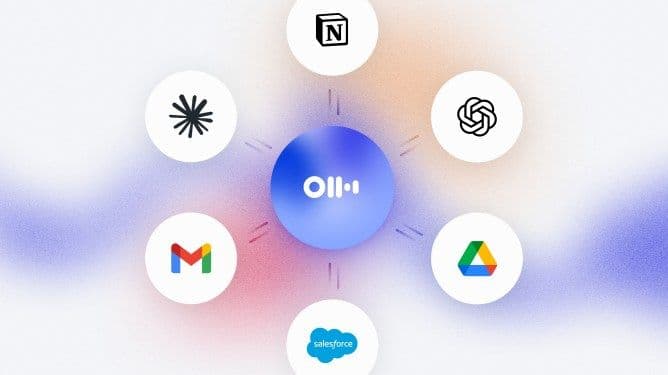
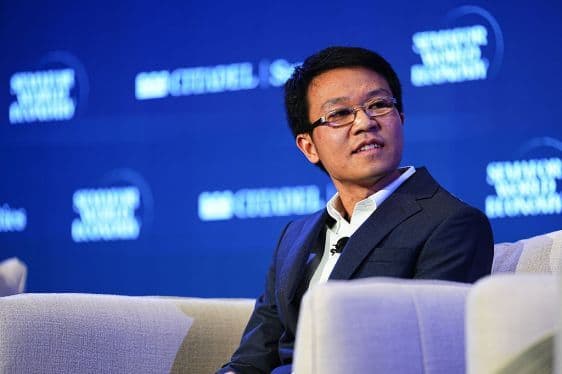
AI meeting notetaker apps have realized that transcribing meetings and providing summaries alone is not enough to justify their business models and valuations. They now want to act as a full workspace where users bring in data from different sources, search across all of it, and make decisions about their business. Following notetakers like Read AI, Fireflies.ai, and Fathom, Otter is now launching enterprise search by acting as a Model Context Protocol (MCP) client. That means it can connect to and pull data from outside apps and services using a common standard that AI tools are rapidly adopting. Otter has been around for nearly a decade now, but it has been making moves toward becoming an enterprise productivity tool in the last few months. Last October, the company launched a way fororganizations to build custom MCPs to access Otter data outside the app. The company’s latest move is more about bringing outside data into the app. With this launch, users can connect their Gmail, Google Drive, Notion, Jira, and Salesforce accounts and query that data along with existing meeting data. The company said that it will soon allow connections with Microsoft Outlook, Teams, SharePoint, and Slack. Users can not only search for data across these tools but can also push meeting summaries to Notion or draft a Gmail message. The company said that it has also redesigned its AI assistant to be consistently present across the whole interface, so users can ask questions anytime. The assistant can understand the context of the screen, such as a particular meeting or a channel, and answer questions accordingly. Meanwhile, most notetakers are followingGranola’s leadand allowing fora botless meeting capture— recording meetings using a device’s system audio rather than having a bot join the call. Otter said that it brought this feature to the Mac app late last year, and is now launching a Windows app with a similar feature. There has been a debate around meeting note-taking with bots (where a bot joins the meeting) or without bots. Otter CEO Sam Liang said that the company’s enterprise customers prefer when a meeting notetaker joins the call. “When we talk to enterprise customers, most of them actually prefer the note taker that joins the Zoom meeting because it provides the transparency. They also prefer the meeting notes to be shared with all the meeting attendees, so that the note is not limited to one person,” he told TechCrunch over a call. Otter said that it has a deduplication feature that prevents a swarm of bots from joining a meeting simultaneously to avoid situations where there are more bots than humans on a call. Last year, the company said it had25 million users and $100 million in annual recurring revenue. While the company didn’t provide a new set of financials, it said that the platform now has 35 million users.

read more
Latest AI News

View All News →
Jio AI Call Agent Explained: What It Is, How It Works, Features and More

Jio AI Call Agent Explained: What It Is, How It Works, Features and More

Reliance held the 49th edition of its annual general meeting (AGM) with shareholders on Friday. The Indian conglomerate unveiled various new artificial intelligence (AI) innovations that its telecom service provider (TSP) arm, Reliance Jio, plans to join in the coming months in the country. Among the many announcements, the company revealed its plan to integrate AI directly into its network. The company claims that this will allow the TSP to introduce a voice-based AI call agent for its subscribers. During the presentation, the company demonstrated the AI agent's capabilities, showing that it will be able to transcribe calls and generate call summaries without asking users to download a standalone app.

3 hours ago

View

The CEO of Allbirds’ new AI biz has a plan, but no employees

The CEO of Allbirds’ new AI biz has a plan, but no employees

When Allbirds pivoted to AI in April, it felt like a joke fromSilicon Valleybreaking free of the TV: The direct-to-consumer shoe purveyor whose flimsy kicks helped define what we’ll loosely call Silicon Valley style had discovered a new trend to chase. The move was right out of the meme stock playbook written by Gamestop: Take a troubled public company, latch onto the hottest fad, and reap the rewards of a rising stock price as retail investors piled in. Well, it worked. The company sold its shoe business for $43 million, raised another $100 million from the stock market, and now it’s called Smartbird. Now, Nadia Carlsten has to make it work. A former AWS executive with an engineering PhD, Carlsten most recently led the European compute company DCAI before she began yesterday as Smartbird’s CEO. “We’re going to be recruiting a brand new team for the AI business, and we’re going to be getting an office,” Carlsten told TechCrunch from Amsterdam. “The shoe business has officially closed as of yesterday, so that’s all done…The first task that I’m tackling right now is rounding up the leadership team, looking for somebody to lead infrastructure operations, for example.” Call it a startup with a sole founder and a very large seed round. What’s next is less clear. Smartbird aims to be an AI infrastructure provider, latching on to the seemingly bottomless demand for compute to train and run deep learning models. But unlike neoclouds, which relentlessly arbitrage the price of chips against the cost of GPU time or inference tokens, Carlsten will be aiming at more carefully managed deployments. The ideal Smartbird customers need direct control over the servers running their models — typically for political or business-model reasons — and value data sovereignty over the scalability of the public cloud. Carlsten couldn’t yet estimate the size of that market, and argued that it was fairly nascent, since many companies are still just piloting AI tools. At DCAI, she worked with Novo Nordisk and other European firms who take a special interest in data sovereignty or operate bespoke models—”we certainly have anybody that’s within the pharmaceutical industry, energy industry, financial, the public sector,” she said. To Carlsten’s view, that means Smartbird isn’t competing with hyperscalers or neoclouds, but with internal company projects. Still, there are established companies in this space—Hewlett Packard offers a single-tenant managed AI compute service, as does Equinix, the data center giant. It’s real business model, but it’s not clear if it has the same growth potential as the cloud services, where expansion is the be-all, end-all. Carlsten said she expects to have compute clusters deployed for several customers by the end of the year. Other startups, like the inference cloud General Compute, have bigger ambitions—the companyannounceda $300 billion chip order when it came out of stealth last month. Carlsten says she doesn’t need big chip commitments to realize Smartbird’s vision, because her potential customers needs sit in the range of hundreds to thousands of chips—it’s “not about large scales and huge numbers of GPUs, they’re more about agility of these clusters, and more about having control of the infrastructure stack.” Smartbird is also unlikely to compete with rivals on price, since cloud services go to great lengths to optimize chip usage 24 hours a day to offer the cheapest compute, though Carlsten suspects that companies with specialized workflows will be able to work more efficiently with their own servers. Demand for AI infrastructure is a powerful force in the market, driving up the stock prices for chipmakers, cloud providers, and energy companies, even convincing investors that orbital data centers are a feasible idea. But Carlsten insists that Allbird’s transition was carefully thought through. “It wasn’t, ‘Let’s just do AI, because it’s AI, and it’s hot,’” Carlsten, who will be paid a $700,000 annual salary and was awarded stock worth about $9 million to take the job, said. “It was really about, do we have a chance to build a business over time that is going to find this niche in the market and be able to grow over time?” When Allbirds pivoted, one thing that went by the wayside was its public benefit corporation status, which had been intended to enshrine the sustainability commitments that were part of the shoe company’s pitch. PBC charters are often used by companies to highlight non-financial promises. OpenAI, for example, is a PBC with a focus on AI safety. This change of direction, however, suggests PBCs are hardly ironclad. Carlsten said that Smartbird’s board made a long-term commitment to execute against her AI strategy. “There are some companies out there chasing AI,” she told TechCrunch,” but at the end of the day, what matters is, is there actual weight behind the chasing?”

3 hours ago

View

Reliance Approves Jio IPO, Paving the Way for One of India’s Largest Public Listings

Reliance Approves Jio IPO, Paving the Way for One of India’s Largest Public Listings

The planned IPO comes as Reliance accelerates investments in artificial intelligence, data centres and AI-generated media content through its various businesses.

3 hours ago

View

Why India’s Automotive Talent Capital Still Lives in Bengaluru’s Shadow

Why India’s Automotive Talent Capital Still Lives in Bengaluru’s Shadow

Automotive firms are rethinking their GCC locations as software and industrial engineering are beginning to merge.

3 hours ago

View