AI Styling Studio — Infinite avatar looks from just 1 photo.Try it now.

BestAITools

Submit your Tool

8000+ AI tools already listed
8K+Tools
100K+/moViews
25K+/moVisitors

AI NewsOpenAI’s Sam Altman announces Pentagon deal with ‘technical safeguards’

OpenAI’s Sam Altman announces Pentagon deal with ‘technical safeguards’

12:36 AM IST · March 1, 2026

OpenAI’s Sam Altman announces Pentagon deal with ‘technical safeguards’

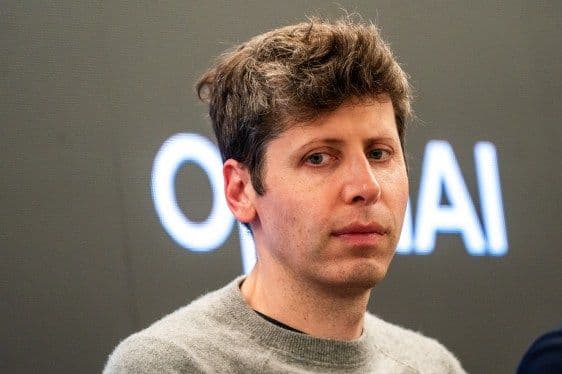
OpenAI CEO Sam Altman announced late on Friday that his company has reached an agreement allowing the Department of Defense to use its AI models in the department’s classified network. This follows a high-profile standoff between the DoD — also known under the Trump administration as the Department of War — and OpenAI’s rival Anthropic. The Pentagonpushed AI companies, including Anthropic, to allow their models to be used for “all lawful purposes,”while Anthropic sought to draw a red line around mass domestic surveillance and fully autonomous weapons. Ina lengthy statement released Thursday, Anthropic CEO Dario Amodei said the company “never raised objections to particular military operations nor attempted to limit use of our technology in anad hocmanner,” but he argued that “in a narrow set of cases, we believe AI can undermine, rather than defend, democratic values.” More than 60 OpenAI employees and 300 Google employeessigned an open letter this weekasking their employers to support Anthropic’s position. After Anthropic and the Pentagon failed to reach an agreement, President Donald Trump criticized the “Leftwing nut jobs at Anthropic” ina social media postthat also directed federal agencies to stop using the company’s products after a six-month phase-out period. Inaseparatepost, Secretary of Defense Pete Hegseth claimed Anthropic was trying to “seize veto power over the operational decisions of the United States military.” Hegseth also said he is designating Anthropic as a supply-chain risk: “Effective immediately, no contractor, supplier, or partner that does business with the United States military may conduct any commercial activity with Anthropic.” On Friday,Anthropic saidit had “not yet received direct communication from the Department of War or the White House on the status of our negotiations,” but insisted it would “challenge any supply chain risk designation in court.” Surprisingly, Altmanclaimed in a post on Xthat OpenAI’s new defense contract includes protections addressing the same issues that became a flashpoint for Anthropic. “Two of our most important safety principles are prohibitions on domestic mass surveillance and human responsibility for the use of force, including for autonomous weapon systems,” Altman said. “The DoW agrees with these principles, reflects them in law and policy, and we put them into our agreement.” Altman said OpenAI “will build technical safeguards to ensure our models behave as they should, which the DoW also wanted,” and it will deploy engineers with the Pentagon “to help with our models and to ensure their safety.” “We are asking the DoW to offer these same terms to all AI companies, which in our opinion we think everyone should be willing to accept,” Altman added. “We have expressed our strong desire to see things de-escalate away from legal and governmental actions and towards reasonable agreements.” Fortune’s Sharon Goldman reportsthat Altman told OpenAI employees at an all-hands meeting that the government will allow the company to build its own “safety stack” to prevent misuse and that “if the model refuses to do a task, then the government would not force OpenAI to make it do that task.” Altman’s post came shortly before news broke that the U.S. and Israeli governmentshave begun bombing Iran, with Trump calling for the overthrow of the Iranian government.

read more

Latest AI News

View All News →
How AceCloud Plans to Win India's Enterprise AI Market

How AceCloud Plans to Win India's Enterprise AI Market

As Indian enterprises move AI out of sandboxes and into core operations, the case for locally governed infrastructure, built on cost, compliance, and real-time performance, is no longer theoretical.

3 hours ago

View

Cognizant Launches Governance Platform to Manage Agentic AI Risks in Enterprises

Cognizant Launches Governance Platform to Manage Agentic AI Risks in Enterprises

Cognizant has launched Neuro AI Trust, a governance platform that provides real-time monitoring and policy enforcement across AI models and agents.

3 hours ago

View

MeitY Directs WhatsApp to Halt Username Rollout in India

MeitY Directs WhatsApp to Halt Username Rollout in India

WhatsApp said the feature is not yet live and includes safeguards against impersonation, but the government wants further consultations before any launch.

3 hours ago

View

Indian tech tycoon bets $30M of his own money to build AI alternative to Microsoft Office

Indian tech tycoon bets $30M of his own money to build AI alternative to Microsoft Office

Indian serial entrepreneur Bhavin Turakhia is making a $30 million personal bet that there is still room for another enterprise AI company. His new venture,Neo, is built on a simple premise: workplace software designed before the AI era cannot simply be upgraded with chatbots — it has to be redesigned from the ground up. Turakhia, 46, is no stranger to ambitious enterprise technology bets. Over the past two decades, he has co-founded companies including Directi, Radix, Titan, and banking software firm Zeta, largely backing them with his own cash before bringing in outside investors. He’s doing the same with Neo. Turakhia told TechCrunch he is bootstrapping this much money because he believes AI marks a technology shift significant enough to justify rebuilding workplace software from scratch. “If you want to build an iPhone, you can’t take the parts of a Nokia and somehow convert it into an iPhone,” he said. Launched internally in April this year, Neo is an enterprise work platform that combines project management, documents, file storage, and AI into a single product. The goal, Turakhia said, is to make AI an active participant in day-to-day work rather than just another assistant employees turn to separately. Turakhia argued most incumbents face a structural disadvantage when adding AI to products designed before generative AI. Neo, he said, was designed from the ground up for AI and is model-agnostic, allowing enterprises to switch between AI models rather than being tied to a single provider. He’s not alone in thinking this way. Investor Chamath Palihapitiya initially launched enterprise AI coding venture 8090 with his own capital beforeraising a $135 million funding roundthis week. Still, Turakhia’s bet comes as enterprise AI has emerged as one of the most competitive areas in technology. Microsoft, Google, and Salesforce are embedding AI across their workplace software. Meanwhile every startup from the giant labs like Anthropic and OpenAI, to the productivity companies like Notion and Superhuman are racing to reshape how businesses use AI in their daily workflow. Turakhia argued enterprise software has never been a winner-takes-all market, saying even a small share of global enterprise AI spending would represent a sizeable company. “Even if we end up with 2% to 5% market share, that’s larger than anything I’ve built so far,” he said. For the past few months, Neo has been in internal use across Turakhia’s companies, including Zeta. The company plans to begin rolling out the software to mid-sized businesses in the coming months, initially targeting knowledge workers across technology, consulting, and professional services firms. Turakhia said Neo’s initial platform was built in three months, with AI extensively used in the development process, work he estimates would have taken more than a year with a much larger engineering team before generative AI. The Bengaluru-based startup currently employs about 45 people, including 18 engineers. Turakhia told TechCrunch that it expects to grow to around 100 employees by the end of the year, with most new hires focused on AI and software engineering.

7 hours ago

View