AI Styling Studio — Infinite avatar looks from just 1 photo.Try it now.

BestAITools

Submit your Tool

8000+ AI tools already listed
8K+Tools
100K+/moViews
25K+/moVisitors

AI NewsOn the stand, Elon Musk can’t escape his own tweets

On the stand, Elon Musk can’t escape his own tweets

6:20 AM IST · April 30, 2026
On the stand, Elon Musk can’t escape his own tweets

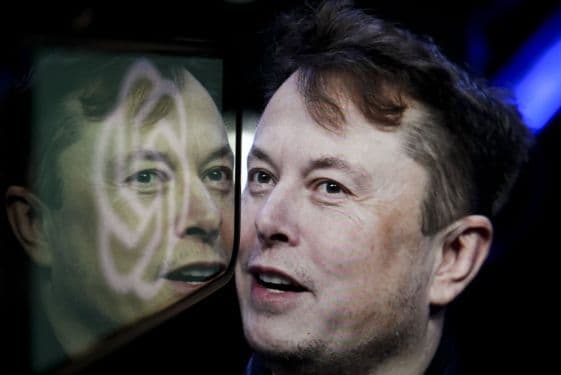
Elon Musk came to a California federal court on Wednesday to argue that Sam Altman and his cofounders “stole a charity.” He left having admitted, under oath, that Tesla is not currently pursuing artificial general intelligence (AGI)— directly contradicting a tweet he’d posted just weeks earlier. It was that kind of day for Musk. The lawsuit he filed challenging the structure of OpenAI alleges Sam Altman and the other cofounders tricked him into backing a non-profit, then launched the frontier lab’s for-profit arm and let it come to dominate the organization. After an occasionally testy Musk testified for hours, it appears the case may come down to how much of a distinction jurors and Judge Yvonne Gonzalez Rogers make between investors in OpenAI having their potential profit capped or not. In Musk’s telling, when he cofounded the lab with Sam Altman, Ilya Sutskever, Greg Brockman and others, he trusted them to build AI for humanity, but over time became suspicious of their motives, and finally concluded that they were “looting the nonprofit.” OpenAI’s lawyer William Savitt sought to complicate that story during cross-examination, trying to show that Musk had supported a variety of efforts to transition OpenAI toward for-profit status so it could raise the funds necessary to compete with firms like Google, including incorporating the AI lab into Tesla. Musk testified that he had discussed converting the company to a for-profit as early as 2016, and that in 2017, he had explored creating a for-profit arm of OpenAI where he would hold the majority of the equity and control the company. When those plans fell apart, he stopped making regular donations to OpenAI, though he continued to pay for its office space until 2020. Musk insisted that there was a big difference between investors whose profits are capped and those whose profits are unlimited. The earliest major investments by Microsoft in OpenAI limited the software giant’s profits, but those restrictions have been rolled back over the years. Musk says those changes ultimately led him to bring this lawsuit. Savitt tried to establish that Musk had been consulted by Altman and Shivon Zillis — his longtime adviser who is also the mother of four of his children — about subsequent efforts to raise money, and did not object. Zillis was also a member of the OpenAI board when it approved some of those transactions. That cross-examination extended to Tesla’s AI ambitions. Notably, Musk was asked about Tesla’s efforts to develop competing AI technologies and found himself, not for the first time, on the wrong side of one of his own posts on X. After Musk said that Tesla’s AI work was focused only on self-driving and not AGI (a term for AI systems that can perform any intellectual task that a human can), he was asked about a recentpostclaiming that “Tesla will be one of the companies to make AGI.” “We are not pursuing AGI right now,” Musk told the court. (Tesla shareholders may want to take note.) Musk was also asked about apostwhere he claimed to have invested $100 million in OpenAI, rather than the $38 million that actually changed hands. He argued that his reputation and network made up for the disparity. Savitt brought up emails where Musk had backed efforts by Tesla and his brain interface company, Neuralink, to poach employees from OpenAI while he was still on that company’s board. Another conversation focused on his efforts to hire OpenAI leaders when he left the board in 2018, including Andrej Karpathy, who departed OpenAI to lead self-driving work at Tesla. Musk was also asked about a conversation where Zillis suggested Musk recruit Sutskever to Tesla. The most consequential thread of the day, though, may have been about harm prevention. Part of Musk’s case rests on the idea that OpenAI transition into a traditional corporation is dangerous to society because it reduces the company’s focus on safety. Savitt, in turn, had Musk admit that all AI companies, including his own, suffer from this risk. Judge Gonzalez Rogers halted that line of questioning, but in remarks to the lawyers after testimony concluded made clear it would resume, with limits. When Musk’s lawyers floated questions about ChatGPT’s role in the Tumbler Ridge shooting—an incident earlier this year in Canada in which a person went on a killing spree after extensive conversations with the chatbot—she made clear that she didn’t want to hear about scandals caused by AI models, but that xAI and OpenAI’s approaches to safety were fair game. Musk returns Thursday for another round of adversarial questioning. Also expected to testify are his family office manager, Jared Birchall; AI safety expert Stuart Russell; and OpenAI president Greg Brockman. Correction: An earlier version of this story misstated details of the Tumbler Ridge shooting due to an editing error. It has been updated.

read more
Latest AI News

View All News →
Qualcomm Doesn't Want AI to Live on Your Phone, It Wants AI to Follow You Everywhere

Qualcomm Doesn't Want AI to Live on Your Phone, It Wants AI to Follow You Everywhere

The year 2026 can be largely related to the widespread adoption of Artificial Intelligence (AI) and the year of agentic AI. We have seen all the major brands building new AI agents, whether it be Meta, OpenAI, Google, Anthropic, and more. However, only a handful of players are focusing on the hardware that can power the new AI features. A few years down the line, the conversation around chips used to be fairly simple: faster cores, better cameras, longer battery life, and more.

28 minutes ago

View

RIL AGM 2026: JioHotstar Gets GenAI Media Studio, AI Snapshot and Content Commerce Features

RIL AGM 2026: JioHotstar Gets GenAI Media Studio, AI Snapshot and Content Commerce Features

Reliance Industries Limited (RIL) announced several AI-powered initiatives for its media and entertainment business at the 49th Annual General Meeting (AGM) on Friday. The company outlined new features for JioHotstar, including JioStar GenAI Media Studio (JAMS), which is designed to streamline the content creation process. AI Snapshot, Content Commerce, and Multiview were also announced, with the aim of transforming how users discover, consume, and interact with content. During the annual meeting, RIL also highlighted the growth of its media ecosystem involving JioStar, Jio Studios, Network18, and JioHotstar.

28 minutes ago

View

RIL AGM 2026: Jio Showcases AI Voice Agent for Calls, Jio TeleFrame AI Agents and JioBharat IQ Apps

RIL AGM 2026: Jio Showcases AI Voice Agent for Calls, Jio TeleFrame AI Agents and JioBharat IQ Apps

Reliance hosted its 49th annual general meeting (AGM) of shareholders on Friday. During the keynote presentation, the Indian conglomerate showcased new AI innovations coming to its platforms. Reliance has announced that it will launch five new AI platforms in India, namely JioBharat IQ, AI Vyapar, JioHealth IQ, JioLearn IQ, and JioKrishi IQ. On top of this, the company has also revealed that it is integrating AI directly into the Jio network to bring an AI-powered agent, which can be triggered with a voice command during calls. The AI agent will be available in all regional languages in the country. Additionally, the company has also unveiled the Jio TeleFrame, its new family of AI agents.

29 minutes ago

View

The US says ASML’s top chip tool may be in China. ASML says it isn’t

The US says ASML’s top chip tool may be in China. ASML says it isn’t

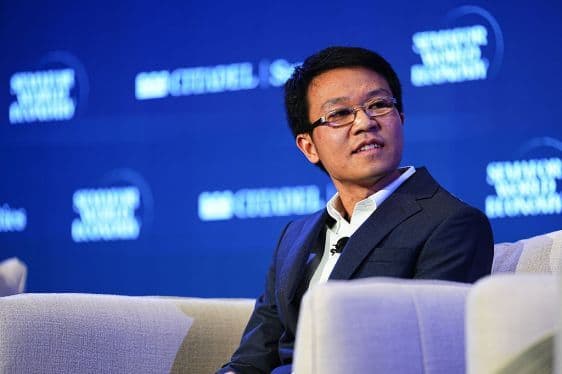
According to Bloomberg, U.S. Commerce Secretary Howard Lutnick has, in a series of recent meetings, told senior ASML executives he’s concerned that one of the Dutch chipmaker’s extreme ultraviolet lithography machines — the EUV systems that are the only tools on Earth capable of printing the most advanced semiconductor patterns —may have ended up in China. That would be a major breach of export controls that have barred ASML from selling EUV to China since the first Trump administration. It’s a serious claim. Senior administration officials told Bloomberg they have evidence that ASML shipped EUV-related components and transport equipment to China, though they’ve declined, repeatedly, to show it — to Bloomberg or, apparently, to ASML itself. The company says no such machine exists in China and has never existed there. The Commerce Department didn’t respond to Bloomberg’s questions about whether it has evidence of an actual EUV system on Chinese soil. You might think this isn’t worth paying attention to if you’re outside the chip industry, but it is. ASML is a Dutch company most people have never heard of, but it is, by a wide margin, the most important company in the global AI buildout that isn’t named Nvidia or one of the hyperscalers. It makes the only machines on the planet capable of EUV lithography — the process of printing the microscopic circuit patterns that define the most advanced chips. Every cutting-edge processor made by TSMC, the foundry behind Nvidia’s and Apple’s chips, depends on ASML tools that took the company roughly two decades and untold billions to develop. There is, at present, no second supplier. That monopoly has made ASML Europe’s most valuable public company, with a market capitalization that has been trading in the neighborhood of $700 billion as of this week, up sharply over the past year on the back of insatiable AI-driven chip demand. That scale is exactly why the China question matters so much. If even one EUV machine made it into Chinese hands, it would represent one of the most consequential breaches of the export-control regime the U.S. has built over the past several years to keep advanced AI capability out of Beijing’s military and industrial base. I sat down with ASML CEO Christophe Fouquetsix weeks ago, well before this story broke, and asked him directly about the China question. Fouquet told me ASML tracks every machine it has ever shipped — they’re either in active use with monitored customers or have been dismantled and returned to the company. He said the firm built an internal firewall years ago: employees who can access EUV technology, documentation, and training are walled off from those who can’t, and ASML’s China-based staff sit on the wrong side of that wall by design. He argued the only reason ASML could build an EUV machine at all was that 80% of it already existed from decades of prior knowledge, and that solving the one genuinely new problem — generating EUV light itself — took 20 years on its own. His broader point seemed to be that you can’t reverse-engineer a machine you’ve never had, and nobody in China has had one. There’s also a simpler commercial logic that cuts against the idea that ASML would risk its export license to quietly arm a Chinese customer. ASML does sell older-generation deep ultraviolet tools to China — gear it first shipped a decade ago — but Fouquet framed that explicitly as a protective calculation, not a loophole. The idea, he suggested, is that it keeps enough of a generational gap that customers can still do business — but without manufacturing its own future competitor. ASML expects roughly 20% of its 2026 revenue to come from already-permitted sales to China. Risking the EUV ban entirely would put that revenue, and the company’s standing as the most valuable monopoly in European industry, on the line over a single illegal sale. None of this proves the allegations are false. The government hasn’t yet made its evidence public, and it’s worth withholding judgment until it does. The Commerce Department, under Lutnick’s leadership, agreed late last year to put up to$150 million of taxpayer moneyinto xLight, a startup developing a next-generation light-source technology that’s been written about as a long-term challenge to the core of ASML’s EUV monopoly. xLight’s own CEOtold me last yearthat the company sees itself as a future partner to ASML, not a rival, building hardware meant to plug into ASML’s machines rather than replace them. When I put that framing to Fouquet in May, he was polite about it but unconvinced; ASML, he made clear, doesn’t see itself as needing xLight’s technology to keep its lead. Does that have anything to do with why Lutnick is suddenly pressing ASML on EUV? Nothing public connects the two. It could be entirely unrelated. But a federal official scrutinizing a monopoly while his own agency has money riding on a startup angling to improve that monopoly’s core technology is worth examining. xLight isn’t the only outside bet on the future of lithography. Peter Thiel — who has his own long-running ties to Trump’s political orbit — hasbacked Substrate, a separate startup explicitly pursuing its own EUV-rival technology, with ambitions to compete with ASML more directly than xLight says it intends to. As Bloomberg notes, a bipartisan bill moving through Congress would go much further than EUV — it calls for an effective ban on all of ASML’s deep ultraviolet (DUV) shipments to China, the less advanced lithography tools that account for roughly a fifth of the company’s expected 2026 revenue. The bill cleared a key committee in April, and the Trump administration hasn’t taken a formal position on it. Pictured above: ASML CEO Christophe Fouquet

29 minutes ago

View