AI Styling Studio — Infinite avatar looks from just 1 photo.Try it now.

BestAITools

Submit your Tool

8000+ AI tools already listed
8K+Tools
100K+/moViews
25K+/moVisitors

AI News‘Odyssey’ director Christopher Nolan calls AI an obvious ‘Trojan horse’

‘Odyssey’ director Christopher Nolan calls AI an obvious ‘Trojan horse’

8:46 PM IST · July 19, 2026

‘Odyssey’ director Christopher Nolan calls AI an obvious ‘Trojan horse’

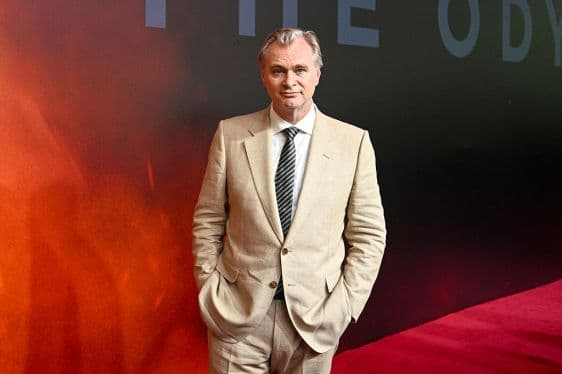
Christopher Nolan, the Oscar-winning director whose new version of “The Odyssey” is currentlyconquering the box office, said it’s been “pretty encouraging” to see deep skepticism of AI,especially from young people. Nolan wasresponding to a question from interviewer Hugo Travers, who publishes on YouTube under the name HugoDécrypte. Travers brought up the legendary Trojan horse, which plays a key role in Nolan’s film — just as the horse was a gift concealing murderous Greek invaders, he wondered if AI might be something “that you welcome in your daily life” but ends up becoming “something else and something darker.” Laughing, Nolan responded, “I think AI is a Trojan horse that everybody knows the Greeks are inside.” He later described the technology as “a transparent horse, it’s made of glass.” “I’ve never seen a technology advancing so rapidly [that’s been] so completely rejected by the public,” he said. “Everybody’s suspicion of it is so extreme, particularly young people. The reaction to AI videos online and people my children’s age immediately calling it ‘AI slop’ and coining that term and just putting it in a box.” In Nolan’s view, this is “a very healthy skepticism, because technology is always going to give us great gifts, as you say, but it has to be viewed with skepticism.” Similarly, he said, “The motives of the people giving it to us also have to be viewed with skepticism. That’s when we’ll get the best out of a new technology, rather than just blind faith that everything’s going to be great.” (Meanwhile, SpaceX CEO Elon Musk has beenangrily posting about the film’s nonwhite and transgender cast members.) Nolan didn’t get more specific about what he views as the threat from AI, but the technology has been a growing source of concern in Hollywood and was a major focus duringthe writers’ and actors’ strikes of 2023. The Directors Guild of America, where Nolan is president,also won some generative AI protectionsin its most recent contract. The director has been famously resistant to other technologies, including smartphones; his embrace of film can make him seem simultaneously like aLudditeand a pioneer, with “The Odyssey” becoming the first feature film to be shot entirely on Imax film and cameras. When The New York Timesrecently asked Nolan if he thinks of himself as a technophobe, he replied, “I think of myself as a techno-skeptic,” and said his love of film comes from the fact that it’s “better in terms of representing the way the eye sees the world than any digital imaging system I’ve seen.” “I embrace new technology all the time, but it tends to be sold to people at the expense of systems that might still be valid and viable,” Nolan said. “That’s what I saw in my industry — throwing the baby out with the bath water. We almost lost film!”

read more
Latest AI News

View All News →
YouTube clarifies policies around AI slop and upsetting videos

YouTube clarifies policies around AI slop and upsetting videos

A recentchangesees YouTube further cracking down on AI slop by clarifying its policies around how content on its platform can be monetized. To discourage creators from using AI and other tools to make low-quality content, YouTube’s policy now explains that there are three types of videos under the broader category of “inauthentic content” that cannot be monetized. YouTube already had policies around AI content. Last year,the company announcedit was stemming creators’ ability to generate revenue from what it called “inauthentic content,” including mass-produced videos and other types of repetitive content that have become easier to generate with the help of AI technology. Rather, the recent update is about adding more nuance to the existing policies. The updated guidelines break down inauthentic content into three categories, including generic, repetitive, or template-based content, followed by off-putting or distressing content, and then any content where AI personas are used to discuss sensitive topics, like health and finance. While AI slop, much like adult content, is something of a “you’ll know it when you see it” situation for many, YouTube’s policies are meant to more specifically spell out when AI’s use in content creation is allowed or is not permitted for videos being monetized through its YouTube Partner Program (YPP). The program, which allows creators to earn money through advertising and subscriptions, is YouTube’s lifeblood; allowing it to fill up with AI slop or other low-quality fare would not be in the company’s financial interests. This is especially important given that YouTube is inclose competition with TVand other streamers for TV ad dollars. Google’s video platform now generatesmore ad revenue than rival streamersand hasovertaken Netflix in average daily views worldwide. As YouTube’s trust and safety chief Matt Halprin explained in aCreator Insider videolast week, the company’s goal with its policy revision is to cut down on content farming efforts — a reference to low-quality videos that exist solely to generate revenue. “AI can actually allow people to make a lot of videos,” said Halprin. “Sometimes those videos are great, and it really enhances creativity. And you can create a higher volume of high-quality content that we want to encourage and have in YPP.” “But that exact same new tool can allow you to make lots of videos really quickly that are very similar. They’re very generic and don’t really have a narrative arc and don’t really show your creativity. So the same technology really enables great stuff, but it also enables stuff that’s kind of content farming, and that’s the stuff that we don’t want to have in YPP,” Halprin added. The first category, he said, includes repetitive content, such as material that can be easily made with AI, computer-generated imagery (CGI), or templates, with little variation from video to video. This fills a channel with cookie-cutter videos. Halprin notes that tutorial videos could also fall under this policy if they’re reproducing content that’s already prevalent on the platform, instead of being original. The second category focuses on what YouTube calls “off-putting” content, or content designed to be distressing or emotionally manipulative to chase views. This could include videos featuring an animal in distress, which someone then comes along and rescues, Halprin said. “We’ve heard from our viewers that that’s not something that they like. They find it off-putting. They don’t want to come back to that channel, or maybe even the platform,” Halprin said. Channels dedicated to this content will be removed from YPP, regardless of whether the content is AI-generated or not. The third bucket more directly targets the use of AI personas — representations of real people made with AI. YouTube says it doesn’t want to incentivize creators using AI personas to discuss more sensitive topics, like finance, legal issues, healthcare, and medical issues. Any YouTube channel that has too much of any of these three types of content will not be able to monetize, Halprin said. The policy clarifications were rolled out on July 16 and impact all YouTube Partner Program members.

49 minutes ago

View

Karnataka Approves ₹12 Crore AI Centre of Excellence at IIIT Raichur

Karnataka Approves ₹12 Crore AI Centre of Excellence at IIIT Raichur

The centre will focus on developing practical AI applications across sectors including agriculture, healthcare, education, MSMEs, and governance.

4 hours ago

View

Salesforce Launches SMB Growth Kit for Indian Businesses

Salesforce Launches SMB Growth Kit for Indian Businesses

The company said businesses adopting the package can go live within four to six weeks through structured onboarding and implementation support.

8 hours ago

View

Meet the AI Startup Behind India’s Got Latent Viral Song ‘Chai Ki Tapri’

Meet the AI Startup Behind India’s Got Latent Viral Song ‘Chai Ki Tapri’

The startup is betting that AI’s future lies beyond song generation, with agents designed to help creators produce, distribute and monetise music.

8 hours ago

View