AI NewsNo one has a good plan for how AI companies should work with the government
No one has a good plan for how AI companies should work with the government
10:08 AM IST · March 3, 2026
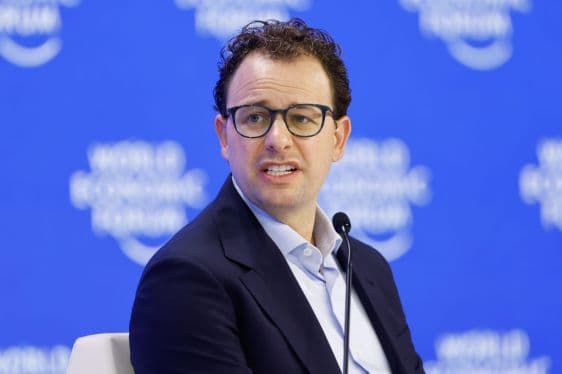
As Sam Altman discovered Saturday night, it’s a fraught time to do work for the U.S. government. Around 7 p.m., the OpenAI CEOannounced he would be fielding questionspublicly on X, as a way of demystifying his company’sdecision to pick upthe Pentagon contract that Anthropic had just walked away from. Most of the questions boiled down to OpenAI’s willingness to participate in mass surveillance and automated killing – the exact activities Anthropichad ruled outin its negotiations with the Pentagon. Altman typically punted to the public sector, saying it wasn’t his role to set national policy. “I very deeply believe in the democratic process,” he wrote in one response, “and that our elected leaders have the power, and that we all have to uphold the constitution.” An hour later, he confessed surprise that so many people seemed to disagree. “There is more open debate than I thought there would be,” Altman said, “about whether we should prefer a democratically elected government or unelected private companies to have more power. I guess this is something people disagree on.” It’s a telling moment for both OpenAI and the tech industry at large. In his Q&A, Altman employed a stance that’s standard in the defense industry, where military leaders and industry partners are expected to defer to civilian leadership. But what’s more telling is that, as OpenAI transitions from a wildly successful consumer startup into a piece of national security infrastructure, the company appears unequipped to manage its new responsibilities. Altman’s public town hall came at a heightened time for his company. The Pentagon had justblacklisted OpenAI rival Anthropicfor insisting on contractual limitations for surveillance and automated weaponry. Days later, OpenAI announced it had won the same contract Anthropic had given up. Altman portrayed the deal as a quick way to deescalate the conflict – and it was surely a lucrative one. But he seemed unprepared for how much blowback it generated from both the company’s users and its employees. OpenAI has been engaging with the U.S. government for years — but not like this. When Altman was making his case to the Congressional committeesin 2023, for instance, he was still mostly following the social media playbook. He was bombastic about the company’s world-changing potential while acknowledging the risks and enthusiastically engaging with lawmakers — a perfect combination for stirring up investors while heading off regulation. Less than three years later, that approach is no longer tenable. AI is so obviously powerful and the capital needs are so intense that it’s impossible to avoid a more serious engagement with the government. The surprise is how unprepared both sides seem to be for it. The biggest immediate conflict is Anthropic itself, and U.S. Defense Secretary Pete Hegseth’s stated plan Friday to designate the lab as a supply chain risk. That threat looms over the whole conversation like an unfired gun. As former Trump official Dean Ballwrote over the weekend, the designation would cut Anthropic off from hardware and hosting partners, effectively destroying the company. It would be an unprecedented move against an American company, and while it mightultimately be reversed in court, it will cause damage in the interim and send shockwaves through the industry. As Ball describes the process, Anthropic was carrying out an existing contract under terms that had been established years earlier – only to have the administration insist on changing the terms. It’s far beyond anything that would fly between private companies, and sends a chilling message to other vendors. “Even if Secretary Hegseth backs down and narrows his extremely broad threat against Anthropic, great damage has been done,” Ball wrote. “Most corporations, political actors, and others will have to operate under the assumption that the logic of the tribe will now reign.” It’s a direct threat to Anthropic, but also a serious problem for OpenAI. The company is already under intense pressure from employees to maintain some semblance of a red line. At the same time, right-wing media will be on alert for any sign of OpenAI being a less-then-staunch political ally. In the middle of everything is the Trump administration, doing its best to make the situation as difficult as possible. It can be argued that OpenAI didn’t set out to become a defense contractor, but by virtue of its massive ambitions, it’s been forced to play the same game as Palantir and Anduril. Making inroads during the Trump administration means picking sides. There are no apolitical actors here, and winning some friends will mean alienating others. It remains to be seen how high a price OpenAI will pay, either in lost business or lost employees, but it’s unlikely to emerge unscathed. It might seem strange that this crackdown is coming at a time when there are more prominent tech investors holding influential positions in Washington than ever, but most of them seem entirely happy with tribal logic. Among Trump-aligned venture capitalists, Anthropic has long been perceived as currying favor with the Biden administration in ways that would damage the larger industry – a perception underscored by Trump advisorDavid Sacks’ reaction to the ongoing conflict. Now that the reverse has happened, few seem willing to stand up for the broader principle of free enterprise. This is a difficult position for any company to be in – and while politically aligned players may benefit in the short term, they’ll be just as exposed when political winds inevitably shift. There’s a reason why, for decades, the defense sector was dominated by slow-moving, heavily regulated conglomerates like Raytheon and Lockheed Martin. Operating as an industrial wing of the Pentagon gave them the political cover they needed to avoid the politics, staying focused on the technology without having to press reset every time the White House changed hands. Today’s startup competitors might move faster than their predecessors – but they’re much less prepared for the long term.
read more