AI Styling Studio — Infinite avatar looks from just 1 photo.Try it now.

BestAITools

Submit your Tool

8000+ AI tools already listed
8K+Tools
100K+/moViews
25K+/moVisitors

AI NewsNimble raises $47M to give AI agents access to real-time web data

Nimble raises $47M to give AI agents access to real-time web data

8:27 PM IST · February 24, 2026

Nimble raises $47M to give AI agents access to real-time web data

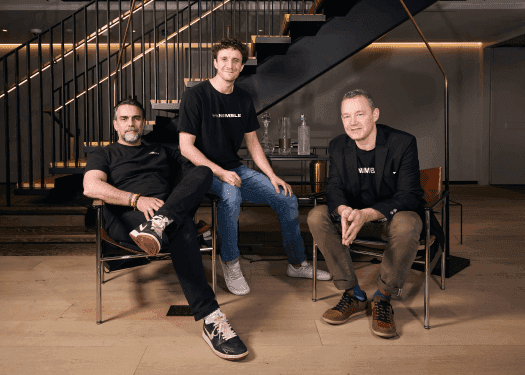
Believe it or not, web search is still thriving as an industry. As businesses invest in using AI agents to make the most of their data, there’s demand for tools that not only scrape the web to inform what those AI bots do, but also return those results in a way that’s easier to use with modern data tools. That’s the promise behind web search startupNimble, which recently raised a $47 million Series B round, led by Norwest. The New York company’s platform employs AI agents to search the web in real time, verify, and validate the results, and then structure the information into neat tables that can then be queried like a database. That last part is crucial here. LLMs and AI agents are great for searching the web, connecting results from a variety of sources, and analyzing them, but they often return the results in plain text, which can be difficult to work with at an enterprise level. And that’s before you factor in hallucinations, the risk of the agent misunderstanding your instructions, or the use of unreliable sources. By validating and structuring results into tables, Nimble lets companies use web data as if it were already part of their existing databases. The startup also integrates with enterprise data warehouses and data lakes — large centralized repositories where businesses store and analyze data — offered by the likes of Databricks and Snowflake. That means its AI agents can plug into a business’s trove of data, using it to build context, and shape how search results are structured and returned. In effect, this lets enterprises have live, structured web data as part of their existing data environments, Nimble CEO and co-founder Uri Knorovich (pictured above, middle) told TechCrunch. Such integrations also allow Nimble’s software to remember constraints — such as how you want the search to be performed, or which data sources to tap. This is particularly useful for applications such as competitor analysis, pricing research, know-your-customer (KYC) processes, brand monitoring, deep research, and financial analysis. (Knorovich noted that Nimble works to ensure all customer data remains within customers’ data infrastructure to comply with data retention and security policies.) To that end, the startup has partnered with Databricks, Snowflake, AWS and Microsoft to help streamline enterprise deployments that require access to internal data sources. (Databricks also participated in this Series B.) “Models can do a lot of things, but most production AI fails aren’t because the models are not good enough — it’s because of a data failure,” Knorovich said. “What we’re seeing today is that enterprises don’t need more AI; they need AI with good, reliable web search […] If you nail it down, if you can choose what your agent can search and cannot search, this is the tipping point for enterprises to say, ‘hey we can actually trust AI. We can actually put AI to work in more use cases’.” Knorovich says the ability to search the web in real time at scale, and validate and structure search results, is what sets Nimble apart from other data brokers already in the space. The startup currently has more than 100 customers, with the majority of its revenue coming from large enterprises, Fortune 500 companies, and even some Fortune 10 companies, including major retailers, hedge funds, banks, and consumer packaged goods companies, as well as some AI-native startups. “Nimble is tackling a problem that has existed for years without a proper solution and is now becoming of critical urgency,” Assaf Harel, partner at Norwest, said in a statement. “Trusted live web data is increasingly becoming a prerequisite for AI agents performing critical business decisions.” The Series B also saw participation from returning investors Target Global, Square Peg, Hetz Ventures, Slow Ventures, R-Squared Ventures, J-Ventures, and InvestInData. Proceeds from the round will be used to expand R&D in multi-agent web search and a governed data layer that processes and validates search results. Nimble has now raised a total of $75 million.

read more

Latest AI News

View All News →
Jersey Mike’s IPO illustrates how bad the AI hype has become

Jersey Mike’s IPO illustrates how bad the AI hype has become

I can’t tell the exact tipping point from realistic excitement over a new technology, to hype, toaww-come-on— but I’m pretty sure when a sandwich shop with Danny DeVito as its public face talks about AI in its IPO documents, we must be getting close. So it is with Jersey Mike’s. Because of investor thirst for all things AI these days, I understand why tech companies feel the need to sprinkle AI dust all over their pitches. This is as true for non-AI startupsraising venture capitalas it is forBending Spoons’ public debut, a company in the business of buying aging, “not-AI” tech companies to rehabilitate. Just for kicks, I took a look at Jersey Mike’s IPO documents to see how far this compulsion may go. Surely a sandwich shop would have no need to mention AI in itsS-1. But lo and behold! The term artificial intelligence and its acronym “AI” were mentioned 22 times. In this case, the company can’t claim to be selling AI software. It sells submarine sandwiches. AI products are what investors are really hungering for (terrible pun intended). Still, it found a way to mention AI in its investor-risk warnings. That may be even more funny. It doesn’t explain what it’s using AI for that could be dangerous to investors, beyond a hand-wave of a phrase, “We are beginning to use AI Technologies in our business.” In all fairness, as a company that operates franchisees, it does rely on software (mentioned 52 times) and data (112 mentions), as all businesses do. Its AI risk warning was boilerplate copy, perhaps even necessary, as such disasters have already happened to other food businesses, likethe half-baked AI inventory toolthat Starbucks rolled out, which couldn’t count and was recently scrapped. Still, I’m going to go out on a limb here and predict that the risk of an AI disaster for a company that produces real-life sandwiches, not AI slop, is about the same as, say, a franchise shop getting hit by lightning. That actuallyhappened, by the way,to a shop in Texas in 2021. Yet weather was only mentioned five times in the S-1. And lightning? Not once.

3 hours ago

View

OpenAI proposed donating 5% of its equity to a US sovereign wealth fund

OpenAI proposed donating 5% of its equity to a US sovereign wealth fund

OpenAI CEO Sam Altman has proposed giving 5% of the company’s equity to a U.S. sovereign wealth fund,the Financial Times reported on Thursday, citing two people familiar with the matter. Under the proposal, other AI companies would donate similar stakes, although significant questions remain about the specifics. According to the FT’s reporting, the donation would be meant to “secure good relations with the administration and … address political blowback.” Similar discussions werereported by CNBC in Juneand were subsequently confirmed by President Trump, who said he had discussed “concepts where pieces could be given to the American public, where the American public essentially becomes a partner with the companies.” At the time, no specific size for the proposed equity stake was given. The talks remain preliminary and, per the FT, it’s likely that any formal action would require congressional approval, which would significantly complicate the matter. The idea of a public AI fund has also been publicly discussed by Altman, and OpenAI has grown increasingly specific in its proposals for how such a fund could be structured. Most recently, a policy paper titled “Industrial Policy for the Intelligence Age,” released by OpenAI in April, proposed a public wealth fund that could invest directly in AI labs and companies deploying their technology. “Returns from the Fund could be distributed directly to citizens, allowing more people to participate directly in the upside of AI-driven growth, regardless of their starting wealth or access to capital,” the document reads. A more aggressive version of the policy wasproposed by Sen. Bernie Sanders(I-VT) in June, calling for a one-time 50% tax on AI company stock, with the collected shares being deposited into a public wealth fund. The bill, called the American AI Sovereign Wealth Fund Act, would apply to all “systemically important” AI companies, including those dealing with data centers, infrastructure, or robotics. Under the proposal, companies like Google and SpaceX that include AI as only part of their business would be allowed to spin off non-AI portions of the company to avoid taxation. The bill has yet to advance to committee.

7 hours ago

View

Anthropic is discussing a new custom chip with Samsung

Anthropic is discussing a new custom chip with Samsung

Back in April, Reutersreported thatAnthropic was toying with the idea of producing its own AI chips as a means of responding to chip shortages. Now, it would appear that the company is getting serious about this idea. On Thursday,The Information reportedthat Anthropic was in contact with Samsung to explore a collaboration around the pending chip. However, Anthropic hasn’t yet decided what the chip will be used for, how it will fit into the server, or how powerful it will be, according to the report. When reached for comment, Anthropic told TechCrunch that a diversified hardware stack that includes chips from Google, Amazon, and Nvidia will continue to be pivotal to its compute strategy. On the topic of a potential Samsung partnership, the company said it had nothing further to add. A number of AI companies have sought to develop custom chips — both as a way to create unique hardware for specific compute tasks and to gain a certain amount of independence from Nvidia, which continues to be the undisputed leader of the chip industry. Anthropic’s announcement may also be a response to one made last week by its key competitor, OpenAI, which hasteamed up with Broadcomto announce its own custom built inference processor, dubbed “Jalapeño.” OpenAI says that the chip is more efficient, demonstrating better performance-per-watt, than other competitor chips.AmazonandGoogleboth offer custom-built TPUs as part of their cloud offering. Samsung is already embedded in the AI industry, and acts as a major partner of Nvidia,producing chipsthat the company needs to train or run its AI models. In turn, Samsung uses Nvidia’s software to manufacture its chips. The duo areworking on an AI chip factoryin South Korea. Samsung has alsodiscussed partneringwith Google on its chip-making efforts.

7 hours ago

View

Meta quietly launches vibe-coded gaming app Pocket

Meta quietly launches vibe-coded gaming app Pocket

Meta is getting into gaming with the launch of a new app calledPocket, which allows people to generate small, interactive apps and games using AI prompts. The software, a result of Meta’sacquisitionof the team at thevibe-coded gaming platform Gizmoearlier this year, describes itself as “a creative platform for making and sharing gizmos,” which is what the interactive experiences are called. It also offers a scrollable feed where you can play with gizmos others have made. Based on theapp’s screenshots in Google Play,there are many similarities to Gizmo’s original app,which is still listed. Like Pocket, Gizmo also offers a way to use written AI prompts to build small, interactive experiences, and it includes a discovery feed. Alessandro Paluzzi,a reverse engineer and regular spotter of new apps and features, first noticed the app’s launch this morning and published a Play Storescreenshotof the app on X. According to data from app intelligence providerAppfigures, however, Pocket was first launched on June 29, 2026 on the App Store and Google Play. (Because of its newness, the firm can’t tell if it’s yet to see any downloads.) #Metais working on a new app called Pocket 👀ℹ️ A new creative platform to make and share gizmos.pic.twitter.com/zFjMU5jj1U Other outlets, includingBusiness InsiderandInvesting.com, have also reported on Paluzzi’s discovery. Meta has not yet responded to a request for comment. Pocket is another example of Meta’s push to make AI creation tools more mainstream, extending its earlier efforts, which included AI-generated images created viaits Meta AI app, and AI videos created withits app called Vibes.It has also added AI features across its social platforms and into itsvideo-editing app for creators, Edits. Given that Meta has not officially announced Pocket’s debut, it’s likely that Pocket is still in its initial experimentation phase. Its counterpart Gizmo, however, had generated 635K lifetime installs across both iOS and Google Play, according to Appfigures, which noted it had a 98% positive sentiment.

7 hours ago

View